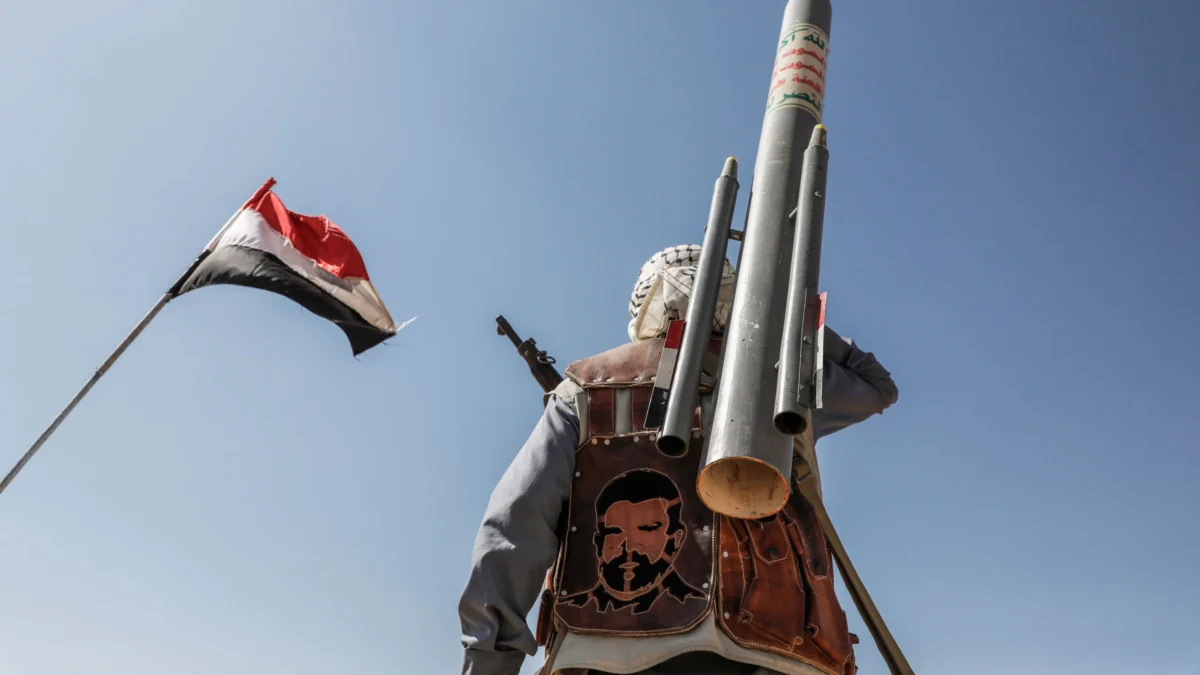
The security architecture of the Middle East is currently facing its most severe test in years. A convergence of intensifying conflict in the Red Sea and renewed threats in the Persian Gulf has brought the region to a precarious tipping point. With the Iran-backed Houthi militia intensifying its offensive against both regional infrastructure and international maritime corridors, the world’s most vital oil transit routes are now under direct fire.
The conflict, which has seen the strategic Bab al-Mandab Strait become a focal point of kinetic military operations, is no longer merely a local civil war within Yemen. It has evolved into a broader geopolitical confrontation involving regional powers, international shipping interests, and the global energy market.
The Strategic Battlefield: Bab al-Mandab and the Strait of Hormuz
The current instability is defined by threats to two primary chokepoints: the Bab al-Mandab Strait and the Strait of Hormuz.
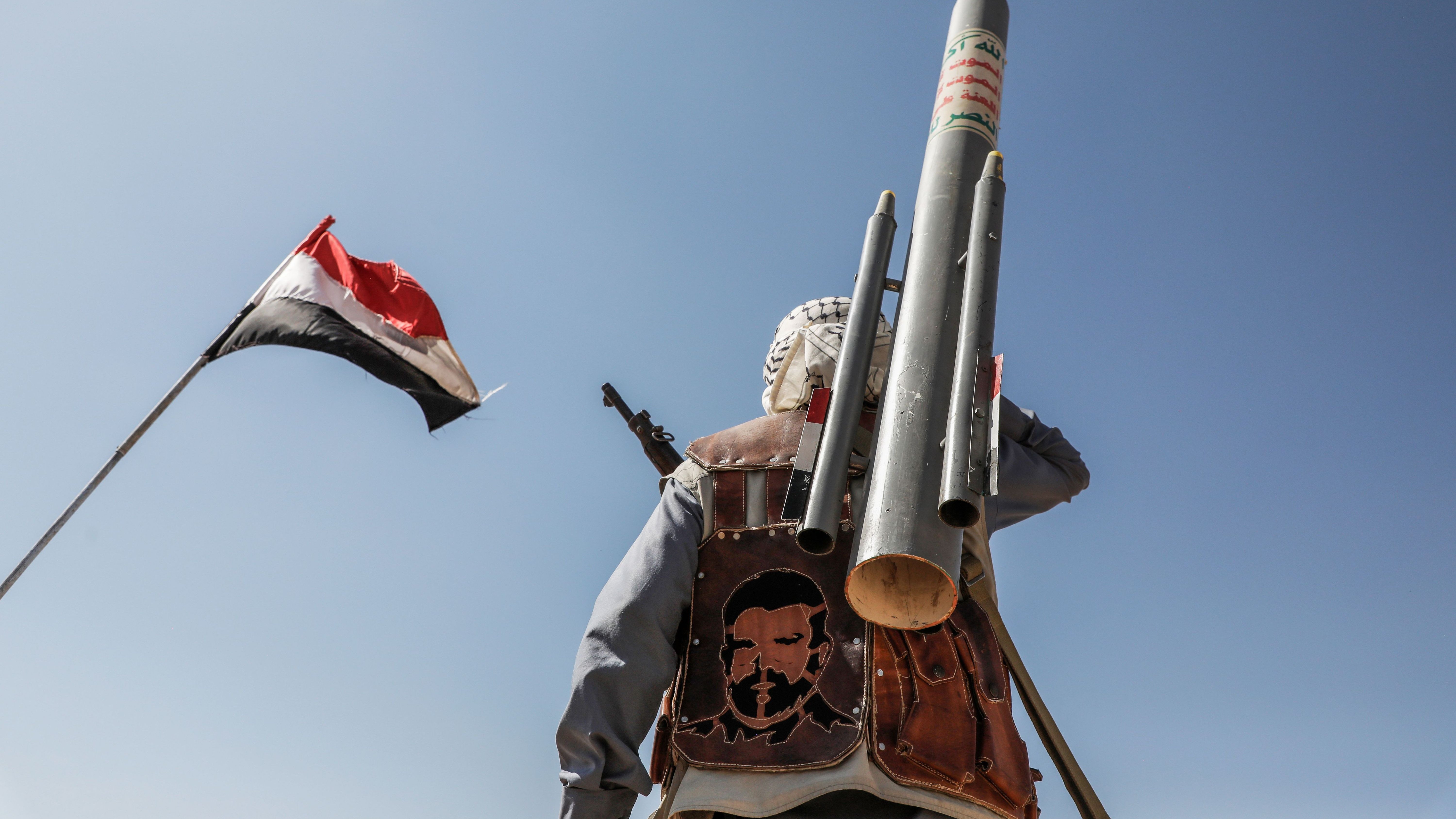
The Bab al-Mandab, a narrow passage connecting the Red Sea to the Gulf of Aden, serves as the gateway for the Suez Canal. For the global economy, this route is indispensable; a significant percentage of the world’s maritime trade, particularly energy shipments from the Persian Gulf to Europe, passes through these waters. The recent Houthi offensive, which includes ballistic missile and drone strikes targeting both maritime vessels and airports in neighboring Saudi Arabia, represents a direct challenge to freedom of navigation.
Simultaneously, the Strait of Hormuz—the world’s most important oil chokepoint—is witnessing renewed Iranian posturing. Iranian officials have explicitly threatened to close additional shipping routes in the area, asserting full control over the passage until Tehran’s geopolitical demands are met. These threats, combined with a string of reported attacks on tankers, have injected a high degree of volatility into global oil markets.
Chronology of Recent Escalations
The intensification of hostilities can be tracked through a series of rapid-fire developments over the past week:

- The Aden Airport Attack: On Wednesday, Houthi rebels launched a sophisticated assault on the international airport in Aden using ballistic missiles and drones. A commercial flight from Cairo was forced to divert to Jeddah after a missile struck near the runway, highlighting the increasing reach and precision of the militia’s weaponry.
- The Maritime "Invisible War": Reports from the British maritime security agency, UKMTO, confirm a series of attacks on commercial tankers in the Strait of Hormuz. One vessel reported a fire in the engine room after being struck by an unidentified projectile. Similar attacks were logged throughout the weekend, targeting both oil and liquid gas carriers.
- The Saudi Counter-Offensive: In response to the Houthi threat, a Saudi-led coalition has launched a massive air and ground campaign. Using hundreds of sorties, the coalition aims to neutralize Houthi launch sites near Sanaa and along the Red Sea coast, attempting to reclaim strategic ground around the Bab al-Mandab.
- The Diplomatic and Military Realignment: Amidst the chaos, Pakistan, Saudi Arabia, and Turkey have announced a new security pact, pledging to rapidly station military forces and technical capabilities within the Kingdom to bolster its defensive posture.
The Nuclear Dimension: Washington’s Stance
The conflict is inextricably linked to the broader tensions regarding Iran’s nuclear program. US officials, including Vice President JD Vance, have signaled a hardening of the American position. In recent statements, Washington has demanded concrete, verifiable concessions from Tehran regarding its uranium enrichment levels—specifically calling for a reduction from the current 60 percent enrichment level.
"We will not accept words as a substitute for action," Vance stated, emphasizing that the United States is moving toward a more restrictive policy. Furthermore, the US Treasury Department has issued a stark warning to foreign financial institutions, indicating that any entity continuing to facilitate transactions with the Iranian financial sector faces the risk of immediate, unannounced sanctions.
Data and Security Implications
The impact of these maneuvers extends far beyond the immediate theater of war. The "Giants Brigades," a military faction aligned with the Yemeni government, has reported advancing on multiple fronts, yet the threat of a prolonged, attritional war remains high.
Impact on Global Energy
The threat to the Strait of Hormuz is particularly sensitive. While Saudi officials have suggested that the East-West pipeline remains operational and that exports have not been permanently disrupted, the psychological impact on the market is tangible. Any sustained closure or credible threat of closure in this region typically results in a sharp spike in crude oil prices, adding inflationary pressure to an already strained global economy.
Security of Military Assets
The sensitivity of the region was underscored by the recent withdrawal of American B-1 bombers from the RAF Fairford base in the UK. This move, officially attributed to "operational security," followed the arrest of individuals allegedly planning terror attacks against the facility. The proximity of these threats to the ongoing conflict in the Middle East has heightened concerns that the instability could export itself to Western soil.
Official Responses and Strategic Outlook
Regional and global leaders are struggling to contain the fallout. German Chancellor Friedrich Merz recently expressed "cautious optimism" regarding the situation in the Red Sea, following reports that government-aligned forces had regained ground around the Bab al-Mandab. However, he admitted that this optimism is fragile and contingent on the permanent, unhindered reopening of maritime routes.

"We are doing everything in our power—the Foreign Ministry, the Defense Ministry—to end this conflict as quickly as possible, because we are feeling the consequences massively in our energy prices," Merz remarked.
Tehran, meanwhile, continues to project defiance. The Iranian Revolutionary Guard Corps (IRGC) has signaled that it is in the process of extending the range of its ballistic missile arsenal. Army spokesperson Mohammed Akraminia noted that the positioning of US forces within a 1,000-kilometer radius has necessitated a shift in Iran’s military doctrine, forcing the country to develop longer-range capabilities that could potentially threaten NATO infrastructure, such as the Incirlik airbase in Turkey.
The Humanitarian and Political Fallout
While the maritime and energy aspects dominate international headlines, the human cost of the conflict in Yemen continues to mount. The renewed offensive by the internationally recognized government, backed by Saudi airpower, has turned cities like Tais into focal points of urban warfare.

The Houthi militia’s decision to warn airlines against using Saudi airspace adds yet another layer of complexity, effectively declaring the regional sky a combat zone. This move is a clear attempt by the militia to demonstrate its ability to disrupt regional connectivity, even as it faces mounting pressure on the ground.
Moreover, the internal political dynamics in Iran have shifted. The recent resignation of Iran’s Oil Minister, Mohsen Paknejad, citing "personal reasons," comes at a time of severe economic pressure caused by the ongoing confrontation with the US. While the government attempts to maintain a veneer of stability, the reshuffling of key economic portfolios suggests that the regime is bracing for a prolonged period of economic hardship.
Future Projections: A Fragile Equilibrium
The coming weeks will be critical in determining whether the Middle East descends into a wider regional conflagration or moves toward a tense, negotiated standoff. Three factors will define the trajectory of the crisis:

- The Success of the Saudi-led Offensive: If the coalition can effectively neutralize Houthi launch sites and secure the Bab al-Mandab, the threat to global shipping may subside. Failure to do so, however, will likely lead to an expansion of the "tanker war."
- US-Iran Nuclear Diplomacy: The American demand for 60-percent-enriched uranium to be drawn down is a high-stakes ultimatum. If Tehran refuses, the risk of direct, rather than proxy, conflict between the US and Iran increases significantly.
- Regional Alliance Cohesion: The new security cooperation between Turkey, Pakistan, and Saudi Arabia marks a significant shift in the regional balance of power. Whether this alliance can act as a deterrent or will serve as a lightning rod for further attacks by Iran and its proxies remains to be seen.
As it stands, the world is watching a high-stakes game of brinkmanship. The intersection of energy security, nuclear proliferation, and regional power struggles means that the events unfolding in the waters of the Red Sea and the Persian Gulf are not just local issues—they are the pulse of the global economy. The current volatility serves as a stark reminder of how thin the line between regional stability and global disruption truly is. The international community, led by major powers, remains under immense pressure to navigate this crisis before a single miscalculation turns a simmering conflict into an uncontrollable blaze.