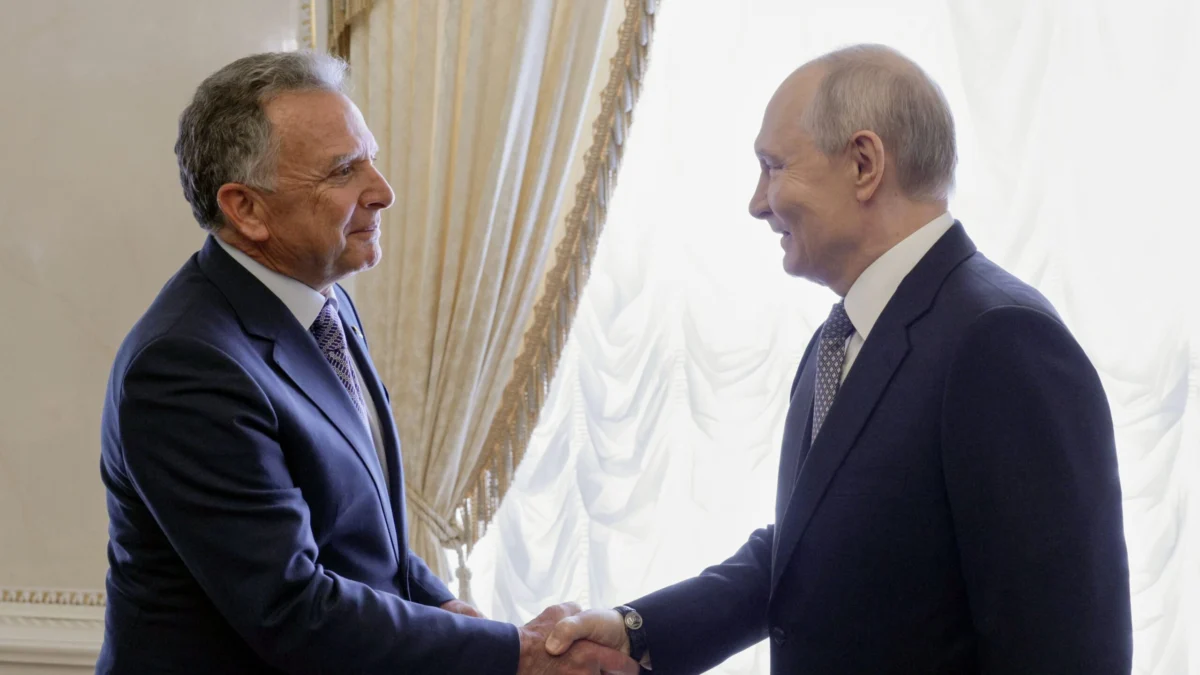
St. Petersburg, Russia / Kyiv, Ukraine – In a significant diplomatic maneuver, US Special Envoy Steve Witkoff met with Russian President Vladimir Putin in St. Petersburg this week, signaling a renewed push for peace negotiations in the ongoing Ukraine conflict. The high-stakes meeting, which followed Witkoff’s discussions with Ukrainian President Volodymyr Zelenskyy and European leaders in Oslo, coincided with a surge in Russian attacks on Ukrainian cities and heightened security concerns across Europe.
The diplomatic efforts unfolded against a backdrop of complex geopolitical developments, including a notable prisoner release, Russia’s readiness for trilateral talks involving the US and Ukraine, and a proposal for broader discussions with China on strategic stability. Meanwhile, European leaders voiced strong warnings against Russian hybrid warfare and emphasized unwavering support for Ukraine, even as the military landscape continued to be marked by fresh casualties and tactical incidents.
Main Facts
- US Diplomatic Push: US Special Envoy Steve Witkoff held three-hour talks with Russian President Vladimir Putin in St. Petersburg after meeting Ukrainian President Volodymyr Zelenskyy and European leaders in Oslo. Witkoff presented new peace proposals and expressed hope for trilateral talks.
- Prisoner Release: During the St. Petersburg meeting, Witkoff thanked Putin for the release of 74-year-old American citizen Stephen Hubbard, held in Russia for over four years. Kremlin officials cited "humanitarian considerations" for the release.
- Talks on the Horizon: Following the meeting, the Kremlin announced Putin’s readiness for a resumption of trilateral talks with Ukraine and the US next month, focusing on post-conflict security guarantees. Russia also indicated openness to a trilateral meeting with the US and China in November to discuss strategic stability and nuclear disarmament.
- Escalating Hostilities: Russia launched fresh attacks on Ukrainian cities, resulting in five deaths (three in Kyiv, two in Kharkiv) and dozens injured. Energy infrastructure and a cargo ship in the Black Sea were targeted.
- European Alarm: German Chancellor Friedrich Merz issued a stark warning about daily Russian hybrid attacks on Germany and firmly rejected any notion of Ukraine’s surrender. The German Bundeswehr elevated its sabotage threat assessment to "considerable," and NATO announced a strengthened military presence in the Black Sea region.
- Starlink Controversy: The EU expressed "extreme concern" over reports that SpaceX, led by Elon Musk, had throttled Starlink internet services for Ukraine, demanding immediate restoration of full access. US Secretary of State Marco Rubio affirmed Ukraine’s dependence on US support while clarifying that Washington did not order any Starlink throttling.
Chronology of Key Events
Tuesday Evening (Oslo): US Diplomatic Initiative Begins
The diplomatic flurry commenced with US Special Envoy Steve Witkoff engaging Ukrainian President Volodymyr Zelenskyy and key European figures in Oslo, Norway. The meeting, hosted by Norwegian Prime Minister Jonas Gahr Støre and Finnish President Alexander Stubb, aimed to lay the groundwork for potential peace negotiations. Discussions reportedly focused on a comprehensive set of proposals, including robust security guarantees for Ukraine, an ambitious post-war economic reconstruction plan, and a reimagined European security architecture. Critically, these talks were attended by representatives from several European nations, Germany among them, as well as officials from the European Union and NATO, underscoring the collective effort to forge a unified path forward. Both Norwegian and Finnish leaders expressed cautious optimism following the "good and constructive" discussions, hinting at "significant progress" on substantive and technical levels behind the scenes.
Tuesday Evening/Wednesday Morning: Ukraine Receives Renewed Early Warnings
In a related development, Ukrainian President Zelenskyy confirmed that his country was once again receiving timely early warnings from its allies regarding impending Russian attacks. This welcome restoration of intelligence sharing, which had reportedly been inconsistent, followed direct consultations with US government officials, including a telephone call with US Secretary of State Marco Rubio. Zelenskyy expressed gratitude, highlighting the critical importance of these warnings for civilian protection and the early detection of ballistic missile threats.

Wednesday (St. Petersburg): Witkoff Meets Putin, Prisoner Released
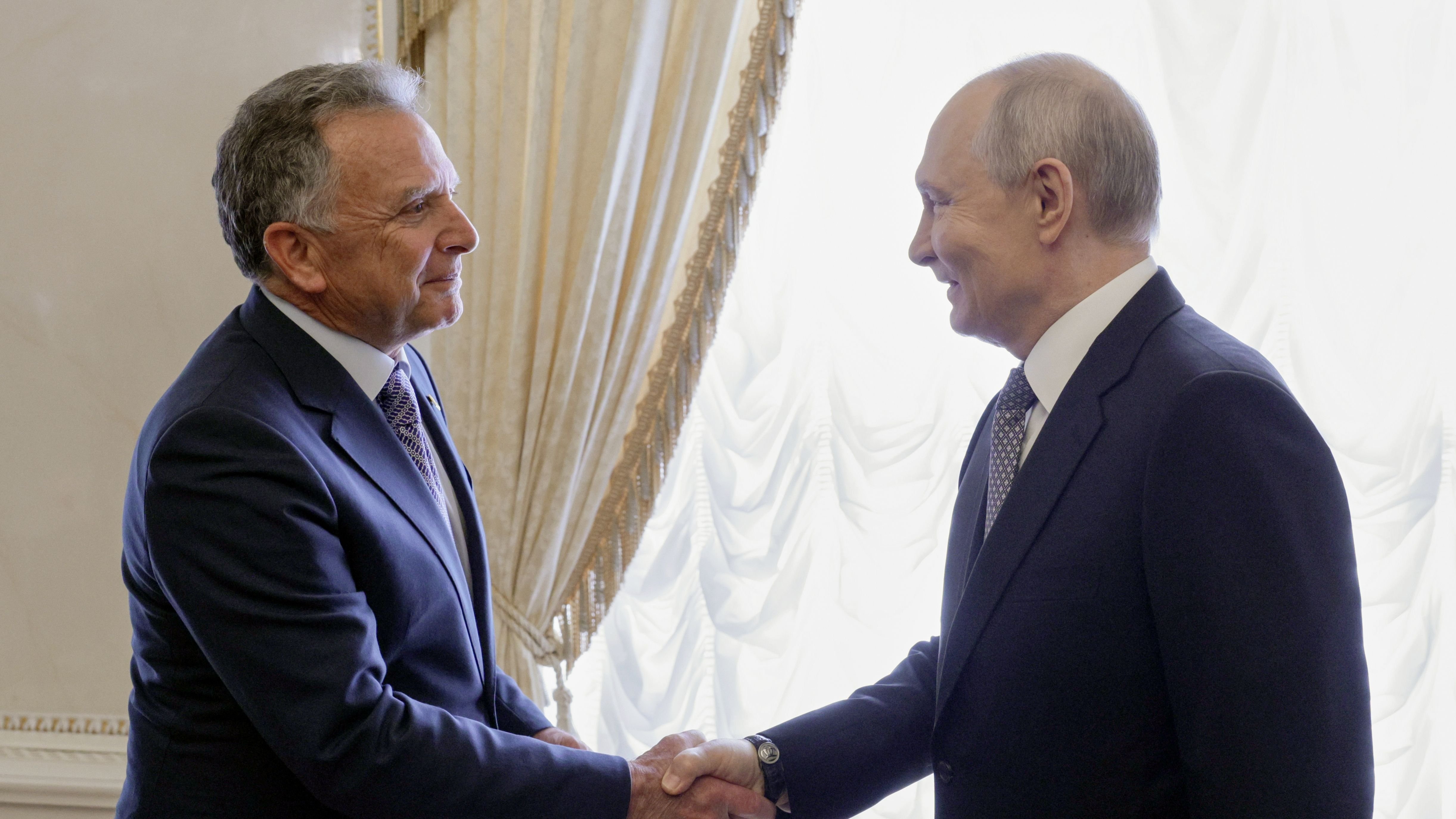
The focus of the diplomatic efforts shifted to St. Petersburg, Russia, where Steve Witkoff embarked on a crucial three-hour meeting with Russian President Vladimir Putin at the Konstantin Palace. Witkoff, carrying the peace proposals discussed in Oslo, articulated his hope for the resumption of trilateral talks involving Russia, Ukraine, and the United States, emphasizing a perceived "momentum" for ending the conflict.
A significant outcome of this encounter was the release of Stephen Hubbard, a 74-year-old American citizen and former teacher from Michigan, who had been imprisoned in Russia for over four years. Hubbard, detained in 2022 and later sentenced in a closed trial in 2024 to six years and ten months on charges of fighting as a mercenary in Ukraine, was reportedly "on his way home," as confirmed by US President Donald Trump. Witkoff publicly thanked Putin for this "humanitarian" gesture, going so far as to describe the Kremlin chief as a "philanthropist." Kremlin spokesman Dmitri Peskov reiterated that the release was prompted by persistent US requests and humanitarian considerations.
Wednesday: Russia Open to Further Talks
Following the Witkoff-Putin meeting, Kremlin advisor Yuri Ushakov announced that President Putin was "fundamentally ready" to resume talks with Ukraine and the US in the coming month. These negotiations, according to Ushakov, would concentrate on crucial security guarantees for both Russia and Ukraine once the conflict concludes. The last such direct discussions had taken place in February.
Simultaneously, the Kremlin signaled its openness to a broader trilateral meeting involving the US and China. Kremlin spokesman Peskov indicated that "all three sides" – the US, Russia, and China – shared the view that a meeting "would be good." Russia proposed holding these talks on the sidelines of the Asia-Pacific Economic Cooperation (APEC) summit in Shenzhen, China, in November. While the US reportedly wished to focus on nuclear disarmament, China was hesitant, though Russia stated its readiness to discuss both disarmament and other topics. This echoed earlier sentiments from US President Donald Trump, who had also championed a meeting of the three major nuclear powers for disarmament, suggesting it would be "a very good thing for the world" and could encompass "other topics like Ukraine."
Wednesday: Continued Russian Aggression and European Response
Even as diplomatic channels opened, the conflict on the ground saw no abatement. Russian forces launched fresh attacks across Ukraine.
- Attacks on Ukraine: Kyiv’s military administration reported three fatalities and 25 injuries in Russian strikes on the capital. Prime Minister Serhiy Koretskyy stated that Russian attacks targeted energy facilities in Kyiv and three other cities. Near Kharkiv, drone strikes hit a residential area, killing two people and injuring eleven. The Russian Defense Ministry claimed its forces struck a warehouse, a substation, and a bulk carrier en route to Odesa in the Black Sea. It also asserted the interception of 373 Ukrainian drones. Later reports confirmed another Russian attack on a cargo ship off Odesa, said to be carrying military equipment, alongside strikes on drone depots in Poltava and a Kyiv substation vital for the Ukrainian defense and industrial sectors.
- Kaliningrad Jet Crash: In the Russian exclave of Kaliningrad, a Sukhoi Su-30 fighter jet crashed during a training flight. The crew successfully ejected, and no injuries were reported, though the cause of the crash remained undisclosed.
- Luhansk Casualties: The Russian-appointed governor of the occupied Luhansk region reported two deaths from Ukrainian attacks in the eastern part of the country. These claims could not be independently verified.
Wednesday: Heightened Security Concerns in Europe

The ongoing conflict spurred stronger defensive postures across Europe:
- German Warnings: German Chancellor Friedrich Merz delivered a stern warning about Russia’s daily "hybrid attacks" on Germany, emphasizing the need for increased resilience against Moscow’s efforts to destabilize Western societies through disinformation. He explicitly linked these efforts to a political party within Germany (a clear allusion to the AfD). Merz reiterated Germany’s steadfast support for Ukraine, asserting that "a surrender – or even an unconditional surrender of Ukraine – is out of the question. Because that would be a surrender of all of us." He stressed that the conflict represented "a fundamental attack on the entire political order we achieved after 1990."
- Bundeswehr Threat Assessment: The German Bundeswehr officially raised its threat assessment for sabotage against its facilities to "considerable." This escalation was attributed to recent incidents, including a drone found near the Wunstorf airbase, suggesting Russia possessed the capability and a "heightened intention" to act against German military assets. The objective was "very likely" to weaken German support for Ukraine, prompting a review of protective measures.
- NATO Black Sea Reinforcement: In response to intensified Russian attacks on Ukrainian export routes and repeated incidents involving vessels, NATO announced a significant reinforcement of its military presence in the Black Sea region. This included deploying additional maritime reconnaissance aircraft, radar systems, drones, specialized explosive ordnance disposal teams, and mobilizing additional intelligence personnel. NATO ambassadors had previously discussed regional security in the North Atlantic Council, reinforcing the alliance’s eastern flank with drone defense systems and enhanced surveillance capabilities.
- EU Arctic Strategy: EU Commission President Ursula von der Leyen called for a fundamental reorientation of the European strategy for the Arctic. Citing Russia’s growing military presence in the region, von der Leyen declared that the values historically underpinning security in the North could no longer be taken for granted. She vividly described the Arctic as "a space where the tectonic plates of geopolitics collide."
Wednesday: Starlink Controversy and Russian Exports
- EU Demands Starlink Restoration: The European Union expressed "extreme concern" over reports from the "Wall Street Journal" suggesting that SpaceX CEO Elon Musk had ordered a throttling of Starlink satellite internet services for Ukraine. A spokesperson for the EU Commission, led by Ursula von der Leyen, urgently demanded that SpaceX "immediately restore full services for Ukraine," emphasizing the critical need for these connections for Ukrainian soldiers, civilian protection, and drone operations in their defense efforts.
- US Stance on Starlink: US Secretary of State Marco Rubio, while acknowledging the Starlink reports, stated that the US had no prior knowledge of or involvement in any such throttling, asserting that Washington could not control the actions of a private company. Rubio also reiterated a strong message to Ukraine, stating that it "would not exist without the support of the USA," even under a Trump administration.
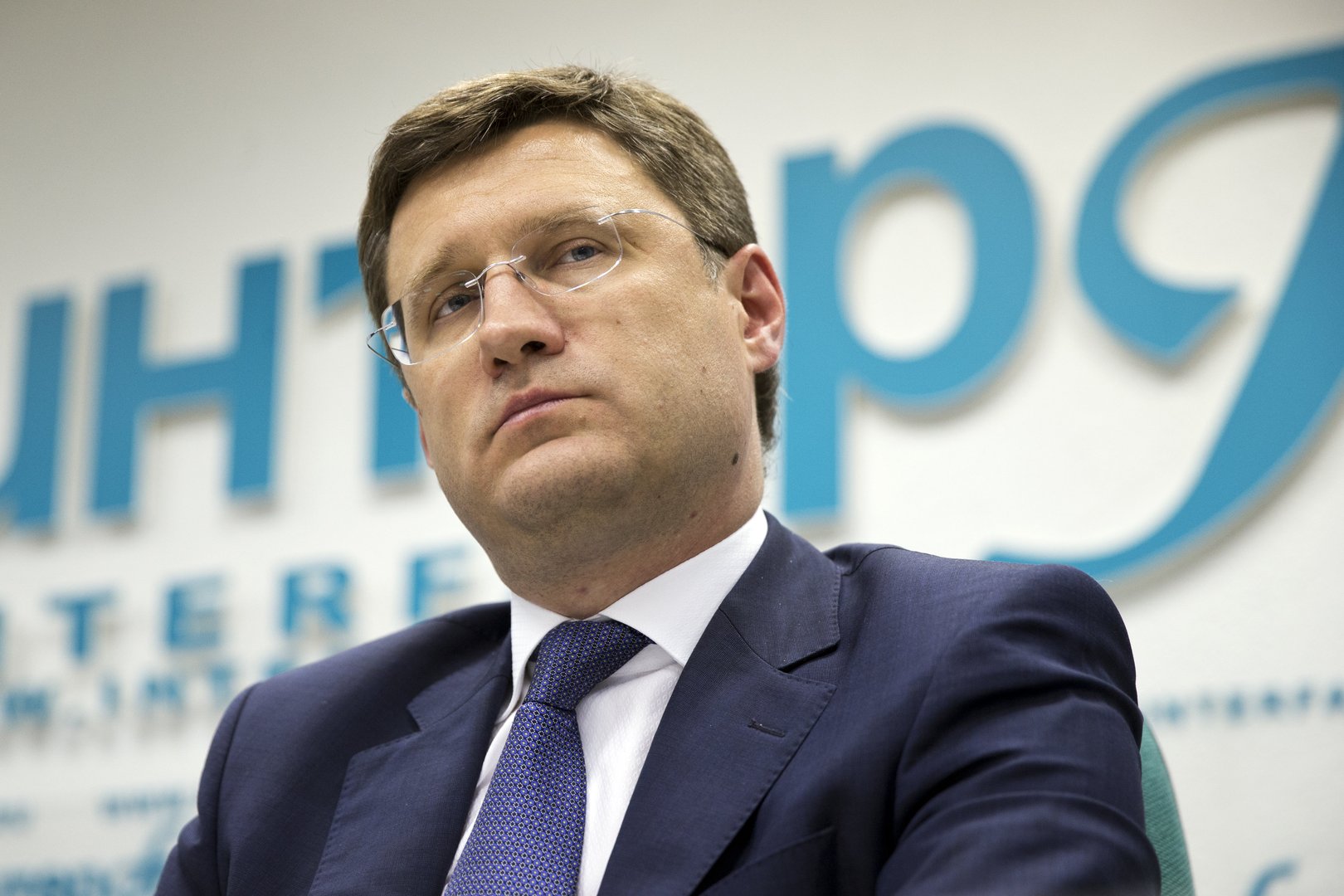
- Russian Diesel to USA: In an unexpected economic development, Russia announced its first diesel shipment to the United States. Vice Prime Minister Alexander Novak reported that a tanker with a capacity of 40,000 tons was scheduled to depart on Thursday, with further deliveries anticipated. He also mentioned the possibility of exporting diesel to other countries once Russian refinery capacities reach full production volume by year-end.
Wednesday: Arrest of Former German Soldier

The Russian Federal Security Service (FSB) reported the arrest of a German national, identified as a former Bundeswehr soldier (serving from 1996 to 2010), who allegedly deserted from the Ukrainian armed forces. The FSB claimed the individual was a mercenary sniper who fled after not receiving promised payments. A criminal investigation into mercenary activities was reportedly underway.
Supporting Data
- Casualties: 5 killed (3 in Kyiv, 2 in Kharkiv), 36 injured (25 in Kyiv, 11 in Kharkiv) in Russian attacks. 2 killed in Luhansk (Russian-claimed).
- Military Assets: Sukhoi Su-30 fighter jet crashed in Kaliningrad. Russian claims of hitting 373 Ukrainian drones.
- Prisoner Details: Stephen Hubbard, 74 years old, former teacher from Michigan, imprisoned for over 4 years.
- Diplomatic Engagements: Witkoff-Putin meeting lasted approximately 3 hours.
- Economic Data: First Russian diesel shipment to USA: 40,000 tons.
Official Responses
- US Envoy Steve Witkoff: Expressed hope for trilateral talks and "momentum" for peace. Called Putin a "philanthropist" for Hubbard’s release.
- Russian President Vladimir Putin: Thanked Donald Trump for his efforts to end the Ukraine war.
- Kremlin Advisor Yuri Ushakov: Confirmed Putin’s readiness for new talks with Ukraine and the US, focusing on security guarantees.
- Kremlin Spokesman Dmitri Peskov: Stated Hubbard’s release was for "humanitarian reasons" after US requests. Indicated trilateral US-Russia-China talks are "possible" and desired by "all three sides."
- US President Donald Trump: Announced Hubbard’s release. Advocated for Ukraine to agree to a peace deal, noting Russia’s territorial gains and continuous advance. Supported trilateral nuclear disarmament talks.
- German Chancellor Friedrich Merz: Warned of daily Russian hybrid attacks, rejected Ukraine’s "unconditional surrender" as a "surrender of all of us." Emphasized continued support for Ukraine as a defense of the post-1990 political order.
- Ukrainian President Volodymyr Zelenskyy: Thanked US for renewed early warnings against Russian attacks.
- US Secretary of State Marco Rubio: Asserted Ukraine’s existence hinges on US support. Clarified US non-involvement in Starlink throttling, calling it a private company’s decision.
- EU Commission President Ursula von der Leyen: Called reports of Starlink throttling "extremely concerning," demanded full service restoration. Advocated for a new EU Arctic strategy due to Russian militarization.
- Norwegian PM Jonas Gahr Støre & Finnish President Alexander Stubb: Described Oslo talks as "good and constructive," noted progress on peace approaches.
- Russian Vice PM Alexander Novak: Announced first diesel shipment to USA and potential for further exports.
Implications
The flurry of diplomatic activity, particularly the direct engagement between US Special Envoy Witkoff and President Putin, underscores a potential shift in the approach to resolving the Ukraine conflict. The release of Stephen Hubbard, a US citizen, serves as a tangible goodwill gesture, potentially creating a more conducive environment for future negotiations. Putin’s expressed readiness for trilateral talks with the US and Ukraine, coupled with the Kremlin’s openness to a broader US-Russia-China dialogue on strategic stability, suggests Russia might be testing the waters for a diplomatic off-ramp, especially in the context of a potential change in US leadership with Donald Trump’s stated desire for peace. However, the exact terms and genuine commitment to such talks remain highly uncertain, given the deep mistrust and divergent objectives.
The simultaneous escalation of Russian attacks on Ukrainian cities, targeting vital infrastructure and civilian areas, casts a shadow over these diplomatic overtures. It suggests that Russia continues to pursue its military objectives while engaging in talks, potentially aiming to negotiate from a position of strength. The crash of a Russian fighter jet in Kaliningrad, though not directly linked to the conflict, highlights the ongoing operational demands on Russian forces.

Europe’s response, led by Germany and NATO, signals a clear understanding of the broader threat posed by Russia. Chancellor Merz’s strong rejection of Ukraine’s surrender and his warnings about Russian hybrid warfare underscore the perception that the conflict extends beyond Ukraine’s borders, directly challenging the foundational security architecture of Europe. The Bundeswehr’s heightened sabotage threat assessment and NATO’s increased presence in the Black Sea and Arctic regions reflect a proactive stance to counter Russian destabilization efforts and protect critical infrastructure and strategic territories. The EU’s demand for full Starlink access for Ukraine highlights the critical role of modern technology in warfare and the ethical dilemmas faced by private corporations in geopolitical conflicts.
The proposed trilateral talks involving the US, Russia, and China introduce another layer of complexity. While nuclear disarmament is a perennial concern, the inclusion of "other topics like Ukraine" by Trump suggests a potential willingness to link the two, a move that could be viewed with skepticism by both Kyiv and Beijing, given China’s careful neutrality in the Ukraine war. Russia’s initial diesel shipment to the US, despite ongoing sanctions, indicates a transactional approach to international relations, where specific economic interests might override broader geopolitical tensions.
Overall, the situation remains precarious. While diplomatic channels are opening, suggesting a potential desire from various parties to de-escalate, the continued military aggression and the robust European defense posture indicate that a comprehensive and lasting peace solution is still a distant prospect. The interplay of military realities, domestic political pressures, and international power dynamics will continue to shape the trajectory of this multifaceted conflict.