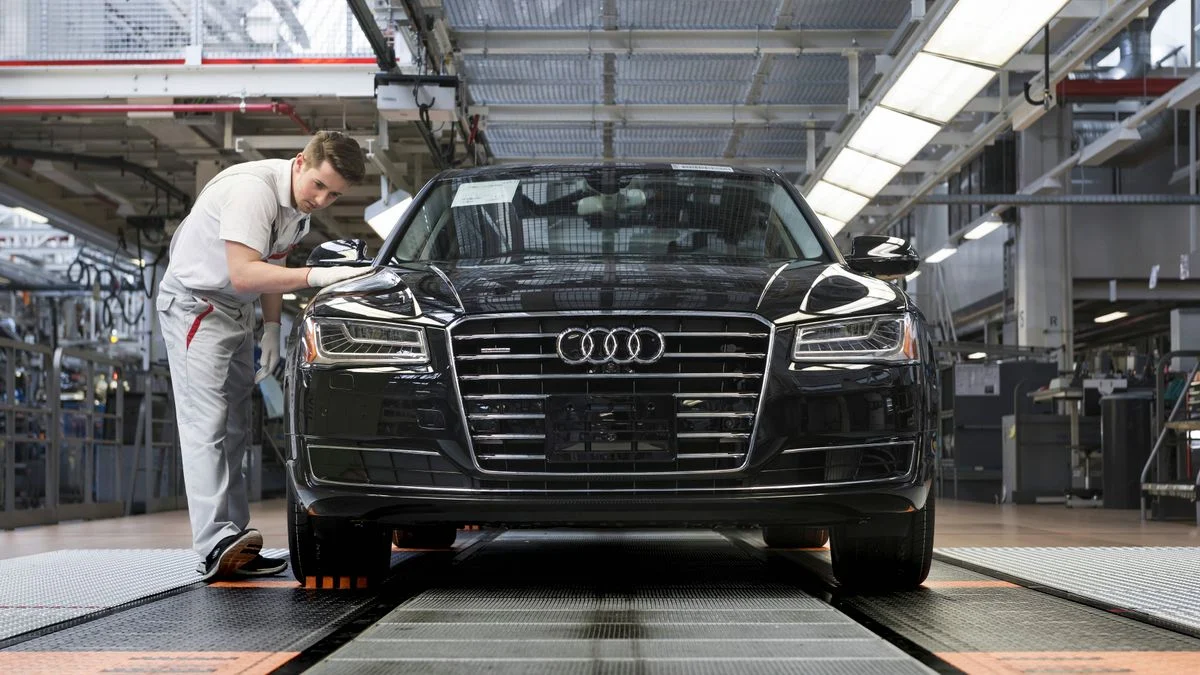
The Volkswagen Group is navigating its most precarious chapter in history. As the automotive giant implements a radical restructuring plan, the spotlight has fallen on its crown jewel: the Audi plant in Neckarsulm. With jobs at risk and management invoking emergency clauses, the struggle reflects a broader, existential crisis facing the German automotive industry.
The Gathering Storm: A Crisis of Competitiveness
For decades, the Neckarsulm facility has stood as a symbol of German industrial prowess—a high-tech nexus where precision engineering met innovative manufacturing. Today, that very facility finds itself at the center of an existential standoff. Audi CEO Gernot Döllner has formally initiated "mandatory negotiations" regarding the future of the site, citing a catastrophic decline in economic viability that has forced the company’s hand.
The situation reached a boiling point during a recent employee assembly at the plant. As management outlined a path that could lead to the closure of the historic site, the tension between the boardroom and the factory floor became palpable. At the heart of this confrontation is the "bad weather clause"—a contractual mechanism established in the 2019 "Future Pact." This clause mandates that if the company’s economic framework deteriorates significantly, management and the works council must enter immediate, binding negotiations on cost-cutting measures.
According to Döllner, that threshold has been breached. While the works council remains cautious—carefully scrutinizing whether the legal requirements for triggering the clause have actually been met—the clock is ticking. The reality is stark: the Volkswagen Group, of which Audi is a flagship subsidiary, has declared a historic restructuring program. For Neckarsulm, this means a one-year ultimatum to produce a viable cost-reduction strategy. Failure to do so will result in the permanent shuttering of the facility.
Chronology of a Slow-Motion Collapse
The current crisis did not emerge overnight; it is the culmination of years of shifting market dynamics, aggressive competition from new electric vehicle (EV) entrants, and internal structural bloat.
- 2019: The "Future Pact" is signed, introducing the "bad weather clause" as a safeguard against long-term economic instability.
- September 2026: The Volkswagen Group announces a historic, sweeping sanification plan, signaling that no plant is immune to the pressure of cost-cutting.
- October 2026: Audi officially invokes the bad weather clause for the Neckarsulm facility, triggering formal negotiations.
- Present Day: The facility is under a 12-month moratorium, during which it must prove it can bridge a significant cost gap to remain part of the Audi production network.
The Efficiency Gap: Why Neckarsulm is Under Pressure
To understand why a facility as sophisticated as Neckarsulm is in the crosshairs, one must look at the cold math of manufacturing. Neckarsulm is undeniably a state-of-the-art operation. It is a showcase for Industry 4.0, featuring artificial intelligence that manages paint-drying processes, a fleet of 200 autonomous transport vehicles, and algorithmic production scheduling that looks six days into the future. It produces the company’s premium portfolio, including the A5, A6, A8, and the high-performance e-tron GT.

However, prestige and technology do not offset structural inefficiencies. Internal data suggests that the production cost per vehicle in Neckarsulm is hovering just under €6,000. In contrast, industry-leading, highly competitive factories in Europe are achieving similar outputs for approximately €3,000.
Even when accounting for the fact that Neckarsulm produces high-end premium models—which inherently require more man-hours and craftsmanship than mass-market vehicles—the gap remains unacceptably wide. Once adjusted for vehicle class and production complexity, there is a persistent, non-negotiable deficit of roughly €2,000 per car. In the razor-thin margins of the global automotive sector, this discrepancy is the difference between a thriving hub and a liability.
Official Responses: Management vs. Labor
The divide between the views of top management and the workforce is profound. Volkswagen Group CEO Oliver Blume, speaking directly to the workers at the Neckarsulm assembly, defended the restructuring as a bitter but necessary medicine.
"We built this group for a different era—one of larger markets and higher volumes," Blume stated. "Today, our structures are too cumbersome, and our costs are unsustainable. We must streamline, or we risk the integrity of the entire group." Blume emphasized that the company is prepared to commit billions of euros to ensure that the necessary workforce reduction is handled in a "socially responsible" manner, though this offer provides little comfort to those whose livelihoods are tied to the plant’s existence.
Conversely, the labor representation has responded with indignation. Jens Stammler, head of the Audi General Works Council, condemned the threats against the site as an affront to the workforce’s history of loyalty. "Whoever questions our future is questioning a location that helped build the Audi AG," Stammler argued. He highlighted that the employees have provided the flexibility and dedication required to keep the brand competitive through previous cycles, suggesting that the fault lies not with the workers, but with failed strategic management at the corporate level.
Regional Implications: A Ticking Time Bomb
The potential closure of the Neckarsulm plant is not merely a corporate problem; it is a regional catastrophe in the making. Economists estimate that if Audi were to cease production in the area, the ripple effect would result in the loss of approximately 50,000 jobs.

This figure accounts for more than just the 15,000 direct employees currently on the payroll. The regional economy is heavily anchored by the plant, with roughly 1,000 supplier companies—ranging from logistics providers to high-precision component manufacturers—relying almost exclusively on the facility’s output. The collapse of such an ecosystem would lead to a localized depression, affecting municipal tax revenues, social services, and the broader economic stability of the Baden-Württemberg region.
Conclusion: The Crossroads of German Industry
The crisis at Neckarsulm is a microcosm of the "German Dilemma." As the automotive industry transitions toward electrification and software-defined vehicles, the traditional advantages of German manufacturing—deep institutional knowledge and high-cost, high-quality production—are being challenged by leaner, more agile competitors.
The upcoming months will be a crucible. For management, it is a test of resolve to force through painful structural changes. For the workforce, it is a fight for survival. The "bad weather clause" may have been designed to protect the company during temporary downturns, but the challenges facing Audi are structural and permanent. Whether Neckarsulm can reinvent itself to close the €2,000-per-car gap remains the multi-billion-euro question.
As the negotiations begin, the world is watching. The fate of this plant will likely serve as a bellwether for the future of the entire Volkswagen Group—and, by extension, the ability of Germany’s industrial heartland to survive the most significant transformation in the history of the automobile.