Salvador, Brazil – The world holds its breath as Brazil prepares for a pivotal presidential runoff election on October 25th, a contest that is far more than a domestic political squabble. At stake is the future of the Amazon rainforest, the planet’s irreplaceable "green lung," and a critical linchpin in global climate stability. The outcome of this election will determine whether Brazil continues on a path of renewed environmental protection or reverts to policies that have historically accelerated the destruction of this vital ecosystem.
The two candidates vying for the nation’s highest office represent diametrically opposed visions for the Amazon: the incumbent, Luiz Inácio Lula da Silva, a left-wing veteran committed to conservation, and the surprising challenger, right-wing Senator Flávio Bolsonaro, son of the controversial former President Jair Bolsonaro, whose agenda promises a significant shift towards industrial and agricultural expansion within the rainforest. This election is poised to be a defining moment for Brazil’s ecological trajectory and, by extension, for the global fight against climate change.
A Pivotal Election: Brazil’s Fate and the Amazon’s Future
The Contenders and the First Round Shock
The initial round of voting on October 4th delivered a surprising result, with Senator Flávio Bolsonaro, a figure closely associated with his father’s populist and anti-environmental policies, narrowly securing 47 percent of the vote. This unexpected lead over the experienced leftist leader, Luiz Inácio Lula da Silva, who garnered 45 percent, set the stage for a tense runoff. Neither candidate achieved the absolute majority required to win outright, forcing a second, decisive confrontation.

Flávio Bolsonaro, a senator from Rio de Janeiro, has made no secret of his intention to continue the political project initiated by his father, Jair Bolsonaro. This alignment sends shivers down the spines of environmentalists and climate scientists worldwide, who vividly recall the elder Bolsonaro’s presidency as a period of unprecedented environmental degradation. Lula da Silva, conversely, is campaigning on a platform of restoring Brazil’s environmental leadership and reversing the damage inflicted over the past four years. His bid for a fourth term is widely seen as a last stand for the Amazon.
A Legacy of Destruction: The Bolsonaro Era and the Amazon
Jair Bolsonaro’s Environmental Policies and Their Impact
Jair Bolsonaro’s presidency, which began in early 2019, marked a radical departure from Brazil’s previous environmental commitments. He consistently downplayed the severity of climate change, weakened environmental protection agencies, and actively encouraged the expansion of agriculture, mining, and logging into protected areas, including indigenous territories. His administration’s rhetoric often framed environmental regulations as obstacles to economic development, creating a permissive environment for illegal activities.
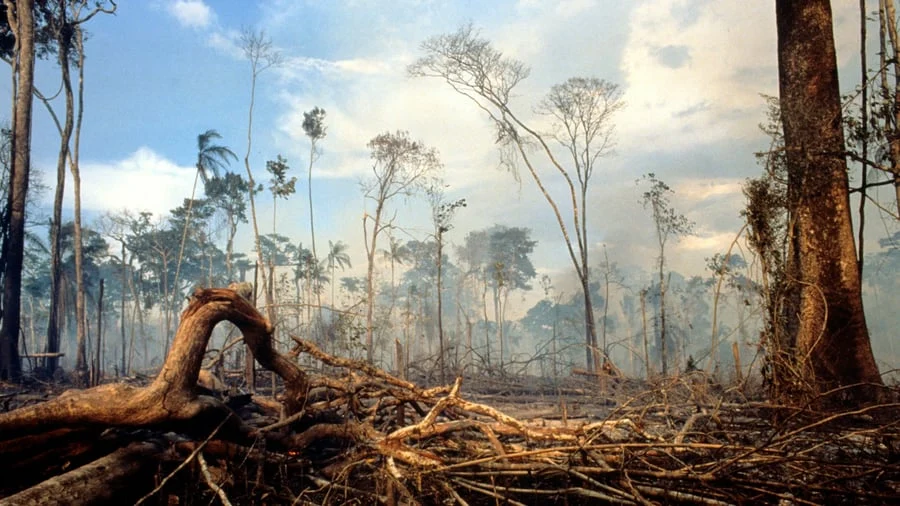
The consequences were swift and devastating. When Bolsonaro took office, approximately 7,500 square kilometers of the Amazon were being deforested annually. Within just two years, this figure surged to 13,000 square kilometers – the highest rate in many years. Over his four years in power, an area of rainforest larger than Switzerland was irrevocably lost. This period was characterized by rampant forest fires, often set intentionally for land clearing, and a dramatic increase in illegal logging, cattle ranching, and gold mining. These activities were frequently linked to organized crime, which capitalized on the weakened enforcement and judicial oversight to launder illicit profits, particularly from drug trafficking. The former president’s stance was encapsulated in his infamous declaration: "The interest in the Amazon is not for the indigenous people nor for the damn trees. It is for the mineral resources!" This statement perfectly articulated his administration’s prioritization of resource extraction over ecological preservation and indigenous rights.
Flávio Bolsonaro’s Proposed Continuation
Flávio Bolsonaro’s government program, though less detailed than his father’s, is explicitly designed to extend and deepen these extractive policies. He intends to significantly curtail the powers and responsibilities of key environmental agencies, such as Ibama (Brazilian Institute of Environment and Renewable Natural Resources) and ICMBio (Chico Mendes Institute for Biodiversity Conservation), as well as Funai (National Indigenous Foundation), the agency responsible for indigenous affairs.

Among his most controversial proposals are:
- "Deemed Approval" for Environmental Permits: Environmental permits would be considered automatically approved if agencies fail to meet deadlines, effectively bypassing thorough review processes.
- Moratorium on Indigenous Protected Areas: No new indigenous protected areas would be demarcated, halting a critical mechanism for conservation and indigenous rights.
- Long-Term Regulatory Stability for Investors: He plans to fix environmental regulations for up to 20 years to provide "planning certainty" for investors. Should the state subsequently alter these conditions, it would be liable for compensation, a move designed to incentivize large-scale industrial projects regardless of their environmental impact.
- Intensified Exploitation: Like his father, Flávio Bolsonaro aims to further open the Amazon region for agriculture, mining, and infrastructure development, including roads and dams.
- Legalization of Illegal Land Occupations: His program implies a willingness to legalize illegal land seizures that have often led to deforestation and conflict.
- Facilitating Economic Activities in Indigenous Territories: This policy would allow for resource extraction and commercial farming within ancestral lands, directly threatening the cultural integrity and physical survival of indigenous communities who are often the most effective guardians of the forest.
These proposals collectively signal a return to, and potentially an intensification of, the policies that led to widespread environmental destruction under Jair Bolsonaro, exacerbating the threats to the Amazon’s biodiversity and its role in global climate regulation.
A Turn Towards Conservation: Lula’s Recent Revival of Amazon Protection
Reversing the Trend: Lula’s Current Term
Upon his return to the presidency, Luiz Inácio Lula da Silva immediately prioritized environmental protection, signaling a dramatic shift from the previous administration. His government moved quickly to revitalize Brazil’s environmental agencies, reinstate enforcement mechanisms, and reactivate the Amazon Fund, which had been frozen under Bolsonaro due to a lack of commitment to environmental policies.
The results of Lula’s renewed focus on conservation have been tangible and impressive. Deforestation rates in the Amazon have significantly declined, reaching 5,731 square kilometers in the most recent assessment – the lowest figure in more than a decade. This reduction is directly attributed to the re-implementation of Brazil’s robust action plan for Amazon protection and a tightening of environmental controls, demonstrating that political will and effective governance are paramount in safeguarding this critical ecosystem.

Broader Regional and Global Progress
Brazil’s renewed commitment to environmental protection under Lula has had a ripple effect across Latin America. Recent reports from the international Forest Declaration Assessment initiative highlight a remarkable 33 percent reduction in deforestation across Latin America over the past five years. This progress is largely a direct consequence of Brazil’s revitalized Amazon protection plan and stricter environmental enforcement, alongside significant efforts by other nations, such as Colombia under President Gustavo Petro, which has also demonstrably reduced its deforestation rates.
Globally, these regional successes have contributed to a positive trend. Recent data indicates that global deforestation rates saw a 15 percent reduction compared to the previous year, a trend significantly influenced by Latin America’s efforts. However, despite these encouraging signs, the world remains far from achieving the ambitious targets set forth in the 2021 Glasgow Leaders’ Declaration, where more than 140 nations pledged to halt and reverse global deforestation by 2030. The fragile gains underscore the urgent need for sustained, concerted action, particularly in ecologically vital regions like the Amazon.
The Climate Imperative: Amazon’s Role in Global Emissions
Tangible Climate Gains Under Lula
The Amazon’s immense capacity to absorb carbon dioxide makes its preservation indispensable for global climate stability. The recent reduction in deforestation under President Lula has translated into significant, measurable climate benefits. According to calculations by the Brazilian research network SEEG (System of Estimates of Greenhouse Gas Emissions), Brazil’s annual greenhouse gas emissions from deforestation and other land-use changes decreased by a substantial 435 million tons of CO2 equivalents from 2023 to 2024.
Further emphasizing the scale of this achievement, physicist Shigueo Watanabe Jr. from the climate protection organization ClimaInfo has estimated that the reduction in Amazon deforestation under President Lula has prevented approximately 1.2 billion tons of CO2 equivalents from entering the atmosphere since 2023. To put this into perspective, this averted emission volume is roughly equivalent to France’s total greenhouse gas emissions over three years. These figures highlight the immediate and profound positive impact that effective forest protection policies can have on global climate targets.

The Amazon’s "Extreme Vulnerability"
However, these hard-won climate gains are acutely vulnerable to political shifts. Should Brazil revert to the high deforestation rates witnessed under Jair Bolsonaro, a substantial portion of this crucial climate protection achievement could be swiftly undone. The implications extend far beyond national borders. The Amazon, often described as a complex, self-regulating system, is teetering on the brink of ecological collapse. The authors of the Forest Declaration Assessment 2026 report warn that Brazil’s next government will preside over the Amazon in a phase of "extreme vulnerability."
Scientists increasingly caution about the potential for "tipping points," beyond which large parts of the rainforest could transition into a drier, savanna-like ecosystem. Such an irreversible transformation would not only extinguish unparalleled biodiversity but also release colossal amounts of stored carbon, further accelerating global warming and severely disrupting regional and global weather patterns. The stability of global climate systems hinges significantly on the political choices made in Brazil regarding the Amazon.
Geopolitical Crossroads: Raw Materials and International Pressure
Shifting Global Priorities: Demand for Critical Minerals
The international context in which Brazil’s election is taking place has significantly evolved. In the wake of heightened geopolitical tensions, particularly between the United States and China, the securing of supply chains for critical minerals and rare earths has become a top priority for Western industrial nations. These resources are essential for advanced technologies, renewable energy infrastructure, and national security. The Amazon basin, known for its vast natural wealth, harbors significant deposits of not only gold, oil, and gas but also vital raw materials for fertilizers and other critical minerals.
This intensified global demand for strategic resources presents a dangerous new dynamic for the Amazon. While Jair Bolsonaro faced considerable international backlash for his environmental policies, driven by concerns over climate change and biodiversity loss, a Flávio Bolsonaro presidency might find a different reception from some international actors. The imperative to secure resource supplies could potentially override or at least temper traditional environmental concerns from nations eager to diversify their sources of critical raw materials.

The Peril of Exploitation
Environmental protection advocates express grave concerns that Flávio Bolsonaro’s proposed relaxation of environmental regulations would directly facilitate access to these valuable raw materials. Guilherme Syrkis, Executive Director of the climate protection organization Centro Brasil no Clima, warns: "This policy primarily benefits those who have the capital to develop large areas." Mining, raw material, and agricultural corporations, both domestic and international, could be emboldened to push further into previously protected areas, including indigenous lands, to exploit these resources.
The historical international resistance to Jair Bolsonaro’s environmental agenda, which saw countries like Norway and Germany freeze contributions to the Amazon Fund and the European Union express concerns over trade deals, might find itself navigating a more complex landscape. In a global race for critical resources, some industrial nations might be less inclined to exert strong environmental pressure if it means jeopardizing potential access to vital raw materials. This shift in global priorities could mean that the pressure to exploit the Amazon’s natural resources under a Flávio Bolsonaro government could be even greater than under his father, with potentially fewer international checks and balances. The enduring echo of Jair Bolsonaro’s statement, "The interest in the Amazon is not for the indigenous people nor for the damn trees. It is for the mineral resources!", serves as a stark reminder of the underlying motivations driving this extractive vision.
Sustainable Pathways vs. Destructive Myths
Debunking the "Economy vs. Environment" Fallacy
A prevalent and dangerous myth often propagated by proponents of unchecked resource extraction is that environmental protection inevitably stifles economic growth. However, experts and scientific studies increasingly debunk this notion. Erin Matson of Climate Focus emphatically states, "It’s a dangerous myth that forest protection harms economic growth." In fact, a growing body of evidence suggests the opposite: sustainable development in the Amazon can unlock significant economic potential without sacrificing the forest.
A compelling study by the World Resources Institute (WRI) projects that a sustainable development model, one that eschews further deforestation, could boost the annual economic output in the Brazilian Amazon by a remarkable $8.2 billion by 2050. Furthermore, such an approach could generate an estimated 300,000 new jobs. This sustainable pathway encompasses a bioeconomy focused on non-timber forest products, sustainable agriculture practices, ecotourism, and the valuation of ecosystem services provided by a healthy forest, such as carbon sequestration and water regulation. Indigenous communities, with their invaluable traditional knowledge, are often at the forefront of these sustainable initiatives, demonstrating that stewardship and prosperity can go hand-in-hand.

The Political Will to Choose
The choice before Brazil on October 25th is stark: to embrace a future where economic prosperity is intertwined with ecological preservation, or to succumb to short-term gains from destructive exploitation. While the economic and environmental benefits of sustainable development in the Amazon are well-documented, the crucial question remains whether Flávio Bolsonaro and his allies possess the political will to deviate from the extractive path championed by his father. Given the elder Bolsonaro’s dismissive attitude towards environmental concerns and his son’s stated commitment to continuing that legacy, skepticism about a shift towards sustainability under a Bolsonaro Jr. administration is well-founded. The fate of one of the world’s most vital ecosystems, and with it, a significant portion of the global climate future, rests heavily on the ballot.
Conclusion
The upcoming Brazilian presidential runoff is more than a national election; it is a global flashpoint for climate action and biodiversity conservation. The choice between Flávio Bolsonaro’s proposed acceleration of resource extraction and Lula da Silva’s commitment to Amazon protection presents a clear dichotomy with far-reaching consequences. The world watches, understanding that the outcome on October 25th will not only determine Brazil’s leadership but also profoundly influence the delicate balance of our planet’s climate and ecological health for generations to come.