As the world turns its gaze toward the 2026 FIFA World Cup in the United States, Mexico, and Canada, the German Football Association (DFB) finds itself haunted by the ghosts of Qatar 2022. Former DFB director Oliver Bierhoff, speaking out ahead of the tournament, has issued a stark warning: keep the morality debates away from the players.
With the kickoff exactly one month away, the discourse surrounding the role of national teams in political landscapes has reignited. For the German national squad, the tournament in North America presents a unique set of challenges—not least of which is the current political climate in the United States under President Donald Trump.
The Bierhoff Doctrine: Protecting the Players
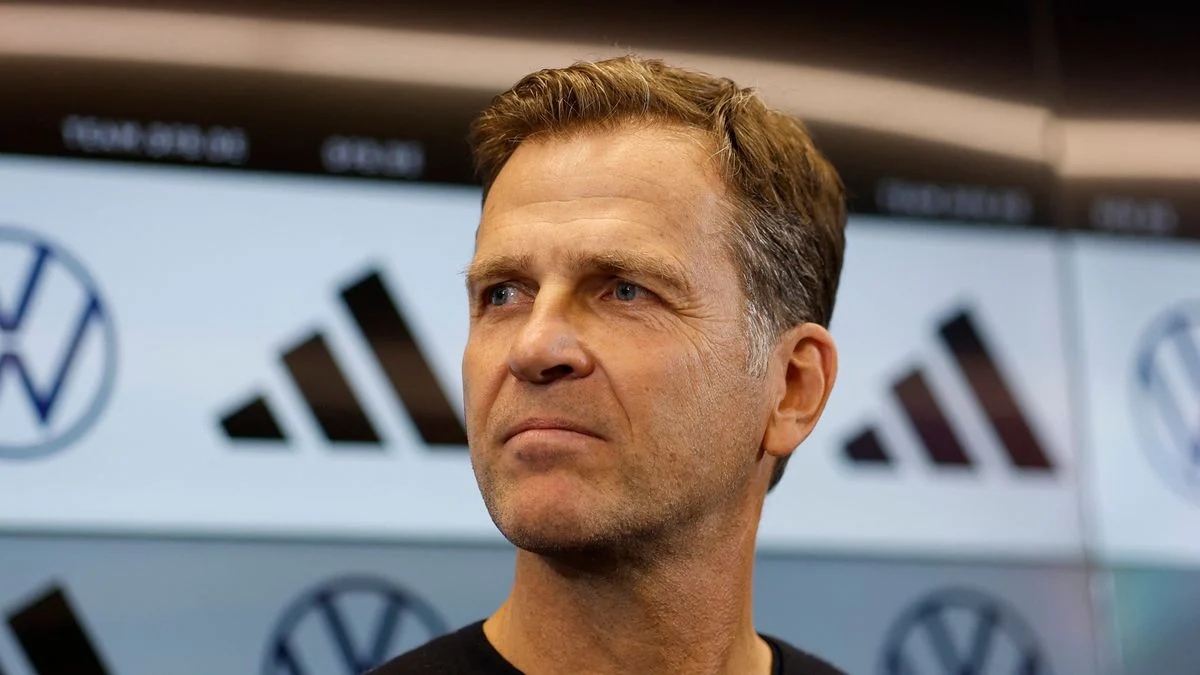
In a candid interview with Stern, Oliver Bierhoff, who served as the face of the German national team’s management during the tumultuous 2022 World Cup, argued for a clear demarcation between sport and political activism. The 58-year-old, who now navigates the intersection of European sports and American football as an advisor to the NFL’s New England Patriots, believes the DFB must adopt a more disciplined approach to external pressures.
"Let the team be!" Bierhoff declared. "Carry on your moral debates if you must, but do not do it on the backs of the players."
Bierhoff’s stance is rooted in his experience during the 2022 tournament, where the German team was caught in a crossfire between FIFA’s regulations, human rights advocacy, and their own desire to make a statement. He suggests that the DFB should take a definitive position as an institution, but shield the athletes from the burden of serving as the moral compass of the nation. For the players, he argues, the focus must remain on the competition for which they have dedicated their lives.

A Chronology of Conflict: From Doha to the United States
To understand the current tension, one must look back at the strategic failures of 2022. The road to the Qatar World Cup was paved with high-minded intentions that crumbled under the weight of administrative indecision.
- Late 2022 (Pre-Tournament): The DFB, responding to public outcry over human rights in Qatar, announced the intention for team captain Manuel Neuer to wear the "One Love" armband—a symbolic gesture of inclusivity.
- November 2022 (The FIFA Crisis): Just days before the opening matches, FIFA threatened severe sporting sanctions for any player wearing the armbands. The DFB, fearing immediate disciplinary action, backed down, leading to a public relations disaster.
- The "Hand-Over-Mouth" Protest: In response to the perceived censorship by FIFA, the German squad covered their mouths during the official team photo before their match against Japan. It was a visual protest that dominated the headlines, yet the team subsequently lost the match 1-2.
- The Aftermath: The early exit in the group stage was widely attributed, by critics and supporters alike, to the distraction caused by the constant media firestorms surrounding the team’s political stances.
Now, as the 2026 tournament approaches, the context has shifted. The focus is no longer on the host country’s labor laws, but on the domestic policies and rhetoric of the U.S. administration. The question of whether a national team should boycott or protest against a host nation’s government is once again at the forefront of the German media discourse.
Supporting Data: The Economic and Geopolitical Reality
Bierhoff’s argument against boycotts is underpinned by the pragmatism of modern international relations. He points out that Germany and the United States share deep, multifaceted ties—economic, political, and cultural.
"Why should the national team, of all institutions, adopt a different stance than the German government or the business sector?" Bierhoff asked. He argues that individual political comments from football players are unlikely to shift the needle of American domestic policy. Instead, he advocates for the "soft power" of the sport itself.
He posits that when athletes of diverse backgrounds, races, and religions compete on the same pitch with mutual respect, they create images that are inherently more transformative than any press conference or political gesture. By fostering an environment of excellence and fair play, the team serves as an ambassador for the values of global cooperation, regardless of the political noise surrounding the host country.

Official Responses and the "Hidden" Leadership
A significant portion of Bierhoff’s critique is directed inward, specifically at the DFB leadership. He expresses disappointment in the management of the 2022 crisis, noting that he felt the DFB hierarchy, including current President Bernd Neuendorf, failed to provide a buffer for the players.
"I had the feeling that the leadership preferred to hide behind the players and me," Bierhoff said, reflecting on his time as a non-voting member of the DFB presidium. He contends that political statements, if necessary, should be the sole responsibility of the governing body. "To demand that players take a stand on every international issue is excessive and inappropriate."
The current DFB administration appears to have internalized some of these lessons. In recent statements, DFB officials have emphasized that they aim to avoid repeating the "mistakes of Qatar." The stated goal is to keep the dressing room clear of external political debates, focusing entirely on the sporting objective. However, this is easier said than done. With human rights organizations and political commentators keeping a close watch on the U.S. political trajectory, the pressure on the DFB to "do something" is mounting daily.
Implications: The Future of Political Athletics
The debate raises a fundamental question for modern sport: Can the athlete ever truly be "just an athlete" again?
In an era of hyper-connectivity and social media, silence is often interpreted as complicity. Yet, as Bierhoff highlights, the burden of activism, when placed on the shoulders of professional athletes, often comes at the cost of their primary objective: sporting performance.

The Risks of Performative Activism
Bierhoff’s assertion that much of the debate regarding the influence of sport is "hypocritical" strikes a chord with many fans who feel the game has become over-politicized. The risk, according to this school of thought, is that performative gestures—like the "One Love" band—become empty symbols if they are not backed by institutional power, or if they are abandoned at the first sign of pressure.
The Path Forward for the 2026 DFB Squad
For the German team, the 2026 tournament represents a critical juncture. The path forward, according to voices like Bierhoff’s, is to reclaim the narrative of the sport as a unifying force rather than a political tool.
- Centralized Communication: If a political position is required, it must come from the DFB President and the governing board, not from the captain or the coach.
- Focus on Inclusivity through Action: The team can embody the values of diversity through their own composition and conduct on the field, rather than through symbolic gestures that are prone to manipulation or backlash.
- Resilience to External Pressure: The team must be mentally prepared to navigate a media landscape that will inevitably attempt to bait them into controversy.
As the squad prepares for the journey across the Atlantic, the lesson from 2022 is clear: the strength of a national team lies in its cohesion. If the DFB can provide the political cover and the organizational stability required, the players may finally be able to perform in a way that respects both their sporting ambitions and the gravity of the global stage.
The world will be watching in June 2026. Whether they are watching for the football or for the controversy remains to be seen, but for the German team, the mission is clear: stay on the pitch, stay focused, and keep the game the priority.