Introduction: A View from the Water
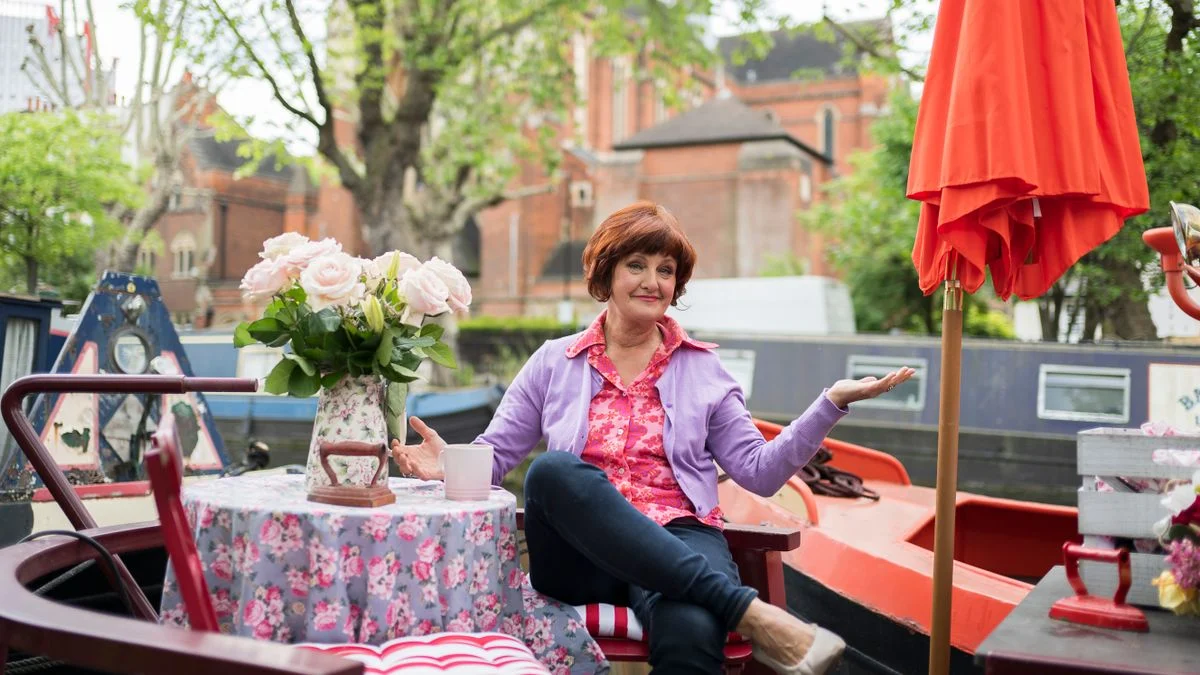
For years, Annette Dittert has served as one of the most recognizable and insightful German voices reporting from the United Kingdom. As the former head of the ARD studio in London, her career has been defined by the granular observation of British politics, culture, and the shifting identity of a nation in flux. However, her most intimate reporting does not come from the hushed corridors of Westminster or the frantic newsrooms of Fleet Street, but rather from the deck of her houseboat, anchored in the intricate canal network of London.
In a recent, deeply personal reflection, Dittert offers a unique vantage point on the British psyche. By stepping away from the daily grind of hard-news cycles, she invites her audience into the quiet, rhythmic world of life on the water—a perspective that provides a startlingly clear view of how the United Kingdom has transformed in the post-Brexit era.
Main Facts: The Intersection of Personal and Political
The core of Dittert’s narrative is the duality of the British experience. She captures a country that is simultaneously grappling with a profound sense of isolation and a stubborn, enduring connection to its own traditions.
- The Setting: Her houseboat acts as a microcosm of the UK itself. It is a vessel tethered to the past but floating on the shifting tides of the present.
- The Narrative: Dittert moves beyond the statistics of GDP growth or parliamentary maneuvering. Instead, she focuses on the human element—the people she encounters on the towpaths, the neighbors who manage the locks, and the retirees who find refuge in the slow pace of canal life.
- The Thesis: The British, according to Dittert, are a people who have internalized the trauma of the European divorce. She argues that the "Great Britain" of the past is being recalibrated, not necessarily through policy, but through a slow, collective psychological shift in how the average citizen interacts with their immediate environment.
Chronology: A Nation in Transition
To understand the current state of the United Kingdom, Dittert traces the arc of recent history through several critical phases:
- The Pre-Referendum Optimism: A time when the UK’s role in Europe was contested but generally accepted as a baseline reality.
- The 2016 Schism: The shock of the Brexit vote, which Dittert witnessed from the epicenter. She documents the immediate fracture in communities and the confusion that defined the following years.
- The Pandemic Interlude: A period where the UK turned inward, both by necessity and by choice, accelerating the trend toward localism.
- The Modern "Drift": The present day, where the UK is neither fully detached from its continental neighbors nor fully settled into its new "Global Britain" identity. It is a period of stagnation, but also one of quiet, domestic resilience.
Supporting Data: The Socio-Economic Landscape
While Dittert’s approach is narrative-driven, it is supported by the stark realities of the UK’s economic trajectory.
- Cost of Living Crisis: The inflation rates that have plagued the UK since 2022 are not just numbers for Dittert’s neighbors. She documents how the price of fuel, heating, and food has forced a restructuring of the "British Dream."
- Canal Economy: The rise of canal living—once a bohemian lifestyle choice—has increasingly become a practical response to the housing crisis in London. The data suggests that the demographic of the canal dwellers is shifting from leisure-seekers to those seeking a more affordable, if precarious, existence.
- Regional Disparities: Dittert frequently highlights the disconnect between the metropolitan center and the post-industrial north. Her travels allow her to bridge the gap between the affluent bubbles of the capital and the struggling communities that feel abandoned by the Westminster consensus.
Official Responses and Public Sentiment
The political establishment in London has remained largely focused on macroeconomic stability—trying to plug the holes in the fiscal boat. However, Dittert notes a distinct disconnect between the rhetoric of the political class and the sentiment of the public.
- The Government’s Stance: The official narrative remains one of "sovereign opportunity." Ministers point to trade deals and deregulation as the path forward.
- Public Sentiment: On the towpaths of London, the sentiment is vastly different. There is a palpable sense of exhaustion. Dittert records conversations with voters who have moved past the initial anger of the Brexit debates and into a state of "managed indifference." They are no longer waiting for the government to save them; they are adjusting their lives to survive the current climate.
Implications: What Does This Mean for Europe?
The implications of Dittert’s observations extend far beyond the British Isles. For the European Union, the UK has become a case study in the consequences of departure.
1. The Erosion of Soft Power
Dittert posits that the UK’s cultural and political influence in Europe is waning. The loss of the "bridge" between the English-speaking world and the continent has left a void that is not easily filled by trade agreements or defense pacts.
2. The Internal Fragmentation of the UK
Perhaps the most alarming trend identified is the potential for the United Kingdom itself to splinter. The disparity in how Scotland, Northern Ireland, and England view their relationship with the continent is not just a political issue; it is a fundamental challenge to the unity of the British state.
3. The Lessons for the Future
For Germany and other European nations, Dittert’s account serves as a warning. It demonstrates that the social contract is fragile. When a country turns inward, the immediate result is not a resurgence of national pride, but a struggle to maintain the basic functions of daily life—a struggle that is best observed not in the halls of power, but on the margins of society.
Conclusion: The Quiet Observer
Annette Dittert’s work remains essential because it resists the urge to provide easy answers. She does not tell us whether Britain will succeed or fail; instead, she shows us how the country feels.
As she navigates the canals, the image of the houseboat becomes a powerful metaphor. It is a vessel that requires constant maintenance, careful steering, and an intimate knowledge of the water—just like a nation. As the UK continues to drift in uncertain waters, Dittert’s voice provides the steady, observant commentary that is necessary to understand the human cost of grand political experiments.
For those looking to understand the Britain of today, the view from Dittert’s deck is not just a travelogue; it is a masterclass in empathetic journalism. It reminds us that behind every headline, there is a person adjusting their mooring, waiting for the storm to pass, and hoping for a calmer horizon. The UK may have left the European Union, but it remains a country in search of a harbor, and Dittert is there to record the journey.
Analysis of the Current British Mood
To further understand the context of Dittert’s reporting, one must look at the psychological state of the British electorate. Following the tumultuous years of 2016–2022, there is a clear shift toward introspection.
- The "Quiet Period": Unlike the vocal polarization of the early Brexit years, the current mood is characterized by a quiet, somewhat weary pragmatism. The debates that once tore families apart have been replaced by a focus on individual survival and community support.
- The Role of the Media: Dittert notes that the British media landscape remains as polarized as ever, yet the public’s consumption of it has changed. There is a growing skepticism toward the "London Bubble" on both sides of the political spectrum.
- Cultural Identity: The question of "What does it mean to be British?" is being redefined. Is it a global, outward-looking entity, or a small island nation returning to its historical roots? Dittert suggests that the answer is likely a messy combination of both, a hybrid identity that is still under construction.
Ultimately, by focusing on the mundane—the locks, the boat repairs, the local markets—Dittert elevates the conversation. She proves that to truly understand a nation, one must stop looking at the top-down policies and start looking at the ground-level reality. As the United Kingdom continues to navigate its post-Brexit path, voices like hers will be crucial in decoding the complex, often contradictory, story of a nation in transition.