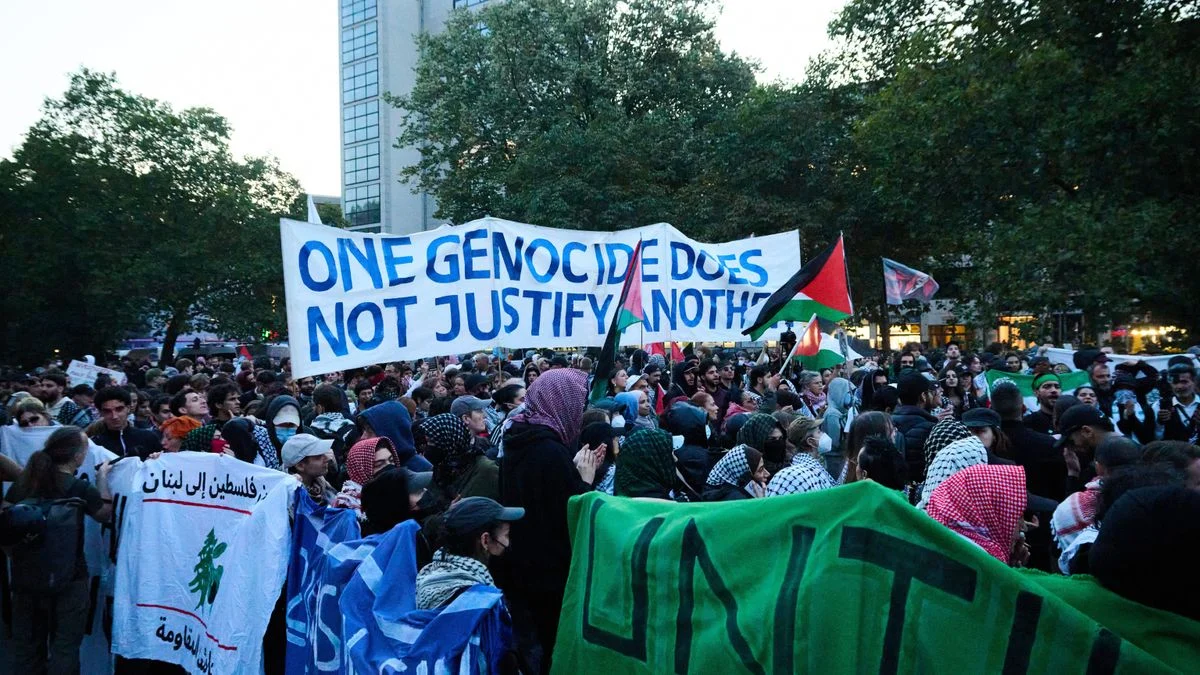
On the first anniversary of the October 7 Hamas-led massacre, a pro-Palestine demonstration in Berlin descended into chaos. The event, which saw the participation of prominent activist Greta Thunberg, was abruptly terminated by police as tensions boiled over into physical violence, the display of banned symbols, and the chanting of slogans deemed terror-glorifying by authorities.
The Main Facts: A Day of Escalation
The demonstration, organized in the Neukölln and Kreuzberg districts of Berlin, was intended as a protest against Israel’s military campaign in Gaza. However, the timing—falling precisely on the one-year anniversary of the Hamas terror attack on Israel—set the stage for a highly volatile atmosphere.
Throughout the march, participants engaged in behavior that prompted immediate and repeated intervention from the Berlin Police. The event was eventually declared dissolved by authorities, citing "repeated and numerous violations of the conditions" and "significant threats to public safety."
The protest was characterized by a disturbing trend of rhetoric. Chants such as "Viva, viva Palestina" and calls for "Intifada Revolution" echoed through the streets. The latter, a reference to the violent uprisings of the late 1980s and early 2000s that were marked by suicide bombings and widespread loss of civilian life, was interpreted by observers and law enforcement as a direct incitement to violence.
Furthermore, reports from the scene confirmed that individuals displayed symbols associated with Hamas, a terrorist organization banned in Germany. The police confirmed over 30 arrests, with charges ranging from the use of prohibited symbols to physical assaults on officers.
A Chronological Breakdown of Events
The Buildup
In the days leading up to the protest, organizers used social media to mobilize participants. The promotional material for the march was itself controversial; it featured an illustration of a bulldozer breaking through a wire fence—a direct reference to the method used by Hamas militants to breach the border between Gaza and Israel on October 7, 2023. The imagery was accompanied by the slogan, "Until total liberation."
The Commencement
The march began with a heightened police presence, anticipating the potential for conflict. At the starting point, a small counter-protest emerged, with approximately a dozen individuals holding Israeli flags and signs reading "Shame on you," attempting to highlight the somber nature of the anniversary. The march was initially intended to head toward Hermannplatz in Neukölln, but the route became a focal point of agitation as the crowd moved into Kreuzberg.

The Turning Point
As the demonstration moved through the streets of Berlin, the atmosphere grew increasingly aggressive. Observers noted that the slogans shifted from anti-war sentiment to the explicit glorification of militant resistance. The phrase "Glory to the resistance" was chanted repeatedly, a direct reference to the Hamas attacks.
The Police Intervention
By the later hours of the evening, the situation had become untenable for law enforcement. Polizeisprecher (Police Spokesperson) Nath stated that demonstrators had begun physically confronting officers, engaging in shoving, kicking, and various skirmishes. Citing the explicit violation of public safety regulations and the presence of criminal behavior, the police officially terminated the demonstration and began clearing the streets.
The Context: A Dark Anniversary
The events in Berlin must be viewed through the lens of the horrific tragedy that occurred one year prior. On October 7, 2023, Hamas militants initiated an unprecedented, coordinated attack on southern Israel. The scale of the violence was catastrophic: approximately 1,200 people were killed—mostly civilians—and 251 individuals were abducted and taken into the Gaza Strip as hostages.
This event triggered a massive, ongoing military offensive by Israel in the Gaza Strip. The subsequent year of conflict has seen tens of thousands of deaths and a humanitarian crisis of historic proportions. In Berlin, the protesters sought to focus the public discourse on the suffering in Gaza; however, the presence of slogans calling for "Intifada" and the glorification of "the resistance" served to polarize the public and provoke intense criticism from government officials and Jewish organizations.
Official Responses and Legal Implications
The decision to end the protest was not taken lightly, as the right to demonstrate is a fundamental pillar of the German constitution. However, the German authorities have maintained a strict line regarding the glorification of terrorism.
Legal Thresholds
In Germany, the use of symbols of proscribed organizations (such as Hamas) is a criminal offense under Section 86a of the German Criminal Code. The chanting of slogans that incite violence or approve of criminal acts also crosses the legal threshold for "incitement to hatred" (Volksverhetzung).
Police spokesperson Nath emphasized that the decision to disperse the crowd was necessitated by the escalation of physical violence against officers. The police reported that the "repeated and numerous violations of the conditions" made it impossible to allow the march to continue under the guise of peaceful assembly.

Political Fallout
The presence of figures such as Greta Thunberg at the protest has drawn significant scrutiny. While Thunberg has positioned her activism within the framework of human rights, her participation in a march where Hamas-aligned rhetoric was being broadcast in real-time has sparked a fierce debate about the intersection of climate activism and the Israel-Palestine conflict. Critics argue that by participating in such events, high-profile figures provide a veneer of legitimacy to movements that include elements of radicalization and anti-semitism.
Broader Implications: The State of Public Discourse
The events in Berlin are a microcosm of the intense societal divisions currently gripping Europe. The tension between the right to free expression and the responsibility to prevent the incitement of hatred has become a central challenge for German domestic policy.
The Radicalization of Protest
Sociologists studying the German protest scene have noted a shift in the nature of pro-Palestine demonstrations. Since October 7, these protests have increasingly moved away from traditional diplomatic critiques of Israeli policy toward more radicalized, identitarian, and, in some cases, openly pro-militant rhetoric. This shift has alienated many who would otherwise support the cause of Palestinian self-determination, leading to a breakdown in constructive dialogue.
The Role of Law Enforcement
The Berlin Police are now under pressure to balance the protection of civil liberties with the need to curb the rise of hate speech. The arrest of over 30 individuals marks a significant enforcement action, but it also raises questions about how the city will manage future demonstrations. As the conflict in the Middle East continues, the prospect of further, potentially violent, confrontations on German soil remains high.
A Fractured Society
The imagery of the bulldozer, the chants for "Intifada," and the confrontation on the streets of Berlin underscore a painful reality: the trauma of the Middle East is being imported into the daily life of European cities. The demonstration, which was intended to voice a political opinion, ultimately became a display of the deep-seated anger and ideological rifts that continue to define the current era of geopolitical instability.
Conclusion
The dissolution of the pro-Palestine demonstration in Berlin on the anniversary of the October 7 massacre serves as a grim indicator of the current state of public discourse. While the participants claimed to be protesting for peace and human rights, the reality on the ground—defined by slogans calling for violence, the glorification of terror, and physical assaults on law enforcement—revealed a far more chaotic and extremist reality.
As Germany moves forward, the challenge for lawmakers, police, and civil society will be to navigate these turbulent waters. The fundamental question remains: how can a democratic society protect the right to dissent without allowing that right to be weaponized by those who incite violence and celebrate the loss of innocent life? The events in Berlin provide no easy answers, but they do provide a stark warning that the polarization surrounding the Middle East is reaching a breaking point in the heart of Europe.