Even 36 years after German reunification, the corridors of power remain firmly in the hands of those from the West. As recent data highlights a stagnant landscape for East German representation in leadership, experts warn that this structural imbalance is fueling profound social and political alienation.
The State of the Nation’s Elite
Thirty-six years after the fall of the Berlin Wall, the promise of a unified Germany remains, in many respects, an unfinished project. While the physical infrastructure of the former German Democratic Republic (GDR) has been modernized through trillions of euros in investment, the social and institutional fabric of the nation tells a different story. According to a new report from the Federal Government’s Commissioner for East Germany, Elisabeth Kaiser (SPD), the higher one climbs in the hierarchy of German influence, the fewer East Germans one finds.
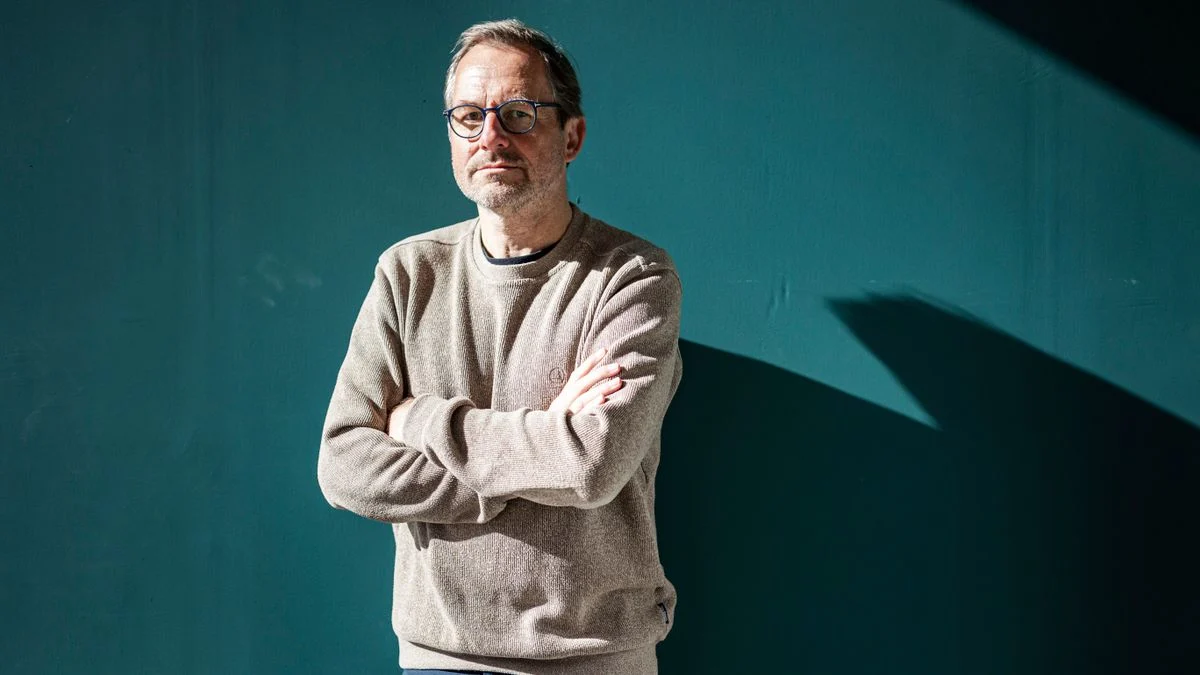
Sociologist and emeritus professor at the Technical University of Darmstadt, Michael Hartmann, describes the current situation as a structural bottleneck. In an interview with tagesschau24, Hartmann defines the national "elite" as those individuals—roughly 3,000 to 4,000 people—whose decisions fundamentally shape the trajectory of German society. The data confirms a sobering reality: East Germans are starkly underrepresented in these circles, holding only about 12% of total elite positions. When the political sector is excluded, that number drops to under 10%.
A Chronology of Exclusion: The "West German Lens"
To understand why the divide persists, one must look back to the immediate aftermath of 1990. Following the collapse of the GDR, the rapid transition to a market economy resulted in a wholesale replacement of East German institutional leadership.
"After the fall of the Wall, all elite positions were newly filled by West Germans," Hartmann explains. "These individuals brought their own staff and, crucially, a specific understanding of what constitutes a ‘suitable’ leader."
This period established a "West German lens"—a pattern of recruitment and promotion that favored those socialized in the West. Over the subsequent three decades, this culture became self-perpetuating. Hartmann notes that in the German corporate sector, which has remained largely stagnant in its recruitment patterns for over a century, more than 80% of top positions are occupied by individuals from the top 4% of the socioeconomic strata. This narrow demographic filter, combined with a Western-centric cultural bias, has effectively locked East Germans out of top-tier roles in law, finance, and major industry.
Supporting Data: The Statistics of Absence
The numbers provided by the Commissioner’s report and corroborated by Hartmann’s research are illustrative of a deep-seated disparity:
- Corporate Leadership: Among the more than 250 board members of DAX-listed companies, only one individual was raised in East Germany.
- Top 100 Companies: Among the CEOs and Supervisory Board Chairs of Germany’s 100 largest companies, there is virtually zero representation from the former East.
- The Judiciary: Representation remains minimal. Even in the highest courts, such as the Federal Court of Justice, East Germans are outliers.
- Regional Politics: Even in federal states like Mecklenburg-Vorpommern, which is located entirely within the former East, a significant portion of cabinet positions remained in the hands of those raised in the West, even 35 years after reunification.
The only sector where East Germans reach near-representative levels (roughly 20%) is within the political sphere. However, Hartmann points out that this is largely a functional necessity: "One cannot present only West Germans to the electorate for decades without consequence."
Implications: Alienation and the Rise of Populism
The implications of this structural imbalance extend far beyond simple employment statistics. Hartmann argues that when all significant decisions regarding the economy—such as the shuttering of factories in Zwickau or the strategic direction of major corporations—are made in boardrooms in Wolfsburg or Frankfurt by individuals with no personal history in the East, a profound sense of "fremdbestimmung" (being determined by others) takes root.

"When West Germans dominate legal rulings and economic decision-making, many East Germans feel marginalized," says Hartmann. "It is no coincidence that the AfD is significantly stronger in East Germany than in the West. This feeling of being a second-class citizen, when added to existing social and economic grievances, creates a fertile ground for populist movements."
The feeling of being subject to external control is not just a perception; it is a reality of the institutional landscape. Decisions that dictate the livelihoods of thousands in the East are frequently made by people who lack an understanding of the regional context, leading to a perception that the legal and economic systems are "foreign" entities imposed upon them.
Official Responses: Calls for Reform
The Federal Commissioner for East Germany, Elisabeth Kaiser, has been vocal about the need to break this cycle. Her latest annual report, titled "Staying in Motion," explicitly demands more East Germans in leadership positions. The report serves as a formal acknowledgment by the government that the "self-healing" mechanism—the idea that time would naturally resolve these disparities as a new generation entered the workforce—has failed.
Hartmann agrees that the passage of time is no longer a viable excuse. "The argument that East Germans were less qualified because of their education in the GDR is completely obsolete," he says. "The individuals who would be eligible for these positions today studied and were socialized in a unified Germany. Yet, almost nothing has changed."
The Call for Quotas
Given the stubbornness of these institutional structures, Hartmann advocates for a radical shift in policy: the implementation of quotas. Drawing a parallel to the success of gender quotas in corporate boardrooms, he argues that the elite sectors—particularly business, the judiciary, and media—will not diversify through voluntary measures alone.
"I believe that in matters of top leadership, one will not achieve significant change without quotas," he states. "The media landscape is a prime example. The print media in the East are essentially appendages of West German media conglomerates. You cannot change this on the basis of voluntary agreements or the hope that it will eventually resolve itself. It hasn’t."
Conclusion: The Road Ahead
The "Unity" of Germany remains an ongoing process. While the material wealth and infrastructure of the East have seen massive improvements, the "glass ceiling" facing East Germans in the nation’s elite circles remains remarkably intact.
As the country looks toward the future, the debate over quotas and structural representation will likely intensify. The question is no longer whether East Germans are capable of leading, but whether the institutions that define Germany are willing to relinquish their reliance on a narrow, West-centric network in favor of a truly representative and integrated national leadership. Until that happens, the sense of alienation in the East will continue to pose a significant challenge to the cohesion of the German state.