In an era defined by geopolitical instability, hyper-efficient supply chains, and the grueling isolation of life at sea, the International Seamen’s Club "Duckdalben" stands as a vital sanctuary. For 140 years, the German Seamen’s Mission has been the bridge between the high seas and humanity.
The Reality of Modern Maritime Life
The view from the Hamburg harbor is a landscape of steel and scale. Massive container giants, some stretching over 300 meters, arrive daily like clockwork. Yet, for the men and women who crew these vessels, the arrival in port is rarely the respite it once was.
Jan Burow, a 75-year-old volunteer for the German Seamen’s Mission, stands before a towering black steel hull, waiting for a crew to disembark. A veteran of the sea himself, Burow knows the cadence of the harbor. "In my day, we spent weeks in port," he reflects. "Today, with the pressure of container logistics, ships are often in and out within 36 hours. The crew is lucky if they get a few hours of freedom."
When the crew of the Guayaquil Express remains trapped behind the gangway due to intense cargo-handling schedules and crew-change protocols, the isolation of the sea is prolonged. This is the reality of modern global trade: ships are faster, but the humans operating them are more confined than ever.
A Chronology of Care: From 1886 to the Present
The mission to support seafarers is not a new phenomenon, but its necessity has evolved alongside the industrialization of the oceans.
- 1886: The Foundation. On September 29, 1886, a group of evangelical associations founded the "Committee for the Pastoral Care of German Seafarers Abroad." At the time, sailors faced existential threats: long, months-long stays in foreign ports without safe lodging, rampant exploitation, and the constant threat of being defrauded.
- The Mid-20th Century: The mission expanded its physical footprint, moving from simple religious outreach to providing social centers, medical aid, and contact points for families.
- The Modern Era: Today, the Deutsche Seemannsmission operates in 33 ports worldwide, from Rotterdam to Douala, Cameroon, where they maintain hotels and recreational facilities.
- The Digital Transition: While the iconic telephone booths in the Duckdalben remain, their function has changed. They are now silent monuments to a bygone era, replaced by the digital reality of smartphones and satellite internet—though, as many seafarers report, connectivity on board remains expensive, limited, and unreliable.
Supporting Data: The Human Cost of Efficiency
The maritime industry accounts for approximately 90% of global trade, yet the workforce remains largely invisible to the public. The "Duckdalben" serves as a rare point of intersection.
- Time Constraints: Modern "just-in-time" logistics have reduced port stays by as much as 70% compared to the 1970s.
- Mental Health: Studies by various maritime welfare organizations suggest that seafarers are at a significantly higher risk of depression and anxiety compared to shore-based workers, largely due to the "closed-loop" nature of ship life.
- Geopolitical Impact: Ongoing conflicts, such as those in the Red Sea and the war in Ukraine, have turned once-routine transit routes into high-risk zones, adding layers of trauma and stress that follow sailors even into the safety of a club like Duckdalben.
Official Perspectives: The Role of the Mission
Matthias Ristau, the General Secretary of the German Seamen’s Mission, views the organization’s expansion not just as a goal, but as a moral imperative. "We are in 33 ports, but we want to be where the need is greatest," Ristau says. "Whether it is providing a swimming pool in a tropical climate or a quiet room for prayer, our goal is to provide a ‘home away from home.’"
However, Ristau acknowledges a growing obstacle: the "securitization" of ports. "It has become increasingly difficult for crews to obtain shore leave," he notes. Bureaucratic hurdles, strict visa requirements, and security concerns mean that even when a ship is docked, the crew is often barred from stepping onto solid ground. This creates a "prison-at-sea" effect, where the sanctuary of a club is within sight but out of reach.
The "Duckdalben" Experience: A Microcosm of Global Culture
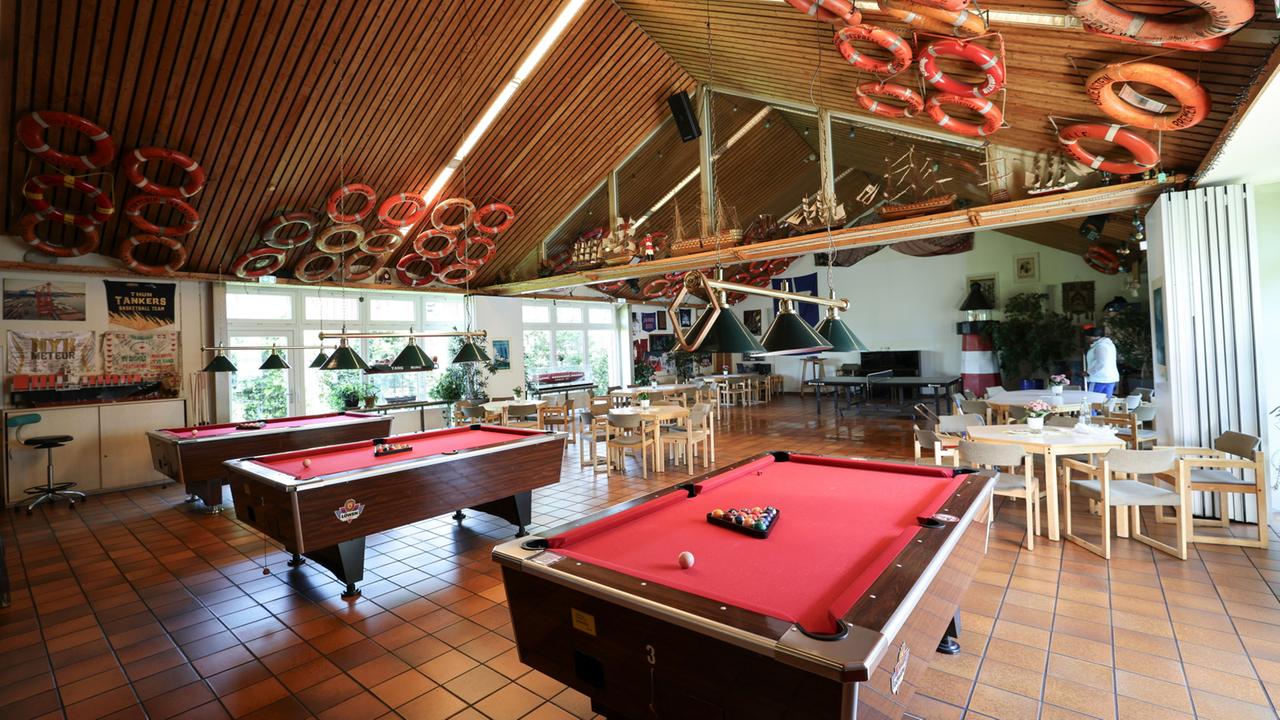
Stepping into the Duckdalben is like stepping into a neutral, international territory. The walls are adorned with ship models, flags, and masks—mementos from every corner of the globe.
Anji Kirankumar, an Indian seafarer with a chocolate bar in hand, is preparing to depart for Antwerp. "On the ship, you see the same faces for months," he explains. "Here, there is life. You can talk to someone new, drink a beer, or just sit in a chair that doesn’t move with the waves."
For many, the club is a psychological lifeline. Julia Hagelstein, a staff member, spends her days listening. "It is rarely about the big things," she says. "It is about the small, heavy things. The child they haven’t seen in six months, the argument with a superior officer, or the trauma of a near-miss during a pirate alert."
For others, like 45-year-old Rodrigo Llamas Jr., it is about the bridge to home. "The internet on the ship is slow and expensive. Here, I can see my family’s faces on a video call. It reminds me who I am working for."
Implications: The Future of Maritime Welfare
The work of the Deutsche Seemannsmission highlights a glaring disconnect in the global economy: we rely on the seamless flow of goods, yet we are increasingly indifferent to the conditions of those who facilitate that flow.
- Regulatory Reform: There is a growing call for international regulations to guarantee "shore leave" as a human right, rather than a privilege subject to the discretion of port authorities.
- Social Infrastructure: As shipping companies focus on autonomous vessels and increased automation, the human element risks being further sidelined. Clubs like the Duckdalben must be integrated into the infrastructure of every major port as a non-negotiable standard of operation.
- Mental Health Support: The shift from simple pastoral care to professionalized psychological support is essential. Organizations like the Mission are increasingly finding themselves on the front lines of mental health crisis intervention.
Conclusion: A Quiet Anchor
As the sun sets over the Port of Hamburg, the cranes continue their rhythmic dance, loading thousands of containers into the hulls of waiting ships. Inside the Duckdalben, the pool table is still busy, and the murmur of diverse languages—Tagalog, Hindi, Russian, German—creates a unique, transient community.
The club is named after the Duckdalben—the sturdy, heavy-duty wooden piles driven into the harbor floor to provide an anchor for massive vessels. For 140 years, the mission has lived up to its name. In a world of perpetual motion and increasing complexity, it provides the one thing that machines cannot: a place to pause, to breathe, and to be human. As long as the world relies on the sea to survive, the need for this sanctuary remains not just relevant, but essential.