By Investigative Desk
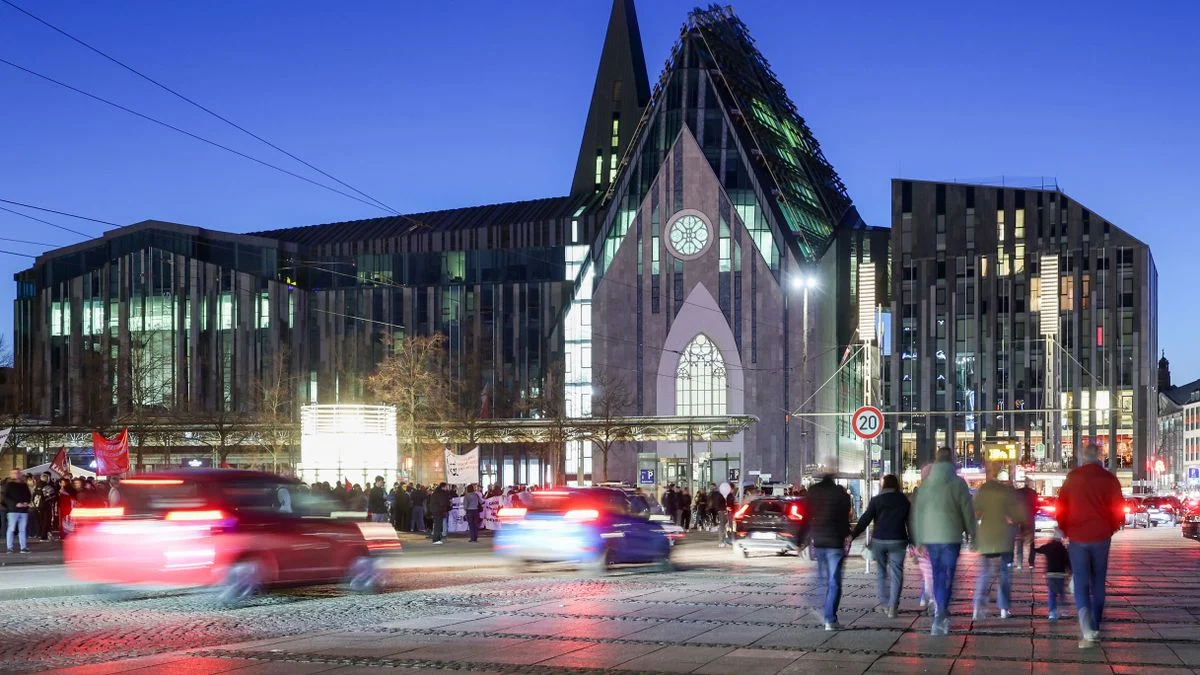
Leipzig University has officially announced the establishment of a new, high-profile academic institution: the "Center for Comparative GDR and Transformation Studies." Backed by a €3 million grant from the German Federal Ministry of Education and Research, the center aims to serve as a nexus for academic inquiry into the German Democratic Republic (GDR) and the profound societal shifts that followed the 1990 reunification.
By situating itself in the city where the "Peaceful Revolution" of 1989 gained its decisive momentum, the center seeks to bridge the gap between rigorous historical scholarship and the public discourse surrounding the lingering impacts of systemic transformation.
Main Facts: A New Pillar for Historical Scholarship
The Center for Comparative GDR and Transformation Studies is designed to be more than a traditional research institute. According to the university’s announcement, its core mandate is to synthesize decades of existing research on East German history and the post-1989 structural changes.
The center operates on three primary pillars:
- Academic Synthesis: Integrating fragmented historical data into a coherent comparative framework.
- Public Engagement: Facilitating a "dialogue" between academia and the broader public, ensuring that historical findings are accessible to those who lived through the era and the generations that followed.
- Networking: Serving as a central hub for various initiatives currently scattered across Germany, which focus on the processing of GDR history and the ongoing commemoration of the transformation period.
With a €3 million federal investment, the center is positioned to become the premier facility for understanding the long-term socioeconomic and cultural consequences of the German reunification process.
Chronology: From the Peaceful Revolution to Institutionalized Memory
To understand the necessity of this center, one must view it as the latest milestone in a decades-long process of national reflection.
- 1989: The Catalyst. Leipzig becomes the epicenter of the Montagsdemonstrationen (Monday Demonstrations). The St. Nicholas Church in Leipzig serves as the starting point for the protests that would eventually bring down the GDR regime.
- 1990: The Transformation. The formal dissolution of the GDR and the accession of its states to the Federal Republic of Germany trigger a period of rapid, often disruptive, structural change.
- 1990s–2010s: Decentralized Research. In the decades following reunification, research into the GDR was largely decentralized. Various foundations, university departments, and historical archives operated in silos, focusing on specific aspects such as the Stasi archives, economic privatization, or the psychological impacts of the transition.
- 2024: The Institutional Pivot. Recognizing the need for a more unified approach, the Federal Ministry of Education and Research moves to consolidate these efforts. The choice of Leipzig as the host city is a deliberate symbolic and logistical decision, rooting the center in the geography of the 1989 protests.
Supporting Data: The Ongoing Legacy of Transformation
The need for a comparative approach is underscored by current sociological and economic data. While the "inner wall" of Germany has significantly diminished since 1990, the data suggests that the transformation process is far from concluded.
Economic Disparities
Despite massive infrastructure investment in the former East, economic data continues to show a divergence in wealth accumulation. Studies indicate that while GDP per capita has converged significantly, the ownership of major German corporations and the concentration of high-income households remain heavily skewed toward the western federal states. The new center will examine these persistent economic patterns through the lens of historical "path dependency."
The "Transformation Gap"
Social scientists have long noted a "transformation gap"—a disparity in how citizens perceive democracy and the rule of law. Surveys frequently reveal that voters in the former GDR exhibit different levels of trust in federal institutions compared to their counterparts in the West. By analyzing the long-term consequences of the 1990 transition, the Leipzig center aims to provide data-driven insights into why these differences persist and how they impact contemporary German political discourse.
Commemoration and Memory Culture
The center will also act as a repository for "memory culture." As the generation that directly experienced the GDR begins to retire, the risk of fading historical knowledge grows. The center’s mission is to digitize and preserve personal narratives, ensuring that the human element of the transformation is not lost to dry statistical analysis.
Official Responses and Strategic Vision
The announcement has been met with broad support from both academic and political circles.
The Ministry’s Perspective
A spokesperson for the Federal Ministry of Education and Research emphasized that the €3 million investment is an acknowledgment that the "transformation is not a closed chapter." The Ministry views the center as a tool for national cohesion, providing the empirical basis for understanding why the "New States" (the former GDR) often feel distinct from the rest of the country.
Leipzig University’s Mandate
In a statement, the University administration underscored that the center is not intended to be an ivory tower. "Our goal is to create a space where scientific excellence meets the public interest," the administration stated. "The dialogue between the academia and the citizens of Leipzig—who are the living witnesses of 1989—is essential."
Academic Community Reactions
Leading historians in the field of modern German history have lauded the initiative. Dr. Helena Schmidt, a fellow in contemporary history, noted: "For too long, GDR research has been categorized under ‘German history.’ By formalizing ‘Transformation Studies’ as a discipline in its own right, we are acknowledging that the 1990s were as significant for Germany as the post-war reconstruction of the 1950s."
Implications: A New Era for Historical Inquiry
The establishment of the Center for Comparative GDR and Transformation Studies signals a shift in how Germany processes its recent past.
1. Moving Beyond "Ostalgie"
Historically, public discourse on the GDR has often oscillated between two extremes: the demonization of the regime or "Ostalgie" (a nostalgic longing for the GDR). The new center aims to move the conversation into a more nuanced, evidence-based middle ground. By applying a comparative framework—comparing the German transformation to transitions in other post-socialist nations like Poland or Hungary—the center will place Germany’s experience in a global context.
2. Addressing Contemporary Populism
One of the most significant implications of this research involves contemporary politics. Observers note that political movements questioning the current democratic order often find fertile ground in the former GDR. By scientifically analyzing the grievances and the perceived "losing out" of the 1990s, the center may provide the intellectual tools necessary to address these feelings of alienation.
3. A Model for Future Global Studies
Finally, the center is expected to serve as a global model. As many countries across the globe grapple with the transition from authoritarianism to democracy, the methodology developed in Leipzig could become the gold standard for how nations document and analyze their own societal shifts.
4. A Dynamic Hub for Future Generations
The center is also committed to educational outreach. By hosting workshops, public lectures, and interactive exhibits, it aims to engage the younger generation. The university plans to integrate the center’s findings into the curricula for history, sociology, and political science students, ensuring that the lessons learned from the GDR and the subsequent transformation remain part of the German intellectual heritage for decades to come.
Conclusion: Looking Ahead
As Leipzig prepares to host this new center, the city once again finds itself at the center of Germany’s historical narrative. The €3 million investment is more than just funding; it is an endorsement of the idea that a society can only move forward if it truly understands where it has been.
The Center for Comparative GDR and Transformation Studies will not merely be a place for archives and dust. It is envisioned as a living, breathing laboratory for the German identity. By combining the rigor of historical research with the urgency of modern democratic challenges, Leipzig University is setting the stage for a comprehensive, long-overdue national conversation.
The path from the fall of the Wall to the present day is long and complex. With this new center, Germany is finally equipping itself with the tools to walk that path with clarity, nuance, and a deeper understanding of its collective soul. Whether the center succeeds in bridging the gap between the academic elite and the public remains to be seen, but the intent is clear: the history of the GDR and the transformation of the 1990s are no longer just matters of the past—they are essential components of Germany’s future.