By Henrik Diekert and Michael Eiden
Updated: October 14, 2026
The German federal government has officially inaugurated a new specialized commission tasked with drafting a comprehensive overhaul of the national nursing care system. As the nation faces a demographic shift and mounting fiscal pressure, the debate has moved beyond the halls of the Bundestag and into the living rooms of millions. For families like the Umsonsts, the political discourse is not merely a matter of policy—it is a daily struggle for dignity and survival.
The Personal Cost: A Life Transformed
"Look at this," says Jutta Umsonst, her finger hovering over a digital tablet. The screen displays a vibrant photograph of her and her husband, Ulf, standing arm-in-arm against the iconic backdrop of the New York City skyline. "That was just last year. We were on top of the Empire State Building."
For the 66-year-old Jutta and her 71-year-old husband, life in Jugenheim, Rhineland-Palatinate, changed in a heartbeat. During the Easter holidays, the couple’s world collapsed. Ulf, an active man who regularly cycled 80 kilometers in a single outing, suddenly collapsed in the bathroom. Subsequent medical examinations revealed a devastating diagnosis: metastatic kidney cancer, with lesions in the brain that had hemorrhaged, mimicking the symptoms of a stroke.
What followed was a traumatic sequence of surgeries and prolonged hospitalization. Ulf returned home not as the active partner Jutta knew, but as a high-needs patient. The transition was abrupt. "On Thursday, he was cycling; by Saturday, he was critically ill," Jutta recalls. Today, their existence is governed by the rigid, exhausting schedule of home care.
The Mechanics of Daily Struggle
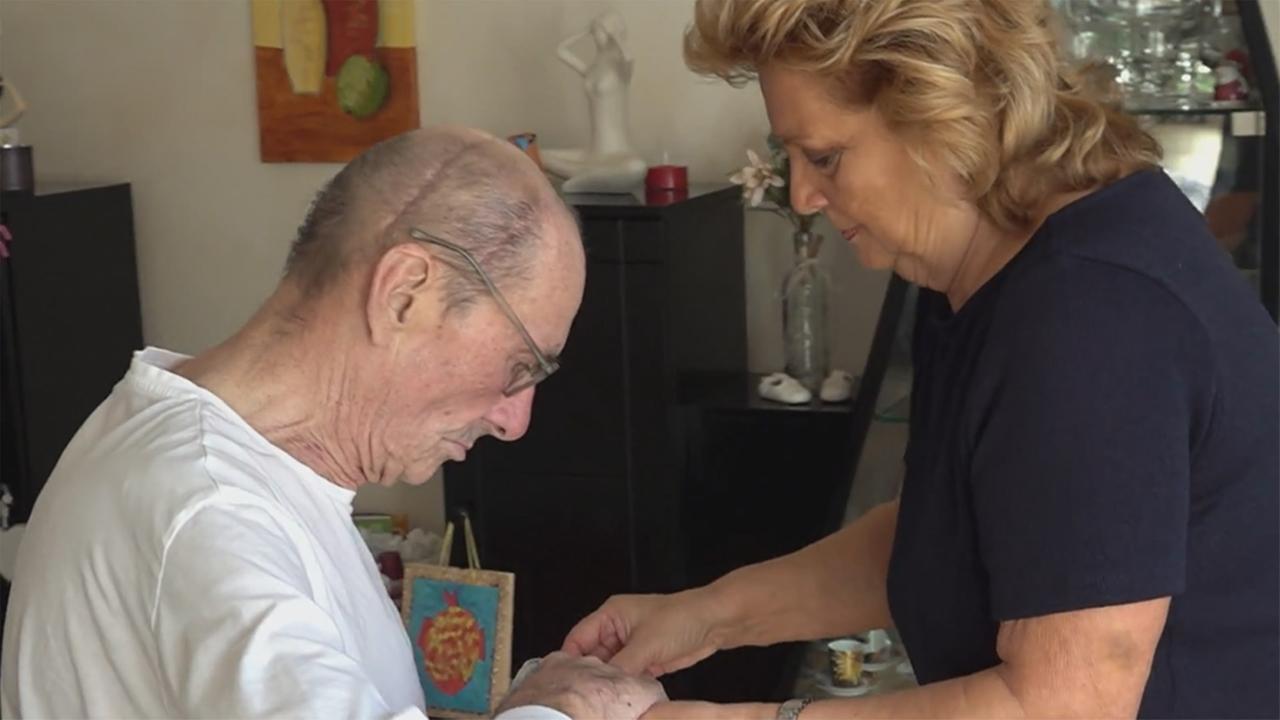
The Umsonst household has been fundamentally restructured. Because Ulf can no longer navigate stairs, the ground floor has become his primary domain. Every morning begins with the physical exertion of transferring him from bed to a chair with the assistance of a mobility aid. Jutta handles every aspect of his hygiene, from washing his face to brushing his teeth.
Even simple errands require tactical planning. Jutta describes a pervasive anxiety that looms over every departure. "He is terrified that I won’t come back," she explains. "We stay in constant contact via mobile phone. If I go to the supermarket, he calls me. It’s a rational fear—if I were to have an accident, he would be completely helpless."
While the Umsonsts benefit from the support of their daughter, who lives next door, and Jutta’s 87-year-old mother, the emotional and physical toll remains immense. "You have to be grateful for family who steps up," Ulf admits, his voice weary. However, the reliance on family is a fragile safety net that many in Germany no longer have access to as social structures evolve.
Chronology: From Crisis to Commission
The current push for reform stems from a critical juncture in the German social security system. The timeline of this systemic tension is clear:
- Easter 2026: The Umsonst family’s crisis serves as a microcosm of the wider issue, as thousands of families face similar sudden transitions into caregiving.
- Late September 2026: The Federal Cabinet approves the draft of the "Nursing Reorganization Act" (Pflegeneuordnungsgesetz), aimed at addressing an projected 8-billion-euro funding gap for 2027.
- October 14, 2026: Following delays due to intense coalition negotiations, the federal government officially activates the "Nursing Structure Commission." This body is mandated to deliver proposals by late January 2027 to ensure the system is sustainable for the 2030s.
Official Responses and Legislative Strategy
Health Minister Carsten Linnemann (CDU) has been vocal about the necessity of protecting the "silent heroes" of the system. In a recent appearance on the ARD program Bericht aus Berlin, Linnemann emphasized that while structural changes are vital, the government will not retreat from supporting family caregivers.
"At the point where it concerns nursing relatives, I will make no concessions," Linnemann stated. "These people are the pillars of the entire system."
The government’s proposed legislation includes:
- Increased Contributions: A 0.3 percentage point increase in the surcharge for childless individuals, bringing their contribution to 0.9%.
- Adjusted Thresholds: Raising the contribution assessment ceiling for long-term care insurance by 300 euros per month.
- Prioritization: Despite early rumors of cuts, the state will continue to cover pension contributions for those providing full-time care to family members.
Supporting Data: The Funding Gap and Structural Failure
The core of the political friction lies in the sheer scale of the deficit. The projected eight-billion-euro shortfall for 2027 is not merely a result of rising costs, but a symptom of a system built for a previous generation.
Waltraud Klein, a board member of the advocacy group Wir pflegen Rheinland-Pfalz e.V., argues that the government is confusing "funding" with "reform." In an open letter to Minister Linnemann, she warned that focusing solely on fiscal levers ignores the changing geography of German families. "Children live further away from their parents than ever before," Klein notes. "The system is not designed for this mobility. We are pumping money, time, and energy into a decaying structure instead of modernizing the delivery of care."
Implications: A Call for Integrated Care
The implications of the current debate are far-reaching. Experts suggest that the focus on "nursing degrees" and "insurance premiums" misses the need for radical infrastructure changes.
Klein advocates for the creation of "Care Hubs"—integrated centers where daycare, short-term inpatient care, night care, and mobile nursing services coexist in one facility. "If you consolidate these services, you reduce the logistical nightmare for families," she argues. "Currently, we have fragmented services that force families to become full-time care managers, which is exactly what leads to burnout."
Furthermore, there is a push to involve the private sector more deeply. Employers, Klein suggests, must be incentivized to accommodate the realities of employees who are simultaneously balancing careers and the care of elderly parents.
The Path Forward: Personal and Political
For Jutta Umsonst, the promise of a government commission feels distant from the reality of her living room. While she appreciates the political attention, she is skeptical of the pace of change.
"Politicians are losing touch with the base," she says, reflecting on her own years of volunteer experience in local politics. "They look at spreadsheets, but they don’t look at the human cost of waiting for a decision from a health insurance company or the anxiety of a patient who cannot be left alone."
The Umsonsts have decided they will soon bring in a professional nursing service to supplement their care. While this will force them to forfeit a portion of their government nursing allowance, the trade-off—a modicum of personal freedom and a reduction in the risk of caregiver burnout—is becoming unavoidable.
As the newly formed commission begins its work, the message from the "base" is clear: the system cannot be saved by financial adjustments alone. It requires a fundamental shift in how society supports the individuals who provide the bedrock of care. Whether the government can bridge the gap between abstract fiscal policy and the visceral, daily reality of families like the Umsonsts remains the defining challenge of this legislative period.
The clock is ticking for the 2030s, but for the millions currently navigating the system, the need for relief is not a matter of the next decade—it is a matter of tomorrow morning.