

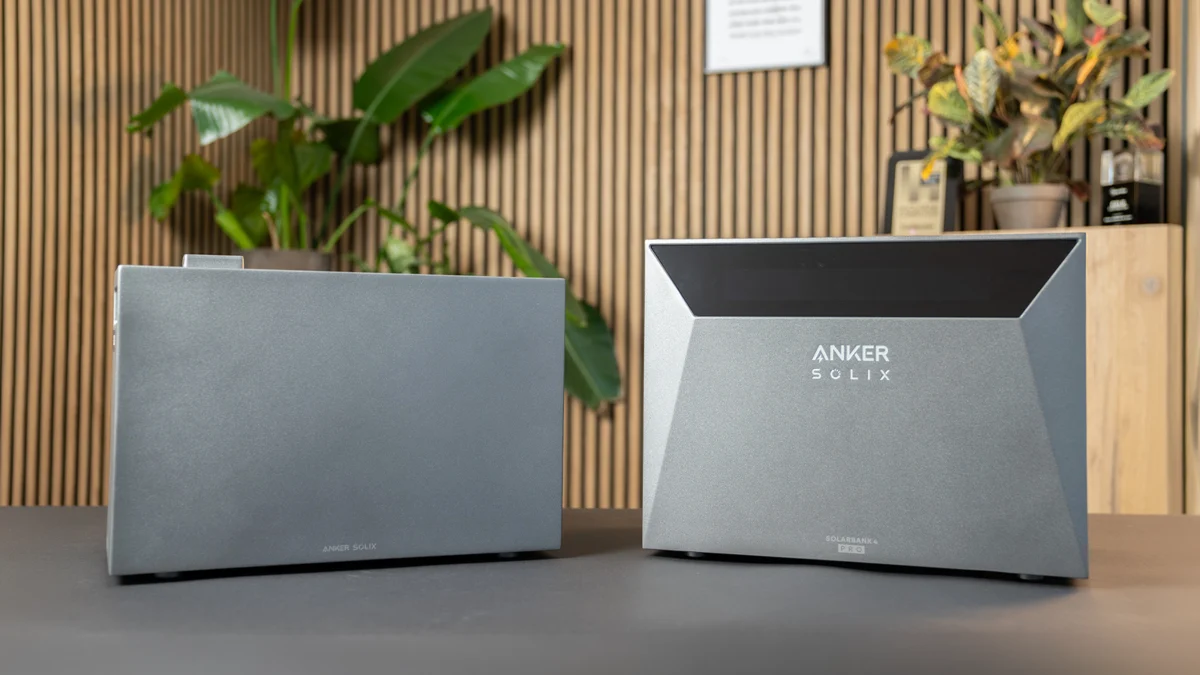
The landscape of domestic energy management is undergoing a tectonic shift. With the official announcement of the Anker SOLIX Solarbank 4 E5000 Pro, Anker has effectively moved beyond the "balcony power plant" niche, stepping firmly into the territory of professional-grade, whole-home energy storage solutions. By combining massive capacity, high-power input, and intelligent software integration, the Solarbank 4 aims to solve the perennial problem of intermittent renewable energy: the gap between production and consumption.
Main Facts: A New Benchmark for Home Storage
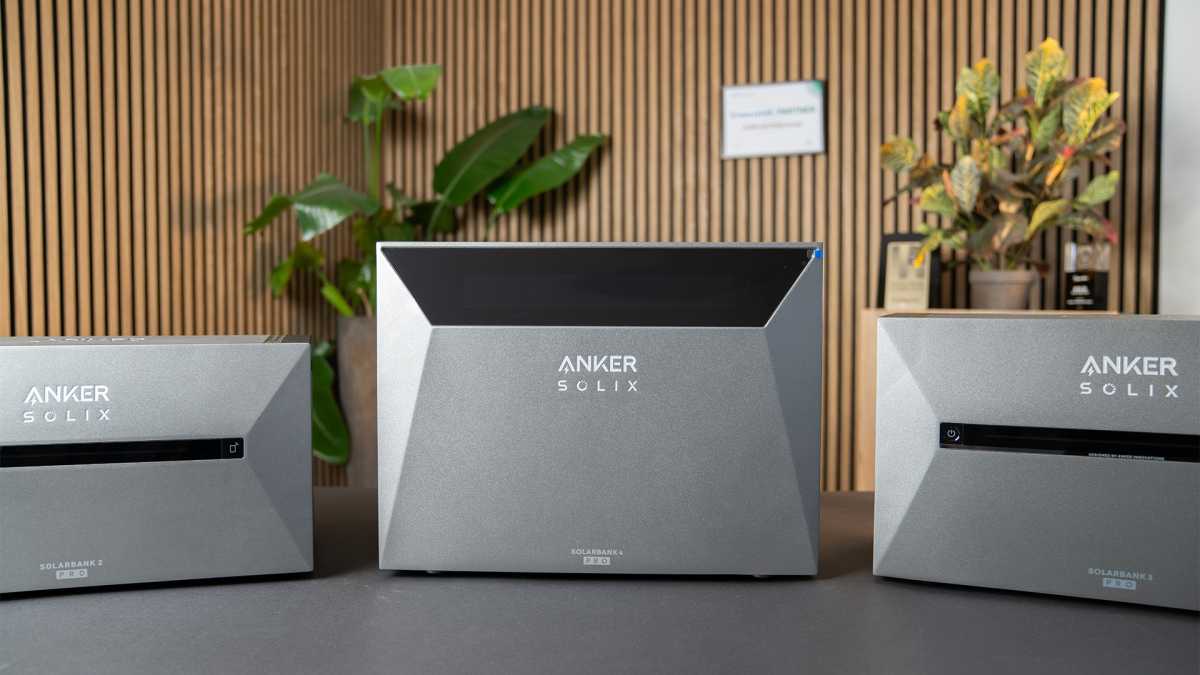
The Anker SOLIX Solarbank 4 E5000 Pro represents the most significant architectural overhaul in the company’s history. Moving from the 2.7 kWh capacity seen in the Solarbank 3 Pro, the new generation debuts with a substantial 5 kWh baseline. However, the hardware’s modularity is its true strength; the system can be scaled up to 30 kWh per unit, or, through the advanced "Power Dock" system, expanded to a staggering 120 kWh.
Key Technical Specifications:
- Base Capacity: 5 kWh (Expandable to 30 kWh per unit).
- PV Input: Up to 5,000 Watts across four independent MPPT trackers.
- Output: 800W (Schuko/Grid-tied) or 2,500W via Wieland connection (Plugin Power 2.0).
- Off-Grid Capability: Dedicated 2,500W output for emergency power.
- Battery Chemistry: High-cycle LFP (Lithium Iron Phosphate) with 314 Ah capacity.
- Efficiency: 100% depth of discharge (DoD).
Beyond the raw numbers, the system features a 10-millisecond switch-over time for Uninterruptible Power Supply (UPS) functionality, ensuring that household appliances remain powered during grid instability.
Chronology of the Launch and Pre-Heat Campaign
Anker has partnered with specialized retailers, such as Kleines Kraftwerk, to initiate an aggressive market entry strategy. The "Pre-Heat" campaign, which serves as both a promotional tool and a logistical test-run for the hardware, is structured as follows:
- May 12, 2026: Official launch of the pre-order portal.
- May 12 – June 11, 2026: The exclusive pre-registration window. Customers who subscribe to the provider’s newsletter during this period qualify for a 25% discount on the MSRP.
- June 11, 2026 (23:59): Deadline for the pre-registration promotion.
- Incentive Structure: Participants receive a €500 discount on the Solarbank 4 E5000 Pro and a €350 reduction on the BP5000 expansion battery. Furthermore, every early adopter receives the new 3-Phase Smart Meter Gen 2 free of charge, a component essential for the system’s "smart" energy balancing.
Supporting Data: Efficiency and ROI
The economic feasibility of the Solarbank 4 is predicated on its ability to optimize self-consumption. Anker claims that in a standard four-person household with an annual electricity demand of approximately 4,500 kWh, the system can cover up to 95% of the total energy requirement.

Amortization and Lifecycle Analysis
Anker calculates that the average user can achieve a total annual saving of up to €2,234. When considering the 15-year projected lifespan of the unit—backed by a comprehensive 10-year warranty—the system is expected to yield a 56% cost reduction compared to relying solely on traditional grid energy. Under optimal conditions, the break-even point (amortization period) is estimated at just three years, a figure that is highly attractive in an era of rising energy costs and fluctuating grid prices.
The Role of Dynamic Tariffs
The system’s ability to charge at 2,500W allows for a 0% to 100% charge cycle in approximately two hours. This is critical for users on dynamic electricity tariffs. By drawing power from the grid when prices are negative or exceptionally low (often during high-wind or high-solar production hours) and discharging during peak-price hours, the Solarbank 4 acts as an intelligent arbitrage machine for the average consumer.
Official Perspectives and Ecosystem Integration
Central to the success of the Solarbank 4 is the Anker Power OS. Unlike legacy systems that require manual configuration, the Power OS provides an automated, "set-it-and-forget-it" experience.
The Power of Ecosystem Synergy
The software platform now boasts compatibility with over 870 third-party energy providers, inverters, wallboxes, and smart home components. This is not merely a marketing claim; it is a functional necessity for the 3-phase Smart Meter Gen 2 to operate. The meter continuously monitors real-time household consumption and communicates with the Solarbank 4, instructing the battery to release exactly the amount of power needed to balance the load, thereby minimizing grid feed-in and maximizing self-sufficiency.
Expanding the Horizon: The Power Dock
For power users, the "Power Dock" represents the transition from a hobbyist setup to an industrial-strength residential solution. By chaining four Solarbank units, users can achieve a total system capacity of 120 kWh, a 20 kW PV input, and a 10 kW AC output. This configuration effectively positions the Solarbank 4 as a direct competitor to established, high-end residential storage brands that were previously only available through specialized, high-cost installation services.
Implications for the Energy Market
The release of the Solarbank 4 E5000 Pro has several profound implications for the renewable energy sector:
1. The Death of the "Balcony Power" Limitation
By pushing the boundaries of capacity and power, Anker is blurring the lines between DIY solar solutions and professional electrical infrastructure. This democratization means that homeowners who previously felt priced out of the storage market now have a modular, scalable, and—crucially—user-installable path to energy independence.
2. Standardization of Smart Metering
The bundling of the Smart Meter Gen 2 with the main unit is a strategic move to standardize home energy management. By ensuring every user has a high-fidelity data stream of their consumption, Anker is not only improving their product’s efficiency but also contributing to the stability of the local power grid by smoothing out the "duck curve"—the imbalance between peak solar production during the day and peak household demand in the evening.
3. Sustainability and Reliability
The use of LFP (Lithium Iron Phosphate) batteries is a clear nod to safety and longevity. Unlike older Lithium-ion variants, LFP chemistry is inherently more stable and capable of sustaining thousands of charge cycles without significant degradation. With a 15-year design life, the Solarbank 4 is positioned as a durable capital asset rather than a disposable electronic device.
Conclusion: A New Era of Energy Autonomy
The Anker SOLIX Solarbank 4 E5000 Pro is more than just an upgrade; it is a fundamental repositioning of what a household energy storage system can be. By integrating high-capacity hardware with a sophisticated, user-friendly software ecosystem, Anker is addressing the primary barriers to renewable adoption: cost, complexity, and capacity.
As the pre-registration window closes on June 11, 2026, the market will gain a clearer picture of consumer appetite for this level of energy independence. However, the trends are clear. The combination of falling component costs, rising energy prices, and a growing consumer desire for self-sufficiency makes the Solarbank 4 a compelling case study in the future of the home. Whether for the urban dweller looking to optimize their solar intake or the suburban homeowner planning for long-term grid independence, the Solarbank 4 E5000 Pro provides the tools necessary to take control of the energy transition at home.























Leave a Reply