


Main Facts
Berlin mourns the loss of one of its most celebrated and defiant actresses, Angelica Domröse, who passed away at the age of 85. The news, initially reported by "Super Illu" and subsequently confirmed by MDR from her private circle, marks the end of an era for German cinema and theatre. Domröse, a native Berliner, rose to national prominence in 1973 with her unforgettable portrayal of Paula in Heiner Carow’s cult classic, "Die Legende von Paul und Paula" (The Legend of Paul and Paula), a film that transcended the ideological divides of the Cold War and captivated audiences across Germany. Her career, spanning decades, mirrored the complex history of a divided nation, establishing her as a formidable presence on both East German and later West German stages and screens.
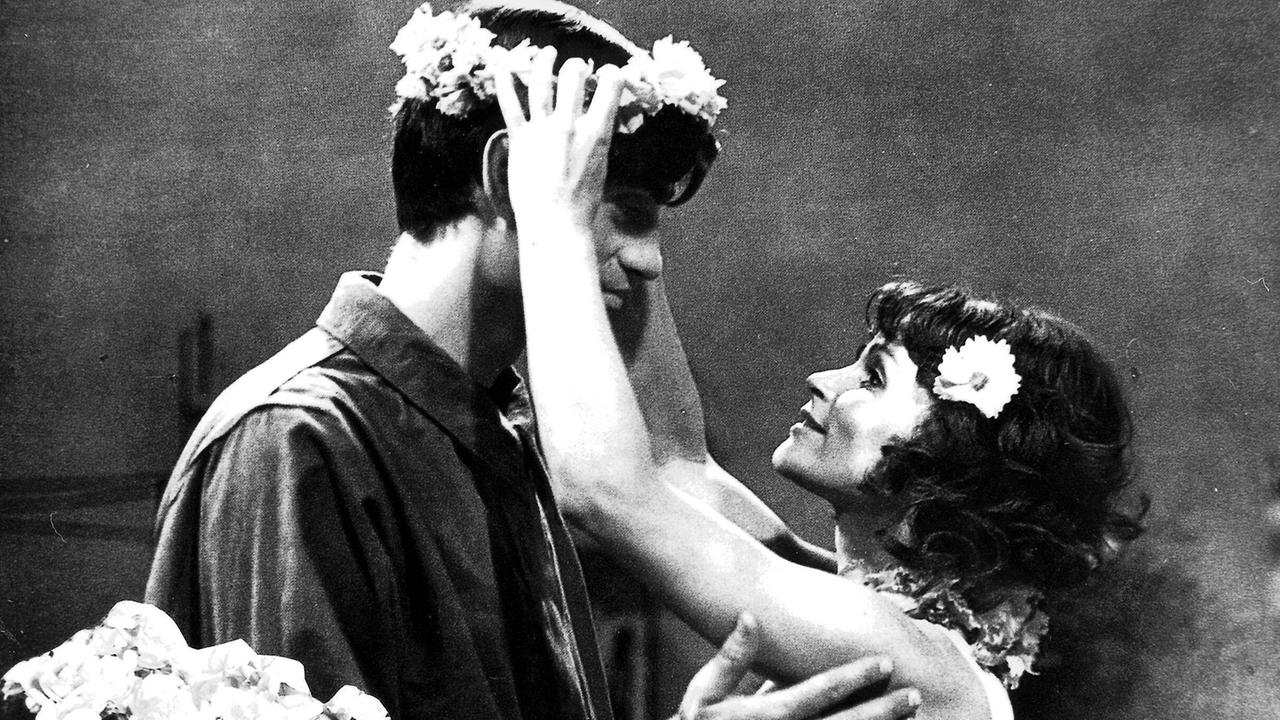
Domröse was not merely an actress; she was an emblem of artistic integrity and a powerful voice for individuality. Her roles often embodied a spirit of rebellion against conformity, a trait that defined her most iconic character and, arguably, her own life. "Die Legende von Paul und Paula" saw her play a spirited, single mother of two children who dares to love a married state official, challenging the rigid societal norms and adaptation ideologies prevalent in the German Democratic Republic (GDR). Critics lauded the film for its ability to weave a poetic dimension into a realistic depiction of everyday life in the GDR, making it a timeless narrative about love, freedom, and defiance. Her death leaves a profound void in the German cultural landscape, but her extensive body of work, characterized by its depth, authenticity, and enduring relevance, ensures her legacy will continue to inspire.
Chronology: A Life Reflected in German History
Angelica Domröse’s journey began in Berlin in 1941, amidst the tumultuous backdrop of World War II. Her early years were shaped by the post-war reconstruction and the subsequent division of Germany, events that would subtly influence her artistic sensibilities. Her innate talent for performance blossomed early, leading her to her first appearances before a film camera as a young woman. This initial foray into acting set her on a path that would see her become a pivotal figure in German cultural life.
In 1959, Domröse embarked on formal training at the Hochschule für Film und Fernsehen Potsdam (Potsdam University of Film and Television), now known as the Filmuniversität Konrad Wolf. This institution, a crucible for artistic talent in the GDR, provided her with the foundational skills and theoretical understanding that would underpin her illustrious career. Upon graduation from the prestigious Babelsberg Film School, her talent was immediately recognized by one of the most influential figures in German theatre: Helene Weigel, the widow of Bertolt Brecht and director of the Berliner Ensemble. Weigel herself extended a personal invitation via telegram, urging Domröse to audition, a testament to her burgeoning reputation. Joining the Berliner Ensemble, Domröse immersed herself in the Brechtian tradition, refining her craft and gaining invaluable stage experience. She later graced the stage of the Berliner Volksbühne, another renowned theatre, further cementing her reputation as a versatile and compelling stage actress.
However, it was through her extensive work in film and television that Domröse truly became a household name in the GDR. Her captivating screen presence and ability to convey complex emotions resonated deeply with audiences. Throughout the 1970s, her popularity was undeniable, leading to her being honored as the "DDR-Fernsehkünstlerin des Jahres" (GDR Television Artist of the Year) a remarkable three times. Before her significant departure to the West in 1980, she had already starred in over 50 films, building an impressive and diverse portfolio of roles that showcased her range from dramatic intensity to nuanced comedic timing.
The zenith of her East German career undoubtedly arrived with Heiner Carow’s 1973 film, "Die Legende von Paul und Paula." In this cinematic masterpiece, Domröse delivered a career-defining performance as Paula, a vibrant and independent woman navigating the intricacies of love and life in a socialist society. Alongside Winfried Glatzeder as Paul, she created a screen couple whose chemistry was palpable and whose story became a profound allegory for personal freedom. Paula, a single mother daring to pursue an unconventional love with a married man, embodied a yearning for authenticity and self-determination that resonated deeply with East German audiences who often felt constrained by the state’s pervasive influence. The film, initially facing censorship and controversy for its frank depiction of sexuality and individualism, eventually became a massive success, a cult classic that continues to be celebrated for its emotional depth, its dreamlike sequences, and its iconic soundtrack. It perfectly captured the zeitgeist, reflecting the hopes and frustrations of a generation and offering a glimpse of a more poetic, less rigid reality within the confines of the GDR. "Paul und Paula" was more than just a love story; it was a cultural phenomenon that cemented Domröse’s status as an icon.
The year 1980 marked a dramatic turning point in Domröse’s life and career: her "Ausreise" (departure) to West Germany. This decision, often fraught with political implications and personal sacrifices for artists in the GDR, was driven by a desire for greater artistic freedom and a growing disillusionment with the restrictions imposed by the state. While specific details of her reasons remain somewhat private, it is widely understood that many artists felt stifled by censorship and the omnipresent surveillance of the Stasi. The move was a courageous one, as transitioning from the tightly controlled East German cultural sphere to the competitive West German market was notoriously challenging, and many who made the switch struggled to regain their footing.
However, Angelica Domröse was an exception. She belonged to a select group of East German actors who not only survived but thrived after relocating to the West. Her talent transcended political boundaries. She quickly found work at the renowned Schiller-Theater in West Berlin and subsequently graced other prestigious stages across West Germany. Her versatility allowed her to seamlessly transition between classical and contemporary roles, proving her mettle to a new audience.
Her success was not confined to the theatre. Domröse made a significant impact on West German television, notably taking on the role of Commissioner Vera Bilewski in the popular crime series "Polizeiruf 110" for four years. This role showcased her ability to adapt to a different narrative style and further broadened her appeal. In the 1990s, she expanded her artistic repertoire by venturing into directing, staging several theatre productions and demonstrating her keen understanding of storytelling from behind the scenes. A nostalgic and heartwarming moment for fans occurred in 2008 when the legendary "Paul und Paula" screen couple, Domröse and Winfried Glatzeder, reunited on stage in a production at the Hans-Otto-Theater in Potsdam, bridging the decades and the former divide.
Beyond the professional accolades, Domröse’s life also contained personal struggles, which she addressed with remarkable candour. In her 2003 memoirs, she spoke openly about her prolonged battle with alcoholism, a challenging period that she ultimately overcame, showcasing her resilience and strength of character. In her later years, her public appearances became less frequent. Her last film role was in the 2012 senior comedy "Bis zum Horizont, dann links!" (To the Horizon, Then Left!). After this, she gradually withdrew from the limelight, seeking a more private existence. The loss of her husband, the actor and director Hilmar Thate, in 2016, marked another profound personal moment in her life.
Supporting Data and Cultural Context
Angelica Domröse’s career cannot be fully appreciated without understanding the unique cultural landscape of the GDR. The state-controlled film studio, DEFA (Deutsche Film-Aktiengesellschaft), was the primary producer of films in East Germany. While subject to political oversight and ideological directives, DEFA also fostered significant artistic talent and produced films that resonated deeply with audiences, often subtly pushing boundaries. "Die Legende von Paul und Paula" stands as DEFA’s most commercially successful film and a masterpiece of East German cinema. Its enduring appeal lies in its romanticism, its embrace of individual yearning, and its subtle critique of societal rigidity through the lens of a passionate love affair. The film’s raw emotion, unconventional narrative structure, and evocative soundtrack made it an instant classic, a beacon of creative expression that transcended the often grey realities of daily life in the GDR.
The challenges faced by artists in the GDR were immense. State control, censorship, and the constant threat of surveillance from the Ministry for State Security (Stasi) meant that artistic freedom was a precarious concept. Actors, writers, and directors often navigated a delicate balance between expressing their artistic vision and adhering to official guidelines. For many, like Domröse, the desire for uncompromised artistic expression eventually led to the difficult decision to leave the GDR. Her successful transition to the West German film and theatre scene was a rare feat, highlighting her exceptional talent and adaptability. Many East German actors struggled to find equivalent recognition and roles in the West, often facing prejudice or being typecast. Domröse’s ability to thrive in both systems underscores her extraordinary versatility and resilience, making her a symbol of the possibilities, and the pain, of a divided Germany. Her work became a vital bridge, connecting the cultural narratives of East and West, and enriching the broader German artistic landscape.
Official Responses
The news of Angelica Domröse’s passing elicited heartfelt tributes from prominent figures across Germany, underscoring her profound impact on the nation’s cultural identity.
Federal President Frank-Walter Steinmeier expressed deep sorrow upon hearing of her death, stating, "The news of Angelica Domröse’s death has made me very sad. Angelica Domröse was one of the most formative actresses of our country, both on stage and in film; her work reflects recent German history." This poignant statement acknowledges not only her artistic prowess but also her crucial role as a chronicler of a nation’s complex past through her performances.
Brandenburg’s Minister President Dietmar Woidke (SPD) echoed these sentiments, releasing a statement on Friday evening that hailed Domröse as "one of the defining artistic personalities of East German film and theater." He further added, "With great admiration, I look upon her life and her work," recognizing her enduring legacy and the indelible mark she left on the artistic landscape, particularly in the region where much of her early career blossomed. These official responses collectively highlight Domröse’s unique position as a cultural icon whose influence transcended political boundaries and whose artistic contributions will be remembered as integral to Germany’s narrative.
Implications: An Enduring Legacy of Artistry and Defiance
Angelica Domröse’s passing marks the end of an extraordinary life and career, but her legacy will undoubtedly endure, shaping the understanding of German acting and cultural history for generations to come. Her influence extends beyond her individual performances; she represents a particular era of German cinema and theatre, one characterized by both artistic innovation and political tension.
Her most iconic role as Paula in "Die Legende von Paul und Paula" remains a touchstone for German cinema. The character’s spirited defiance, her yearning for authentic love, and her rebellion against societal constraints continue to resonate, embodying a timeless spirit of individuality that transcends its specific historical context. Domröse’s portrayal imbued Paula with a vulnerability and strength that made her an enduring symbol of resistance against conformity, a character whose message of living life to the fullest remains profoundly relevant.
Domröse’s entire career serves as a powerful mirror reflecting the younger German history. From her formative years in the GDR’s state-subsidized film and theatre industry to her courageous decision to emigrate to the West and successfully rebuild her career, her journey illustrates the profound personal and artistic challenges faced by individuals during Germany’s division and reunification. She navigated these complex transitions with unwavering artistic integrity, proving that talent and authenticity could bridge even the deepest ideological chasms.
Her work will continue to be studied and celebrated, not only for its artistic merit but also for its historical significance. Future generations of actors, filmmakers, and audiences will look to Angelica Domröse as an example of an artist who dared to challenge the status quo, who poured her soul into every role, and whose dedication to her craft left an indelible mark on the cultural fabric of a nation. Her memory will live on through the vibrant characters she brought to life, the powerful stories she told, and the indomitable spirit she embodied throughout her remarkable life.


















Leave a Reply