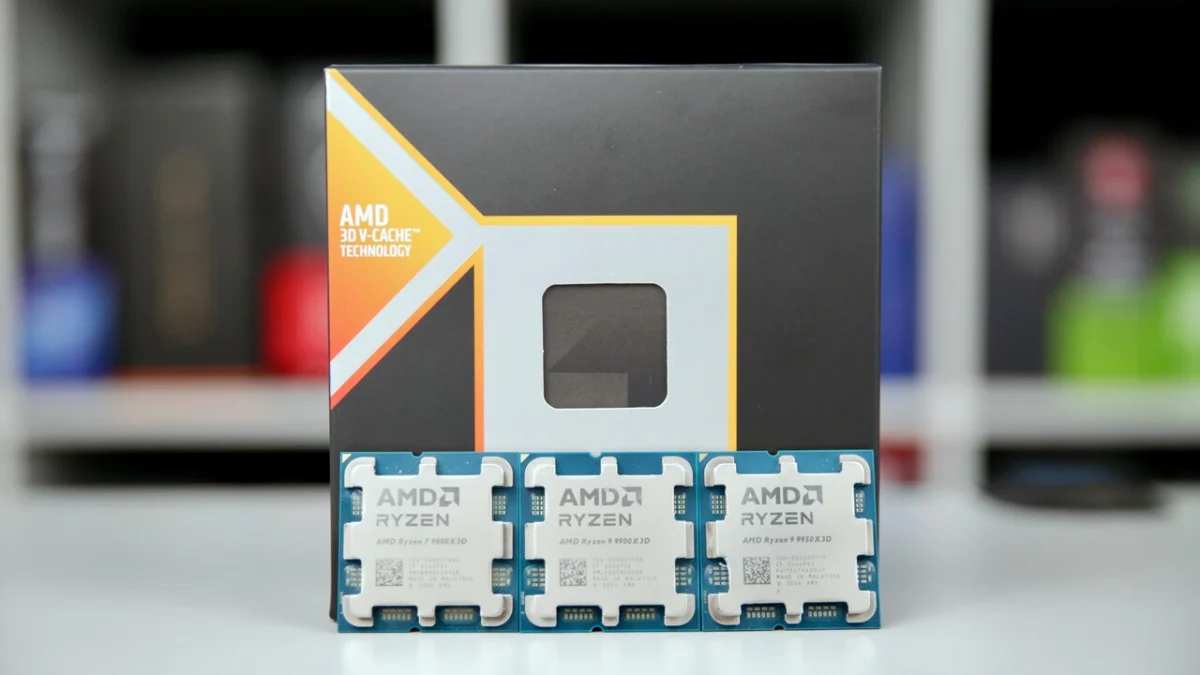
In a significant move for the Linux enthusiast and professional community, AMD has initiated the process of integrating an "AMD Overclocking Driver" (AOD) into the mainline Linux kernel. This development, which surfaced via a patch submission on October 11, represents the first time AMD has provided an official, kernel-level interface for adjusting specific CPU operational modes on its Ryzen processors under Linux. While the announcement has generated considerable excitement, it is important to temper expectations: the driver is currently a foundational utility rather than a full-featured equivalent to the Windows-based "Ryzen Master" software.
Main Facts: What the AOD Driver Actually Does
The newly proposed "AMD Overclocking (AOD) WMI driver" serves as a bridge between the Linux kernel and the firmware-level interfaces that govern processor behavior. By leveraging the Windows Management Instrumentation (WMI) architecture—the same underlying mechanism used by the proprietary Ryzen Master utility on Windows—AMD is essentially porting the ability to communicate with the CPU’s power and thread management registers to the Linux ecosystem.
At this inaugural stage, the driver exposes a limited set of parameters through the sysfs virtual file system. This allows power users and developers to interact with the CPU via the command line. The specific capabilities currently outlined in the initial patch include:
- Power Limit Management: Users can define specific constraints for Package Power Tracking (PPT), Thermal Design Current (TDC), and Electrical Design Current (EDC).
- SMT Control: The driver provides a native mechanism to toggle Simultaneous Multi-Threading (SMT) on or off.
- Memory Telemetry: The current memory clock speed can be read by the driver, though it remains a "read-only" parameter at this time.
Crucially, the driver does not yet offer real-time, dynamic overclocking. Unlike the Windows implementation, where settings can often be applied on the fly, the current Linux implementation requires a system reboot for the changes to take effect. This underscores the current status of the project: it is a bridge, not an all-encompassing control panel.
Chronology: The Path to Integration
The journey toward this driver began quietly but gained momentum in mid-October 2024. Following years of requests from the Linux community for better CPU management tools, AMD engineers formally submitted the patch to the platform-driver-x86 mailing list.
- October 11, 2024: The official announcement of the AOD WMI driver patch. This event marked the transition from internal AMD testing to the public peer-review process required for Linux kernel integration.
- The Review Process: Following the submission, the kernel development community began the rigorous process of code review. This is standard procedure for any addition to the Linux kernel, ensuring that the driver meets the high standards for security, stability, and maintainability.
- Future Milestones: While there is no official timeline for when this code will be merged into the mainline kernel, the submission indicates that AMD is prioritizing the visibility of these parameters. The community is now waiting to see how quickly the kernel maintainers approve the patch and in which version (e.g., Linux 6.13 or later) it might appear.
Supporting Data: Why This Matters for Linux Performance
For years, Linux users have relied on the motherboard’s UEFI/BIOS settings or community-developed scripts to manage Ryzen performance. While effective, these methods are often cumbersome and lack the granular control that a native driver can provide.
The Role of Sysfs
The use of sysfs is a strategic choice. In Linux, sysfs is the standard way for drivers to export hardware information and control knobs to user space. By exposing PPT, TDC, and EDC via sysfs, AMD is enabling third-party developers to build their own front-ends. This is a vital distinction: AMD does not need to build a GUI application if they provide a standardized, stable API that the community can use.
The Comparison to Windows
On Windows, Ryzen Master is a sophisticated, GUI-driven application that handles complex voltage-frequency curves and real-time monitoring. The AOD Linux driver acts as the "backend" to that theoretical application. By providing the same WMI-based communication layer, AMD has effectively removed the most significant technical barrier to creating a high-quality, native Ryzen performance suite for Linux.
Official Responses and Strategic Intent
AMD’s communication regarding the driver has been intentionally conservative. By characterizing it as a "first version" that only provides a "small selection of settings," the company is managing expectations. This is a standard corporate approach to open-source contributions, ensuring that the initial release is seen as a baseline rather than a finished product.
From a strategic perspective, this move signals an evolution in AMD’s relationship with the Linux kernel. Historically, AMD has focused on GPU drivers (AMDGPU) and basic CPU support. By moving into the "overclocking/tuning" space, AMD is acknowledging that the Linux user base is no longer just composed of server administrators and software developers, but also a growing segment of high-end gamers and creative professionals who demand performance parity with Windows.
Implications: The Future of Ryzen on Linux
The release of the AOD driver has profound implications for the Linux enthusiast landscape.
The End of "Black Box" Tuning
Previously, adjusting power limits on Ryzen processors under Linux was a matter of trial and error, often involving complex workarounds that could vary significantly between motherboard vendors. With an official driver, there is a clear path to standardization. If the driver is implemented correctly, it should theoretically work across all compatible Ryzen platforms, regardless of the motherboard manufacturer.
The Rise of Third-Party Innovation
The most exciting implication is the potential for community-led development. While the current driver is limited, it provides a stable foundation for projects like the Ryzen Master Commander. By having an official driver to hook into, developers can move away from "hacky" workarounds and toward robust, well-documented software that can interact with the hardware safely.
The "Ryzen Master for Linux" Debate
The question remains: will AMD eventually release a native, official GUI for Linux? While the company has remained silent on this front, the existence of the AOD driver suggests that the infrastructure is finally in place. If the demand remains high, AMD may find that creating a simple GTK or Qt-based interface is a low-cost, high-reward project to improve the user experience for their platform.
Limitations and Risks
It is important to acknowledge the risks. Overclocking, even with official drivers, is inherently risky. Users who tinker with PPT, TDC, and EDC values run the risk of system instability, data corruption, or physical hardware degradation if parameters are set outside of safe operational envelopes. Unlike Windows, where software can sometimes protect users from "unsafe" settings, the Linux command-line approach puts the onus of responsibility entirely on the user.
Conclusion
The introduction of the AMD Overclocking Driver for Linux is a landmark moment. While it is not yet the "magic button" that some users may have hoped for, it represents a fundamental shift in AMD’s philosophy toward its Linux user base. By moving these controls into the kernel, AMD has provided the tools necessary for the community to build a new generation of performance-tuning utilities.
Whether the future holds a polished, AMD-supported GUI application or a vibrant ecosystem of third-party tools, the path forward is now clear. For the power user, the tinkerer, and the Linux professional, the ability to squeeze more performance out of their Ryzen hardware is no longer a matter of luck—it is now a supported, albeit nascent, capability of the Linux kernel itself. As the driver evolves, we can expect the gap between the Windows and Linux experience to continue to narrow, further solidifying Linux as a premier platform for high-performance computing.