

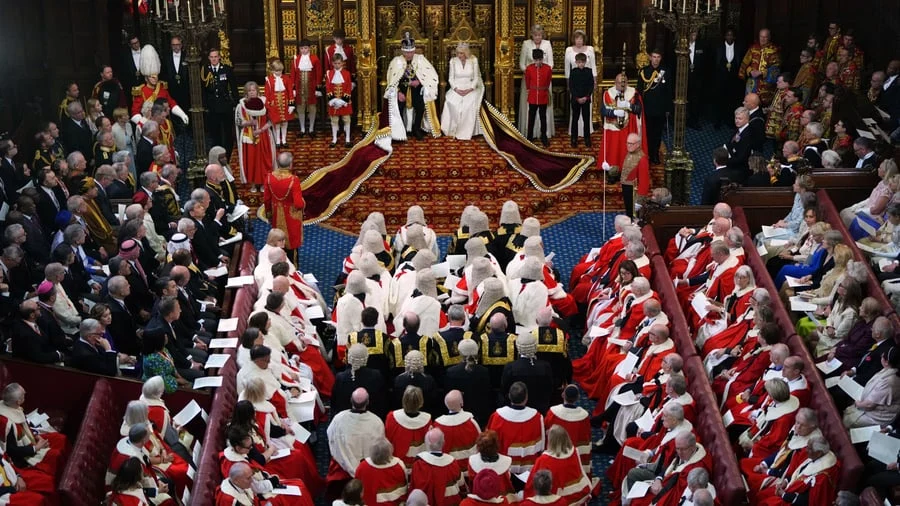
London, UK – May 13, 2026 – A constitutional spectacle meant to embody national unity and governmental resolve was dramatically overshadowed today as King Charles III delivered the traditional King’s Speech. The ceremonial opening of Parliament, detailing the government’s legislative agenda, unfolded against a backdrop of unprecedented political turmoil, with Prime Minister Keir Starmer’s leadership hanging by a thread and his Labour Party fractured by an escalating internal power struggle. Whispers of a direct challenge from within his own cabinet have erupted into open speculation, threatening to derail the government and plunge the United Kingdom into deeper uncertainty.
The air in Westminster was thick not only with the pomp and circumstance of royal tradition but also with the palpable tension of a Labour Party teetering on the brink. Health Minister Wes Streeting, widely seen as Starmer’s most formidable internal rival, is reportedly poised to resign as early as Thursday to launch an open challenge for the party leadership. This potential defection, coupled with a growing chorus of dissent from trade unions and a significant number of Labour Members of Parliament (MPs), paints a grim picture for the embattled Prime Minister.
Chronology of a Political Earthquake
The political drama began to unfold in London with a series of events that escalated rapidly throughout the day, transforming a routine legislative announcement into a crisis management exercise.
The Tense Morning Meeting: A 17-Minute Showdown
The day’s events kicked off with an almost farcical encounter that highlighted the depths of the internal schism. Prime Minister Keir Starmer, visibly under pressure, met his Health Minister, Wes Streeting, for a "coffee" at 10 Downing Street. This seemingly innocuous invitation, intended perhaps to project an image of calm and control, was widely anticipated by British media as a decisive showdown. However, the brevity of the meeting – lasting precisely 17 minutes – spoke volumes. Sources within Downing Street confirmed the meeting but offered no details beyond its duration, leaving political commentators to interpret the rapid conclusion as a clear indication that no common ground was found and the internal power struggle was far from over. The short duration suggested either an intractable disagreement or a deliberate signal from Streeting that he was unwilling to engage in prolonged negotiations, preferring a more confrontational approach.
Streeting’s Alleged Ultimatum and Impending Challenge
Following the terse exchange, the political temperature soared. Unconfirmed reports, widely circulated through British media outlets, suggested that Wes Streeting intends to resign from his cabinet position as early as Thursday. This resignation would serve as a precursor to an official challenge for the leadership of the Labour Party, forcing a new internal election. Such a move would be a direct and audacious attempt to unseat the sitting Prime Minister, reflecting a profound lack of confidence in Starmer’s ability to lead the party. Streeting’s camp has remained tight-lipped, neither confirming nor denying the speculation, which only added to the frantic atmosphere of anticipation. The prospect of a high-profile cabinet minister actively campaigning against his own Prime Minister during a King’s Speech period underscores the extraordinary nature of the crisis.
Union Backlash and Parliamentary Dissent: Foundations Crumble
The gravity of Starmer’s predicament was further amplified by a significant withdrawal of support from the Labour Party’s traditional allies. Shortly after the Downing Street meeting, a joint statement was issued by eleven powerful trade unions, all historically and intrinsically linked to the Labour Party. Their declaration was unequivocal: they asserted that Keir Starmer lacked the mandate and capability to lead the party and the government into the next general election, constitutionally mandated to occur no later than 2029. This public vote of no confidence from such a critical constituency represents a severe blow to Starmer’s authority and electoral viability.
Simultaneously, the parliamentary wing of the party is also deeply fractured. Approximately 90 Labour MPs, a substantial bloc of the governing party, have reportedly demanded the Prime Minister’s resignation. Further compounding Starmer’s woes, four political secretaries – junior ministers – have already resigned from their government posts in protest against his leadership. These resignations are more than symbolic; they represent a tangible erosion of Starmer’s parliamentary support and his ability to command loyalty within his own administration. While around 150 of the 403 Labour MPs have publicly affirmed their support for Starmer, this still leaves a significant portion of the parliamentary party either openly hostile or uncommitted, highlighting the deep divisions that threaten to paralyze the government.
The King’s Speech: A Royal Performance Amidst Political Chaos
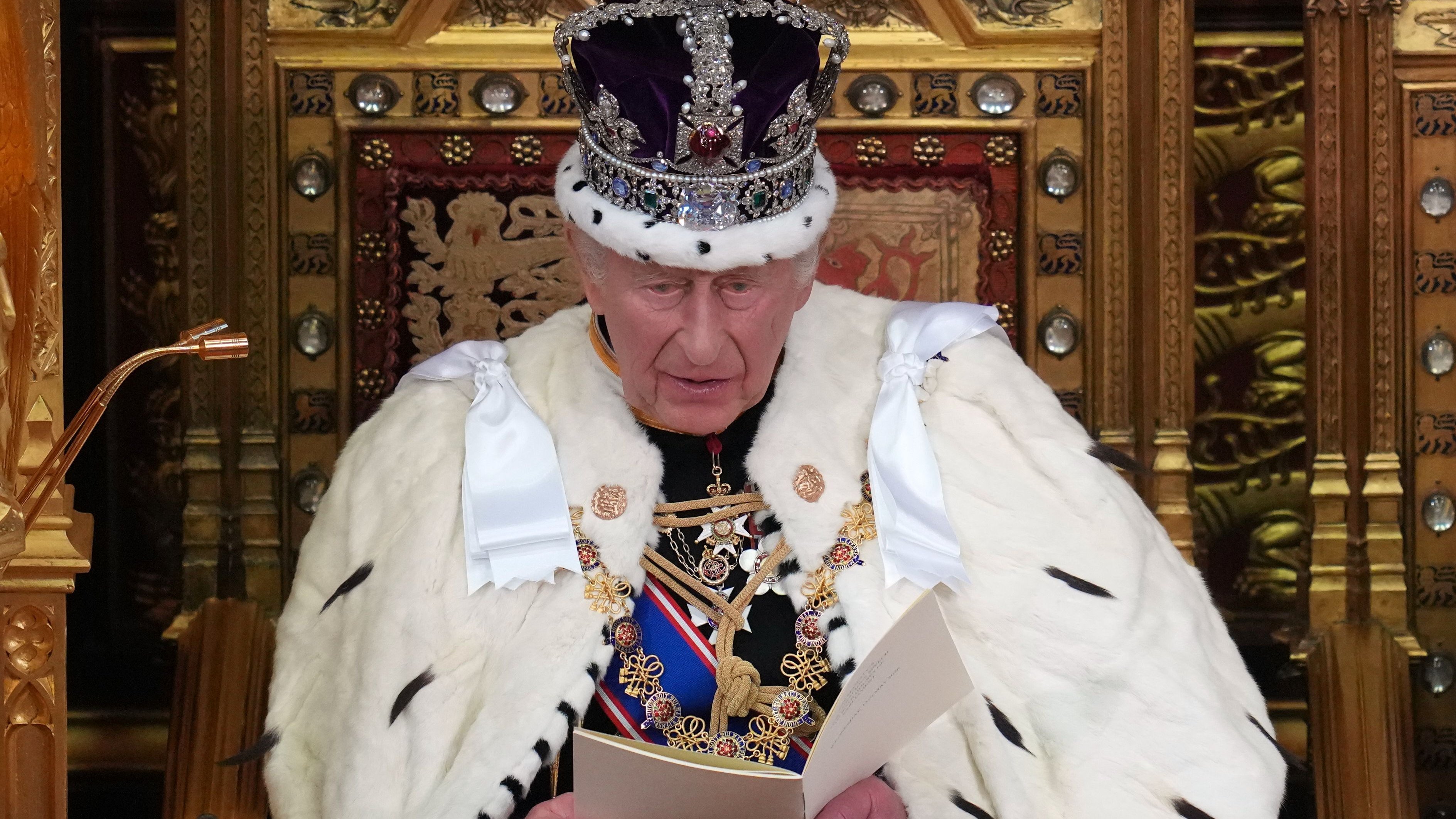
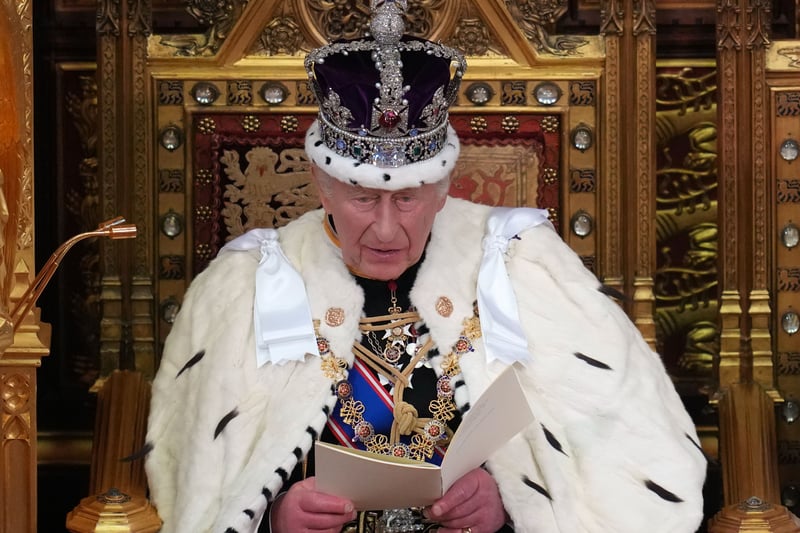
Against this tumultuous political backdrop, King Charles III proceeded with the traditional King’s Speech in the House of Lords. Dressed in ceremonial robes, the monarch delivered the government’s legislative programme, outlining its priorities for the coming parliamentary session. This ancient ceremony, a cornerstone of British parliamentary democracy, is designed to project an image of stability and continuity. However, the contrast between the King’s solemn address and the unfolding political drama outside the chamber could not have been starker. The very "government’s programme" being read was arguably on the verge of collapse, its architect facing an unprecedented challenge. The symbolic gravity of the King’s presence, normally a unifying force, inadvertently highlighted the profound disunity gripping the political establishment, making the occasion feel less like a confident declaration of intent and more like a desperate plea for order amidst the chaos.
Supporting Data and the Depth of Division
The numbers and actions of key stakeholders reveal the critical nature of the crisis facing Prime Minister Keir Starmer. This is not merely an internal squabble but a fundamental challenge to the Labour Party’s direction and leadership.
The Fractured Labour Ranks
With 403 Labour MPs in total, the reported figures are particularly alarming for Starmer. The fact that approximately 90 parliamentarians are openly calling for his resignation represents a formidable bloc of dissent. These are not fringe elements but a significant portion of the parliamentary party whose loyalty is irrevocably broken. Their motivations are likely multifaceted, ranging from ideological disagreements over the party’s policy direction (e.g., economic policy, approach to public services, or foreign affairs) to concerns over Starmer’s electability. Many may fear that remaining under Starmer’s leadership guarantees electoral defeat in the next general election, and they are seeking a change before it’s too late. The 150 MPs who have declared their support, while a larger number, still means that nearly half of the parliamentary party is either against him or conspicuously silent, an unhealthy position for any leader. This internal division weakens the party’s ability to present a united front to the public and effectively govern.
Trade Unions: A Historic Pillar Cracks
The collective declaration from eleven closely associated trade unions is arguably the most damaging blow to Starmer’s authority. Historically, trade unions have been the bedrock of the Labour Party, providing significant financial backing, grassroots support, and a vital link to the working-class electorate. Their endorsement is often seen as indispensable for a Labour leader to command credibility and momentum. The unions’ statement signifies a fundamental breakdown in this relationship. Their grievances could stem from perceived shifts in Labour’s policy platform away from traditional socialist values, a lack of engagement from Starmer’s leadership, or specific concerns regarding workers’ rights, wages, and public sector funding. The unions’ decision to go public with their dissent transforms an internal party issue into a broader political crisis, sending a clear message to the electorate that even Labour’s core allies have lost faith in its leader.
The Departing Junior Ministers
The resignations of four political secretaries, or junior ministers, are a tangible manifestation of the crisis. These individuals are part of the government’s machinery, holding positions that require loyalty and collective responsibility. Their departure signifies not just a personal protest but a crack in the executive arm of the government. Such resignations often trigger a domino effect, emboldening other disgruntled MPs to follow suit and further destabilizing the administration. It also raises questions about the Prime Minister’s ability to maintain a functional government, as he must now find replacements and contend with the narrative that his team is abandoning him.

Public Sentiment and Electoral Anxiety
While not explicitly stated in the initial report, the public nature and severity of this internal strife are almost certain to erode public confidence in the Labour Party. Voters typically prefer stable, united parties, especially when faced with pressing national issues. The image of a party consumed by infighting, particularly during a significant state occasion like the King’s Speech, is highly damaging. It reinforces perceptions of political instability and may lead voters to question Labour’s competence and readiness to govern. For a party aiming to win a general election by 2029, this internal conflict could be catastrophic, potentially turning off floating voters and even discouraging traditional Labour supporters. Recent poll numbers, if available, would likely reflect this growing electoral anxiety, putting further pressure on Starmer.
Official Responses and Strategic Maneuvers
In the high-stakes world of British politics, every statement, every silence, is a calculated move. The responses from various camps reflect the desperate struggle for control and legitimacy.
Downing Street’s Official Line: A Tight-Lipped Defence
From the confines of 10 Downing Street, the Prime Minister’s office has maintained a remarkably terse and controlled response. The official line regarding the 17-minute meeting with Streeting was simply that it occurred, with no further details offered. This silence is a strategic choice, aiming to prevent the Prime Minister from being drawn into a public slanging match that would further undermine his authority. Any acknowledgement of a leadership challenge would legitimize it. Instead, Starmer’s camp is likely attempting to project an image of business-as-usual, focusing on the legislative agenda outlined in the King’s Speech and emphasizing the need for unity in the face of national challenges. However, the lack of transparency often fuels speculation and can be perceived as weakness or an inability to control the narrative. Starmer himself, when pressed, has likely reiterated his commitment to leading the party and the country, dismissing the internal dissent as minor or unrepresentative.

Streeting’s Camp: The Challenge Takes Shape
While Wes Streeting himself has not yet publicly declared his intentions or resigned, his allies and supporters are actively shaping the narrative. Their silence on an official challenge, while allowing the speculation to build, could be a tactic to gauge support, rally forces, and put maximum pressure on Starmer. If Streeting does proceed, his campaign would likely focus on several key arguments: a perceived lack of direction or vision under Starmer, a failure to capitalize on the government’s (hypothetical, if it were the Conservatives) unpopularity, and a belief that Starmer cannot win the next general election. Streeting might position himself as a more dynamic, electable leader, perhaps appealing to a broader coalition of voters or promising a clearer ideological path for Labour. His camp would be working tirelessly behind the scenes to secure pledges of support from MPs and trade unions, preparing for the formal challenge.
The Silent Palace: Royal Neutrality
Amidst the political maelstrom, Buckingham Palace maintains its customary dignified silence. The monarch’s role in British politics is strictly ceremonial and non-partisan. King Charles III’s delivery of the King’s Speech is a constitutional duty, a formal act that does not imply endorsement or disapproval of the government’s policies or its internal stability. The Palace will scrupulously avoid any comments or actions that could be interpreted as interfering in the political crisis, upholding the centuries-old tradition of royal neutrality. This impartiality, however, inadvertently serves to highlight the severity of the political situation, as the monarchy stands as a stable, unchanging symbol against the turbulent tides of Westminster.
Broader Implications: A Nation on Edge
The unfolding crisis within the Labour Party extends far beyond the confines of Westminster, posing significant threats to the party’s future, the efficacy of governance, and the very stability of the nation.

Impact on Labour’s Future
A protracted leadership battle would be profoundly damaging for the Labour Party. It would divert attention and resources away from developing policy, scrutinizing the government, and campaigning for public support. Internal divisions often lead to public disillusionment, making it harder to attract new members and voters. The party risks being perceived as chaotic and unfit for government, a perception that could take years to shake off. Furthermore, the ideological fault lines that often underpin leadership challenges could deepen, making it difficult for the party to unite even after a new leader is chosen. The scars of such a contest can linger, impacting future electoral performance and the party’s ability to present a credible, cohesive alternative to the public.
Governance Paralysis
Even if Keir Starmer manages to cling to power for now, the deep divisions within his party threaten to paralyze his government. A leader who has lost the confidence of a significant portion of his own MPs and key external allies struggles to pass legislation, implement policy, and project authority. The government’s legislative agenda, as read by the King, could face significant challenges in Parliament, with rebel Labour MPs potentially voting against their own government. This paralysis could lead to policy inertia at a time when the country faces numerous economic and social challenges, affecting everything from public services and the economy to international relations. The focus shifts from governing to internal survival, leaving the nation without strong, decisive leadership.
The Shadow of a General Election
The next general election is constitutionally due by 2029. However, a severe government crisis or a successful leadership challenge could significantly alter this timeline. If Starmer were to lose a leadership contest, a new Labour leader might feel compelled to seek a fresh mandate from the country through an early general election, especially if they came to power on a significantly different platform. Alternatively, if the government’s ability to govern becomes entirely untenable due to continuous rebellions and a lack of support, Starmer himself might be forced to call an early election as a last resort, hoping to secure a mandate or prevent further internal erosion. Such an election, forced by internal party strife, would likely be highly unpredictable and could lead to a hung parliament or a significant shift in the political landscape.
Historical Echoes of British Political Turmoil
British political history is replete with examples of leadership challenges and government crises, but the current situation bears particular weight due to the convergence of factors. Comparisons might be drawn to the internal struggles within the Conservative Party during the late 20th century, or even the dramatic shifts in Labour’s fortunes under different leaders. The scale of trade union discontent, reminiscent of historical clashes, adds another layer of gravity. However, the spectacle of a Prime Minister facing such an existential threat during a symbolic state event like the King’s Speech is rare, underscoring the acute instability gripping the nation’s political heart.
The Path Forward: Uncertainty Reigns
As the echoes of the King’s Speech fade from Westminster, the future of the Labour government and indeed, the Labour Party itself, hangs in the balance. Prime Minister Keir Starmer faces an uphill battle to quell the rebellion, restore party unity, and reassert his authority. The coming days will be critical, with Wes Streeting’s potential resignation and leadership challenge looming large. The outcome of this power struggle will not only determine the fate of one man but could profoundly reshape the political trajectory of the United Kingdom, potentially triggering an early general election and ushering in a new era of unpredictable governance. For now, uncertainty reigns supreme in a nation accustomed to political drama, but rarely of this intensity.












Leave a Reply