


Paris, France – October 8, 2026 – In a ceremony steeped in both solemnity and the warm glow of personal camaraderie, German President Frank-Walter Steinmeier concluded his official visit to France today, marked by a poignant farewell orchestrated by his French counterpart, President Emmanuel Macron. The grandeur of the Champs-Élysées, lined with jubilant German and French flags and the majestic presence of the Republican Guard’s cavalry, provided a fitting backdrop for a moment that transcended mere diplomatic protocol. It was a send-off for two leaders who have navigated the often-turbulent waters of European politics side-by-side for nearly a decade, and who are set to depart their respective offices in the spring of 2027, leaving behind a continent grappling with profound challenges.
The elaborate reception, beginning with the resonant strains of the German national anthem beneath the Arc de Triomphe, underscored the deep and enduring bond between Germany and France. As President Steinmeier was escorted down the iconic avenue, flanked by Macron’s elite cavalry, the symbolism was clear: a tribute not only to a visiting head of state but to a trusted friend and partner. This sentiment was further amplified within the Élysée Palace, where President Macron, in a heartfelt address, emphasized the personal connection that has characterized their shared tenure.
A Decade of Shared Journeys: Navigating "Damned Difficult Times"
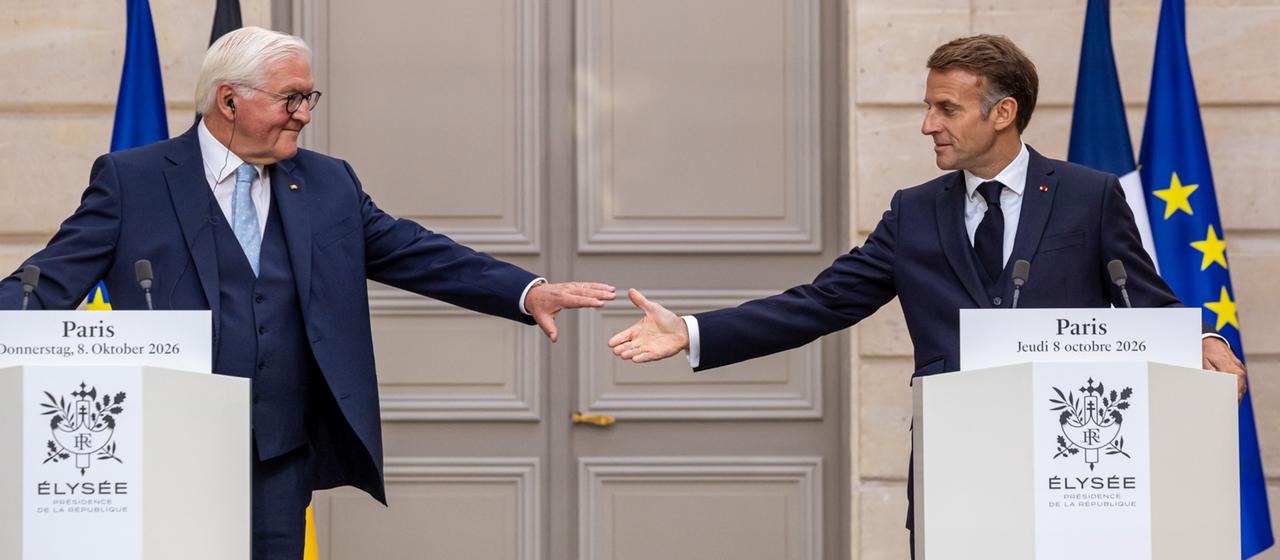
The synchronicity of their presidencies began just months apart, with Steinmeier’s election to the German presidency preceding Macron’s ascent to the French Élysée. "For ten years, we have moved forward side by side," Macron declared, his gaze fixed on Steinmeier. "We have known some storms, but we have always faced them hand in hand." This powerful statement, delivered with palpable sincerity, seemed to evoke a shared history of overcoming adversity.
Macron’s direct and impassioned address to Steinmeier, met with a touch of endearing bashfulness from the German President, highlighted the depth of their personal rapport. Steinmeier, in turn, responded with eloquent gratitude, drawing upon his command of French to express his appreciation for their shared journey.
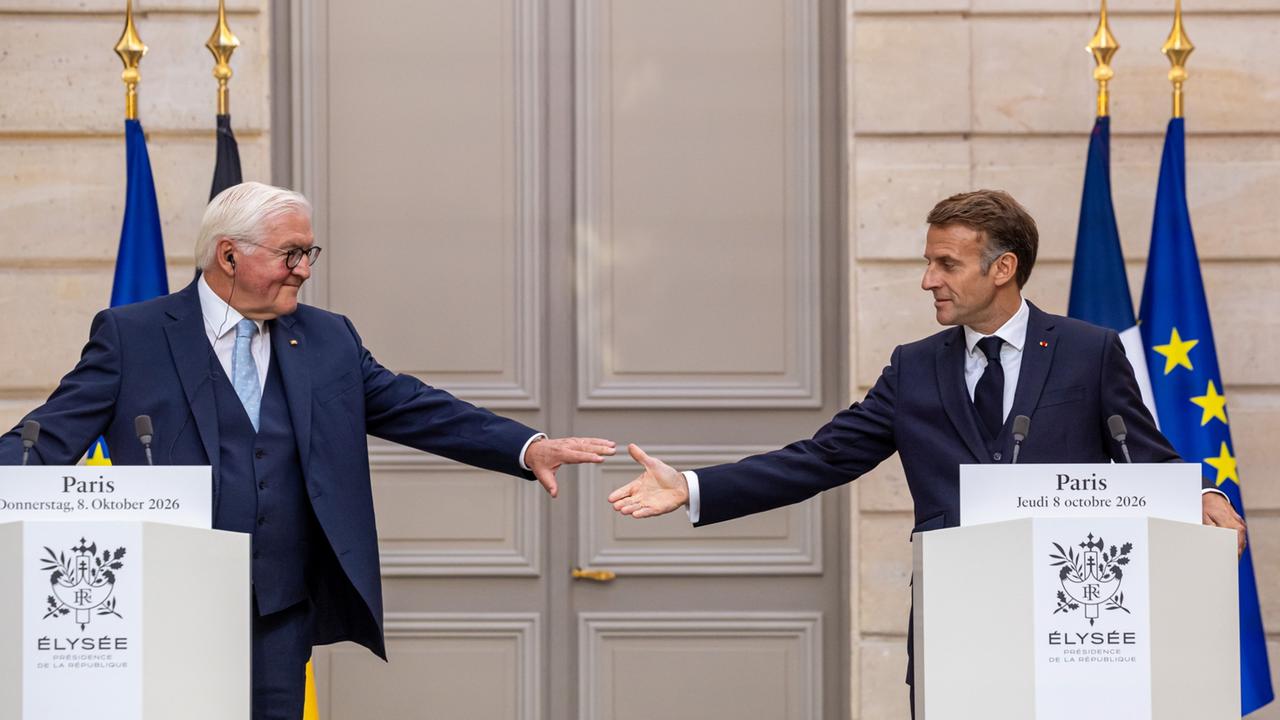
The farewell visit, however, was not solely a nostalgic reflection on past triumphs. Both leaders acknowledged the gravity of the current geopolitical landscape, with Steinmeier characterizing the era as "damned difficult times." The echoes of the ongoing conflict in Ukraine, the pervasive societal polarization, the emboldening of extremist factions, and the increasing migration of political discourse to the volatile realm of social media were all implicitly or explicitly present in their discussions. The recent German elections, with their far-reaching implications discussed globally, added another layer of complexity to the political climate they are both preparing to leave.
A Legacy of European Commitment: "Germany Will Remain Good Europeans"
In this context of profound uncertainty, Steinmeier articulated a crucial message to his French hosts and to Europe at large. He sought to reassure France, and indeed the entire continent, of Germany’s unwavering commitment to its European identity. "Even as much changes in our country, economically, politically, especially in security policy, Germany will remain good Europeans," Steinmeier pledged. This declaration was a powerful affirmation of Germany’s continued dedication to the European project, a cornerstone of its post-war foreign policy.
Steinmeier further emphasized his deeply held conviction that Germany’s future success is intrinsically linked to its European integration. He underscored that Germany can only thrive "as a European Germany, closely embedded in the European Union." This sentiment resonated as a defining principle of his presidency, a legacy he is keen to solidify as his term draws to a close.
A Future Forged in Cooperation: The German-French Youth Exchange and Beyond
The visit also saw the signing of a new framework agreement for the German-French Youth Exchange (DFJW/OFAJ), a testament to the enduring power of people-to-people diplomacy. This initiative, a cornerstone of bilateral relations, plays a vital role in fostering understanding and cooperation between the younger generations of both nations. The presence of regional leaders, including Saarland Minister President Anke Rehlinger and her counterparts from Baden-Württemberg and Rhineland-Palatinate, underscored the broad support for this crucial partnership.
Looking ahead, the leaders are scheduled to visit research and defense sites in Bordeaux tomorrow, further demonstrating their continued commitment to collaborative projects that address contemporary challenges. These engagements highlight the ongoing efforts to strengthen the Franco-German axis, a critical engine for European integration and stability.
The Weight of History and the Specter of Extremism
Steinmeier’s pronouncements, particularly his emphasis on Germany’s unwavering European identity and the crucial role of Franco-German cooperation, carried the weight of a political testament. His words seemed to convey a sense of urgency, almost as if anticipating a potential weakening of the traditional Franco-German partnership in the face of rising radical forces in both countries. The strengthening of far-right movements and the increasing polarization within democratic societies across Europe cast a long shadow over the future of the continent, making the reaffirmation of core European values and bilateral cooperation all the more critical.
As President Steinmeier prepares to step down, his final visit to France serves as a powerful reminder of the enduring strength of the Franco-German relationship and the profound impact of leadership that prioritizes collaboration and mutual understanding. The challenges ahead for Europe are undeniable, but the legacy of Steinmeier and Macron offers a beacon of hope, demonstrating that even in "damned difficult times," the hand-in-hand approach can forge a path forward.
Word Count: 1,205


