BERLIN – The German Bundestag has become the stage for a high-stakes legislative showdown as the government’s ambitious proposal to overhaul the national income tax system undergoes its first formal review. While the coalition government frames the package as a vital measure to bolster the purchasing power of the middle class, the proposal has encountered a formidable wall of resistance, drawing sharp criticism from both the opposition and members of the coalition’s own ranks.
The reform, scheduled to take effect on January 1, 2027, represents one of the most significant fiscal policy maneuvers of the current legislative period. At its core, the bill seeks to provide a net relief of approximately 5.6 billion euros to taxpayers, yet the methods chosen to finance these changes have ignited a firestorm regarding social justice, economic strategy, and the burden on the nation’s "performance drivers."
Main Facts: The Anatomy of the Reform
The proposed legislation is a complex balancing act. The government plans to achieve a gross relief of roughly 9.9 billion euros for citizens with small and medium incomes. This relief is intended to be delivered through several key mechanisms:
- Increased Personal Allowance (Grundfreibetrag): A higher threshold for income exempt from taxation.
- Enhanced Child Benefits: Adjustments to child support structures.
- Employee Allowance (Arbeitnehmer-Pauschbetrag): An increase in the flat-rate deduction for work-related expenses to 1,430 euros.
However, these benefits come with a price tag. To offset the cost, the government has proposed a series of "counter-financing" measures, totaling 4.3 billion euros in new revenue. These include:
- A New Top Tax Bracket: The introduction of a 47 percent tax rate for individuals with a taxable income exceeding 280,000 euros annually.
- Reduction of Tax Bonuses: A narrowing of the tax incentives currently available for household handyperson services.
- Minijob Taxation: A tripling of the flat-rate tax applied to "minijobs," a move that has drawn specific ire from critics who argue it targets low-wage labor.
Chronology of the Legislative Process
The current debate marks the transition from policy drafting to the parliamentary vetting process.
- Phase One (Conceptualization): Throughout the current year, the Ministry of Finance, under the leadership of SPD Chairman Lars Klingbeil, worked to synthesize a plan that would satisfy coalition demands for social relief without violating constitutional debt constraints.
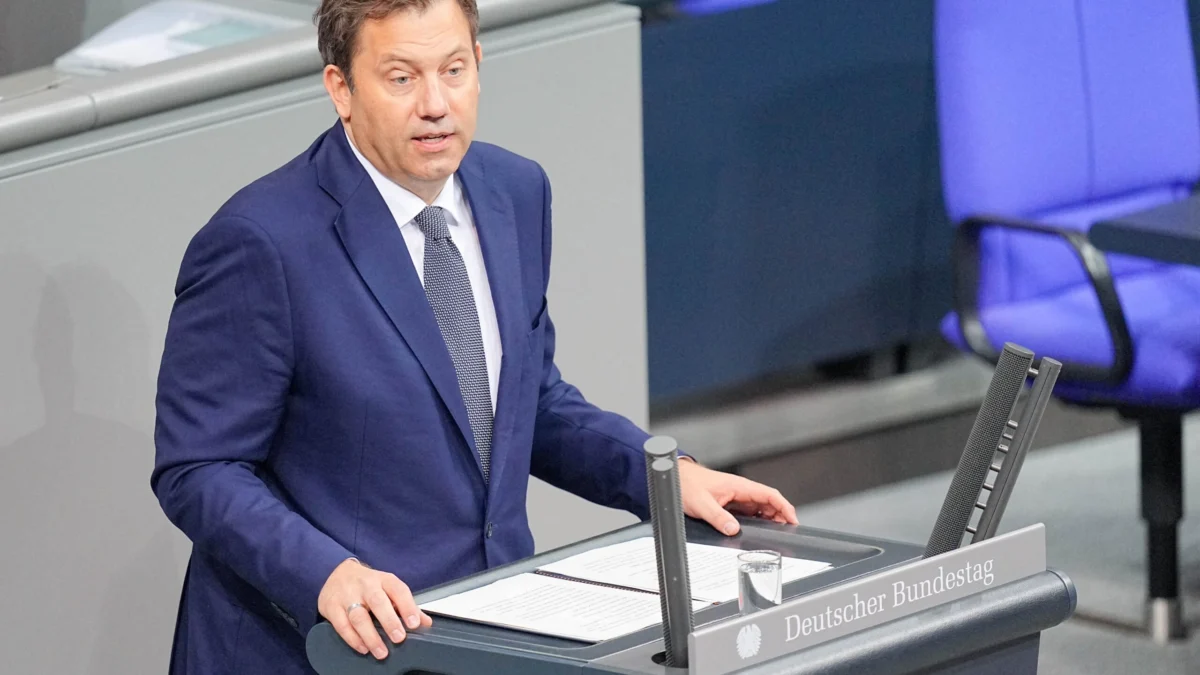
- Phase Two (The First Reading): The formal introduction occurred this past Thursday in the Bundestag. This session served as the first public parliamentary confrontation, where the government’s justification—the necessity of a "fair balance"—was met with immediate skepticism.
- Phase Three (Future Milestones): The bill is slated for further committee review in the coming months. The government hopes to finalize the legislation well in advance of the January 1, 2027, implementation date, though political analysts suggest that the current level of opposition may necessitate significant amendments before a final vote can be called.
Supporting Data: The Fiscal Tug-of-War
The government’s primary defense is anchored in the concept of "fairness." According to data provided by the Finance Ministry, the tax reform is designed to protect those most vulnerable to economic volatility.
"We are providing a gross relief of ten billion euros for citizens with small and medium incomes," Lars Klingbeil stated during the Thursday session. He argued that the fiscal constraints of the current era necessitate that those at the very top of the income pyramid contribute more so that the middle can thrive.
However, opponents have highlighted the disparity between the gross and net figures. While 9.9 billion euros are returned to the taxpayer, the 4.3 billion in "mehreinnahmen" (additional revenue) suggests that the state remains a net beneficiary of tax bracket adjustments, especially when inflation is taken into account. Critics argue that the "cold progression"—the phenomenon where inflation pushes taxpayers into higher brackets despite no increase in real purchasing power—is not being adequately addressed, effectively leading to "creeping tax increases."
Official Responses and Political Friction
The Opposition’s Critique
The opposition parties were unified in their disapproval, though their rationales varied. Kay Gottschalk, a financial expert for the AfD, accused the government of "deliberate deception." He argued that the proposed relief is mathematically insufficient to counter the effects of inflation. Furthermore, he emphasized the impact on the "middle-class engines of the economy," specifically criticizing the increased taxation of minijobs and the reduction of handyperson tax credits as punitive measures against ordinary citizens.
The Left’s Social Justice Argument
From a different perspective, the Green Party and The Left (Die Linke) criticized the proposal for failing to go far enough in its redistributive goals. Sascha Müller of the Green Party pointed to a specific failure: the promise to close the gap between child benefits and tax-deductible child allowances for high earners. Instead of narrowing this divide, critics argue the reform inadvertently widens it, favoring the wealthy at the expense of lower-income families.
Doris Achelwilm of The Left proposed a more radical alternative, suggesting that the government should target a minimum of 350 euros in child benefits, funded by a significant tax increase on the top five percent of the population. She argued that the current reform is a "half-measure" that fails to address systemic inequality.
The Union’s Call for Refinement
Even the CDU, a partner in the broader political discourse, urged caution. Fritz Güntzler, the financial spokesperson for the Union, did not reject the concept of reform but called for urgent "reworking." He argued that the government is failing to address the fundamental issue of inflation-linked tax hikes. "These are billion-euro sums, but compared to the overall budget, they are manageable," Güntzler said, suggesting that a more collaborative, bipartisan approach would yield a more effective result.
Implications: A Broader Economic Context
The implications of this debate extend far beyond the specific tax brackets discussed in the Bundestag.
1. The Burden on "Performance"
The government’s decision to increase the top tax rate to 47 percent for earners above 280,000 euros is a sensitive political signal. Proponents call it "fairness," but critics argue it penalizes high-performing professionals and entrepreneurs, potentially discouraging investment and productivity at a time when the German economy is struggling with sluggish growth.
2. The Future of the "Minijob"
The proposed tripling of the flat-rate tax on minijobs could have a chilling effect on the labor market. Small businesses, which rely on these flexible arrangements, may find their operational costs rising sharply, potentially leading to a reduction in available part-time work or a shift toward the shadow economy.
3. The Trust Deficit
The most significant implication is the growing trust deficit between the public and the government regarding fiscal policy. By framing the reform as a grand relief package while simultaneously cutting popular tax bonuses (like those for handyperson services), the government risks being perceived as "giving with one hand while taking with the other."
Conclusion: A Long Road Ahead
As the debate enters its next phase, the coalition government faces a difficult path. They must decide whether to hold firm on their proposed model—risking further alienation of the middle class and opposition ire—or to enter into a round of negotiations that could see the legislation significantly altered.
The reform of 2027 is not merely a technical adjustment of tax brackets; it is a battle for the soul of Germany’s fiscal identity. As it stands, the government’s message of "fairness" is struggling to find a consensus, leaving the nation’s taxpayers, businesses, and political factions in a state of uncertainty as to what the final tax landscape will truly look like in the years to come.