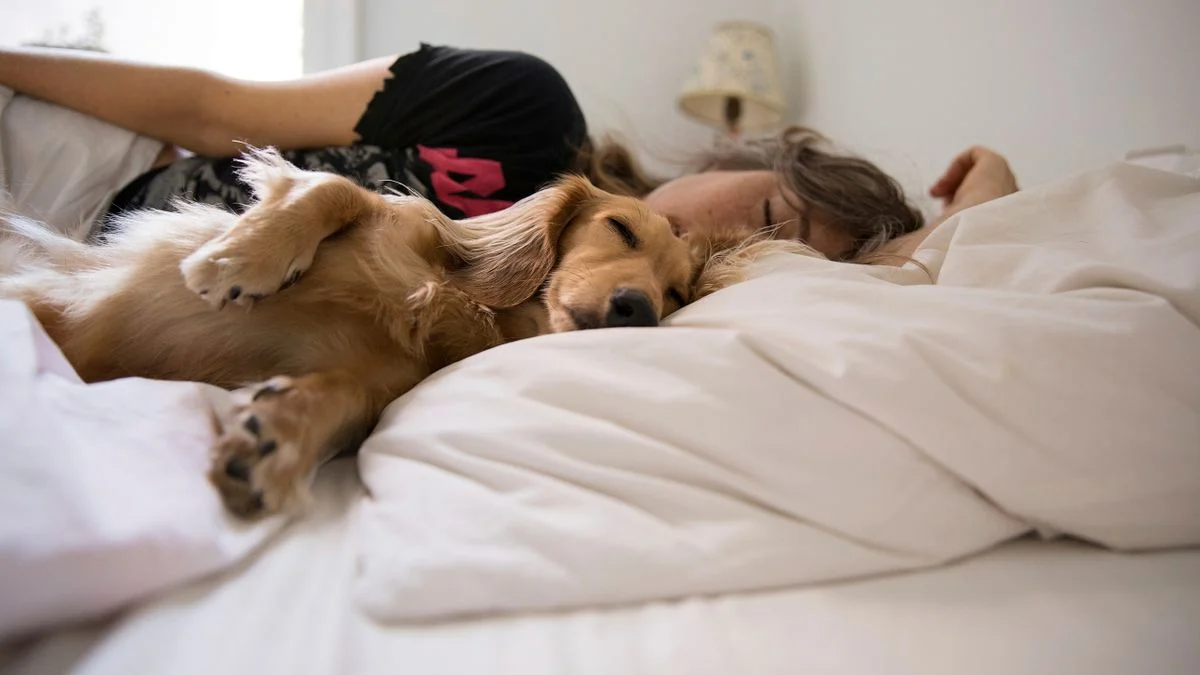
For millions of dog owners, the scene is familiar: a long, exhausting day ends with the comforting weight of a furry companion settling into the crook of one’s knees or sprawling across the foot of the bed. While many pet owners feel a sense of guilt—or perhaps a flicker of annoyance—when their sleep is interrupted by a stray kick or a bout of canine snoring, they often succumb to the undeniable allure of a shared slumber.
But does this nocturnal closeness actually compromise the quality of our rest? A recent study published in the journal PLOS One suggests that the reality is far more nuanced than the "pet-in-the-bed" stigma would have us believe. While humans and their canine counterparts certainly do interact throughout the night, the perceived disruption to our sleep cycles may be more psychological than physiological.
The Science of Co-Sleeping: A Deep Dive into Nocturnal Habits
A research team led by Ming Fei Li and Lavania Nagendran from the University of Toronto recently undertook an investigation into the sleeping patterns of 25 humans (21 women and four men) and their 38 dogs. The subjects were tasked with wearing activity trackers for a period of four weeks—humans wore them on their wrists, while the dogs were equipped with specialized trackers on their collars.
The study aimed to strip away the anecdotal evidence and focus on objective sleep parameters. The participants included a range of dog owners living with Huskies and Malamutes, breeds known for their size and, quite often, their tendency to "hog" the bed.
Chronology of the Research
The study was structured to capture both subjective and objective data. Over the course of the month-long observation, the researchers recorded:
- Activity Levels: Tracking movement during the night to determine periods of wakefulness and sleep onset.
- Subjective Reporting: Asking participants to rate their perceived sleep quality upon waking each morning.
- Data Synthesis: Comparing the mechanical trackers against the participants’ personal accounts to see if the two datasets aligned.
What the researchers found was surprising: while many owners reported that they felt their sleep was disturbed by the presence of their dogs, the biometric data told a different story.
The Disconnect Between Perception and Reality
One of the most compelling findings of the Toronto study is the disparity between how pet owners feel they slept and how they actually slept. Many participants—particularly those sharing a bed with multiple dogs—reported lower sleep quality in their daily surveys. Yet, when the researchers analyzed the activity data, these subjective reports were not reflected in the sleep metrics.
Why Do We Feel Disturbed?
The researchers suggest a strong psychological component. Many dog owners admit that the presence of their pet provides an increased sense of safety and comfort. This sense of security may override the minor, objective disturbances caused by a shifting or restless animal. In essence, the emotional benefit of having a dog nearby may create a "safety buffer," allowing the human to perceive the sleep as restful, even if there are micro-interruptions throughout the night.
Interestingly, the study also revealed that if anyone is doing the disturbing, it is likely the human. The data showed a high correlation between the activity of the human and the dog; when one was active, the other tended to follow. However, in the majority of cases, it was the human who initiated the movement first. This suggests that owners may be unfairly blaming their pets for a cycle of wakefulness that they themselves are triggering.
Evolutionary Roots: Why Dogs and Humans Need to Cuddle
To understand why this behavior persists despite modern warnings about "sleep hygiene," one must look back at our evolutionary history. Dogs are, at their core, pack animals. In the wild, sleeping in close proximity to the pack is a survival strategy. It provides warmth, but more importantly, it provides a distributed alert system. If one member of the pack senses danger, the entire group is alerted.

For humans, the desire to co-sleep is also rooted in our history. Contrary to the modern Western standard of solitary or couple-based sleeping in private rooms, the Homo sapiens of the past rarely slept alone. Until the onset of the Industrial Revolution and the subsequent rise of individual prosperity, communal sleeping was the norm across most human cultures. It was only with the advent of the modern bedroom and the desire for privacy that the idea of "sleeping alone" became the cultural ideal.
In many parts of the world today, sleeping with family members, including pets, remains a standard practice. The "bed-sharing" trend is not a modern vice; it is a return to an ancestral norm that provides social bonding and emotional regulation.
Official Responses and Researcher Perspectives
The study has sparked a conversation about the boundaries of pet ownership. Dr. Lavania Nagendran, a co-author of the study, admits that the findings align with her own personal experience. "My own dog is a very old, cuddly soul," she noted. "He has always slept in the bed with me, and I wouldn’t have it any other way."
Conversely, co-author Ming Fei Li offered a more detached perspective. "I love dogs," she stated, "but I personally have a cat. She sleeps wherever she wants, because that is simply what cats do."
While the research provides fascinating insights, the team is the first to acknowledge the limitations of their work. The study size was small, and there was no control group of non-dog owners to provide a baseline for "ideal" sleep. Furthermore, the research relied on activity trackers, which, while useful, are not as precise as polysomnography (a full sleep study in a clinical setting).
Implications for Pet Owners
What does this mean for the average dog owner? First, it suggests that the "dog in the bed" debate is largely a matter of personal preference rather than a health crisis. If an individual feels they are sleeping well, there is no biological reason to banish the dog to the floor based on current research.
However, for those who struggle with chronic insomnia or fragmented sleep, the study does not rule out the possibility that a pet could be a factor. While the average participant in this study was not negatively impacted, every individual—and every dog—is different. Size, age, and temperament of the animal all play a role. A restless puppy or a dog that occupies 70% of the mattress space may indeed affect sleep quality for a light sleeper.
Finding the Middle Ground
For those who want the companionship of their pet without the physical encroachment, there are several compromises:
- The "Bedside Bed": A pet bed placed immediately next to the human bed allows for physical proximity and the feeling of the "pack" without the lack of space.
- Gradual Transitions: If a dog is currently in the bed, shifting them to a dedicated space nearby can be done through positive reinforcement.
- Prioritizing Quality: If the human or the dog is exhibiting signs of chronic fatigue, a reassessment of the sleeping arrangement is warranted, regardless of what the "average" study shows.
Ultimately, the bond between human and canine is one of the most significant relationships in the modern household. Whether that bond extends into the early hours of the morning is a deeply personal choice. The research suggests that while we might blame our dogs for our restless nights, we are likely just as responsible for their interrupted dreams as they are for ours. As we continue to navigate the complexities of modern living, perhaps we should embrace the wisdom of our ancestors: a little bit of shared warmth might just be the secret to a better night’s rest, regardless of how much kicking happens under the covers.