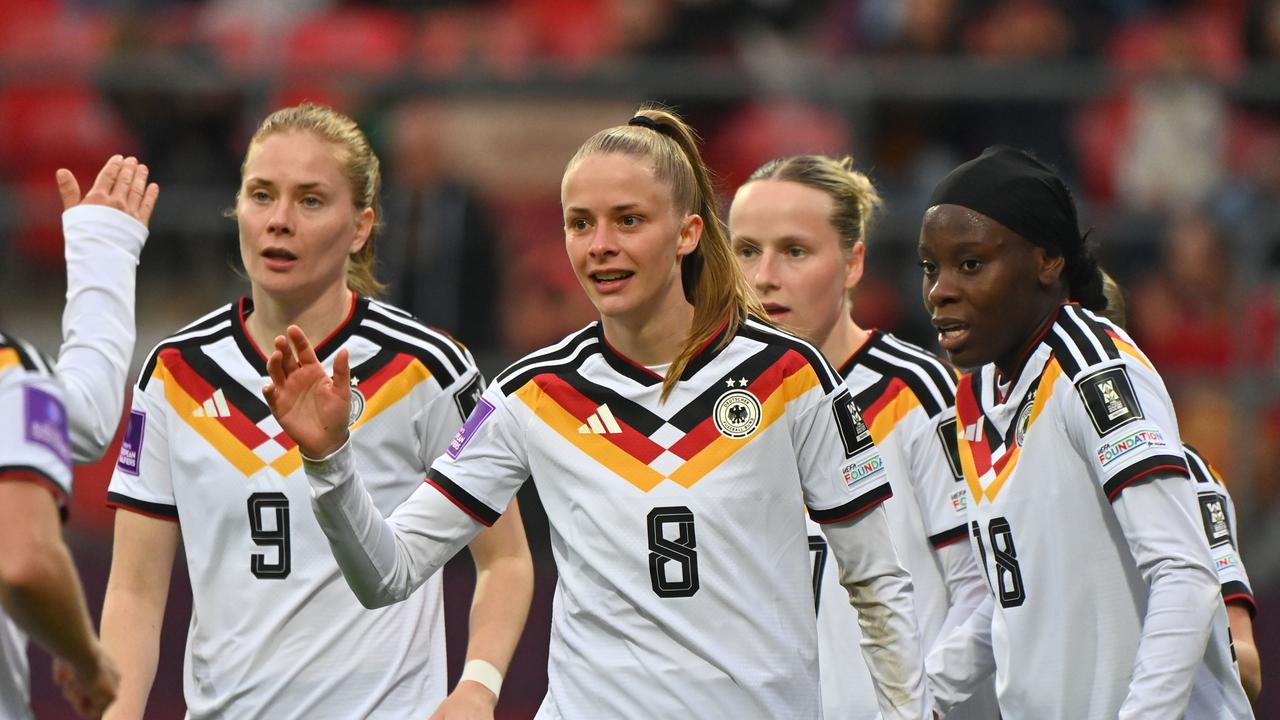
In a landmark move that cements the long-term future of women’s football coverage in Germany, public broadcasters ARD and ZDF have finalized a comprehensive agreement with the German Football Association (DFB). The deal, secured through the broadcasters’ joint sports rights agency, guarantees that the German women’s national team will remain a fixture on free-to-air television until 2031.
This extension ensures that fans across the nation will continue to have unfettered access to the triumphs, challenges, and high-stakes matches of the DFB women’s squad. As the popularity of women’s football continues to surge globally, this commitment by Germany’s public service broadcasters underscores a strategic shift toward prioritizing the sport as a cornerstone of national media programming.
The Core Agreement: A Decade of Coverage
The newly ratified contract covers a broad spectrum of international fixtures. Under the terms of the agreement, ARD and ZDF have secured exclusive media rights for all competitive and friendly matches played by the German women’s national team for the next five years.
This extensive package includes, but is not limited to:
UEFA Nations League: Comprehensive live coverage of all tournament phases.
Euro 2029 Cycles: All qualification matches and essential pre-tournament preparation fixtures.
World Cup 2031 Cycles: Full coverage of the road to the 2031 tournament, including friendlies and qualifiers.
By securing these rights through 2031, the broadcasters are not merely purchasing airtime; they are investing in the narrative growth of the sport. This consistency allows for better marketing, deeper analysis, and a more stable environment for fans to engage with the team over the course of several competitive cycles.
Chronology of Progress
The journey to this multi-year deal is reflective of the rapid professionalization of the women’s game. In the past, women’s football was often relegated to secondary channels or received sporadic coverage. However, the last several years have seen a paradigm shift.
Pre-2020: Coverage was inconsistent, often relying on specific tournament-by-tournament negotiations.
2022-2024: The massive success of the UEFA Women’s Euro 2022 and the subsequent World Cup cycles acted as catalysts. Viewership numbers shattered previous records, proving that there is a massive, dedicated audience for women’s football in Germany.
October 2026: The formal announcement of the 2031 extension marks the most significant commitment in the history of the partnership. It signals a move away from short-term planning to a strategic, long-term vision.
This timeline demonstrates that the growth of the sport is not a fleeting trend but a sustained trajectory that the media industry is now actively facilitating.
Supporting Data: The Rising Demand
The decision to commit to a five-year deal is backed by compelling data. Market research consistently shows that the DFB women’s team is currently one of the most popular sports properties in Germany.
Viewership Metrics
During recent international windows, matches have regularly drawn audiences exceeding several million viewers on linear television alone. When factoring in the ARD Mediathek and digital streaming platforms, the reach is even more profound. Younger demographics, in particular, show a significantly higher engagement rate with the women’s national team compared to traditional legacy sports programming.
The Economic Impact
Beyond viewership, the visibility provided by ARD and ZDF drives commercial interest in the sport. By guaranteeing consistent time slots on prime-time television, the broadcasters are helping to build the "brand" of individual players and the team as a whole, which in turn fuels the sponsorship ecosystem and domestic league attendance.
Official Responses: A Statement of Intent
The leadership at ARD and the DFB have been vocal about the significance of this deal. For the broadcasters, it is about fulfilling their mandate to provide high-quality, inclusive sports programming.
ARD Program Director Christine Strobl emphasized the symbolic weight of the agreement:
"With the extension of our agreement with the DFB, we are making a clear statement. We are very pleased to continue to be able to show the German women’s football team live and comprehensively in Das Erste, in the ARD Mediathek, on the radio, and in all other ARD and Sportschau offerings."
Strobl’s statement highlights the multi-platform approach. In today’s media landscape, exclusivity is only half the battle; accessibility is the other. By leveraging the ARD Mediathek and radio broadcasts, the network ensures that the sport reaches every corner of the country, regardless of how the viewer chooses to consume their media.
DFB officials have mirrored this sentiment, noting that the partnership with public broadcasters provides the stability required to develop the grassroots level of the game. When young girls see their idols on prime-time TV every few months, the inspiration to join local clubs is direct and measurable.
The Immediate Future: Germany vs. Japan
The partnership kicks off its new long-term chapter with a high-profile friendly against Japan on October 13, 2026. This match, held in Bremen, is being positioned as a marquee event.
The production team, led by moderator duo Claus Lufen and Almuth Schult—a former national team goalkeeper herself—is expected to provide a level of analytical depth that reflects the sport’s increased tactical complexity. Stephanie Baczyk, serving as the lead reporter for the match, will provide the on-ground perspective for the broadcast.
This specific match is illustrative of the "new normal" for women’s football: a prime-time slot (17:35 CET), heavy pre-match analysis, and a sophisticated broadcast team, placing the game on equal footing with the highest levels of men’s international football.
Implications: The Broader Landscape
The implications of this deal are far-reaching, affecting everything from domestic league interest to the overall cultural perception of women in sports.
1. The Normalization of Women’s Sport
When a match like Germany vs. Japan is treated with the same production value and scheduling importance as a men’s UEFA Nations League match, it reinforces the message that women’s football is not a "niche" interest. It is a major sporting event. This normalization is essential for the long-term health of the sport.
2. Stability for the DFB
For the DFB, this deal provides financial predictability. Knowing that the media rights are secured through 2031 allows the association to budget more effectively for youth development, coaching education, and infrastructure.
3. A Template for European Broadcasters
Other European nations will likely look at this German model as a blueprint. Public service broadcasters across the continent are under pressure to justify their licensing fees; by securing the rights to high-growth, high-demand content like the women’s national team, ARD and ZDF are demonstrating the tangible value they bring to the public.
4. Digital Integration
The emphasis on the ARD Mediathek and Sportschau apps suggests that the broadcasters are preparing for a digital-first future. As linear TV viewership evolves, the ability to stream high-quality matches on mobile devices will be the key to maintaining audience numbers among Gen Z and Gen Alpha.
Conclusion: A Game for Everyone
The decision to lock in the broadcasting rights for the German women’s football team until 2031 is more than just a business transaction—it is a cultural investment. By ensuring that these matches remain in the public domain, ARD and ZDF are preserving the democratic nature of sports viewership.
As the team prepares for the upcoming challenges against Japan and the cycles leading up to the 2029 Euro and 2031 World Cup, they do so with the security of knowing their matches will be seen by millions. This partnership serves as a testament to how far the sport has come and sets a clear, ambitious path for where it is going. In the coming years, the pitch will belong to the players, but the screens of Germany will remain firmly tuned to their journey.