By Industrial Correspondent
The conflict in Ukraine has fundamentally transformed the nature of modern combat, shifting from the massive, artillery-heavy engagements of the 20th century to a high-speed, technology-driven war of attrition. At the center of this shift is the "Geran" drone, a Russian-deployed, jet-powered loitering munition that has proven both elusive and devastating to critical infrastructure. However, a new partnership between German defense tech startup Quantum Systems and Ukrainian industry is promising to turn the tide. With the backing of the German government, this collaboration is scaling up the production of interceptor drones designed specifically to neutralize these jet-powered threats.
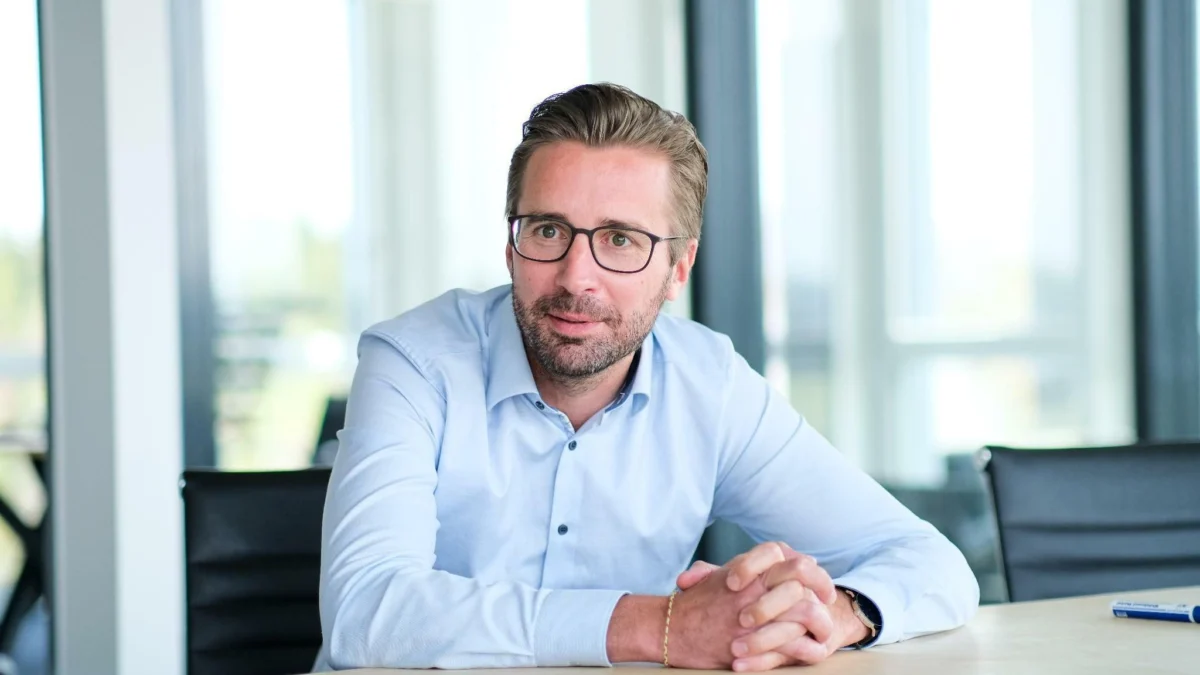
In a recent interview, Florian Seibel, founder and CEO of Quantum Systems, discussed the urgency of this technological race, the necessity of industrial reform, and the geopolitical implications of Europe’s defense capabilities.
The Strategic Shift: Addressing the Jet-Powered Threat
For months, Russia has bombarded Ukrainian cities and energy infrastructure with hundreds of drones daily. The "Geran" variants, equipped with jet propulsion, present a significant challenge for existing air defense systems, which are often ill-equipped to track and intercept such small, fast-moving, and low-flying targets.

The breakthrough comes from a cross-border initiative: Quantum Systems, based in Gilching, Germany, has joined forces with Ukrainian partners to develop an interceptor drone capable of matching the speed and maneuverability of the Russian systems. The German federal government has committed to financing the mass production of these units within Ukraine, signaling a shift toward localized, rapid-response manufacturing.
"The Ukraine is facing an incredibly hard winter," says Seibel. "Russia is developing weapon systems like the Geran drones with high speed. While the ability to innovate quickly was once the hallmark of the Ukrainian defense sector, Russia has now achieved high-volume production to systematically target civilian infrastructure and break the will of the population. We have to increase our speed to match that."

Chronology of the Drone Evolution
The evolution of drone warfare in the conflict can be segmented into three distinct phases:
- The Reconnaissance Era (2022): Initially, drones were primarily used for intelligence, surveillance, and reconnaissance (ISR). Quantum Systems’ "Vector" drone played a pivotal role here, providing the Ukrainian military with real-time, high-definition imagery that allowed for precise artillery targeting.
- The Loitering Munition Surge (2023): As the conflict solidified, both sides began utilizing low-cost, one-way attack drones (loitering munitions). This forced an adaptation in defensive postures, as traditional air defense (S-300, Patriot) became too expensive and scarce to use against cheap, mass-produced drones.
- The Interceptor Era (2024–Present): We are now in the age of the "drone-on-drone" conflict. The focus has shifted from destroying static targets to securing the skies against autonomous or semi-autonomous incoming threats. This is where the new German-Ukrainian interceptor program sits—a strategic attempt to create a cost-effective "air umbrella."
Supporting Data: The Industrial Challenge
The current state of the defense industry is characterized by a "fragmentation trap." According to Seibel, almost every military unit in Ukraine has its own preferred drone supplier and a unique system. While this allows for rapid, localized innovation, it prevents the economies of scale necessary to win a war of attrition.

- Production Volume: To effectively deter Russian attacks, the required interception capacity is in the tens—and potentially hundreds—of thousands of units.
- Market Consolidation: Seibel argues that Germany, and Europe at large, cannot support 100 small drone start-ups. To reach industrial maturity, he suggests a consolidation into three or four "champions" that compete on performance and delivery speed, rather than relying on venture capital subsidies.
- Funding: Despite massive private capital inflows—including a recent €1.2 billion round for Quantum Systems—Seibel insists that the "money is only as good as the contract." He warns that without long-term government procurement strategies, the industry will struggle to build the infrastructure needed for high-volume manufacturing.
Official Responses and Political Friction
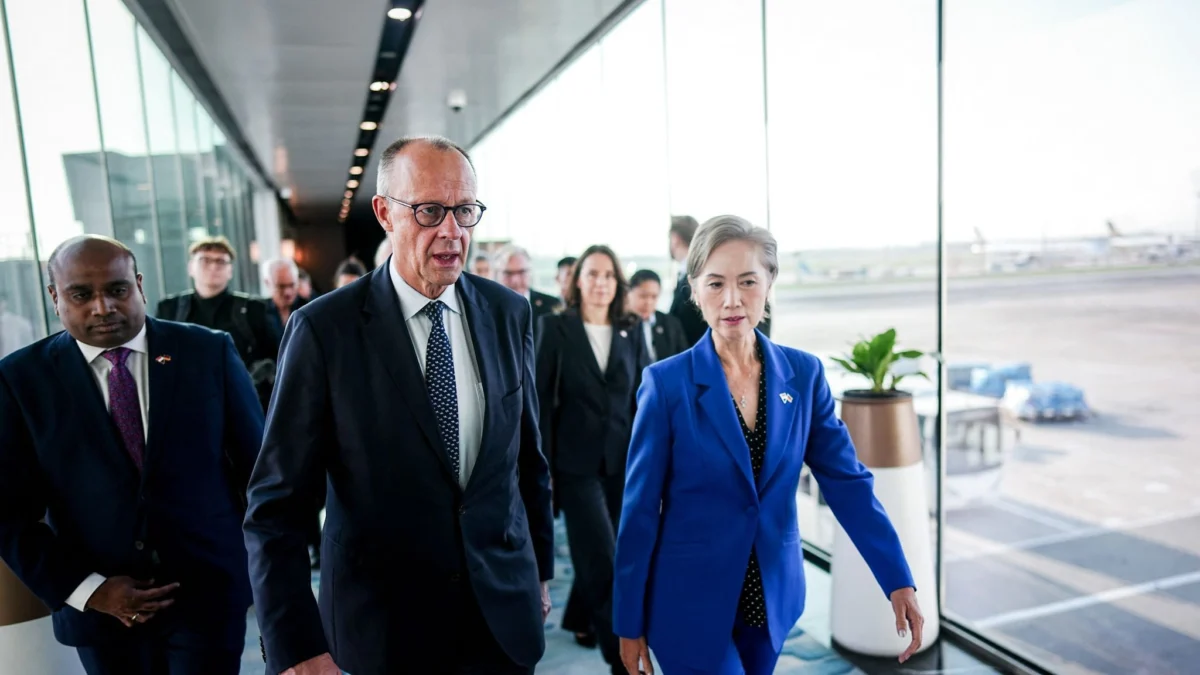
The visit of German Chancellor Friedrich Merz to Kyiv served as the catalyst for the current acceleration in drone production. However, Seibel is critical of the procurement processes currently in place within the German establishment.
"How long did I have to negotiate with the Bundeswehr until we finally got a few contracts?" Seibel asks. He highlights the frustration of smaller, agile firms being passed over in favor of legacy defense contractors, or worse, witnessing a "dilution of competition" where multiple players are given "tickets" to the same project, even after a competitive winner has been decided.

Seibel describes the current procurement landscape as being hampered by decades of institutional lethargy. "We need to disrupt the system," he argues. "We need development from the bottom up, following clear rules where the best—not necessarily the most established—prevail."
Geopolitical Implications: Independence or Reliance?
The core of Seibel’s argument is that Europe is at a historical crossroads. For too long, the continent has relied on American security guarantees and Chinese supply chains for critical components.

1. The Technological Sovereignty Mandate
"If we want to defend ourselves independently, we need to build new industries now," Seibel warns. "We are heading toward times that will be very uncomfortable—both militarily and economically." This includes sourcing components outside of China and ensuring that the intellectual property remains on European soil.
2. Multi-Domain Operations (MDO)
The future of the battlefield is not just about drones; it is about the "network." The Ukrainian military’s success in integrating disparate systems into a unified picture of the battlefield is a preview of future warfare. Seibel emphasizes that Quantum Systems is positioning itself to lead in "Multi-Domain-Operations," where air, ground, and software assets are seamlessly linked.

3. The "Moonshot" Mentality
Seibel calls for a "Moonshot" approach to defense spending. With the largest defense budget in recent history, the danger lies in the "sprinkler" method—distributing funds too thinly across too many projects. If the current funding is not used to create long-term industrial capability, it will be squandered, leaving Europe just as vulnerable as it was before the conflict began.
Looking Ahead: The Future of the Defense Startup
Quantum Systems began in 2015 with a focus on civil applications, such as agriculture and infrastructure monitoring. The company has since evolved into a defense powerhouse with 1,000 employees. This trajectory serves as a blueprint for what is possible when a startup pivots to meet existential national security needs.

When asked about the consolidation of the market, Seibel is pragmatic. He believes that the market will decide which companies succeed, but he stresses that the "Gold Nuggets"—the smaller companies with deep, niche technological expertise—must be integrated into the broader industrial base to ensure that the final products are free from foreign dependencies.
As for the relationship with the German government, Seibel is cautiously optimistic. He acknowledges that the political landscape is changing, albeit slowly. "We have the talent, we have the universities, and we have the money. We just need to have the courage to trust in our own capability to build a robust, independent defense industry."

Conclusion
The partnership between Quantum Systems and the Ukrainian defense sector is more than just a supply contract; it is a fundamental shift in how democratic nations respond to modern, high-intensity conflict. By prioritizing speed, scale, and software-driven hardware, they are challenging the slow-moving bureaucracies of the past. As the conflict in Ukraine continues, the lessons learned in the skies over Kyiv will likely define the security landscape for the next three decades. The question remains: will European political leadership act with the same urgency as the engineers on the front lines?
"We are not here to complain," Seibel concludes. "We are here to deliver. But the window of opportunity to build these champions is closing. We must decide what kind of defense industry we want to be."