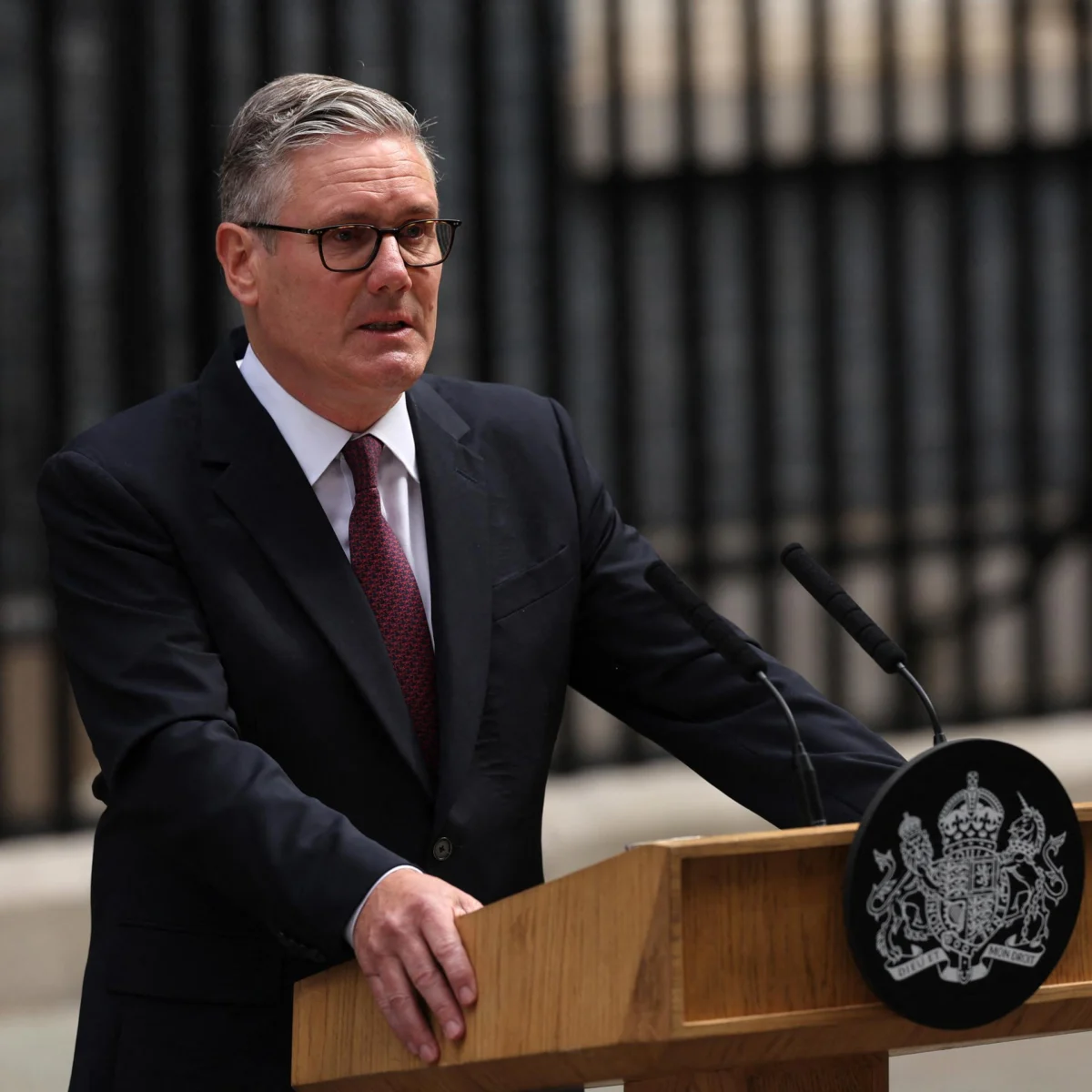
LONDON, United Kingdom – June 22, 2026 – In a dramatic turn of events that underscores the relentless volatility of British politics, Prime Minister Keir Starmer today announced his resignation, effective once his successor is chosen. Speaking from the iconic steps of 10 Downing Street, Starmer stated he was taking "full responsibility" for the Labour Party’s "persistently poor approval ratings" and recent electoral setbacks, bringing an end to his tenure just shy of two years since leading his party to a landslide victory in July 2024.
The announcement sends shockwaves through Westminster and beyond, marking a significant moment in the nation’s recent history of political upheaval. Starmer, who had pledged to restore stability after a tumultuous period, now joins a growing list of prime ministers whose time in office has been cut short by internal party dissent and public dissatisfaction.
Main Facts: A Sudden Departure
Keir Starmer, the leader of the Labour Party and Prime Minister of the United Kingdom, confirmed his intention to step down from both roles. His decision comes in the wake of mounting pressure, including devastating losses in local elections in May 2026 and a series of high-profile cabinet resignations that exposed deep rifts within his government. The final catalyst appears to have been the recent parliamentary by-election victory of his internal rival, Andy Burnham, which paved the way for a potential direct challenge to Starmer’s leadership.
Starmer’s resignation speech, delivered with a mix of defiance and reflection, highlighted what he considered the achievements of his administration while acknowledging the political realities that necessitated his departure. He emphasized his commitment to ensuring an orderly transition of power, promising to remain at the helm until a new Labour leader and Prime Minister is elected, a process expected to conclude by September.
Chronology: From Triumph to Turmoil
Keir Starmer’s political journey to the premiership was marked by a steady ascent within the Labour Party. A former Director of Public Prosecutions and Queen’s Counsel, he was first elected as the Member of Parliament for Holborn and St Pancras in 2015. Following Labour’s catastrophic general election defeat in 2019, Starmer won the party leadership contest in April 2020, inheriting a party described by many as being at its lowest ebb in decades.
The State of Labour in 2024:
Starmer’s initial task was monumental. He took over a Labour Party that, as he himself stated in his resignation speech, was "politically, financially, and morally bankrupt." The party had suffered its worst electoral performance since 1935, grappling with the fallout from Brexit, deep divisions over its future direction, and a pervasive crisis of antisemitism within its ranks. Starmer’s leadership was characterized by a concerted effort to move Labour back to the political centre ground, distancing it from the more radical policies of his predecessor, Jeremy Corbyn. He focused on restoring public trust, particularly concerning economic competence, national security, and defense.
The 2024 General Election Victory:
After years of sustained effort, Starmer successfully repositioned Labour, capitalising on public fatigue with the Conservative government and a series of scandals that eroded trust in the ruling party. The July 2024 general election saw Labour achieve a historic victory, securing a comfortable majority and propelling Starmer into 10 Downing Street. It was, as he recalled, "the proudest moment" of his life, a testament to his strategy of rebuilding the party from the ground up.
A Challenging Premiership:
Despite the initial euphoria, Starmer’s premiership was anything but smooth. His government faced immediate challenges, including a stagnating economy, persistent industrial unrest, and the complex aftermath of post-Brexit relations with the European Union. While Starmer claimed successes in his resignation address – specifically "ripping out the poison of antisemitism" from the party and restoring "trust in the economy, defense, and national security" – these achievements were often overshadowed by the practical difficulties of governing in a deeply divided country.
His leadership style, often described as cautious and pragmatic, began to draw criticism from both within and outside his party. Some backbenchers yearned for bolder, more transformative policies, while others found his approach too controlling.
The Turning Point: Local Elections and Cabinet Exodus:
The true turning point arrived with the local elections in May 2026. Labour, despite being in government, suffered significant losses in key councils across the country. These results were widely interpreted as a damning indictment of Starmer’s government, suggesting that the public’s initial enthusiasm had waned and that voters were still seeking a more compelling vision for the future.
The electoral drubbing was swiftly followed by a cascade of cabinet resignations. Several prominent ministers, citing irreconcilable differences over policy direction and Starmer’s "autocratic leadership style," stepped down, further destabilizing the government and exposing the deep cracks that had formed within the Labour Party’s upper echelons. These resignations, coming so close after the election losses, created an untenable situation for the Prime Minister.
The Burnham Factor:
The final nail in the coffin came on Friday, June 19, 2026, with the by-election victory of Andy Burnham. Burnham, the popular Mayor of Greater Manchester and a long-standing figure in the Labour Party, secured a parliamentary seat, enabling him to formally contest the party leadership. It had been widely reported that Burnham, a prominent figure from the party’s left-leaning wing, would have immediately launched a leadership challenge if Starmer had not resigned, forcing a divisive and potentially damaging internal election. Starmer’s pre-emptive resignation effectively avoids this direct confrontation, though it doesn’t diminish the underlying political schism.
Supporting Data: The Erosion of Trust and Authority
Starmer’s decision, while sudden, was the culmination of several months of declining political capital.
Approval Ratings in Decline:
Throughout late 2025 and early 2026, opinion polls consistently showed a significant drop in public approval for Starmer personally and for the Labour government. While Labour had enjoyed a honeymoon period after the 2024 election, economic headwinds, persistent cost-of-living concerns, and perceived policy indecision began to take their toll. Polling data from various reputable firms indicated that Starmer’s net approval rating had slipped into negative territory, a stark contrast to the robust positive figures he commanded during his election victory. Crucially, these polls also showed a narrowing gap between Labour and a resurgent Conservative Party, and a growing threat from smaller parties like Reform UK.
Local Election Losses Analysed:
The May 2026 local elections were a critical barometer of public sentiment. While the specific results are still being fully analysed, early reports highlighted Labour losing control of several key urban councils, including some that had been traditional strongholds. The Conservative Party, despite its own internal struggles, managed to make unexpected gains in some areas, while Reform UK also showed an increased presence. The narrative that Labour could simply coast on public dissatisfaction with the previous Conservative government had clearly collapsed. Voters were now scrutinising Labour’s performance, and finding it wanting.
Cabinet Dissent and Leadership Style:
The anonymous briefings from within Downing Street and the subsequent public resignations painted a picture of a Prime Minister increasingly isolated. Critics accused Starmer of being overly cautious, prone to U-turns, and unwilling to delegate genuine authority to his cabinet ministers. The resignations of key figures, whose names are still emerging, reportedly stemmed from frustrations over the government’s handling of the NHS crisis, the lack of a clear strategy for economic growth, and a perceived reluctance to address the more radical elements of the party’s manifesto promises from 2024. These internal fractures severely undermined Starmer’s authority and made governing effectively a near-impossible task.
Starmer’s Self-Assessment:
In his farewell address, Starmer offered a defense of his record. Beyond tackling antisemitism, he pointed to restoring "trust in the economy, defense, and national security." While his supporters would argue that he brought a sense of calm and competence back to government after years of Conservative turmoil, critics would contend that this caution often bordered on inertia, failing to deliver the transformative change many voters had hoped for. The economic indicators, while not disastrous, had not shown the robust recovery promised, and public services continued to struggle under strain.
Official Responses: A Divided Reaction
The news of Starmer’s resignation elicited a range of reactions from across the political spectrum, both domestically and internationally.
Domestic Political Landscape:
Nigel Farage, the charismatic leader of the right-wing populist party Reform UK, was quick to seize on the opportunity, immediately calling for a snap general election. Farage, whose party has seen a surge in support by tapping into public discontent with both mainstream parties, declared that Starmer’s resignation proved the need for "radical change in Great Britain." He argued that the political establishment had failed the country and only a fresh mandate from the people could address the nation’s deep-seated problems. Reform UK’s growing influence poses a significant threat to both Labour and the Conservatives, potentially fragmenting the vote in future elections.
The Conservative Party, currently in opposition, has yet to issue a formal statement, but sources indicate a mix of cautious optimism and strategic planning. While Starmer’s departure creates instability for Labour, it also means the Conservatives will face a new, potentially reinvigorated opponent.
Within the Labour Party, the reaction is undoubtedly complex. While some may mourn Starmer’s departure, others, particularly those aligned with Andy Burnham, will see it as an opportunity for a fresh start and a potential shift in the party’s ideological direction.
International Reactions:
The news also resonated on the international stage. European Commission President Ursula von der Leyen issued a statement praising Starmer as an "outstanding statesman." She specifically highlighted his contributions to "the security of Europe and Ukraine," underscoring the strong relationship he had cultivated with European leaders during his time in office. This positive appraisal from Brussels stands in contrast to the often-strained relations under previous British governments, suggesting Starmer had successfully rebuilt some of the bridges burned during the Brexit years.
Other world leaders are expected to offer their condolences and express hopes for continued stability in the UK. The resignation of a British Prime Minister always draws global attention, given the UK’s status as a G7 nation and a permanent member of the UN Security Council.
Implications: A Nation in Search of Stability
Keir Starmer’s resignation plunges British politics into another period of uncertainty, further entrenching a pattern of rapid prime ministerial turnover that has become a defining characteristic of the past decade.
The "Seventh Prime Minister in Ten Years" Narrative:
The fact that Starmer’s successor will be the seventh British Prime Minister in ten years is a stark reminder of the profound instability that has gripped the country since the 2016 Brexit referendum. This rapid succession of leaders – from David Cameron to Theresa May, Boris Johnson, Liz Truss, Rishi Sunak, Keir Starmer, and now a new, as-yet-unnamed leader – speaks volumes about the challenges of governing a deeply divided nation and the increasing fragility of political mandates. This constant churn at the top raises serious questions about Britain’s global standing, its ability to formulate and implement long-term policies, and the very health of its democratic institutions.
The Labour Leadership Contest:
The Labour Party leadership contest, expected to commence in July, will be a defining moment for the party. Andy Burnham is widely anticipated to be a frontrunner, but other figures may also emerge, potentially representing different wings of the party. The contest will likely involve intense debates over Labour’s future direction, its economic policies, and its approach to key social issues. The outcome will not only determine the next Prime Minister but also reshape the ideological landscape of the Labour Party for years to come. A protracted or particularly bitter contest could further damage the party’s image, while a swift and decisive victory for a popular figure could offer a much-needed reset.
Impact on the Next General Election:
While no immediate general election has been called, the possibility looms large. A new Prime Minister might seek an early mandate from the public to solidify their position, particularly if their approval ratings are strong. Alternatively, the ongoing political instability could deter an immediate election, with the new leader opting to consolidate power within the party first. Reform UK’s call for immediate elections underscores the opportunistic nature of opposition parties in such circumstances. The political landscape is now highly fluid, and the timing of the next national ballot will be a critical strategic decision for the new Labour leader.
Economic and International Repercussions:
Economically, the immediate impact could be a period of market nervousness, though the structured nature of Starmer’s departure may mitigate severe reactions. Investors typically prefer stability, and any perception of prolonged political chaos could affect the pound and investor confidence. Internationally, the UK will continue to navigate complex geopolitical challenges, including the ongoing war in Ukraine and evolving relations with the EU and the United States. A new Prime Minister will need to quickly establish their foreign policy credentials and reassure allies of Britain’s continued commitment to its international responsibilities.
Starmer’s resignation marks the end of a chapter that began with such high hopes for Labour. His successor faces the daunting task of uniting a fractured party, reassuring a skeptical public, and leading a nation that appears perpetually on the brink of political transformation. The coming months will be crucial in determining whether this latest change in leadership can finally bring the stability and clear direction that Britain so desperately seeks.
This news was broadcast on Deutschlandfunk on June 22, 2026.