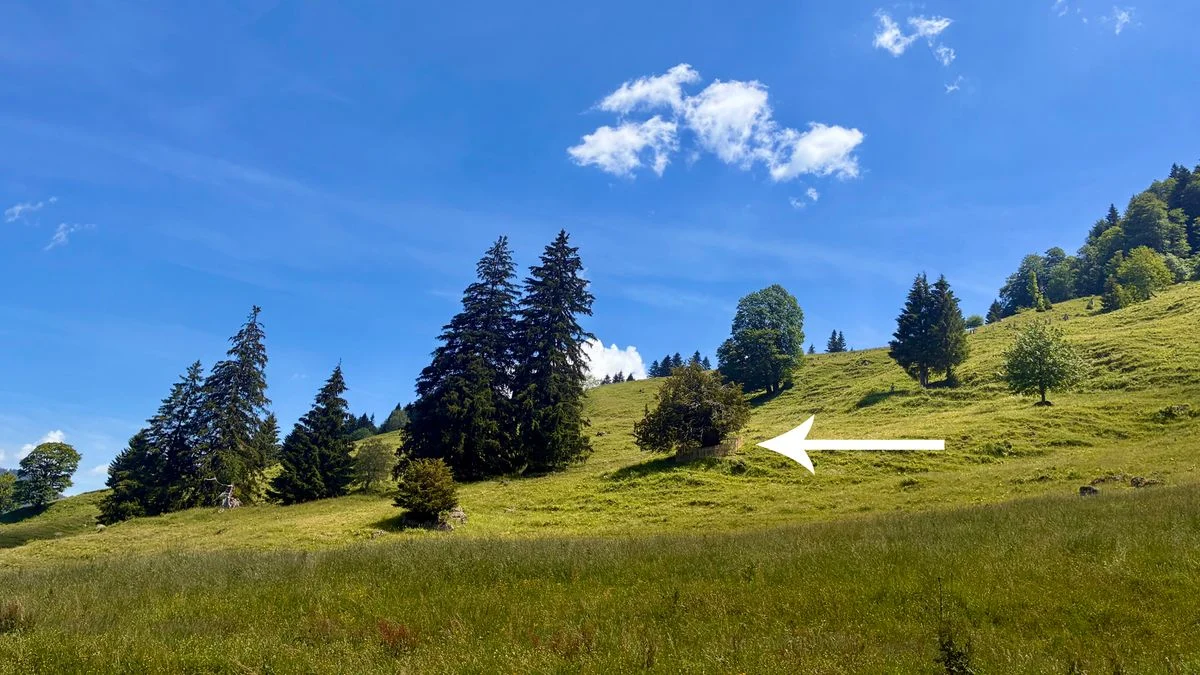
Deep within the verdant, rolling hills of the Oberallgäu region in Bavaria, near the village of Steibis, a silent witness to over a millennium of human history stands guard. It is not a castle, a monument, or a ruin, but a tree: a Common Yew (Taxus baccata). Recent dendrochronological analysis and botanical surveys suggest that this unassuming, gnarled specimen is likely the oldest living tree in Germany, with an estimated age of at least 1,100 years.
The Main Facts: A Silent Survivor
The yew tree at Steibis is a testament to the resilience of nature. Despite its advanced age, it is remarkably small compared to the towering redwoods of North America or the giant sequoias. Its height—often stunted by the harsh Alpine winters and the nutrient-poor, rocky limestone soil—belies its profound biological significance.
For centuries, the tree has been a fixture of the local landscape, though its true age remained a matter of local folklore rather than scientific consensus. Unlike oaks or pines, which grow with predictable vigor, the yew is a slow-growing, shade-tolerant conifer that can enter a state of semi-dormancy, allowing it to survive for millennia. The discovery of its age has elevated this tree from a regional curiosity to a national natural treasure, prompting local conservationists and government authorities to discuss new protective measures for the site.
A Chronology of Millennia
To understand the significance of this tree, one must place it in the context of European history. If the tree is at least 1,100 years old, it began its life around the year 924 AD.
- The Early Years (10th Century): As the tree sprouted, the Holy Roman Empire was in its infancy under the Ottonian dynasty. The region of Bavaria was a frontier of influence, and the yew was likely a sapling when Henry the Fowler was King of East Francia.
- The Medieval Peak (12th–14th Century): By the time the Hohenstaufen emperors were rising to power and the Crusades were reshaping the Mediterranean, the yew had already survived several centuries. It would have witnessed the transition from the Early to the High Middle Ages, standing silently through the rise of feudalism and the eventual arrival of the Black Death.
- The Early Modern Period (16th–18th Century): As the Enlightenment began to dawn and the Thirty Years’ War ravaged the German lands, the tree’s growth rate slowed significantly, a common trait for Taxus baccata in later life stages.
- The Modern Era: The 20th and 21st centuries have brought the greatest threats to the tree, primarily through environmental changes and the increased encroachment of human tourism in the Allgäu Alps.
Supporting Data: The Science of Ageing
Determining the age of a yew tree is notoriously difficult. Unlike many other species, yew trees often become hollow as they age, with the central heartwood rotting away. This makes traditional ring-counting (dendrochronology) via boring tools impossible, as the oldest rings have long since disappeared.
Advanced Analytical Methods
Botanists have employed a combination of cross-referencing and environmental modeling to estimate the tree’s age:
- Girth-to-Age Ratios: By comparing the circumference of the Steibis yew with other documented, ancient yews across Europe (such as the Fortingall Yew in Scotland), researchers can extrapolate an age based on growth patterns in the specific microclimate of the Oberallgäu.
- Genetic Mapping: Recent studies suggest that the genetic stability of this particular specimen indicates a lineage that has occupied the same soil profile for over a millennium.
- Local History Records: Land registry records dating back to the 17th century mention a "great old tree" at the site, providing a baseline that anchors the scientific estimates.
Official Responses and Conservation Efforts
The discovery has sent ripples through the Bavarian Ministry of the Environment and local heritage boards. Dr. Helga Müller, a lead researcher in regional dendrology, stated, "We are not just looking at a plant; we are looking at a living archive of the Alpine climate. Every ring in that wood contains data on the temperature and precipitation levels of the last thousand years."
However, the attention has brought challenges. The local municipality of Oberstaufen is now grappling with the balance between public access and environmental protection.
- Restricted Access: There are ongoing discussions regarding the installation of a perimeter fence to prevent soil compaction around the root zone, a common killer of ancient yews.
- Monitoring Programs: The Bavarian State Office for the Environment has proposed a multi-year monitoring program to track the tree’s health, specifically looking for signs of stress caused by climate change, such as increased summer droughts.
- Public Awareness: Educational signage is being planned to explain the importance of the tree without disclosing its exact coordinates to prevent "botanical tourism" from damaging the surrounding ecosystem.
Implications: Why the Steibis Yew Matters
The discovery of the Steibis yew serves as a potent metaphor for the fragility and persistence of life in the Anthropocene.
Ecological Importance
Yews are dioecious, meaning they have separate male and female plants. The Steibis tree is a critical genetic repository. Its survival for 1,100 years proves its adaptation to the specific environmental stressors of the Allgäu region. Preserving this tree is essential for biodiversity, as it acts as a keystone species in the local forest hierarchy, providing habitat and food (via its arils) for various bird and insect species.
Climate Change and Resilience
Perhaps the most critical implication is what the tree can teach us about climate resilience. Having survived the Medieval Warm Period and the Little Ice Age, the tree’s biological response to these historical fluctuations offers a window into how forest ecosystems might adapt to current global warming. If the tree can continue to thrive despite the increasing frequency of heatwaves and altered rainfall patterns in the Alps, it could provide researchers with clues about genetic traits that promote longevity and drought resistance.
Cultural Significance
In many European cultures, the yew was considered a sacred tree, often associated with death and rebirth due to its longevity and its ability to regenerate from its own roots. The recognition of this tree as Germany’s oldest is a cultural milestone. It anchors the local identity of the Oberallgäu, turning the region into a site of natural pilgrimage.
Conclusion: A Future for the Past
The Steibis yew is more than a biological anomaly; it is a bridge to our collective past. While the digital age moves at an breakneck pace, the silent, steady growth of this ancient yew reminds us of the importance of deep time. As society debates the best way to protect our environment, this tree stands as a silent testament to the fact that with enough time, patience, and the right environment, life can endure against all odds.
For those who wish to visit, the mandate from local authorities is clear: observe from a distance, respect the soil, and leave the ancient sentinel in the peace it has enjoyed for the last eleven centuries. It is a legacy that belongs not just to the people of Bavaria, but to the world—a living treasure that we are now tasked with safeguarding for the next thousand years.