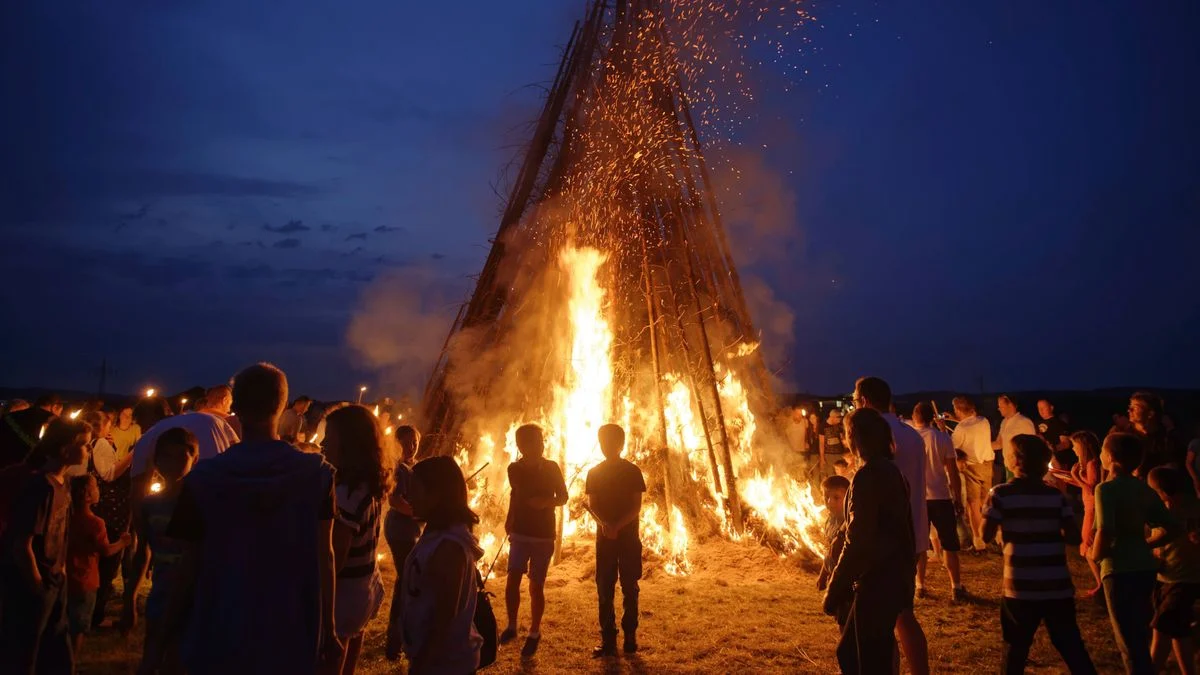
As the longest day of the year approaches, traditional Midsummer celebrations—once characterized by communal joy and seasonal reverence—are increasingly becoming flashpoints for political ideological warfare. Across Germany and Scandinavia, right-wing extremist movements are actively attempting to reclaim the summer solstice, infusing ancient pagan traditions with völkisch ideology.
Main Facts: The Ideological Hijacking of the Solstice
The summer solstice, or Midsummer, has deep roots in European history, symbolizing fertility, the zenith of the sun, and the agricultural cycle. However, in recent years, security services and social researchers have observed a disturbing trend: the systematic instrumentalization of these festivities by the far-right.
The primary goal of these groups is the construction of a "mythic landscape." By performing rituals—such as lighting bonfires, wearing traditional garb, and emphasizing a return to "ancestral" nature—extremist groups attempt to bypass the modern, pluralistic democratic state. They frame the solstice not merely as a holiday, but as a "reawakening" of the European soul, suggesting that modern liberal society has severed the "natural" connection between blood, soil, and spirit.
For the far-right, the solstice provides a convenient, historically sanctioned framework to advocate for ethno-nationalist concepts. By stripping away the religious elements of Saint John’s Day (the Christian overlay of the solstice) and emphasizing Germanic or Nordic pre-Christian roots, these groups argue that their ideology is the "original" state of European existence.
Chronology: From Folklore to Political Tool
The evolution of the solstice into a political weapon did not happen overnight. Its transformation can be traced through several distinct phases:
- 19th and Early 20th Century: The rise of the "Völkisch" movement in Germany saw the first major efforts to link nature-worship with racial purity. Groups like the Artamanen society used summer festivals to recruit youth into agrarian, anti-urban, and anti-Semitic movements.
- 1933–1945: The National Socialist regime institutionalized the "Sonnenwendfeiern" (solstice celebrations) as state-sponsored events. These were highly choreographed spectacles designed to replace Christian holidays with neo-pagan, state-centric rituals that emphasized community, military strength, and the "Aryan" ideal.
- Post-War to the 1990s: The tradition largely retreated into fringe circles, surviving within esoteric sects and neo-Nazi underground movements, particularly in rural areas of Scandinavia and East Germany.
- 2010–Present: With the rise of the "Identitarian" movement and other New Right groups, the solstice has been rebranded for the digital age. Using social media, these groups promote aestheticized, "clean" imagery of bonfires and nature, aiming to make extremist ideology appear culturally conservative and innocuous to the general public.
Supporting Data: The Scale of the Trend
Security reports, including those from the Federal Office for the Protection of the Constitution (BfV), have highlighted a noticeable uptick in organized solstice gatherings that serve as recruitment events.
Data indicates that these gatherings are no longer restricted to isolated rural communes. Instead, they are increasingly used as "family-friendly" events to normalize radical viewpoints. Research conducted by sociologists shows that these events are specifically designed to be "gateway experiences." By emphasizing "culture" over "politics," organizers lure individuals who are initially interested in folk heritage, only to expose them gradually to exclusionary, nativist narratives.
Furthermore, intelligence reports suggest that the funding and organization of these events are increasingly professionalized. Where once these were grassroots gatherings, they are now supported by a network of think tanks, alternative media outlets, and online shops selling "ancestral" merchandise, creating a self-sustaining ecosystem of radicalization.
Official Responses: Monitoring the "Pagan" Fringe
Government authorities have struggled to address the phenomenon, primarily because of the difficulty in distinguishing between harmless folk-culture enthusiasts and those with extremist intent.
"The state cannot and should not police the celebration of the solstice," says a spokesperson for the Ministry of the Interior. "However, when these events move from the realm of private tradition to organized political propaganda aimed at undermining the constitutional order, we have a mandate to intervene."
Law enforcement agencies are now prioritizing the monitoring of "pre-political" spaces. They argue that the normalization of völkisch symbolism—even if presented as "harmless tradition"—is a deliberate strategy to desensitize the public to extremist aesthetics. In some regions, local authorities have begun to restrict the use of public lands for these festivals if the organizers are linked to known extremist networks, though this is frequently met with accusations of "cultural censorship" from the far-right.
Implications: The Battle for Cultural Identity
The struggle over the summer solstice is, at its core, a battle for the definition of "European identity."
The Strategy of Cultural Hegemony
The far-right’s strategy is a classic application of "metapolitics"—the idea that political change is impossible without first changing the culture. By claiming the solstice, they aim to define what it means to be "truly" European. If they succeed in convincing the mainstream that these rituals are the authentic expression of the continent’s history, they successfully marginalize the values of human rights, individual liberty, and multiculturalism as "foreign" or "imported" concepts.
The Erosion of Common Symbols
The danger is that the public may abandon these traditions entirely to avoid being associated with extremist movements. This creates a "hollowing out" effect, where shared cultural symbols are lost to the democratic center. Experts warn that ceding the ground of tradition to the far-right is a tactical error. Instead, they suggest that democratic institutions must find ways to celebrate these historic milestones in a way that is inclusive and emphasizes shared, rather than exclusive, history.
The Digital Acceleration
The role of social media cannot be overstated. High-definition video, curated aesthetic feeds, and the algorithmic promotion of "heritage-focused" content have allowed these groups to reach audiences far beyond their traditional rural bases. A teenager scrolling through Instagram or TikTok may encounter images of a solstice bonfire accompanied by hashtags like #Heritage, #Tradition, and #AncestralPride, unaware that these are the entry points into a deeply radicalized worldview.
Looking Ahead
As we move further into the 21st century, the instrumentalization of history will likely intensify. The summer solstice is merely one of many symbols being contested. The challenge for society is twofold:
- Critical Literacy: The public must become more adept at recognizing how cultural symbols are weaponized. Understanding the history of these movements is essential to distinguishing between legitimate cultural interest and organized radicalization.
- Reclaiming the Narrative: The democratic center must be willing to engage with its own traditions. By failing to offer a vision of culture that is open, modern, and inclusive, society leaves a vacuum that extremist movements are more than happy to fill with their own, exclusionary version of the past.
In conclusion, the solstice remains a beautiful and significant marker of the changing year. Yet, its vulnerability to ideological manipulation serves as a stark reminder that the history we claim for ourselves is never static. It is a contested space, and the battle for the meaning of our traditions is as relevant today as it was in the darkest chapters of the previous century. Ensuring that these celebrations remain rooted in communal joy rather than hate requires constant vigilance and a commitment to a vision of culture that welcomes, rather than excludes, the stranger at the fire.