


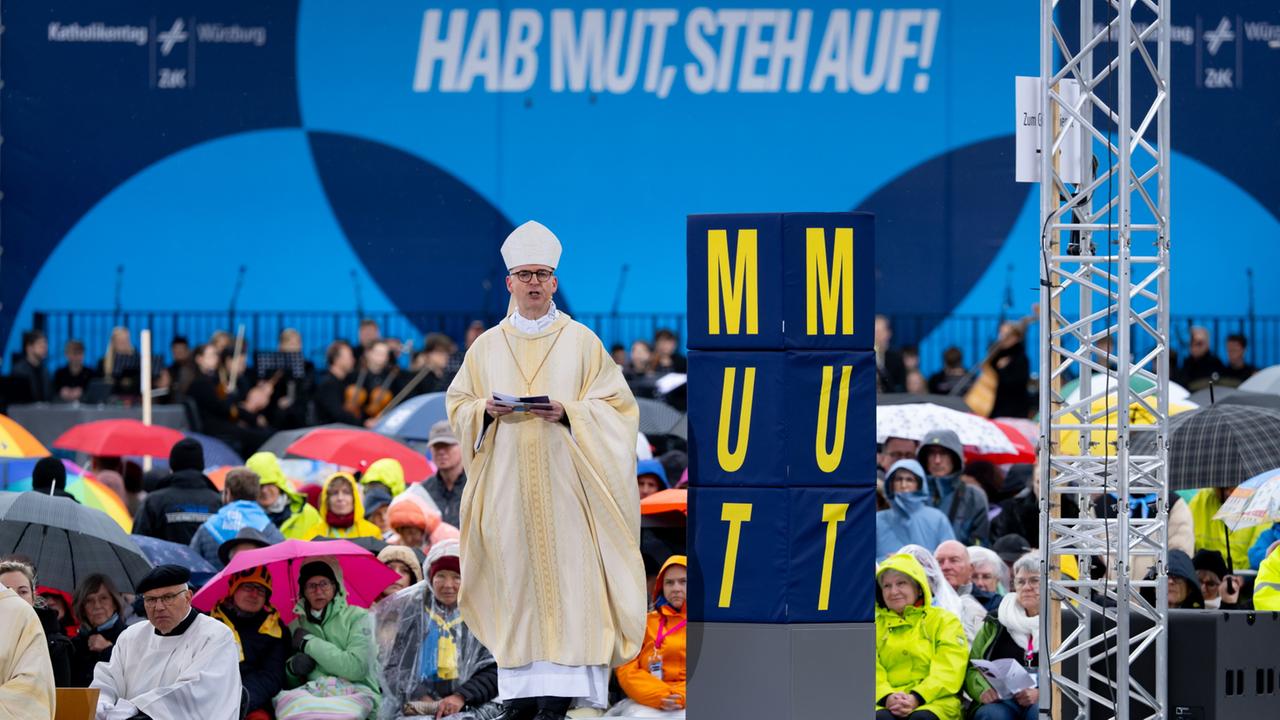
WÜRZBURG – As the 104th Katholikentag (German Catholic Assembly) descends upon the historic city of Würzburg, the event has transformed into more than just a religious gathering; it has become the central stage for a high-stakes debate over the role of faith in secular governance. With high-ranking officials including the Federal Chancellor, the President, the Bavarian Minister-President, and the President of the Bundestag in attendance, the assembly has underscored a fundamental tension: the Catholic Church’s insistence on its role as a political conscience for the nation, and the growing skepticism from conservative political circles regarding that influence.
Main Facts: A Church Seeking Its Voice
The Katholikentag serves as a biennial forum for millions of German Catholics to discuss societal, ethical, and political challenges. However, this year’s iteration is marked by a clear divide. While the Church continues to position itself as a moral compass—addressing issues ranging from climate change to social justice and the rise of right-wing populism—it faces a dwindling membership and a political establishment that is increasingly questioning the legitimacy of the Church’s interventions.
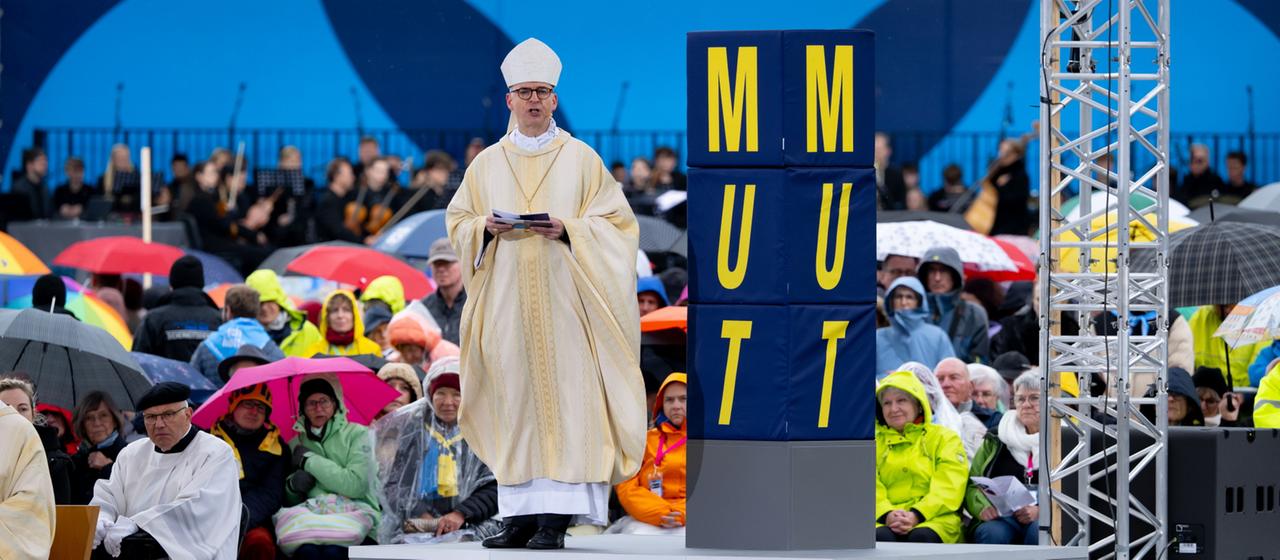
Bishop Franz Jung, the host of this year’s event, set the tone early, emphasizing that the Church’s mission cannot be decoupled from the global political reality. "The great questions of the future will only be solved together, not through national isolation or inward-looking narrow-mindedness," Jung remarked. This assertion, however, clashes with a political climate where secularization is advancing and political leaders are re-evaluating the boundaries of Church-State cooperation.
Chronology: From the Kulturkampf to the Modern Day
To understand the current friction, one must look back at the origins of the Katholikentag.
- 1848: The Genesis. The first "General Assembly of the Catholic Association of Germany" was held in Mainz. It was born out of a period of intense struggle, specifically as a response to state interference in ecclesiastical affairs during the Kulturkampf under Otto von Bismarck. It was a movement of resistance against state repression and an attempt to solidify the Catholic identity in a nascent German state.
- The 20th Century. The movement survived the tumultuous early 1900s but faced a reckoning in 1933. When the National Socialists demanded a "declaration of loyalty to the Führer and the Reich" at the assembly, the Church leadership chose to cancel the event rather than submit to the Nazi regime, marking a moment of moral resistance that remains a point of pride for the organization.
- Post-War Reconstruction. In the decades following WWII, the Katholikentag became a pillar of the West German democratic discourse, fostering a dialogue between conservative Christian values and the liberal-democratic order of the Federal Republic.
- The Current Era. Today, the assembly faces a paradox: while it is historically rooted in the preservation of democratic freedom, its influence is being challenged by a secularized public and a political class that views religious institutional involvement as an encroachment on their legislative mandate.
Supporting Data: The Shrinking Influence
The Church’s political influence is inextricably linked to its social footprint. With approximately 19 million adherents, the Catholic Church remains one of the most powerful organizations in Germany. However, the trajectory is downward.
- Membership Decline: Recent data indicates a steady erosion of the Church’s base, with hundreds of thousands of members opting to leave annually. This decline in membership reduces the Church’s fiscal power (via the Kirchensteuer, or church tax) and, consequently, its perceived legitimacy as a representative of the German people.
- Public Sentiment: Surveys suggest that while many Germans still value the social services provided by the Church (such as hospitals, kindergartens, and charities), there is a growing consensus that religious leaders should remain neutral on specific legislative issues, such as speed limits or fiscal policy.
Official Responses: The Union’s Rebuke
The most vocal opposition to the Church’s political activism has come from the Union (CDU/CSU), a political bloc that historically identifies as "Christian."
Bundestag President Julia Klöckner (CDU) has been particularly critical, arguing that the Church should focus on spiritual guidance rather than weighing in on daily political debates. "That is not what they pay their church taxes for," Klöckner has suggested, highlighting the growing frustration within the conservative party that the Church is drifting into the territory of a political NGO (Non-Governmental Organization).
Bavarian Minister-President Markus Söder (CSU) escalated the rhetoric just before the start of the Würzburg assembly. By explicitly stating that "the Church is not an NGO," Söder signaled that the political establishment is no longer willing to give the clergy a free pass on policy critiques. For the Union, the Church’s recent focus on progressive social causes feels like a departure from its traditional role and a potential political liability.
Conversely, the Church has doubled down. Irme Stetter-Karp, President of the Central Committee of German Catholics (ZdK), has defended the necessity of the Church’s voice. "We must get involved," she stated, arguing that the biblical mandate compels them to advocate for human dignity and solidarity, regardless of whether that interferes with the agendas of professional politicians.
Implications: The Moral Wall Against the AfD
Perhaps the most significant development at this year’s Katholikentag is the Church’s explicit stance against the Alternative für Deutschland (AfD). The German Bishops’ Conference has repeatedly stated that being a Christian and supporting the AfD are fundamentally incompatible, citing the party’s nationalist and exclusionary rhetoric.
This position has led to the effective exclusion of the AfD from the assembly. While the ZdK has stated they are open to "conversations" with individual supporters, the party as a whole is viewed as a threat to the democratic and humanistic values that the Church seeks to protect.
The Path Forward
The conflict between the Church and the political elite is unlikely to subside. As the German government grapples with economic stagnation, migration, and the rise of radical political movements, the Church is forced to choose between two paths:
- Accommodation: Softening its political stance to regain favor with conservative politicians and stem the tide of membership loss.
- Prophetic Resistance: Continuing to challenge the political status quo, even at the risk of further alienating the political establishment and the shrinking congregation.
The Würzburg assembly is not merely a meeting of the faithful; it is a laboratory for the future of German democracy. As Bishop Franz Jung and the ZdK leadership have indicated, the Church sees its role as a necessary "friction" in the machine of the state. Whether this friction helps keep the democracy on track or simply grinds the Church’s remaining influence into dust remains the central question of this 104th assembly.
As the delegates return home, the message is clear: the Katholikentag will continue to be a site of tension, reflecting the broader struggle of a traditional institution trying to find its place in an increasingly post-religious, highly polarized political landscape. The Church has declared its intent to "interfere," and the political class has declared its intent to "resist." The coming years will determine which force prevails in shaping the moral future of Germany.







Leave a Reply