In the collective consciousness of Central European gardeners and farmers, the period between May 11 and May 15 holds a weight far greater than its brief duration. Known as the "Eisheiligen" (Ice Saints), these five days—commemorating Mamertus, Pankratius, Servatius, Bonifatius, and the "Cold Sophia"—are deeply embedded in folklore as the final, dangerous hurdle of the spring season. For centuries, the mantra has been clear: do not plant delicate seedlings until the Ice Saints have passed, lest the return of arctic air claim the harvest. But as the climate shifts and modern meteorology advances, how much of this ancient wisdom remains relevant, and how much is merely a relic of a bygone era?
The Historical Context: Survival in a Volatile Climate
To understand the cultural grip of the Ice Saints, one must look back to the Middle Ages. For the agrarian societies of pre-industrial Europe, the transition from winter to spring was not merely a seasonal change; it was a life-or-death economic threshold. From the late Middle Ages through the 19th century, Europe endured what climatologists often refer to as the "Little Ice Age," a period characterized by erratic, often harsh, and extended winter conditions.
A single frost in mid-May could devastate the young crops upon which an entire village’s survival depended for the coming year. Consequently, farmers became obsessive observers of natural patterns. By tethering their survival strategies to the church calendar—a tool used by everyone at the time—they created a mnemonic device for agricultural safety. These saints, whose feast days fell mid-month, became the gatekeepers of the spring. If one waited until after the 15th of May to plant, the risk of a "black frost" destroying the crop was statistically lowered. This was not a scientific observation in the modern sense, but a vital survival protocol developed through centuries of trial and error.
The Saints of the Frost: Legend vs. Fact
The naming of the Ice Saints is a curious blend of ecclesiastical tradition and folklore. None of the five saints associated with this period—Mamertus (May 11), Pankratius (May 12), Servatius (May 13), Bonifatius (May 14), and Sophia (May 15)—were meteorologists, nor were they inherently linked to cold weather in their historical hagiographies.
- Mamertus: A 5th-century Bishop of Vienne who is credited with introducing the "Rogation Days"—a series of penitential processions held before Ascension Day to plead for protection against natural disasters.
- Servatius: A 4th-century Bishop of Tongeren, around whose grave, according to legend, snow would never settle.
The exact origin of when these specific dates became synonymous with a cold snap remains lost to history. However, the connection served as a perfect psychological anchor for the rural population. It transformed an abstract, terrifying weather phenomenon into a manageable, predictable event. By focusing on these five days, farmers felt they had a clear timeline for when to shield their livelihoods from the whims of nature.
Meteorological Reality: The Science of "Singularities"
Modern meteorologists often view the "Ice Saints" through the lens of a "singularity"—a weather phenomenon that occurs with a high degree of statistical probability at roughly the same time every year.
Lothar Bock, an expert from the German Weather Service (DWD) Regional Climate Office in Munich, emphasizes that while the concept is rooted in observation, it is not a fixed law of nature. "Spells of frost in May occur repeatedly, but they are essentially stochastic, or randomly distributed," Bock explains. "While they sometimes coincide perfectly with the Ice Saints, we see these cold snaps at the beginning of the month and, more rarely, at the end of the month as well."
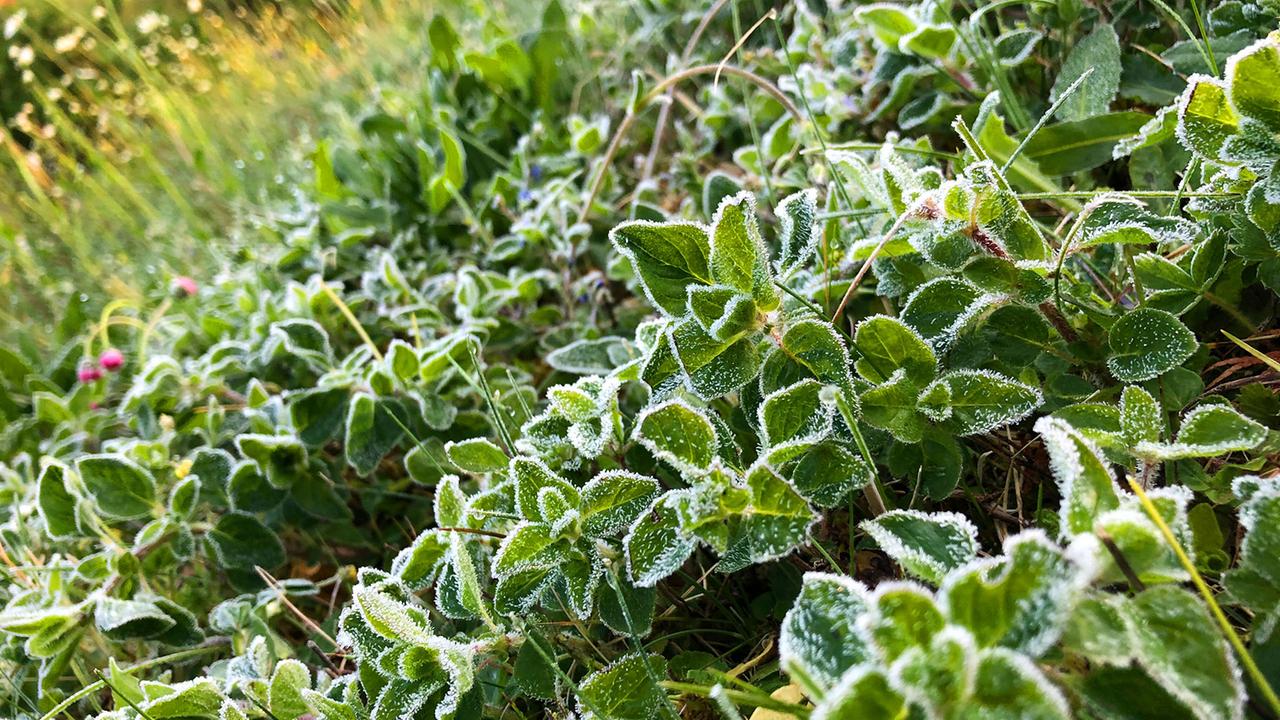
The physical cause behind these cold spells is the massive temperature differential between the warming landmass of Europe and the still-frigid polar regions to the north. In mid-May, the sun is high enough to warm the ground, but the polar vortex remains a potent reservoir of arctic air. If the atmospheric pressure patterns align correctly—often involving a high-pressure system over the Atlantic or Scandinavia—this cold air can be drawn southward. Under clear, cloudless skies, the heat absorbed by the earth during the day radiates rapidly back into space at night. This process, known as radiational cooling, can cause surface temperatures to plummet below zero, creating the "black frost" that kills young plants, even if the air temperature a few meters above the ground remains technically above freezing.
The Calendar Shift: A 13-Day Discrepancy
A critical, often overlooked factor in the "Ice Saints" debate is the massive calendar reform of 1582. The transition from the Julian to the Gregorian calendar, implemented to correct the drift of the solar year, resulted in a loss of 10 days, which has since grown to 13.
If the ancient observations were based on the Julian calendar, the "true" dates of the cold weather phenomenon would actually be shifted forward by nearly two weeks. By modern calculations, the period of maximum frost risk should technically occur in late May. This further underscores that the Ice Saints are more of a cultural tradition than a rigid meteorological constant.
Regional Variability and Topography
The "Ice Saints" do not strike with equal intensity across all of Germany or Europe. Geography plays a decisive role in who experiences the frost. In northern Germany, the arctic air masses tend to arrive earlier, leading to a focus on the 11th–13th of May. In the south, particularly in alpine valleys or high-altitude regions, the risk can persist until the 15th or beyond.
Topography is perhaps the most significant local factor. Cold air is denser than warm air and behaves like a fluid, flowing downhill and settling in basins, valleys, and depressions. A gardener in a low-lying area may lose their entire vegetable patch to frost, while a neighbor living on a slight incline or in an urban center—where buildings and paved surfaces act as heat sinks—remains completely untouched.
Implications of the Climate Crisis: A Paradox
Perhaps the most compelling aspect of the Ice Saints today is how they intersect with the ongoing climate crisis. Climate data from the last 60 to 70 years suggests that while the overall frequency of severe frost events in May is slowly trending downward due to rising average temperatures, the danger to agriculture has arguably increased.
This is the "Spring Paradox." Because of warmer winters and earlier springs, plants are beginning their growth cycles, flowering, and leafing out much earlier than they did a century ago. A fruit tree that would have been dormant during the mid-May cold snaps of the 1900s is now in full, vulnerable bloom. Consequently, when a late-season frost does arrive—even if it is statistically "less likely" than in the past—it hits a much more sensitive, developed, and economically valuable crop. The potential for catastrophic loss for orchards and vineyards has not disappeared; it has simply shifted in nature.
Conclusion: Is the Tradition Still Relevant?
While the Ice Saints themselves are a product of myth and religious tradition, the meteorological phenomenon they describe remains a genuine, albeit unpredictable, danger to the gardener and the farmer. The advice to wait until the middle of May to plant tomatoes, cucumbers, and other frost-sensitive species is not just folklore; it is a prudent risk-management strategy.
Today, we have the benefit of advanced, hyper-local weather modeling, smartphone apps, and satellite data that our ancestors could not have imagined. We no longer need to rely on the feast days of 4th-century bishops to tell us when to cover our plants. Yet, the wisdom remains sound. In a world of increasing climate instability, where the arrival of spring is becoming more erratic, the old farmers’ rule serves as a reminder of our enduring vulnerability to the natural world. Whether one calls them the "Ice Saints" or simply a "late spring frost event," the caution remains the same: in the tug-of-war between the warmth of spring and the lingering reach of winter, it is always safer to wait a little longer.