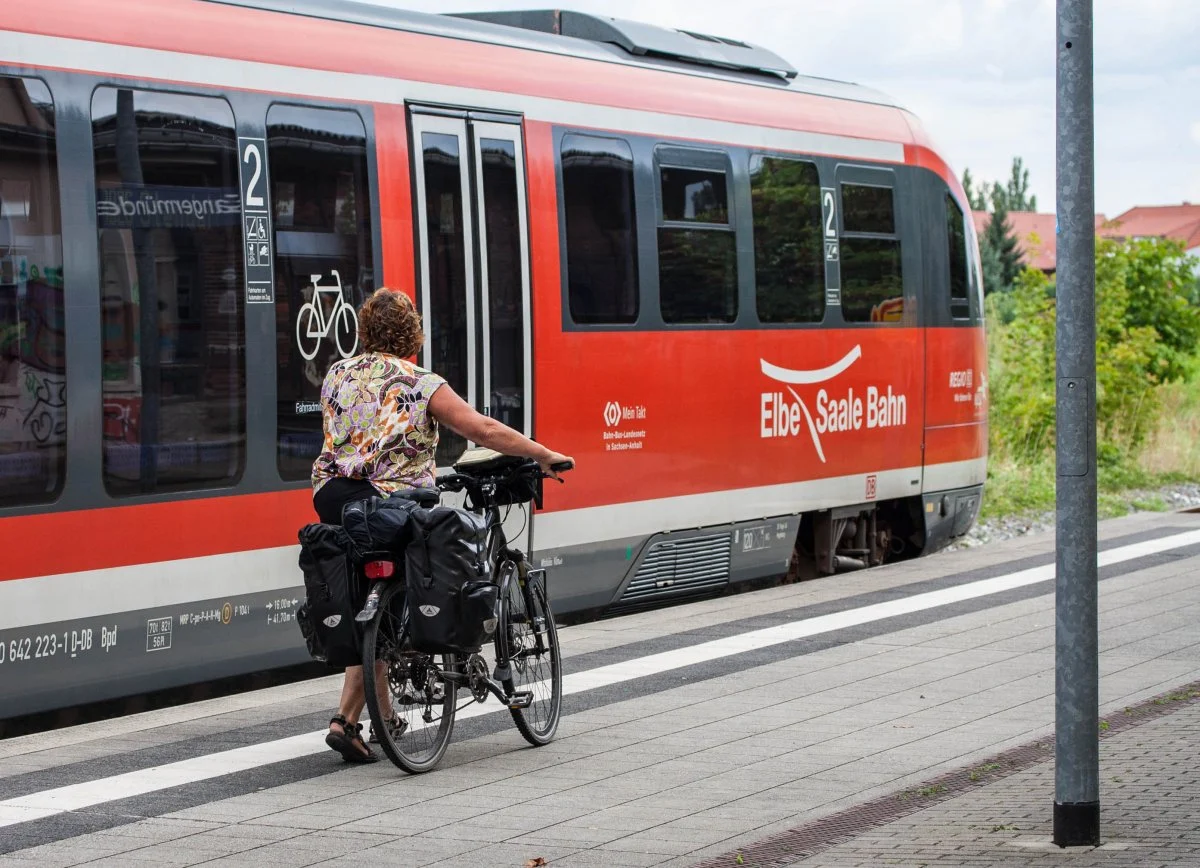
In a move aimed at digitizing and simplifying the commuter experience across Germany, the Deutsche Bahn (DB) and tech giant Google have announced a significant expansion of their existing partnership. Effective immediately, users of Google Maps will be able to purchase tickets for regional trains and S-Bahn services directly through the navigation app. While this functionality had previously been restricted to long-distance travel, its rollout into the regional sector marks a pivotal step toward integrating public transit into the everyday digital toolkit of millions of commuters.
The Core Development: Direct Integration of Regional Ticketing
The partnership essentially transforms Google Maps into a more robust "Mobility-as-a-Service" (MaaS) platform. When a user searches for directions using public transport within Germany, the interface will now display a "Buy Ticket" button for eligible regional connections. Clicking this link redirects the user to the Deutsche Bahn’s digital platform, where the transaction can be completed securely.
While the service is intended to be available nationwide, the Deutsche Bahn has issued a caveat: the implementation is subject to the digital infrastructure and specific agreements of local transport associations (Verkehrsverbünde). Because Germany’s transit landscape is highly decentralized, some regional providers maintain their own ticketing protocols, which may occasionally result in the absence of the Google-integrated button for specific local routes.
A Chronology of the Collaboration
The relationship between Google and the Deutsche Bahn has evolved steadily over the last decade, transitioning from basic schedule displays to a sophisticated, data-driven ecosystem.
- Early Integration: Initially, Google Maps served merely as a static information portal, showing train schedules provided by the Deutsche Bahn. These schedules were often subject to inaccuracies during delays or track maintenance.
- The Long-Distance Rollout: Recognizing the need for a unified booking experience, the two companies partnered to integrate a booking function for InterCity (IC) and InterCity Express (ICE) trains. This allowed travelers to book high-speed transit directly from their search results.
- The Data Exchange Paradigm: The most significant development prior to today’s announcement was the agreement to share real-time GTFS (General Transit Feed Specification) data. This allowed Google to move beyond static timetables and offer "live" updates.
- The Regional Expansion: The current phase represents the final gap in the integration process. By bringing the regional (RE) and S-Bahn networks into the fold, the partnership covers the vast majority of daily commutes in Germany, effectively turning Google Maps into a one-stop-shop for German rail travel.
Supporting Data and Technical Implications
The mechanics behind this partnership rely heavily on the exchange of high-fidelity data. While no direct financial payments are being exchanged for the integration itself, the Deutsche Bahn is effectively paying for the reach and convenience of the Google ecosystem by providing its most valuable commodity: real-time operational data.
The Value of Real-Time Analytics
The Deutsche Bahn now feeds granular, real-time status updates from its regional fleets directly into Google’s servers. For the passenger, this means the "arrival time" displayed on a smartphone is no longer just a theoretical schedule; it is an algorithmic prediction based on the train’s actual GPS position. This technology mirrors the capabilities found in the proprietary "DB Navigator" app, effectively democratizing access to high-accuracy transit data.
Impact on User Behavior
Industry data suggests that passengers are significantly more likely to choose public transit if the friction of ticket purchasing is removed. By reducing the number of "clicks" required to transition from a route search to a valid ticket, the Deutsche Bahn is addressing one of the primary psychological barriers to public transport usage. For the occasional traveler, who may not have the DB Navigator app installed or be registered with the system, the ability to book via Google Maps provides an immediate, low-barrier entry point.
Official Perspectives: Aligning Tech and Infrastructure
Both organizations have framed this partnership as a necessary evolution in the face of climate change and the need for sustainable urban planning.
Timo Rang, a lead manager at Google, emphasized the user-centric nature of the update. "The direct access to precise real-time data on Google Maps makes the use of buses and trains significantly more comfortable and thereby strengthens public local and regional transport in Germany," Rang stated. He noted that the collaboration is an essential step toward achieving a more seamless, climate-friendly mobility network that can compete with the convenience of private car ownership.
Harmen van Zijderveld, Head of DB Regio, echoed these sentiments, focusing on the reduction of digital complexity. "In the digital space, just as in the real world, the rule remains: the simpler, the better," van Zijderveld remarked. By eliminating the "digital detours"—such as needing to navigate separate websites or download specialized apps for different regional transit providers—the Deutsche Bahn hopes to capture a broader demographic of commuters who prioritize speed and simplicity.
Implications for the Future of Public Transit
The implications of this partnership extend far beyond simple convenience. It represents a shift in how public infrastructure interfaces with global technology platforms.
1. Competitive Advantage Over Private Mobility
By placing public transit at the center of the world’s most popular navigation app, the Deutsche Bahn is effectively competing with ride-sharing and personal vehicle navigation. When a user searches for a route, they are presented with a clear, ticketable transit option alongside drive times, making the "cost vs. time" analysis easier to conduct in real-time.
2. The Data Sovereignty Debate
While the collaboration is lauded for its convenience, it highlights the increasing reliance of public services on private, international tech giants. Critics often point out that by feeding data into Google’s proprietary algorithms, the Deutsche Bahn is helping to solidify Google’s dominance in the mapping and search space. However, the DB maintains that the trade-off—gaining millions of potential passengers through increased visibility—outweighs the risks associated with data-sharing.
3. A Template for European Integration
If successful, this partnership could serve as a blueprint for other European rail operators. The European Union has long pushed for the creation of a "Single European Transport Area," which includes the interoperability of ticketing systems. By demonstrating that a major national operator can successfully integrate its regional ticketing into a global platform, the DB is setting a technical and strategic standard that other countries may soon be pressured to adopt.
4. Improving Public Perception
The Deutsche Bahn has struggled with reliability issues in recent years, leading to frustration among regular commuters. By providing transparent, real-time data to Google Maps, the operator is choosing radical transparency. Even if a train is delayed, the user will know exactly when it will arrive, rather than being left to wonder on a platform. This transparency, paradoxically, may improve the public’s trust in the rail system, as the uncertainty of travel is often more frustrating than the delay itself.
Conclusion
The integration of regional train ticketing into Google Maps is more than just a software update; it is a fundamental shift in the way public transport is marketed and consumed. By removing the silos between navigation and transaction, the Deutsche Bahn and Google are acknowledging that the future of mobility is digital, integrated, and immediate.
As the project rolls out across Germany, the primary test will be the consistency of the user experience. If the "Buy" button becomes a ubiquitous, reliable feature for the majority of the country’s rail network, it could significantly contribute to the shift away from private automobiles. For the passenger, the goal is simple: a journey that is as easy to book as it is to take. For the Deutsche Bahn, the goal is equally clear: to remain relevant in a world where the smartphone is the primary interface for every aspect of modern life.