


By Sports Correspondent
Published May 13, 2026
When the news first broke that FC Bayern München had sanctioned a €75 million transfer fee to lure Luis Díaz away from Liverpool, the reaction across Europe was one of profound skepticism. In a summer defined by failed pursuits of high-profile targets like Florian Wirtz, Nico Williams, and Désiré Doué, the acquisition of a 28-year-old winger felt to many like a panic buy—a reactive maneuver from a club that had lost its way in the transfer market.
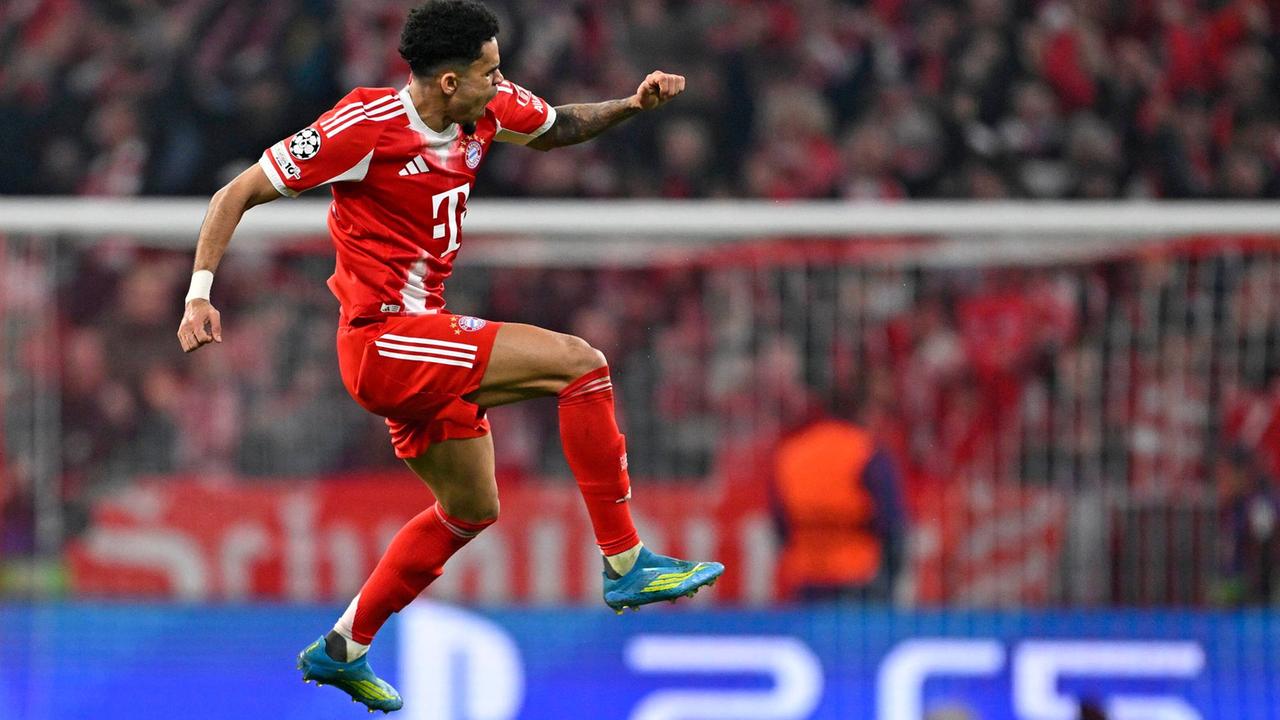
Fast forward to the present: 49 appearances, 26 goals, and 21 assists later, the narrative has shifted entirely. Díaz has not only silenced his critics but has fundamentally redefined the identity of the Bayern attack. Far from being a "risky" investment, the Colombian has become the heartbeat of a side that, for much of the 2025/2026 season, looked invincible. But to understand the player who currently dazzles at the Allianz Arena, one must look 9,000 kilometers away to the arid, dusty pitches of Barrancas, Colombia.
The Skepticism of the €75 Million Gamble
The initial criticism leveled against Bayern’s board was rooted in fiscal conservatism and age-profile concerns. Critics argued that at 28, Díaz was entering the twilight of his prime, and that such an exorbitant sum could have been better invested in younger prospects. Yet, the tactical reality on the pitch quickly dismantled these arguments.
Díaz brought more than just raw offensive output; he introduced a relentless work ethic that transformed Bayern’s defensive transition. His defensive contributions—defined by high-intensity sprints, aggressive counter-pressing, and an uncanny ability to track back—provided a safety net for the team’s more creative, less industrious midfielders. The "risk" had effectively become the foundation of a balanced, championship-contending team.
A Chronology: From "Noodle" to Global Icon
To understand the man, one must understand his origins. Born in the rural municipality of Barrancas, a town of roughly 40,000 residents, Díaz was far from the traditional path of a European footballing prodigy.
The Early Years: "We Kicked Up a Lot of Dust"
Growing up in a region characterized by limited resources and extreme poverty, the young Díaz was known by the nickname "Fideo"—or "Noodle"—a nod to his spindly, frail frame. Yet, what he lacked in physical bulk, he compensated for with a singular, consuming obsession: football.
"We kicked up a lot of dust," recalls his cousin, Josher Brito Díaz, in an interview with ARD. "My grandfather was always complaining, asking, ‘What are you kids doing playing all day?’ We were just obsessed." That obsession was nurtured on dirt pitches, where the ball often moved unpredictably, forcing the young Díaz to develop the lightning-fast footwork and close control that would eventually terrorize elite defenders in the Bundesliga and the Champions League.
The Rise through the Ranks
Díaz’s breakthrough came during a tournament for indigenous players, where his natural talent was impossible to ignore. He transitioned to the Barranquilla FC, a second-division club in one of Colombia’s largest cities. His trajectory from that moment was vertical:
- Barranquilla FC: The launchpad where his speed and tactical intelligence were first refined.
- Atlético Junior: A move to the top flight that proved he could handle the pressure of professional expectations.
- FC Porto: His entry into European football, where he transformed from a raw talent into a sophisticated, tactically disciplined winger.
- Liverpool FC: The global stage, where his reputation as a world-class game-changer was solidified.
- FC Bayern München: The current chapter, where he has matured into a leader and a superstar.
Supporting Data: The Impact of a Difference-Maker
The statistical evidence of Díaz’s influence is staggering. In his 49 appearances this season, he has been directly involved in 47 goals. However, raw numbers fail to capture his "clutch" factor.
Perhaps the most emblematic moment of his season occurred during the Champions League quarterfinals against Real Madrid. With the aggregate score balanced on a knife-edge, it was Díaz who stepped up to net the crucial 3-3 equalizer in the second leg. The goal was more than a technical achievement; it was a testament to his mental fortitude. While the Allianz Arena roared, the impact was felt most viscerally in Barrancas. A viral video captured the scene in his hometown: as Díaz scored in Germany, his father, watching on a giant screen in Colombia, fell to his knees in an eruption of raw emotion. It was a moment that underscored the profound link between the superstar on the pitch and the community that raised him.
Official Perspectives and the Philosophy of Excellence
Bayern München’s sporting directors have maintained that the signing of Díaz was never a gamble, but a calculated acquisition of a "leader of men." Internal sources suggest that the coaching staff was most impressed by his humility—a trait that remains deeply rooted in his upbringing.
"Díaz possesses a unique duality," a club representative noted. "He is an artist with the ball at his feet, but a soldier when the ball is lost. That is a rare combination in modern football."
His influence extends beyond the tactical board. By remaining connected to his roots, Díaz has become a symbol of what is possible. He has funded a significant upgrade to the local facilities in Barrancas, including a state-of-the-art synthetic turf pitch managed by his personal foundation. This is not merely an act of charity; it is an infrastructure project aimed at democratizing access to professional-level training for the next generation of Colombian youth.
Implications: The Legacy of a Hometown Hero
The legacy of Luis Díaz is currently being written in real-time. He has proven that the "risk" of investing in established talent can pay dividends that transcend the spreadsheet. By bringing his specific blend of South American flair and European tactical discipline to Munich, he has forced other clubs to reconsider their scouting paradigms.
Furthermore, his influence on the youth of Barrancas cannot be overstated. As his cousin Josher points out, "There are many kids here who want to develop, just like Luis. Because of the doors he has opened, they now have the chance to be like him—or even better."
As the dust settles on another successful season for the Bavarians, the narrative surrounding Luis Díaz has fundamentally shifted. He is no longer the "expensive experiment" or the "replacement" for a younger star. He is the standard-bearer for a new era at Bayern München. He is the boy from the dust of Barrancas who reached the pinnacle of global football not by changing who he was, but by refining the grit and determination that defined him long before he stepped into the spotlight.
The story of Luis Díaz is, at its core, a reminder that in the high-stakes, multi-million-euro world of professional football, the most valuable attribute remains the internal drive of a player who never forgot where he came from. Whether he is running down the wing at the Allianz Arena or training on the sun-drenched turf in his hometown, Díaz plays with the same intensity—a testament to a journey that continues to inspire.














Leave a Reply