In a crime that has sent shockwaves through the Catholic community and the international heritage sector, a precious historical artifact has been brazenly stolen from the heart of a sacred site. On Tuesday evening, an unidentified thief managed to infiltrate the Basilica of St. Lawrence and St. Zdislava in the Northern Czech town of Jablonné v Podještědí, making off with the skull of Saint Zdislava of Lemberk.
The theft, which occurred during the early evening hours, has been described by authorities as a "devastating" loss of both spiritual and historical significance. While police are still calculating the monetary value of the relic, officials have emphasized that for the faithful and for the historical record, the item is fundamentally "priceless." As investigators comb through security footage and local leads, the search for the perpetrator—and the recovery of the saint’s remains—has become a matter of national priority.
The Chronology of a Profane Heist
The theft took place on Tuesday, October 22, shortly after 6:00 PM. According to local law enforcement, the perpetrator displayed a calculated level of audacity, timing the crime to coincide with the busy preparations for an upcoming evening mass.
Exploiting the Sacred Space
The timing of the robbery was far from accidental. By striking during the pre-service window, the thief was able to exploit a critical lapse in security protocols. Because the basilica was undergoing preparations for a congregation, the electronic alarm system had been temporarily deactivated to allow for the movement of staff and clergy.
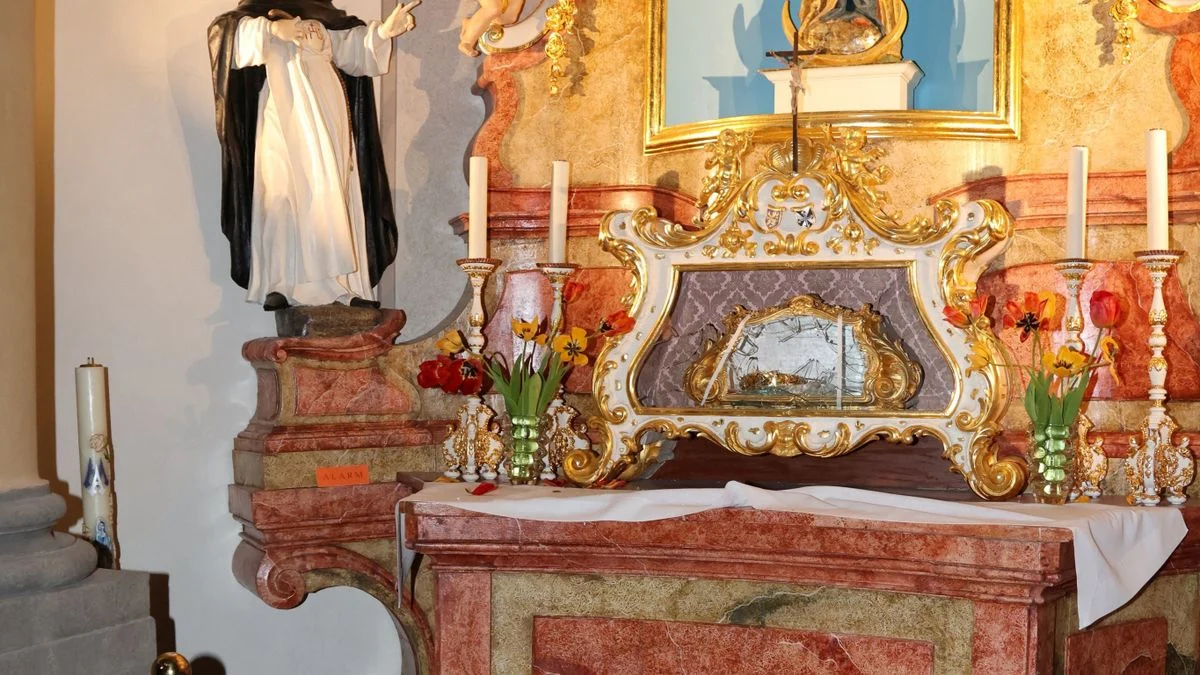
Police spokesperson Dagmar Sochorová confirmed that the thief, described as being clad in dark clothing, entered the basilica and proceeded directly to the side chapel where the relic was housed. Utilizing a tool to force open the protective glass vitrine, the individual seized the skull, which served as a focal point for the chapel’s altar.
A Captured Flee
While the internal security measures were compromised, a low-quality surveillance camera managed to capture the final moments of the heist. The footage shows a shadowy, dark-clad figure traversing the nave of the basilica with the stolen relic in their possession. The perpetrator’s movements appear swift and purposeful, suggesting a degree of familiarity with the church’s layout. The footage, now a central piece of evidence, has been released to the public in hopes that someone might recognize the suspect’s gait, build, or mannerisms.
Saint Zdislava: The Patron of the Poor and Suffering
To understand the magnitude of the loss, one must look back over 750 years to the life of the woman whose remains have been violated. Saint Zdislava of Lemberk (c. 1220–1252) was a noblewoman of significant stature who chose a life of extreme piety, charity, and self-abnegation.
A Legacy of Compassion
Zdislava was not merely a member of the nobility; she was a pioneer of social welfare in the medieval period. She is best remembered for her tireless work among the impoverished and the sick. Having founded a Dominican monastery in Jablonné, she devoted her life to the care of the poor, earning her the title of Patroness of the Poor and the Suffering.
For centuries, her remains have been held in the basilica that bears her name, acting as a site of pilgrimage for thousands of visitors annually. Her skull, specifically, was mounted as a reliquary, serving as a physical connection for pilgrims seeking intercession or simply reflecting on the legacy of a woman who turned her back on material wealth to serve the vulnerable. The theft of these remains is viewed not just as a property crime, but as a direct assault on the cultural and spiritual identity of the region.
Official Responses: A Nation in Mourning
The reaction from the Church hierarchy and local authorities has been one of profound indignation and sorrow.
The Archbishop’s Lament
Stanislav Přibyl, the Archbishop of Prague, expressed his personal anguish during a press briefing held shortly after the news broke. "I cannot fathom that someone would commit a robbery in broad daylight to steal a relic from a church, a relic whose value is primarily of a historical and spiritual nature," Přibyl stated.
The Archbishop noted that the basilica is not merely a tourist destination, but a living house of worship where the relic serves as a "subject of veneration." He highlighted the irony of the situation: a thief entering a house of God—a place founded on the principles of Zdislava’s compassion—to commit an act of profound greed and desecration.
The Police Investigation
The Czech police have mobilized a dedicated task force to investigate the theft. Given the proximity of Jablonné v Podještědí to the German border, there is an immediate concern that the thief may attempt to move the relic across international lines, potentially into the black market for stolen antiquities.
Spokesperson Dagmar Sochorová has urged the public to exercise vigilance. "We are working on every possible lead," she stated. "The historical value of this item is impossible to quantify, and our primary goal is to ensure its safe return to its rightful place."
Implications: The Security of Sacred Heritage
The theft in Jablonné raises uncomfortable questions about the security of religious sites across Europe. In an era where historical artifacts are increasingly targeted for their value on the illicit international art market, the vulnerability of rural churches has come into sharp focus.
The Fragility of Open Doors
Historically, churches have prided themselves on being "open houses," accessible to all members of the public regardless of their faith or background. However, the balance between hospitality and the protection of priceless historical treasures is shifting.
Many parish councils are now forced to consider the installation of more rigorous security systems, including biometric access, enhanced surveillance, and armored display cases. Yet, these measures often clash with the desire to keep these spaces feeling like sanctuaries rather than fortresses. The loss of Zdislava’s relic may serve as a catalyst for a national conversation regarding how best to protect cultural heritage without sacrificing the accessibility of the church.
The Illicit Trade of Relics
The market for human remains—or "relics"—is a niche but dangerous corner of the antiquities trade. While the scientific and ethical community strictly forbids the sale of human remains, the "collector’s market" remains a persistent threat. Thieves often steal such items hoping to find a buyer who values the macabre or the exotic, often unaware that the cultural significance of such an object makes it virtually impossible to sell through legitimate channels.
The theft of the skull of St. Zdislava is a stark reminder that even items of extreme spiritual importance are not immune to the reach of those who view history only through the lens of profit.
The Path Forward: Hope for Recovery
As the investigation enters its second day, the local community in Jablonné v Podještědí remains in a state of shock. Candlelight vigils have been held outside the basilica, with locals praying for the safe return of the relic.
The Czech police have reiterated their appeal for information. They are calling on any witnesses who were in the vicinity of the basilica on Tuesday evening to come forward, particularly those who may have seen individuals acting suspiciously or vehicles parked near the church grounds.
A Call to Conscience
There is a lingering hope among the clergy that the thief may be overwhelmed by the gravity of their actions. Historically, when high-profile relics are stolen, the culprits often find themselves unable to offload the items due to the intense media scrutiny and the "hot" nature of the object. In some instances, such items have been anonymously returned to police stations or left in public spaces once the perpetrators realize that the crime has caused a national outcry.
For the people of Jablonné, the return of the relic would mean more than just the recovery of a historical object; it would be a restoration of a piece of their heritage and a closure to a traumatic violation. Until then, the empty vitrine in the side chapel serves as a somber reminder of the fragility of our past and the ongoing need for vigilance in protecting the treasures that define our collective identity.
As the authorities continue their search, the image of the thief—dark-clad, hurried, and clutching the remnants of a saint—remains burned into the collective consciousness of the nation, a chilling portrait of a crime that has sought to silence a voice of history that has echoed for over seven centuries.