Introduction: A Surreal Turn of Events
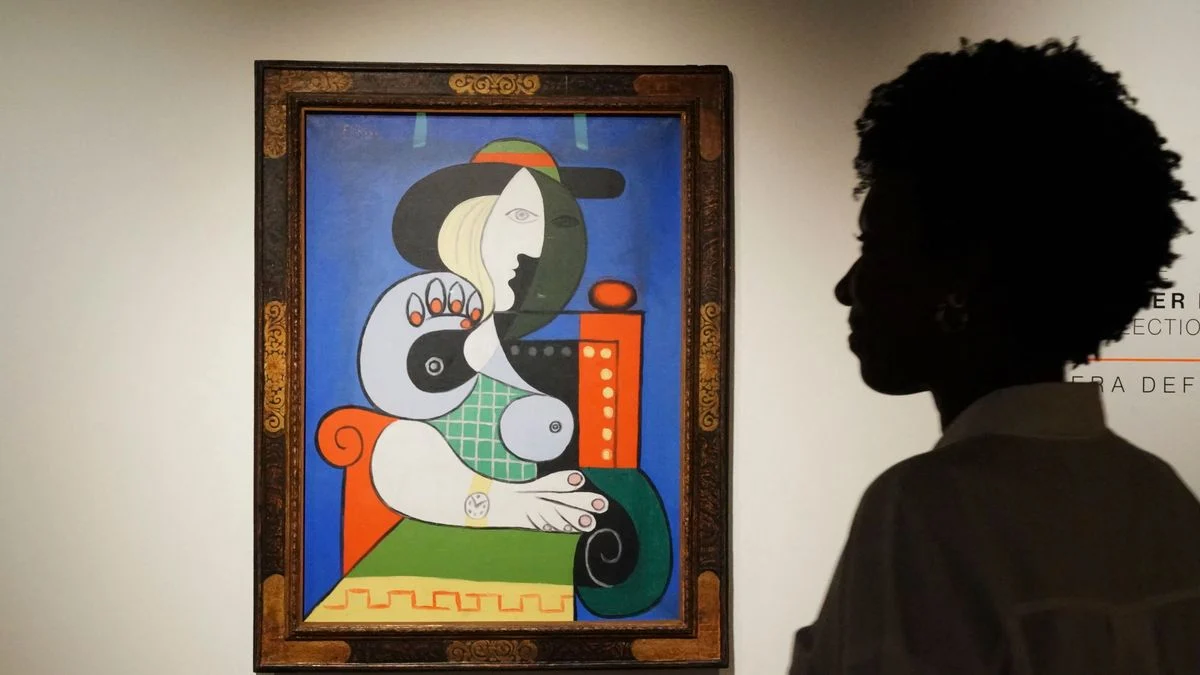
In the high-stakes world of criminal investigations, police officers are often prepared for the unexpected. They anticipate weapons, illicit substances, and resistance. However, the officers of the French judicial police who conducted a raid in the quiet suburb of Champigny-sur-Marne on the outskirts of Paris last Monday were met with a discovery that transcended the typical parameters of a narcotics operation. Amidst the paraphernalia of a localized drug ring, investigators uncovered a treasure of global artistic significance: an authentic painting by Pablo Picasso.
What began as a standard search for contraband—intended to disrupt local drug trafficking networks—evolved into a sophisticated art-crime investigation that has now captivated the international art community. The serendipitous recovery of this masterpiece, currently being held under tight security, has triggered a broader inquiry into the intersection of organized crime and the clandestine trade of stolen fine art.
The Chronology of Discovery
The Raid on Champigny-sur-Marne
On Monday, the operation was executed with precision. The target was a residential property in Champigny-sur-Marne, a commune in the Val-de-Marne department, known for its suburban tranquility. Intelligence reports had suggested the house was being utilized as a distribution point for narcotics. Upon entry, the Kriminalpolizei (criminal police) secured the premises and began their sweep for evidence of illegal activity.
As reported by the French daily Le Parisien, the search initially followed the expected trajectory. Officers quickly located quantities of hashish, high-end luxury clothing items, and several thousand euros in cash—the typical markers of a localized illicit operation.
The Unearthing of the Canvas
The pivot in the investigation occurred when officers inspected the storage areas of the property. Tucked away, perhaps awaiting a buyer or serving as a high-value asset for money laundering, they discovered a framed canvas. While the initial nature of the item was not immediately clear to the tactical team, the quality of the brushwork and the distinct style suggested an object of far greater value than the illicit goods found alongside it.
Upon consultation with art experts and specialized units within the French police force, the work was definitively authenticated as an original Picasso. The realization that such a piece was residing in a suburban drug den sent shockwaves through the local police precinct and necessitated an immediate escalation of the case to specialized judicial authorities.
Judicial Proceedings
By the following Friday, the legal gears were in full motion. The Créteil public prosecutor’s office confirmed to the Agence France-Presse (AFP) that an investigation into theft and the receipt of stolen goods had been formally launched. Four suspects, taken into custody during the initial raid, were brought before a court in Créteil. These individuals are now at the center of a complex legal puzzle that seeks to determine how a piece of such immense cultural value found its way into the hands of petty criminals.
Supporting Data and Contextual Analysis
The Intersection of Narcotics and Art Crime
The presence of a Picasso in a house filled with hashish and cash is not as incongruous as it may appear to the layperson. Historically, organized crime syndicates have long viewed fine art as a preferred vehicle for laundering "dirty" money. Because high-value art is portable, relatively easy to conceal, and capable of holding or increasing its value, it serves as an ideal "currency" for those operating outside the banking system.
The Value of the Unnamed Masterpiece
While the Créteil prosecutor’s office has remained tight-lipped regarding the specific title or the estimated valuation of the painting, the fact that it has been confirmed as a genuine Picasso places it in a category of assets worth millions of euros. The ambiguity surrounding the specific piece suggests that the provenance investigation is ongoing. Law enforcement must now cross-reference the painting with the Art Loss Register and international databases of stolen cultural property to identify the rightful owner and the circumstances under which it was originally taken.
Official Responses and Investigative Challenges
The Prosecutor’s Stance
The public prosecutor in Créteil has maintained a policy of discretion. In their statement to the press, they emphasized that the primary focus remains on the judicial process and the verification of the painting’s history. "The painting has been confirmed as a genuine Picasso," a spokesperson stated, "but we are not in a position to release further details about the work at this stage to protect the integrity of the investigation."
The Challenges of Provenance
The central challenge for investigators is the "provenance gap." For a painting to end up in a suburban drug house, it must have traveled through a chain of illicit handlers. Was the painting stolen in a high-profile museum heist, a private home burglary, or perhaps seized during a corporate bankruptcy? Each link in this chain represents a potential lead. The police are currently working with art historians to determine if this piece was a "known" stolen work or if its disappearance had gone unreported—perhaps because it was part of an estate that had been neglected or stolen in a way that left the original owner unaware of the loss.
Implications for the Art World
Security and Cultural Heritage
The incident in Champigny-sur-Marne highlights a sobering reality: the vulnerability of art. While world-class museums invest millions in security, private collections—or the homes of those who acquire art through illegal means—often lack the climate control, surveillance, and insurance protocols necessary to protect such fragile pieces of history. The fact that an original Picasso was found in a house used for drug trafficking suggests a disturbing lack of care for the preservation of the work, potentially damaging the physical condition of the canvas.
Lessons for Law Enforcement
This case serves as a paradigm shift for local law enforcement. It reinforces the necessity of training patrol officers and tactical units to recognize signs of art fraud and high-value cultural assets during routine searches. When an operation starts with drugs but leads to a masterwork, the scope of the investigation must pivot instantly to encompass international financial crime.
A Call for Global Cooperation
As the investigation expands, the French authorities will likely seek the assistance of Interpol and specialized units, such as the FBI’s Art Crime Team, should the painting’s origin be linked to a crime committed outside of France. This collaborative effort is essential for tracing the "black market" route that brought the Picasso to the Paris suburbs.
Conclusion: The Long Road to Recovery
The recovery of the Picasso is undoubtedly a triumph for the police, but it is only the beginning of a lengthy process. The painting must now undergo rigorous conservation assessments to ensure its time in the possession of the traffickers has not caused irreparable harm. Furthermore, the legal battle to determine the rightful owner—whether it be a museum, a private collector, or an estate—promises to be as complex as the investigation itself.
For now, the painting sits in a secure facility, a silent witness to a bizarre intersection of high culture and low crime. As the investigation into the four suspects continues, the world watches to see what other secrets might be hidden in the underbelly of Paris’s suburban landscape. The case is a poignant reminder that while art is intended to be enjoyed, its immense value makes it a perennial target for those who operate in the shadows, and that justice, occasionally, comes in the form of a surprising, frame-worthy discovery.