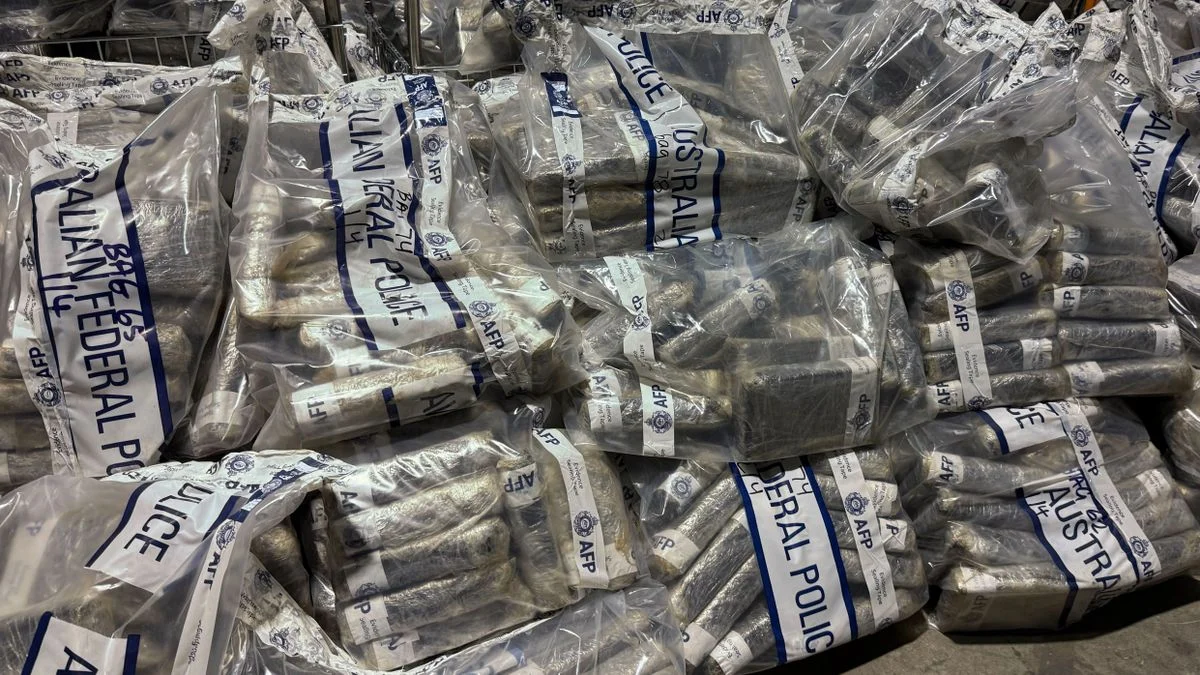
In a landmark operation that has sent shockwaves through international law enforcement circles, Australian authorities have successfully intercepted 2.7 tonnes of cocaine buried beneath a suburban property in Western Sydney. The seizure, which represents the largest single haul of cocaine in the nation’s history, marks a pivotal moment in the ongoing battle against transnational organized crime syndicates that have increasingly targeted the Australian market for its lucrative illicit trade.
The operation, coordinated by the Australian Federal Police (AFP), has effectively dismantled a sophisticated logistics chain that spanned thousands of kilometers, from the rugged coastline of Queensland to the clandestine storage facilities of Londonderry.
The Discovery: A Suburban Vault
The discovery was not the result of a lucky tip-off, but rather the culmination of a high-stakes, months-long investigation targeting an international drug network. On the surface, the site in Londonderry, a quiet suburb on the fringes of Sydney’s western sprawl, appeared unremarkable. However, intelligence pointed to the property serving as a "cold storage" site for a massive illicit consignment.
Upon executing a raid, tactical units discovered a series of industrial shipping containers modified with false floors. Beneath these layers of steel and industrial flooring, investigators unearthed plastic containers packed with high-grade cocaine. The scale of the concealment was significant, suggesting a level of logistical sophistication typically reserved for state-level operations or major cartels.
Two men, aged 21 and 25, were apprehended at the scene. According to police reports, both individuals attempted to flee as officers moved in but were quickly neutralized and taken into custody. They now face charges of possessing a commercial quantity of illegally imported border-controlled drugs—a crime that carries the maximum penalty of life imprisonment in Australia.
Chronology of the Operation: From Queensland to the Courthouse
The Inception (May 2024)
The investigation, codenamed Operation [Internal Codename], was launched in May following intelligence reports suggesting a massive importation attempt was imminent. Authorities began monitoring maritime traffic and suspicious logistics movements across the northeastern coast of Australia.
The Transit Phase
Investigators determined that the shipment originally arrived via sea at the coast of Queensland. Despite the vast distances between the northern coast and Sydney, the syndicate successfully navigated internal logistics, moving the contraband across state lines under the guise of legitimate freight. This phase of the operation underscores the challenge Australian authorities face in monitoring the continent’s sprawling coastline and vast highway networks.
The Staging Period
Once the cargo reached the greater Sydney area, it was moved to the Londonderry property. This location functioned as a distribution hub, where the drugs were intended to be broken down into smaller, sellable quantities for the domestic black market.
The Raid and Arrests
Following the arrest of the two men at the site, the total number of individuals apprehended in connection with the investigation rose to eight. The six previously arrested suspects are believed to be key facilitators within the broader syndicate, ranging from maritime logistics coordinators to local distribution managers.
Supporting Data: The Scale of the Supply Chain
To understand the gravity of this seizure, one must look at the numbers. The 2.7 tonnes recovered in Londonderry, combined with 178 kilograms of cocaine and 142 kilograms of methamphetamine seized earlier in the investigation, brings the total volume of narcotics removed from the streets to over three tonnes.
The Economic Impact
While the street value of the drugs fluctuates, the 2.7 tonnes alone represent a "triple-digit million" valuation in Australian dollars. In the illicit trade, Australia is known as one of the most profitable markets in the world for cocaine traffickers. Due to high domestic demand and the difficulty of importing goods to an island nation, the price per gram in Sydney can be significantly higher than in Europe or the United States, providing a massive incentive for global cartels to attempt these high-risk, high-reward ventures.
Comparative Seizures
This bust eclipses previous records, effectively shifting the landscape of Australian drug interdiction. Previous record-setting hauls, often measured in the hundreds of kilograms, have now been dwarfed by this single operation, signaling a shift in the volume of shipments being sent to the Oceanic region.
Official Responses and Strategic Implications
The Australian Federal Police (AFP) Perspective
AFP officials have described the operation as a "crushing blow" to the criminal groups involved. In a press briefing following the seizure, the Assistant Commissioner of the AFP emphasized that the operation was not just about the volume of the drug seized, but the intelligence gathered on the syndicate’s infrastructure.
"This is not a standalone event," the official stated. "This is part of a systemic effort to dismantle the supply chains that enable these groups to operate. By targeting the logistics, we force these syndicates to take greater risks, which eventually leads to their exposure."
The Transnational Nature of the Threat
The involvement of an "international drug network" highlights the reality that Australian crime is rarely purely local. The investigation into the source of the cocaine—likely originating from South American production centers—is ongoing. The AFP is currently collaborating with international partners, including Interpol and various law enforcement agencies in South America and Southeast Asia, to track the maritime routes used to bypass border security.
The Implications: Why Australia?
The success of this operation raises critical questions about why Australia remains a primary target for global cartels.
- The Price Premium: As noted, the price disparity between the cost of production in South America and the retail price in Sydney allows syndicates to absorb massive losses even if several shipments are intercepted, provided one major delivery arrives safely.
- Maritime Vulnerability: Despite its strict border controls, Australia’s massive coastline presents a perpetual challenge for customs and naval surveillance.
- The Shift to Synthetic Markets: The simultaneous seizure of methamphetamine indicates that these syndicates are diversifying their product portfolios, treating Australia as a "one-stop shop" for various illicit substances.
Future Surveillance and Legislative Reform
In the wake of this operation, lawmakers are already calling for increased funding for the AFP’s maritime patrol units and greater investment in automated detection technologies at major shipping ports. There is also a renewed debate regarding the legal penalties for those involved in the mid-level logistics of the drug trade. While the two men caught in Londonderry face life in prison, authorities are now looking further up the chain to identify the "architects" of the operation—the individuals who remain in overseas jurisdictions, largely immune to Australian law.
Conclusion: A Turning Point
The Londonderry raid serves as a stark reminder of the resilience of criminal organizations, but also of the growing sophistication of international police cooperation. By intercepting 2.7 tonnes of cocaine, Australian authorities have prevented a massive influx of illicit product from flooding local communities, potentially saving countless lives from the ripple effects of addiction and associated crime.
However, the investigation is far from over. The AFP continues to pore over encrypted communications, financial records, and maritime logs to unravel the full extent of this network. As the case moves to the courts, it will likely serve as a benchmark for how Australia handles transnational organized crime in an era of globalized illicit trade. The record-breaking seizure is not merely a headline; it is a strategic victory that will force criminal syndicates to reconsider the cost-benefit analysis of targeting Australia in the future.