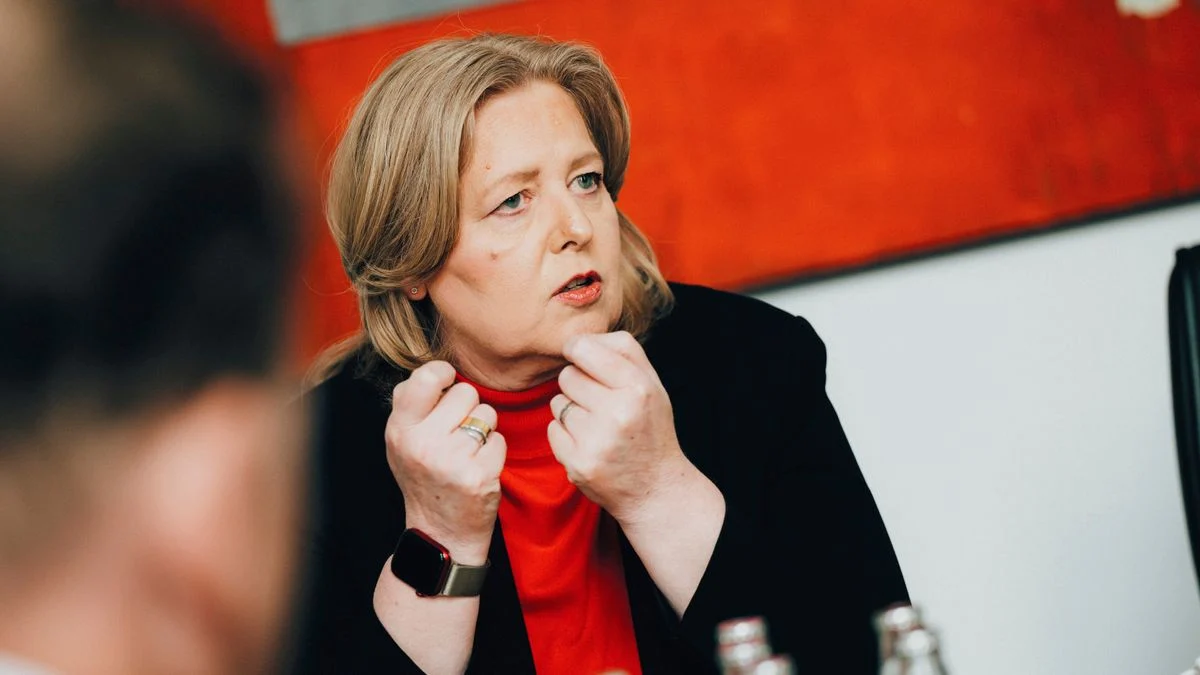
Berlin, Germany – May 13, 2026 – A simmering dispute within Germany’s ruling "Ampel" (traffic light) coalition has erupted into a full-blown political crisis, centered on the foundational principle of the eight-hour workday. Bärbel Bas, the influential Minister of Labour and co-leader of the Social Democratic Party (SPD), is facing intense pressure from the conservative CDU/CSU Union bloc to uphold a crucial agreement from the coalition contract regarding the modernization of working time laws. Bas’s recent public skepticism about touching the long-established eight-hour limit has not only stoked the ire of the opposition but also exposed deep ideological fissures within the government itself.
The controversy comes at a critical juncture for the coalition, already navigating complex challenges ranging from economic transformation to social welfare reforms. Bas’s remarks, delivered at the German Trade Union Confederation (DGB) Congress, suggest a reluctance to move forward with a plan that would replace the daily maximum working hours with a weekly cap, a move designed to offer greater flexibility for businesses and employees alike. This stance puts her directly at odds with the coalition’s agreed-upon agenda and has prompted accusations of political opportunism and obstructionism from the Union, who see her as increasingly undermining government stability.
Main Facts: A Coalition Divided on Labour’s Core Principle
At the heart of the current political maelstrom is a fundamental disagreement over the future of Germany’s working time regulations. The coalition agreement, forged between the SPD, Greens, and the Free Democratic Party (FDP), explicitly includes a commitment to replace the current daily maximum working hours with a more flexible system based on a weekly maximum. This shift would theoretically allow employees to work more than eight hours on certain days, provided their average weekly hours do not exceed a set limit. Proponents argue this would better accommodate modern work models, enhance competitiveness, and provide employees with greater autonomy over their schedules.
However, Labour Minister Bärbel Bas has thrown a significant wrench into these plans. Speaking at the DGB Congress in Berlin on Tuesday, Bas stated unequivocally, "If it were up to the SPD and me personally, we wouldn’t even touch the issue, but it’s in the coalition agreement." This public declaration, widely interpreted as a signal of deep reluctance, has immediately drawn sharp criticism from the CDU/CSU Union parties. They accuse Bas of backtracking on a signed agreement and prioritizing union solidarity over governmental coherence.
The eight-hour workday is not merely a legal stipulation in Germany; it is a deeply ingrained social achievement, enshrined in law since 1918. The current Working Time Act (Arbeitszeitgesetz) strictly limits daily working hours to eight, with only exceptional circumstances allowing for an extension to ten hours. Any alteration to this fundamental principle is seen by many, especially trade unions, as an assault on worker protection and a potential gateway to increased exploitation and poorer work-life balance.
The Union parties, particularly the CDU, are demanding that Bas adhere to the coalition’s pre-agreed terms and present a draft law for the reform by June, as reportedly planned. Their frustration stems from what they perceive as a pattern of obstruction from the Labour Minister, who, despite her prior popularity, has become a significant source of internal friction within the government since assuming her current roles.
Chronology: Bas’s Shifting Political Sands and Growing Tensions
Bärbel Bas’s journey from a widely respected parliamentary figure to a controversial government minister has been swift and dramatic, setting the stage for the current showdown.
From Bridge-Builder to Coalition Critic
Until March 2025, Bas served as the President of the Bundestag, a role in which she garnered widespread admiration and respect across the political spectrum. Her tenure was marked by impartiality and a talent for fostering consensus, even among the often-fractious parties. She was seen as a unifying force, popular even with members of the CDU and CSU, who typically reserved their sharpest criticisms for "Ampel" politicians.
However, her political trajectory took a decisive turn a year ago when she was appointed Minister of Labour and, shortly thereafter, ascended to the co-leadership of the SPD. This dual role has thrust her into the ideological frontline, transforming her public image from a conciliatory parliamentarian to a formidable, and often confrontational, political player.

A Series of Confrontations
The working time debate is not Bas’s first collision with established government narratives or coalition partners. Over the past year, she has cultivated a reputation for being an internal brake on key government initiatives, much to the chagrin of her coalition partners and even some within her own party.
- Summer 2025: The "Bullshit" Remark: Last summer, Bas caused a stir when she publicly dismissed a statement made by Chancellor Olaf Scholz as "bullshit." While the exact context of this comment is not detailed in the original report, it signaled an unusual degree of open dissent from a cabinet minister towards the head of government, raising eyebrows about internal party discipline and the cohesion of the coalition.
- Early May 2026: Pushing the Brakes on Social Welfare Reform: Just weeks before the current controversy, Bas openly admitted to "putting the brakes on" a significant social welfare reform package. This admission solidified the Union’s perception of her as an impediment to necessary legislative progress and a primary blocker of reforms. Critics from the CDU/CSU began to lament that Bas, not the Finance Minister Lars Klingbeil (who is also SPD co-leader), was the true antagonist to the Chancellor’s agenda, effectively portraying her as an autonomous power center within the SPD.
- May 13, 2026: The DGB Congress and the Eight-Hour Day: The most recent episode unfolded at the Bundeskongress des DGB (German Trade Union Confederation Congress) in Berlin. This event itself was charged with political tension, as Friedrich Merz, the leader of the CDU, had been reportedly laughed at and booed by the unionists just hours before Bas took the stage. Bas’s subsequent statement, explicitly aligning herself and the SPD with the unionists’ resistance to abolishing the eight-hour day, was a direct response to this sentiment. While she acknowledged the coalition agreement, her personal stance signaled a clear intention to resist or at least delay the proposed reform, positioning herself as a champion of worker rights against perceived pro-business policies.
This pattern of public defiance and perceived obstruction has significantly strained her relationship with the Union parties and cast a shadow over the "Ampel" coalition’s ability to deliver on its legislative promises.
Supporting Data: Economic Imperatives, Social Protections, and Political Realities
The debate over the eight-hour workday is multifaceted, touching upon deep-seated economic, social, and political considerations that extend far beyond a simple legal amendment.
The Case for Flexibility: Economic Competitiveness and Modern Work
Proponents of reforming the Working Time Act, largely from the FDP and the business-oriented wing of the CDU/CSU, argue that the rigid daily eight-hour limit is anachronistic in a modern, globalized economy. They contend that greater flexibility is essential for Germany to maintain its competitive edge.
- Adaptation to Digitalization: Many modern professions, particularly in the tech and creative industries, do not adhere to a strict 9-to-5 schedule. Projects often require intense, focused work for several days, followed by periods of lighter load. A weekly hour cap would allow companies to better allocate resources and employees to manage their own workflows more effectively.
- Industry-Specific Needs: Certain sectors, like healthcare, logistics, and manufacturing, face fluctuating demands. The ability to schedule longer shifts during peak times, compensated by shorter shifts or days off during quieter periods, could improve operational efficiency and responsiveness.
- Employee Autonomy: Advocates suggest that many employees desire more control over their schedules. Replacing a daily limit with a weekly one could empower workers to condense their work into fewer, longer days, allowing for more extended weekends or personal time, thereby potentially enhancing work-life balance for those who prefer it.
- Reducing Bureaucracy: The current law’s strictness often leads to complex tracking and justification for even minor deviations. A simpler, weekly cap could reduce administrative burdens for businesses.
The Case for Protection: Worker Rights and Public Health
On the other hand, trade unions, the SPD’s traditional base, and Bas herself staunchly defend the eight-hour day as a crucial pillar of worker protection and social well-being.
- Historical Achievement: The eight-hour day was a hard-won victory for the labour movement globally and in Germany. It represented a fundamental shift from exploitative working conditions to a more humane balance between work and life. Undermining it is seen as a regression.
- Preventing Exploitation: Unions fear that replacing the daily limit with a weekly one would open the door to employers demanding excessively long shifts on individual days, leading to burnout, increased stress, and a deterioration of health and safety standards. While a weekly cap exists, the immediate demands of a single long day could be detrimental.
- Work-Life Balance: Despite arguments for flexibility, unions emphasize that a consistent daily limit provides a clear boundary between work and personal life, essential for family time, leisure, and mental recuperation. They argue that flexibility should not come at the expense of predictable free time.
- Health and Safety: Studies consistently link long working hours to increased health risks, including cardiovascular diseases, mental health issues, and higher rates of accidents. The eight-hour limit serves as a preventative measure against these risks.
- Enforcement Challenges: Unions also raise concerns about the practical enforcement of a weekly cap. It could be harder for authorities to monitor compliance and protect employees from pressure to work excessive hours if daily limits are relaxed.
Political Implications for the "Ampel" Coalition
The dispute highlights the inherent ideological tensions within the "Ampel" coalition, composed of the centre-left SPD, the environmentalist Greens, and the liberal-leaning FDP. The FDP, representing business interests, generally pushes for deregulation and flexibility, while the SPD, rooted in the labour movement, champions worker protection. The Greens often find themselves mediating or aligning with either side depending on the specific policy.
Bas’s stance can be interpreted as a strategic move to solidify her position as SPD co-leader and champion of the party’s traditional values, particularly given the DGB Congress context. By aligning with the unions, she reinforces her progressive credentials and mobilizes her base, potentially at the cost of coalition harmony. This creates a difficult situation for Chancellor Scholz, who needs to project an image of a united and functional government while managing conflicting priorities within his own party and coalition.
Official Responses: A Chorus of Criticism and Defensive Posturing
The aftermath of Bärbel Bas’s statements has seen a flurry of official reactions, primarily from the Union parties, demanding accountability and adherence to the coalition agreement.
The Union’s Outcry: "Broken Promises" and "Obstructionism"
Leaders and prominent members of the CDU and CSU have been quick to condemn Bas’s remarks, framing them as a betrayal of trust and a sign of governmental dysfunction.

- Friedrich Merz (CDU Leader): Although not explicitly quoted in the provided text, it’s highly probable that Merz, having just been booed by the same DGB audience, would be among the loudest critics. His party’s general stance is one of disappointment and exasperation. A hypothetical statement from a CDU spokesperson might read: "Minister Bas’s statement is deeply concerning. It is an explicit breach of the coalition agreement, a document signed by all parties, including the SPD. This government cannot afford to have its own ministers openly contradict agreed-upon policy. This is not just about the eight-hour day; it is about the reliability and credibility of the ‘Ampel’ coalition."
- Parliamentary Pressure: CDU politicians in the Bundestag have reportedly intensified their pressure, demanding that Bas present the promised draft law by June. They argue that delaying or outright blocking the reform would send a negative signal to businesses and undermine Germany’s economic potential. "The Minister of Labour has a duty to implement the agreements made in the coalition contract, not to undermine them based on personal preference or party politics," stated a prominent CDU labour policy expert. "Her role is to serve the government’s agenda, not just her party’s base."
- Accusations of Political Calculation: Many in the Union view Bas’s actions as a calculated political maneuver, designed to appeal to the SPD’s traditional unionist base, especially after Merz’s frosty reception at the DGB Congress. They suggest she is prioritizing short-term political gains over the long-term stability and legislative progress of the government.
SPD’s Internal Dynamics: Support, Silence, and Strategic Ambiguity
The SPD’s official response to Bas’s statements has been more nuanced, reflecting the internal tensions within the party.
- Support from the Left Wing: Elements within the SPD’s left wing and trade union-affiliated factions likely support Bas’s skepticism. They would see her as defending core social democratic principles and protecting workers from potential neoliberal reforms.
- Chancellor’s Position: Chancellor Olaf Scholz (SPD) faces a delicate balancing act. As head of the government, he is bound to uphold the coalition agreement. However, as a leading SPD figure, he also understands the importance of maintaining party unity and appealing to the party’s base. His public statements would likely emphasize the importance of finding a "pragmatic solution" that balances flexibility with worker protection, without directly rebuking Bas. He might stress that discussions are ongoing and that no final decisions have been made, attempting to de-escalate the situation.
- Strategic Ambiguity: Bas’s statement itself ("If it were up to the SPD and me personally… but it’s in the coalition agreement") can be interpreted as strategic ambiguity. It signals her personal and party preference while acknowledging the legal and political obligation. This leaves room for negotiation or for shifting blame if the reform fails to materialize or is significantly watered down.
Trade Unions: Unified Opposition
The DGB and its constituent unions have been unequivocal in their opposition to any weakening of the eight-hour workday. Bas’s statement at their congress was met with approval, reinforcing her image as an ally. Their stance is rooted in a long history of fighting for worker rights and conditions. They argue that flexibility should be negotiated within collective bargaining agreements, not imposed through a weakening of statutory protections.
Employer Associations: Calls for Reform
Conversely, employer associations have consistently advocated for greater flexibility in working time. They would reiterate their call for the government to implement the coalition agreement’s promise, emphasizing the need for modern regulations to boost productivity and allow businesses to adapt to changing market conditions. They would likely express disappointment at Bas’s stance, viewing it as a barrier to essential reforms.
Implications: A Test of Coalition Resilience and Labour’s Future
The dispute over the eight-hour workday carries profound implications for the German "Ampel" coalition, the political standing of Bärbel Bas, and potentially the future of labour law in Germany.
For the "Ampel" Coalition: Increased Strain and Potential Paralysis
This conflict represents a significant test of the "Ampel" coalition’s resilience. Already characterized by internal disagreements, particularly between the FDP’s liberal economic agenda and the SPD’s social democratic priorities, this latest friction adds considerable strain.
- Legislative Delays: The immediate consequence could be a significant delay or even the abandonment of the working time reform. If Bas, as the responsible minister, remains unwilling to present a suitable draft law, the project could stall indefinitely, becoming another unfulfilled promise of the coalition agreement.
- Erosion of Trust: The public disagreement over a core policy issue erodes trust not only among the coalition partners but also among the electorate. It feeds into a narrative of governmental indecision and internal strife, potentially impacting future election outcomes.
- Governmental Stability: While unlikely to immediately cause the coalition to collapse, persistent public feuds over fundamental policies can weaken governmental authority and make it harder to pass other crucial legislation. Each major disagreement consumes political capital and diverts attention from other pressing issues.
For Bärbel Bas: A Double-Edged Sword
For Bärbel Bas, her stance is a calculated risk with both potential rewards and significant dangers.
- Strengthening Her Base: By aligning with the DGB and defending the eight-hour workday, Bas reinforces her position as a champion of labour rights and strengthens her appeal within the SPD’s traditional base and the broader progressive electorate. This could be crucial for her leadership within the party.
- Risking Her Ministerial Position: However, defying a clear coalition agreement can have severe consequences for a minister. The Union parties, particularly the FDP, might escalate their demands for her to comply or face political repercussions, potentially even calls for her resignation if the issue escalates further. Her image as a reliable government partner could be damaged.
- Challenging the Chancellor: Her actions also implicitly challenge the authority of Chancellor Scholz. If a minister can openly disregard a coalition agreement, it undermines the Chancellor’s ability to lead and enforce governmental policy.
For German Labour Law: A Crossroads Moment
Beyond the immediate political wrangling, the debate signals a crucial juncture for German labour law.
- Retention of the Status Quo: If Bas’s resistance prevails, it could mean the indefinite retention of the current daily eight-hour limit, signaling a victory for worker protection advocates and a reaffirmation of Germany’s traditionally strong social safety nets.
- Incremental Reforms: Alternatively, a compromise might emerge, leading to more modest reforms than initially envisioned, perhaps allowing for slightly more daily flexibility under strict conditions, or piloting new models in specific sectors.
- The Future of Flexibility: The underlying tension between the desire for greater flexibility in a changing economy and the imperative of robust worker protection will not disappear. This debate will likely resurface, regardless of the immediate outcome, as Germany continues to grapple with the demands of digitalization and evolving work cultures.
The coming weeks will be critical. The pressure on Minister Bas to present a draft law by June will intensify, and her response will determine whether this controversy is contained or escalates into an even more profound crisis for Germany’s "Ampel" coalition. The eight-hour workday, a symbol of industrial-era worker liberation, has once again become a battleground for the future of labour in the digital age.