In the quiet, unassuming village of Süderbrarup, located just a thirty-minute drive from the bustling northern German city of Flensburg, lies a landscape that belies its serene appearance. Here, ancient willows and alders line the banks of a small, tranquil lake, their gnarled roots reaching deep into the dark, peat-rich water. During the summer months, a dense canopy of leaves filters the sunlight, casting long, shifting shadows over the surface, where Canada geese drift in a rhythmic, timeless dance.
To the casual observer, this is merely a picturesque corner of Schleswig-Holstein. To the archaeologist and the historian, however, this is the "Thorsberger Moor"—a site of profound, chilling, and enduring historical significance. This wetland, once a vast high-moor, served as a stage for mysterious, violent, and highly symbolic rituals practiced by Germanic tribes nearly two millennia ago. It is a place where the line between the mundane and the metaphysical once blurred, leaving behind a treasure trove of artifacts that continue to baffle and fascinate experts today.
The Main Facts: A Gateway to the Past
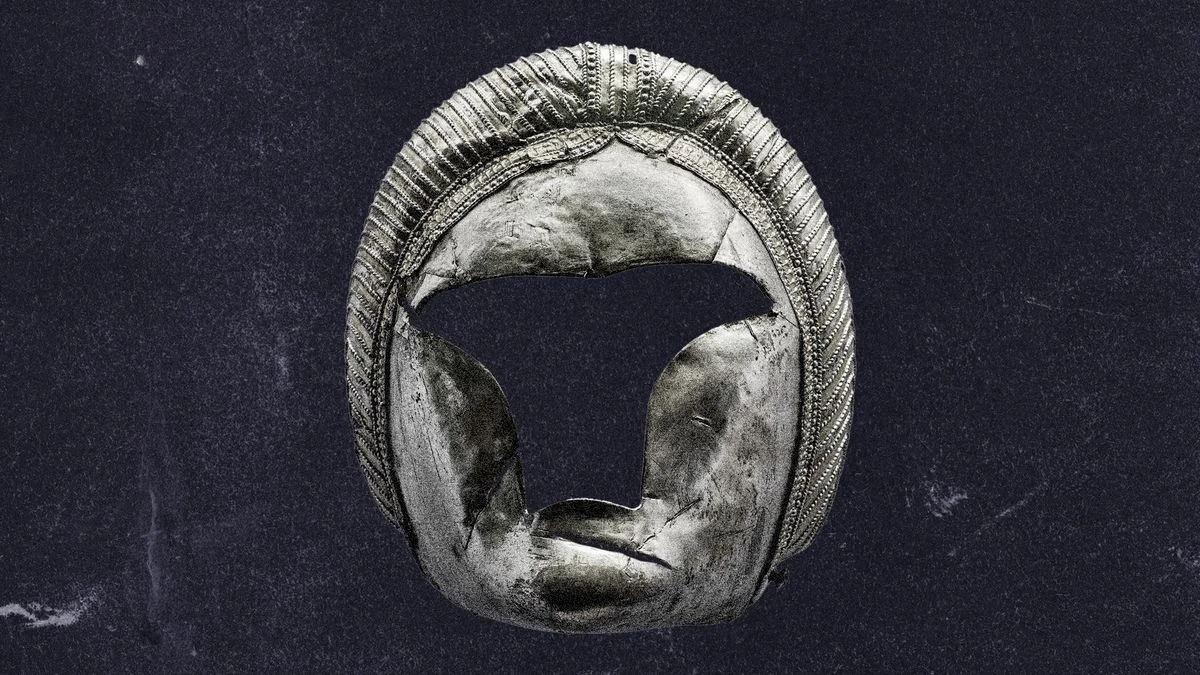
The Thorsberger Moor is not merely a geographic location; it is an archaeological time capsule. Excavations in this region have yielded some of the most spectacular finds from the Roman Iron Age. The primary mystery surrounding the site concerns the practice of "votive deposition"—the systematic destruction and ritualistic sinking of high-value items, including weaponry, armor, jewelry, and even clothing, into the watery depths.
Why would a society, often described as pragmatic and resource-scarce, intentionally destroy functional, expensive, and sometimes ornate military gear? This question lies at the heart of the ongoing research into the Thorsberg complex. The objects recovered from the mire were not lost in battle; they were offered. They were part of a complex socio-religious contract between the tribes and the entities they believed resided within the water—a silent, dark realm that acted as a portal to the divine.
Chronology: A Timeline of Ritual and Rediscovery
To understand the magnitude of the Thorsberg site, one must look at the timeline of its use and the subsequent efforts to bring its secrets to light.
1. The Era of Deposition (1st – 4th Century AD)
The activity at Thorsberg spanned several centuries. During the Roman Iron Age, Germanic tribes—likely the Angles or their predecessors—used the site as a sacred space. Throughout this period, successive generations brought war trophies to the edge of the moor. The ritual was consistent: weapons were bent or smashed, shields were punctured, and precious ornaments were sacrificed. This was not a singular event but a multi-generational tradition of "killing" objects to make them suitable for the spiritual realm.
2. The Great Rediscovery (1858–1861)
The modern history of the site began in 1858, when the first systematic excavations were undertaken by Conrad Engelhardt. During these early years of archaeology, the discovery of the Thorsberg finds sent shockwaves through the scientific community. The sheer volume of metalwork, coupled with the pristine preservation provided by the acidic, oxygen-poor peat, allowed for a level of analysis previously thought impossible.
3. Modern Re-evaluation (Late 20th Century – Present)
In recent decades, advancements in carbon dating, metallurgical analysis, and landscape modeling have allowed researchers to refine the narrative. We now understand that Thorsberg was part of a larger network of ritual sites across Northern Europe, including the famous Illerup Ådal in Denmark. These sites suggest a pan-Germanic tradition of ritual violence and offering that defined the cultural identity of the region for centuries.
Supporting Data: What the Mire Tells Us
The physical evidence from the Thorsberger Moor is staggering. The artifacts found in the peat tell a story of high craftsmanship and intense combat.
- Weaponry: Thousands of spearheads, swords, and shield bosses have been recovered. Metallurgical analysis shows that many of these weapons were of high-quality Roman manufacture, suggesting that they were either traded for or, more likely, captured during border skirmishes.
- The Clothing Finds: Perhaps the most unique aspect of Thorsberg is the preservation of organic material. Rare textiles, including patterned wool trousers and cloaks, have been unearthed. These fragments provide the most detailed picture we have of Germanic fashion and textile technology from the 3rd century.
- The "Killed" Status: Data consistently shows that the weapons were not discarded accidentally. They show clear signs of intentional bending (to render them useless) and fire damage. This reinforces the theory that the objects were "sacrificed"—removed from the human world to be presented to the gods, likely as thanks for military victory.
Official Responses and Archaeological Consensus
For years, the academic community struggled to reconcile the violence of these deposits with the perceived nature of Germanic religious life. Dr. Guido Kleinhubbert, author of Düstere Geheimnisse (Dark Secrets), notes that these finds challenge our understanding of ancient social hierarchies.

"We are not looking at simple trash heaps," Dr. Kleinhubbert argues. "We are looking at state-level ritualization. The logistics required to gather, process, and submerge this amount of wealth suggest a organized social structure that could command its people to forfeit their most valuable possessions for the sake of the collective spirit."
State archaeologists in Schleswig-Holstein have maintained a long-term conservation effort to protect the moor from development. They emphasize that the site is not just a repository of metal, but a fragile ecosystem that holds the key to understanding the migration patterns and belief systems of the peoples who eventually shaped Northern Europe.
Implications: Why Thorsberg Still Matters
The study of the Thorsberger Moor has profound implications for how we view the Germanic tribes of antiquity. Far from the "barbaric" image often painted by Roman chroniclers, the evidence from the moor points to a highly ritualized society with a sophisticated understanding of metallurgy, textile production, and communal governance.
1. Rethinking the "Barbarian" Narrative
The presence of Roman weapons suggests that these tribes were not isolated; they were deeply entangled in the politics and trade networks of the Roman Empire. The act of sacrificing Roman-made goods might have been a symbolic gesture of dominance—taking the weapons of the "civilized" world and dedicating them to the spirits of the North.
2. The Psychology of Sacrifice
The consistency of the ritual over hundreds of years indicates a profound psychological need for communal bonding through sacrifice. In a time of constant warfare and existential uncertainty, the lake served as a psychological anchor. By "killing" the weapons, the tribes were symbolically purging the violence of the battlefield, offering it up to the water to ensure the favor of the gods for the next harvest or the next campaign.
3. A Heritage at Risk
Despite its historical weight, the Thorsberger Moor remains a site of perpetual vulnerability. Environmental changes, fluctuating water tables, and the threat of modern construction continue to pose risks to any artifacts that may still remain hidden beneath the mud. The ongoing debate between preservation and scientific excavation remains a core concern for local authorities.
Conclusion: The Whispering Waters
As you stand today by the edge of the Thorsberger Moor, watching the Canada geese drift across the dark surface, it is difficult to imagine the frantic, smoke-filled, and blood-soaked scenes that once played out here. The water remains silent, keeping its secrets in the deep, anaerobic embrace of the peat.
Yet, the artifacts we have recovered act as a bridge across time. They remind us that the human impulse to make sense of the world—to offer, to sacrifice, and to find meaning in the face of death—is a constant that transcends eras. The Germanic tribes who gathered here may be long gone, their languages evolved and their gods forgotten, but the dark, mysterious waters of Süderbrarup continue to speak, telling a story of a past that was far more complex, vibrant, and profoundly human than we ever dared to imagine.
In studying these "dark secrets," we do not just learn about the past; we gain a deeper appreciation for the roots of our own cultural identity, buried deep beneath the roots of the ancient alders and the still, dark water.