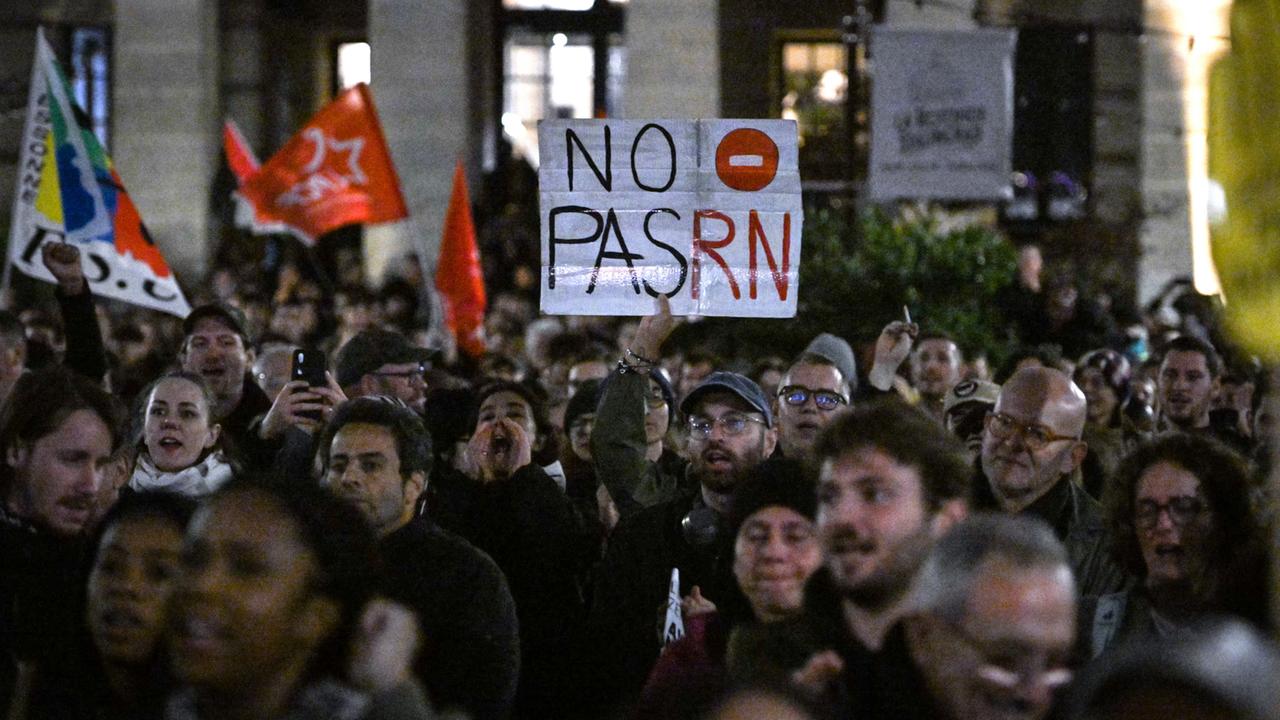
Paris, France – October 27, 2026 – A palpable sense of unease has settled over France in the wake of deeply disturbing, apparently racially motivated attacks in the Parisian suburbs. The nation is confronting a growing fear of right-wing extremism, a phenomenon amplified by the rhetoric of certain political factions and amplified by a segment of the media landscape. In response, thousands took to the streets of Paris to express solidarity and demand action, their voices a chorus against the rising tide of intolerance.
The demonstrations, held under the shadow of darkening skies, saw a diverse crowd united by a shared concern. White placards, stark against the evening gloom, bore the simple yet potent message: "Racism Kills." The raw emotion was palpable, with many participants articulating fears for their own safety and that of their loved ones.
"What has happened shows how much racism and fascism are gaining ground in France," stated Elodie, a student present at the Paris rally. "As a Black woman, this has affected me deeply. I have brothers and sisters, and this could have happened to any of us. I am here to show that I do not accept this." Her words echoed the sentiment of many, a potent reminder of the personal stakes involved in the fight against hate.
Andrea, visiting Paris, shared her own anxieties. A former local politician, she noted a disturbing shift in the boundaries of acceptable discourse. "I am afraid this is just the beginning," she expressed, her voice laced with concern. "Racist statements are increasingly going unchecked in France, and today, they are leading to death." This sentiment underscores a broader concern about the erosion of social norms and the normalization of prejudice.
The Anatomy of the Attacks: A Timeline of Terror
The catalyst for the widespread outrage was a series of violent incidents that unfolded in the towns of Trappes and La Verrière, southwest of Paris, on Friday. A 39-year-old French national, identified as Kevin T., unleashed a torrent of gunfire upon unsuspecting pedestrians. The victims, targeted seemingly by their ethnicity, included individuals of Arab and African descent.
Friday, October 24, 2026:
- In the early afternoon, a 39-year-old man, Kevin T., began a shooting spree in Trappes and La Verrière.
- The initial reports indicate that the assailant deliberately targeted individuals of color, specifically those of Arab and African heritage.
- Tragically, one victim, 26-year-old Pengo Bossio Wangi, a French national with Congolese roots, succumbed to his injuries.
- Four other individuals, including an 11-year-old girl, sustained serious injuries.
Saturday, October 25, 2026:
- Following a manhunt, Kevin T. was apprehended by authorities.
- Initial investigations began to uncover unsettling details about the suspect and the nature of the attacks.
Sunday, October 26, 2026:
- French President Emmanuel Macron visited Trappes, publicly condemning the incident as a "terrorist and racist attack."
- The French Anti-Terrorism Prosecutor’s Office announced it had taken over the investigation, citing the premeditated nature of the crime and the suspected racist motive.
Monday, October 27, 2026:
- Anti-terrorism prosecutor Olivier Christen provided an update on the ongoing investigation.
- He detailed the evidence suggesting a racist motive, including the profile of the victims and statements made by the suspect.
- Further details emerged regarding the weapons found in the suspect’s possession and his personal background.
Mounting Accusations: Media and Political Responsibility
A significant portion of the anger and frustration expressed by protestors and commentators is directed towards what they perceive as the complicity of certain media outlets and political parties in fostering an environment conducive to such violence. The accusation is that some right-wing media channels, such as CNews, have provided a platform for unfiltered racist pronouncements, thereby legitimizing and amplifying hateful ideologies.
Ali Rabeh, the mayor of Trappes, minced no words in placing political responsibility squarely on the shoulders of the far-right Rassemblement National (RN) and its leader, Jordan Bardella. Rabeh cited repeated inflammatory statements made by Bardella, including labeling Trappes as "not France anymore," a "miniature Islamist republic," and "Kabul within 30 minutes of Paris."
"Jordan Bardella has repeatedly, and I quote, ‘Trappes is no longer France’," Rabeh stated, his voice resonating with indignation. "He called the city a ‘miniature Islamist republic’ or said Trappes was ‘Kabul within 30 minutes of Paris’. This man and his party have targeted the entire population of Trappes." These strong accusations highlight the perceived direct link between divisive political rhetoric and real-world violence.
The protestors themselves echoed this sentiment, holding up signs that read, "Your blood is on your hands," a stark indictment of those they believe have contributed to the climate of hate. The demand is for greater accountability, not just from the perpetrators of violence, but from those who cultivate the soil from which such extremism grows.
The Investigation Deepens: Unraveling the Motive
The French Anti-Terrorism Prosecutor’s Office has launched a comprehensive investigation, probing the attacks under charges including "murder in connection with a terrorist undertaking." Their focus is on the possibility that the perpetrator was motivated by a desire to harm individuals belonging to a "specifically defined ethnicity, nation, or religion."
Prosecutor Olivier Christen elaborated on the grounds for the investigation’s escalation. He indicated that the apparent premeditation of the attack, coupled with the victimology and statements made by the suspect, Kevin T., pointed towards a potential racist motive.
During his apprehension, authorities discovered a significant arsenal in Kevin T.’s vehicle, including a submachine gun, ammunition, a tear gas grenade, handcuffs, and a police armband. This discovery further solidified the belief that the attack was meticulously planned.
Key Findings from the Investigation:
- Weapons Cache: A substantial collection of weaponry and incriminating items were found in the suspect’s car, indicating preparedness for a sustained act of violence.
- Victim Profile: The targeted nature of the attacks, focusing on individuals of Arab and African descent, is a primary factor in the investigation’s direction.
- Suspect’s Statements: While Kevin T. reportedly acknowledges carrying out the shootings, he has denied a racist motive. However, reports from Le Monde suggest he stated a desire to avenge looters from October 17th and specifically targeted "Blacks and Arabs" because he was "fed up with them." This conflicting narrative is a central point of investigation.
- Personal Background: Kevin T. is reportedly being treated for schizophrenia and had no prior known connections to intelligence services. His apartment yielded a Bible, a Quran, and a copy of Adolf Hitler’s "Mein Kampf," further complicating the psychological profile and potential ideological influences.
The conflicting accounts and the suspect’s mental health status add layers of complexity to the investigation, making it challenging to definitively ascertain the primary driving force behind the horrific events.
Societal Repercussions and the Path Forward
The attacks in Trappes and La Verrière have sent shockwaves across France, igniting a national conversation about the pervasive nature of racism and the urgent need to address the rise of right-wing extremism. The demonstrations in Paris are more than just a protest; they are a plea for recognition, for protection, and for a fundamental shift in the national discourse.
Student Elodie’s concluding remarks at the rally encapsulated the profound human cost of unchecked intolerance: "It is not normal to get shot just because you are Black and someone doesn’t like it. For me, all people have the same value." This simple yet powerful statement underscores the universal human right to safety and dignity, a right that was brutally violated in the recent attacks.
The coming days and weeks will be crucial for France as it navigates this challenging period. The government faces immense pressure to not only prosecute the perpetrator to the fullest extent of the law but also to implement concrete measures to combat the underlying causes of racial hatred and right-wing extremism. The events have exposed deep societal fissures, and the response will determine whether France can effectively heal and prevent such tragedies from recurring. The fear is real, but so too is the resolve of those who refuse to let hate prevail.