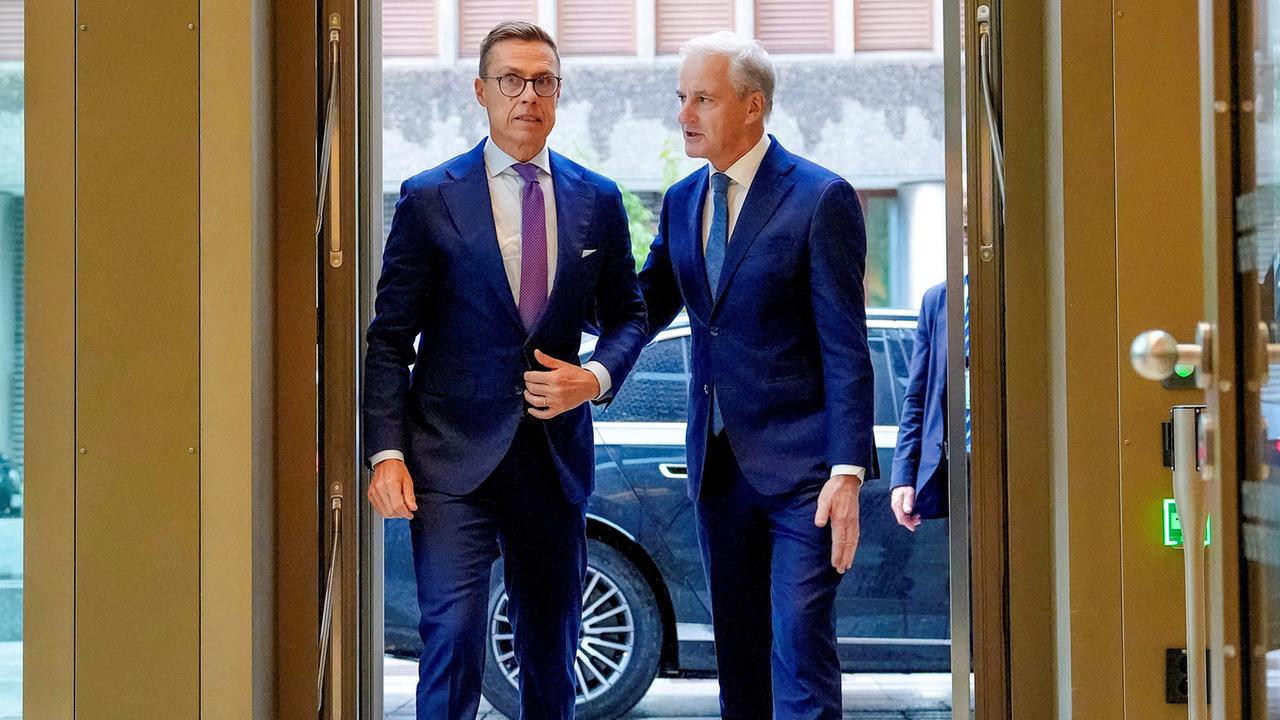
Helsinki/Oslo/Kyiv – October 27, 2026 – In a move that has generated significant international attention and a degree of apprehension, the Presidents of Finland and Norway, Alexander Stubb and Jonas Gahr Støre, respectively, engaged in a direct telephone conversation with Russian President Vladimir Putin on Tuesday. This outreach, undertaken on their own initiative and without prior coordination with European partners, aimed to convey direct messages regarding potential future negotiations to de-escalate and ultimately end the protracted war in Ukraine. The conversation, which lasted approximately 90 minutes, was later followed by discussions with Ukrainian President Volodymyr Zelenskyy.
The unprecedented nature of this direct engagement from Western leaders with Putin, given the ongoing conflict and the perceived low utility of such dialogues, has placed the spotlight on the Nordic approach to international diplomacy and the complex path toward peace in Eastern Europe. While the leaders emphasized their commitment to Ukraine’s sovereignty and territorial integrity, their unilateral action has drawn both praise for its bold diplomacy and criticism for its potential to undermine broader European unity.
The Genesis of a Direct Dialogue: A Bold Diplomatic Gambit
The decision by Presidents Stubb and Støre to initiate direct communication with Vladimir Putin marks a significant departure from the general diplomatic stance adopted by many Western nations since Russia’s full-scale invasion of Ukraine. For years, the prevailing sentiment has been that such conversations yield minimal tangible results, with Putin showing little inclination to alter his aggressive posture towards his neighbor. However, the Finnish and Norwegian leaders appear to have calculated that a direct channel, even a challenging one, is essential to explore any potential pathways toward a cessation of hostilities.
"The objective of the phone call was to convey messages directly to President Putin regarding future negotiations that could contribute to ending the war," stated a joint release from the Finnish and Norwegian presidencies. This sentiment was echoed by the Kremlin, which confirmed the engagement.
President Stubb described the discussion as "open and substantive." He underscored the far-reaching implications of the war’s outcome, stating, "The outcome of this war will have direct consequences for our security and the security of Europe as a whole. To end the war, direct talks are necessary." This statement reflects a pragmatic, albeit potentially risky, assessment that diplomatic engagement, regardless of its perceived efficacy, remains an indispensable tool in resolving such a profound geopolitical crisis.
Norwegian Prime Minister Støre emphasized the immense human cost of the ongoing conflict, noting, "The suffering and destruction will impact entire generations. In the phone call, we stressed the importance of de-escalation." His words highlighted the humanitarian imperative driving their diplomatic initiative, seeking to halt the escalating bloodshed and prevent further long-term damage to Ukraine and its people.
A Carefully Orchestrated Diplomatic Dance: Pre-Conversation Consultations
Crucially, both Stubb and Støre were keen to emphasize that their outreach to Putin was not a clandestine maneuver. They asserted that prior consultations had taken place with Ukraine, underscoring their unwavering support for Kyiv’s position. "Before the meeting with Putin, there were consultations with Ukraine," they stated, making it clear that their actions were aligned with Ukrainian interests.
Furthermore, the Nordic leaders clarified that they were speaking in their individual capacities and not on behalf of the broader European Union. This distinction is vital, as it allows them to explore diplomatic avenues without necessarily creating official EU policy shifts or commitments that might not have unanimous backing.
The discussions with Putin also reportedly touched upon the outcomes of a recent meeting held in Abu Dhabi. This meeting involved Ukrainian President Volodymyr Zelenskyy and US mediator Steve Witkoff. Following this, Witkoff engaged in discussions with Putin, which reportedly led to an agreement to resume trilateral talks involving Russia, Ukraine, and the United States. The Finnish and Norwegian presidents confirmed that their telephone conversation with Putin was directly related to this upcoming trilateral meeting in Abu Dhabi, suggesting an attempt to prepare the ground for more formal diplomatic exchanges.
Putin’s Perspective: Security Interests and "Confrontational Policies"
Following the telephone conversation, the Kremlin released its own statement detailing Putin’s perspective on the discussions. According to Russian state media, Putin indicated that the planned meeting in Abu Dhabi, scheduled for the first half of November, would focus on security issues for both Russia and Ukraine after a complete cessation of hostilities. He reiterated Russia’s stance that its security interests must be taken into account for any lasting peace to be achieved.
The Russian president also reportedly criticized what he termed the "confrontational policies" of the European Union and NATO, alleging that these policies were prolonging the conflict. This characterization highlights the deep-seated mistrust and divergent geopolitical perspectives that continue to define the relationship between Russia and the West.
Despite the contentious rhetoric, the Kremlin stated that the three leaders had "agreed to maintain direct telephone contact," suggesting a willingness on Russia’s part to keep communication channels open, albeit on its own terms.
Kyiv’s Response: Cautious Engagement and Continued Support
From Kyiv’s perspective, President Zelenskyy also engaged in discussions with Presidents Stubb and Støre following his own conversation with Putin. This suggests a coordinated, albeit multi-directional, diplomatic effort. President Stubb, in a post on an online platform, confirmed the conversation with Zelenskyy and reiterated Finland and Norway’s commitment to continued support for Ukraine and their efforts to achieve a lasting peace.
While Ukraine has consistently maintained its position on the need for complete withdrawal of Russian forces and restoration of its territorial integrity, its willingness to engage in diplomatic discussions, even through intermediaries, remains a key element of its strategy. The involvement of Nordic leaders in facilitating these dialogues could be seen as a strategic move to explore all available avenues for peace, without compromising its core demands.
A Divided European Response: Denmark’s Skepticism and Broader Implications
The Finnish-Norwegian initiative, while bold, has not been met with universal approval within Europe. In Denmark, Prime Minister Mette Frederiksen expressed significant reservations about the phone call with Putin. "I am very skeptical about the telephone call with Putin," she told the broadcaster DR. Frederiksen also highlighted the lack of prior coordination with other European partners, a point that has been a source of concern for some EU member states.
"I see no signs that Russia wants peace with Europe," Frederiksen stated, advocating for a united European front rather than unilateral actions. Her remarks underscore a broader concern within some European capitals that individual diplomatic overtures could inadvertently weaken the collective stance against Russian aggression and potentially lead to fragmentation within the EU’s foreign policy.
Despite these criticisms, Norwegian Prime Minister Støre maintained that all partner and allied nations had been informed in advance of the Finnish-Norwegian telephone conversation with Putin. This assertion aims to allay concerns about a complete lack of transparency, even if the "coordination" was limited to prior notification rather than joint planning.
The Road Ahead: Navigating a Perilous Diplomatic Landscape
The direct telephone conversation between the Nordic leaders and Vladimir Putin, though a significant event, is but one thread in the complex tapestry of efforts to resolve the war in Ukraine. The upcoming trilateral talks in Abu Dhabi will be a critical barometer of whether this diplomatic gambit can yield any substantive progress.
The implications of this outreach are multifaceted. On one hand, it demonstrates a willingness among some European leaders to explore all avenues, even those fraught with difficulty, in pursuit of peace. It highlights the unique geopolitical position of Nordic countries, situated geographically closer to Russia and perhaps possessing a more nuanced understanding of its political dynamics.
On the other hand, the initiative raises legitimate questions about the effectiveness of unilateral diplomacy in the face of an entrenched aggressor and the potential for such actions to undermine the unity of European foreign policy. The strong reaction from Denmark serves as a reminder of the differing perspectives and strategies within the EU regarding engagement with Russia.
As the war continues to exact a devastating toll on Ukraine, the world watches to see if this bold diplomatic move by the Finnish and Norwegian leaders will pave the way for genuine de-escalation or if it will remain an isolated episode in a prolonged and devastating conflict. The coming weeks and months will undoubtedly reveal the true impact of this direct outreach to the Kremlin and its potential to shape the future trajectory of the war and the broader European security architecture. The commitment to continued dialogue, however tentative, remains a crucial element in the long and arduous quest for a lasting and just peace.