Zurich/Klagenfurt, [Date of Publication] – In a literary landscape often dominated by conventional narratives, a new work emerges from the German-speaking world, daring to dismantle language and societal norms with a mischievous grin. Eric Ehrhardt, a Zurich-based author born in Magdeburg, has unleashed "Im Klauhof" (In the Thieving Yard), a provocative band that takes language "into the mangle," as critics describe, leveraging the "epistemological power of absurdity" to illuminate the hidden mechanics of consumerism and ownership. Published by the avant-garde Ritter Verlag, Ehrhardt’s latest offering is not merely a book; it’s an intricate act of literary shoplifting, challenging readers to re-evaluate what they think they know about words, property, and artistic engagement.
Main Facts: A Provocative Premise
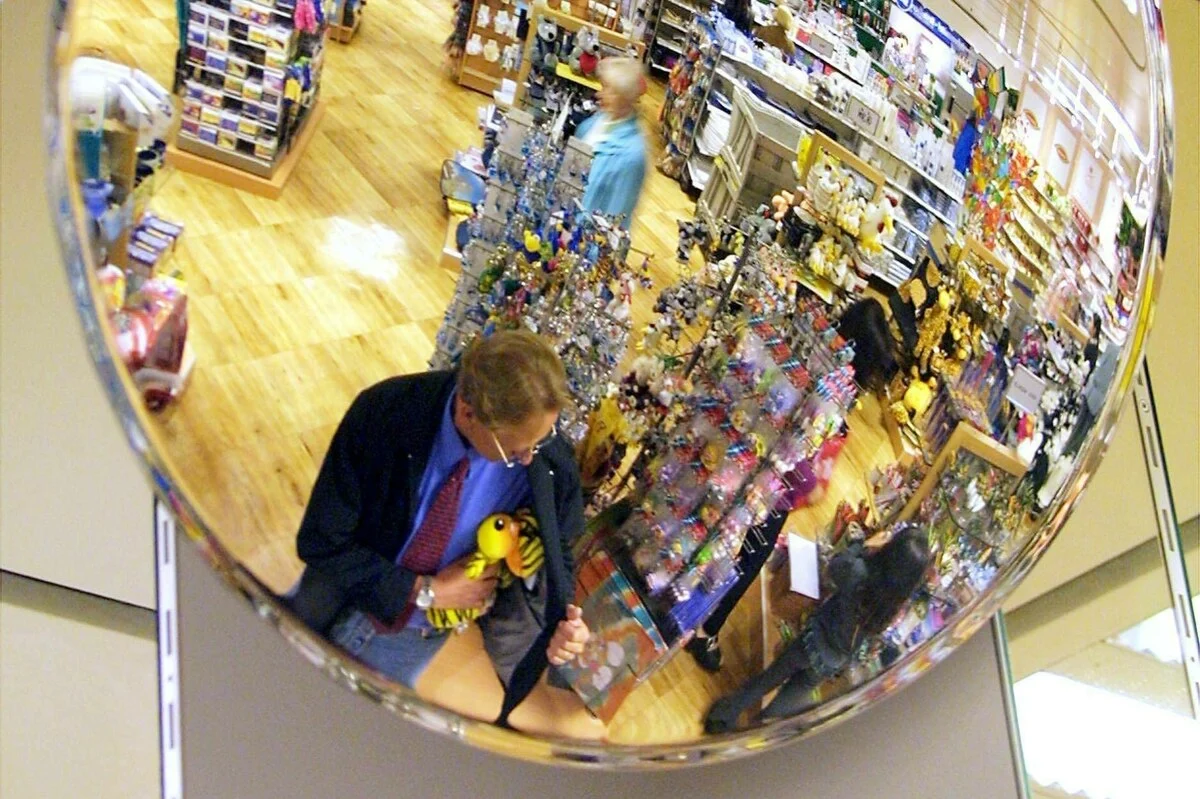
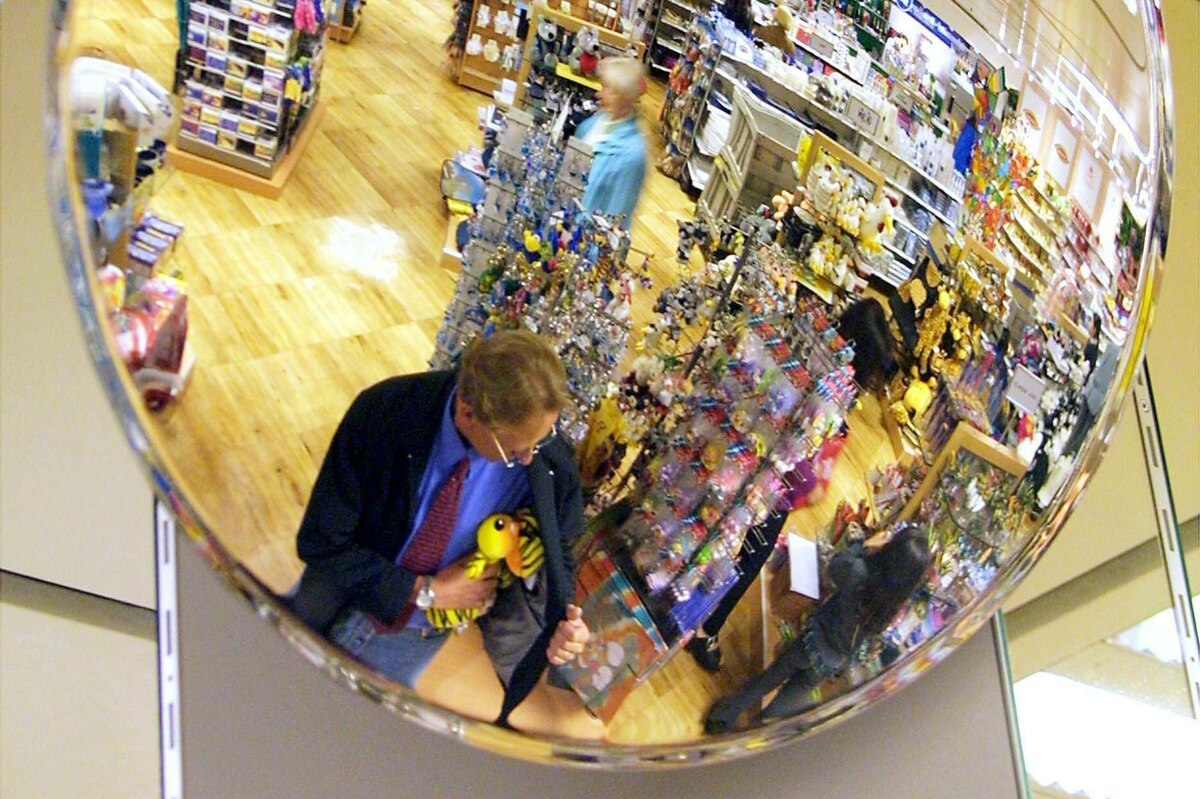
Eric Ehrhardt’s "Im Klauhof: Nach einer Warenbegebenheit" (After a Commodity Incident) plunges readers into the surreal world of a seasoned shoplifter navigating a "shopping paradise" with his trusty backpack, Schlucki. Far from a simple tale of petty crime, Ehrhardt’s work is a densely woven tapestry of philosophical musings, linguistic experimentation, and biting social commentary. The book’s central conceit positions theft not as a mere transgression, but as a profound act of rule-breaking that paradoxically affirms the very rules it defies. This act of "productive delinquency" extends to Ehrhardt’s handling of language itself, where words are warped, broken, and reassembled to reveal underlying truths about our consumer-driven existence.
The core of Ehrhardt’s ambition lies in his belief in the "erkenntnisstiftende Kraft von Albernheit" – the insight-generating power of silliness or absurdity. Through playful impertinence and radical linguistic deformation, "Im Klauhof" aims to strip away the polite facades of language that often obscure societal injustices, consumerist traps, and the true nature of property relations. It’s a work that demands active participation, inviting readers to become complicit in its literary heist, where understanding is stolen rather than simply received.
Chronology: From Academia to Anarchy
Born in Magdeburg in 1989, Eric Ehrhardt’s intellectual journey has been as eclectic as his literary output. His academic pursuits spanned Philosophy, German Studies, and Classical Greek Studies (Gräzistik) across prestigious institutions in Leipzig, Basel, and New York. This diverse background clearly underpins the intricate philosophical and linguistic layers present in "Im Klauhof." His immersion in the rigorous analysis of classical texts and philosophical thought has equipped him with a profound understanding of language’s structure and its potential for manipulation, a skill he deploys with subversive brilliance in his writing.
While the exact timeline of his literary emergence isn’t detailed, "Im Klauhof" arrives as a mature work, reflecting years of intellectual development and experimental writing. Its publication by Ritter Verlag, a publisher renowned for its commitment to the avant-garde, signifies its position within a specific lineage of experimental German-language literature. The book’s release is not an isolated event but rather a continuation of Ehrhardt’s engagement with the boundaries of literary expression, a natural progression for an author whose academic background has honed his critical lens on both language and society. The date "2026" listed in the book’s details within the original article is highly likely a typo, given that the article itself is a contemporary review, implying the book is already available and under discussion in the literary sphere. For the purpose of this enrichment, we proceed with the assumption of a recent publication.
Supporting Data: The Art of Linguistic Subversion
Ehrhardt’s "Im Klauhof" is a masterclass in linguistic subversion, a text that operates on multiple, often contradictory, levels. The novel’s subtitle, "Nach einer Warenbegebenheit" (After a Commodity Incident), immediately signals its engagement with the world of goods and transactions, hinting at a narrative that dissects the very fabric of consumer culture. The protagonist, a dedicated shoplifter accompanied by his anthropomorphized backpack, Schlucki, transforms the mundane act of stealing into a philosophical exploration of ownership, value, and identity within the "Einkaufsparadies" – a consumer landscape that quickly morphs into a modern-day Dantean hell.

The military lexicon is one of Ehrhardt’s primary tools for this dissection. He famously asserts: "Kaufen ist Krieg, Klauen ist Kampf" (Buying is war, stealing is battle). This establishes a combative framework, framing consumerism as a battlefield and theft as a strategic counter-maneuver. The protagonist pores over an "Infamterietaktik" (Infantry Tactics) handbook – a playful distortion of "Infanterietaktik" (infantry tactics) that injects "infamy" into the military context – and quotes from "Vom Kriegen" (On Warring), a clear homage to Clausewitz’s seminal "Vom Kriege," but attributed to a "Crall von Clauewitz." These neologisms and deliberate misspellings are not accidental; they are foundational to Ehrhardt’s poetics. Letters are "dropped from a lorry" or replaced, creating a language that is simultaneously familiar and alien, forcing the reader to engage with words anew, to literally "re-read" their meanings.
This linguistic deformation mirrors the act of theft itself: just as a shoplifter reconfigures property relations by taking what is not "theirs," Ehrhardt reconfigures linguistic meaning by breaking and reassembling words. The book becomes a "Räuberhöhle" (robber’s den), a place where laughter abounds, but where one can also easily get lost in its twilight. This deliberate obfuscation is part of the game, forcing readers to abandon conventional reading habits and embrace a more exploratory, less linear approach.
The choice of Ritter Verlag as publisher is crucial here. Based in Klagenfurt, Austria, the Ritter Verlag has a long-standing tradition of championing experimental and avant-garde literature. Their catalogue is replete with works that push the boundaries of form and content, and they have historically done so "ohne großes Gewese drum gemacht" (without making a big fuss about it). This intellectual environment perfectly complements Ehrhardt’s daring approach, providing a legitimate platform for a text that consciously defies easy categorization and embraces the recondite. The publisher’s reputation adds a layer of scholarly weight to what might otherwise be dismissed as mere wordplay, positioning "Im Klauhof" within a respected tradition of literary innovation.

Official Responses: The Critic’s Labyrinth
The initial critical reception, as exemplified by the original review, highlights the book’s complex nature. The reviewer draws parallels between Ehrhardt’s style and the works of literary giants such as Elfriede Jelinek and Ernst Jandl, both Nobel laureates known for their radical engagement with language. Jelinek, who famously elevated the "Kalauer" (pun or wordplay) to Nobel Prize status, employed linguistic deconstruction to expose the hypocrisies and power structures embedded within Austrian society, particularly concerning fascism, sexism, and consumerism. Her work often presents a devastating critique through a highly stylized, repetitive, and often shocking use of language. Similarly, Ernst Jandl, a prominent figure in concrete poetry, meticulously dismantled words and phrases to reveal their absurdities, creating new meanings through phonetic and visual experiments.
Both Jelinek and Jandl represent a tradition of "productive delinquency" in literature – a deliberate breaking of linguistic norms to achieve a deeper, more critical understanding of reality. Their "irritation over the false and askew-sounding" is precisely what "frees the gaze to the mechanisms by which language overlays reality, veils, denies, or embellishes horror and injustice." Ehrhardt explicitly positions "Im Klauhof" within this tradition, intending it as an "enlightening work."
However, the reviewer also points to a potential challenge: "the text is so dense and so enamored with its own motifs that it hardly reveals its deeper truths to the readership." This critique speaks to the inherent difficulty of experimental literature. While "Im Klauhof" aims to enlighten, its dense, self-referential nature risks alienating readers accustomed to more straightforward narratives. The text’s deliberate opaqueness, its labyrinthine wordplay, and its constant refusal of clear resolution can indeed make it difficult to ascertain "what exactly is being illuminated." This is not necessarily a flaw for all readers, however. For those who embrace the experimental, the journey through the linguistic thicket is part of the reward. The reviewer suggests that this density is only a "deficiency for those who believe that all books must be read from front to back, or even read at all." This implies a more nuanced understanding of literary engagement, one that Ehrhardt actively encourages.

Implications: Reimagining Reading and Ownership
"Im Klauhof" has profound implications for how we perceive literature, reading, and even the concept of ownership. By adopting a style that "shrugs its shoulders between poetry and prose," Ehrhardt challenges genre boundaries, forcing a reconsideration of what constitutes a "novel" or a "poem." This fluidity is central to its experimental nature, suggesting that literary expression is not bound by rigid categories.
The book’s most radical implication lies in its challenge to conventional reading practices. Ehrhardt’s work, with its "word-monsters and sentence-gargoyles" and cryptographic illustrations of hand gestures, implicitly suggests an alternative mode of engagement. It is "not necessarily for reading cover to cover, but rather for opening, for marveling at all the word-monsters and sentence-gargoyles – or even, striving towards the performative: for letting go." This encourages a non-linear, perhaps even tactile or auditory, interaction with the text. The hand gestures might signify a secret language, a code that must be deciphered, or simply an invitation to engage with the book as an object, a piece of art that transcends mere narrative. This resonates with the broader trend in contemporary art and literature that emphasizes experience and interaction over passive consumption.
Ultimately, Ehrhardt’s closing provocation – "Whoever steals this book proves education and good taste!" – encapsulates the entire project. It’s a defiant, playful dare that brings the act of theft full circle. By encouraging the reader to "steal" the book, Ehrhardt blurs the lines between author, reader, and property. It’s a meta-commentary on the ownership of ideas, the appropriation of culture, and the subversive power of transgression. To "steal" the book is to become an active participant in its critique, to embody the very act it describes, and in doing so, to demonstrate a sophisticated understanding of its complex layers.

In an age saturated with information and commodities, "Im Klauhof" stands as a bold artistic statement. It is a work that does not offer easy answers or comforting narratives but instead provides a disorienting yet exhilarating journey through the absurdities of language and consumer society. Eric Ehrhardt’s contribution to contemporary German literature is a reminder that true insight often lies not in clarity, but in the deliberate disruption of the familiar, inviting us to steal meaning from the chaos he so artfully creates.