In a significant move to bolster its infrastructure competitiveness, Vodafone has announced a major upgrade to its cable internet offerings for business customers. Effective immediately, the company is increasing the maximum upload speed for its business-grade cable tariffs to 100 Mbit/s, up from the previous cap of 75 Mbit/s. This enhancement represents a strategic effort to accommodate the growing demands of remote work, cloud-based collaboration, and the increasing reliance on high-bandwidth data synchronization in the modern enterprise environment.
The upgrade translates to a theoretical throughput of up to 12.5 megabytes per second (gross), a meaningful boost for businesses frequently uploading high-resolution media files, performing cloud backups, or hosting real-time collaborative video conferencing sessions. Alongside this technical improvement, Vodafone is deploying an aggressive pricing strategy to capture new market share, offering discounted monthly rates for new subscribers through January 2027.
A Technical Evolution: From DOCSIS 3.1 Low Split to Enhanced Capacity
The road to this speed increase began in January of this year, when Vodafone executed a comprehensive technical overhaul of its cable network. By implementing a "DOCSIS 3.1 Low Split" configuration, the operator successfully expanded the available frequency spectrum for upstream traffic. Traditionally, cable networks prioritized download speeds, leaving the upstream channel relatively congested. By repartitioning the frequency spectrum, Vodafone unlocked greater capacity for data transmission from the customer’s premises back to the network core.
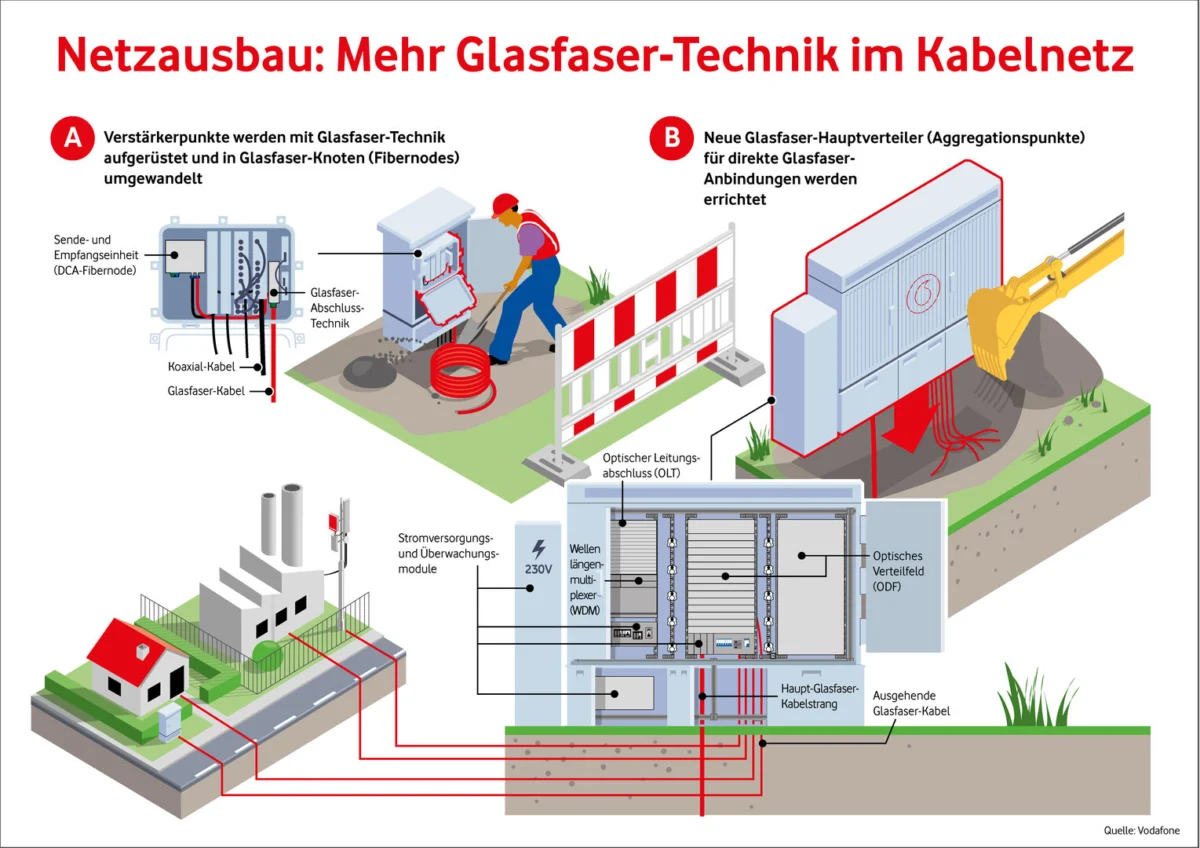
However, increasing upload speeds in a shared medium like a coaxial cable network requires a delicate balancing act to ensure that download performance does not suffer. To mitigate this, Vodafone undertook a rigorous process of network segmentation. By physically splitting larger network clusters—which were previously shared by a high density of households and businesses—into smaller, more efficient segments, the operator reduced contention. Furthermore, the company has pushed fiber-optic infrastructure deeper into the network, moving the "fiber-to-the-node" (FTTN) transition point closer to the end user. This reduction in the distance data travels over legacy copper lines is the fundamental driver behind the increased reliability and higher speeds now being unlocked.
Chronology of Network Enhancements
The trajectory of Vodafone’s network evolution reflects a broader industry trend toward maximizing the lifespan and performance of HFC (Hybrid Fiber-Coaxial) networks.
- Pre-January 2024: The network standard typically offered a maximum upload speed of 50 Mbit/s.
- January 2024: Vodafone officially transitioned its network to the DOCSIS 3.1 Low Split standard, enabling the first significant jump to 75 Mbit/s. This move demonstrated the company’s commitment to optimizing existing infrastructure while preparing for higher demand.
- Late 2024 (Current Phase): With the optimization of the network segments and further fiber deployment, the threshold for business customers has been officially raised to 100 Mbit/s.
- Early 2025 (Projected): Vodafone expects to have completed the automated migration for all eligible business customers who signed contracts from July 2026 onwards, signaling a full-scale rollout of the new standard across the business portfolio.
Supporting Data and Portfolio Impact
The 100 Mbit/s upload speed is being integrated into the "Red Business Internet & Phone Cable" portfolio. These tariffs cater to a broad spectrum of enterprise needs, offering download speeds ranging from 150 Mbit/s to a full Gigabit (1,000 Mbit/s).
The Tariff Structure
The new standard applies to the following download tiers:
- 150 Mbit/s Download / 100 Mbit/s Upload
- 300 Mbit/s Download / 100 Mbit/s Upload
- 600 Mbit/s Download / 100 Mbit/s Upload
- 1,000 Mbit/s Download / 100 Mbit/s Upload
It is notable that Vodafone has opted to omit the entry-level 50/25 Mbit/s tier from this specific business upgrade, reinforcing its focus on providing robust performance for professional users who require consistent upstream capacity. Furthermore, the company continues to provide the "Fritz!Box Premium Business Router" at no extra cost, ensuring that the hardware at the customer premises is capable of handling the increased throughput without acting as a bottleneck.

Implementation: What This Means for Existing Customers
One of the primary concerns for any network upgrade is the status of the existing subscriber base. According to information provided by Vodafone, the rollout is designed to be largely seamless.
For business customers who entered into their contracts in July 2026 or later, the upgrade is automatic. These users will be migrated to the 100 Mbit/s upload threshold by the start of next year without needing to take any manual action or request a contract change. This "silent" upgrade approach is a clear effort to increase customer satisfaction and reduce churn.
For customers on older legacy contracts, the process is slightly different. These users are not automatically upgraded due to the specific terms of their older agreements. However, once their current minimum contract period expires, they gain the flexibility to switch to the current, updated tariff structure. This serves as a significant incentive for long-term clients to review their current plans and potentially transition to more modern, higher-performing service agreements.
Strategic Implications and Competitive Positioning
The timing of this announcement is not coincidental. By pairing technical improvements with a strong promotional offer—featuring a monthly price of 19.90 Euro for the first six to nine months of a 24-month contract—Vodafone is aggressively targeting the SME (Small and Medium Enterprise) sector. This market segment is increasingly demanding "fiber-like" performance, and by upgrading the cable network, Vodafone can offer this performance at a price point that is significantly lower than dedicated fiber-to-the-business (FTTB) connections.
The promotional pricing is valid for new contracts signed through January 27, 2027. After the promotional period, the standard monthly rates (starting at 34.90 Euro) will apply. Crucially, the 100 Mbit/s upload speed is a permanent feature of the tariff, not a temporary benefit. This is a critical distinction for business planning; companies can now budget for higher data throughput as a standard operating cost rather than a fleeting perk.
Implications for Remote Work and Cloud Services
The increase to 100 Mbit/s is a game-changer for the "home office" or "branch office" setup. Modern workflows rely heavily on:
- Cloud Synchronization: Services like Microsoft OneDrive, Google Drive, or Dropbox rely on high upload speeds to sync large project files in real-time.
- Video Collaboration: High-definition video conferencing (Zoom, Teams, Webex) requires stable, high-speed upstream bandwidth to ensure high-quality, jitter-free video streams.
- Offsite Backups: Continuous data protection (CDP) and automated offsite backups are essential for business continuity. Faster upload speeds reduce the time required to complete these cycles, minimizing the risk of data loss.
Conclusion: A Step Toward the Gigabit Future
Vodafone’s move to standardize 100 Mbit/s upload speeds for its business cable customers is a pragmatic acknowledgment of the changing nature of business traffic. By leveraging the existing DOCSIS 3.1 infrastructure and accelerating fiber deployment, the company has found a way to deliver "prosumer" and enterprise-grade performance without the massive capital expenditure of a full-scale nationwide fiber-to-the-premises (FTTP) rollout.
As the digital economy continues to favor businesses that can move data quickly and reliably, this upgrade positions Vodafone as a key enabler for the modern, cloud-native enterprise. While the immediate benefits are reserved for the business sector, the underlying network improvements—the segmentation and the push of fiber closer to the edge—undoubtedly lay the groundwork for future improvements in the residential sector as well. For the time being, the message to the business community is clear: connectivity is no longer just about how fast you can receive data, but how effectively you can contribute it to the global digital ecosystem.