Berlin — Germany’s industrial backbone, the Mittelstand, finds itself in a precarious position. While small and medium-sized enterprises (SMEs) often pride themselves on their agility and resilience, a new, sobering reality has emerged: when it comes to national security and defense, the vast majority of these companies are critically underprepared.
A new study conducted by the management and IT consultancy MHP in collaboration with the Center for Sustainable Transformation at the Berlin-based Quadriga University of Applied Sciences has revealed a staggering disconnect between patriotic sentiment and operational capability. According to the data, a mere 3.1 percent of German SMEs are fully equipped to contribute effectively to national logistics, security, or supply chain resilience in the event of a geopolitical conflict or a state-of-emergency.
The Main Facts: A Disparity of Readiness
The findings, which were shared exclusively with Handelsblatt prior to their full release, paint a picture of a sector that is willing, but fundamentally unable, to translate its intentions into action.
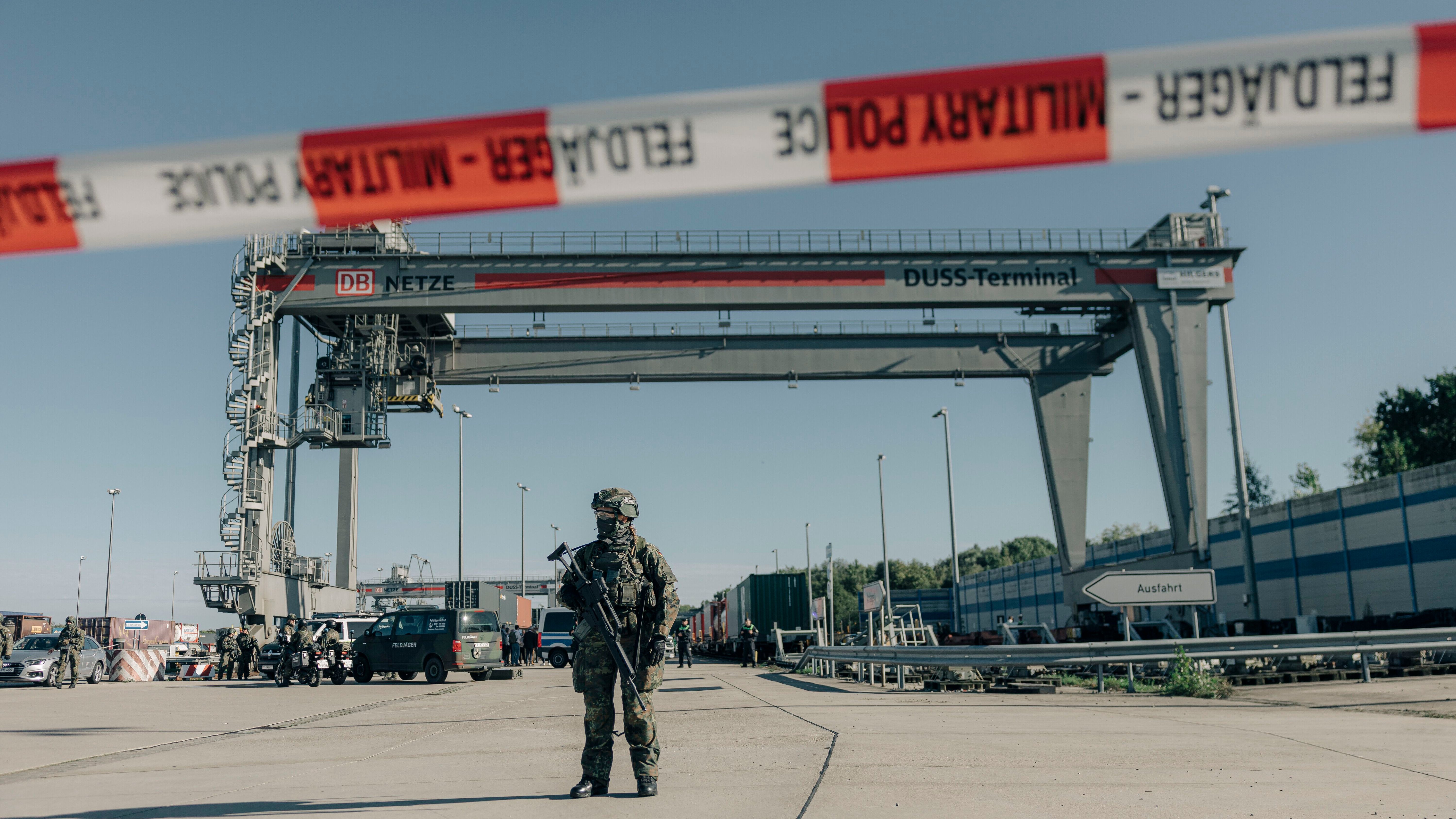
The survey highlights a glaring contradiction: while 86 percent of responding companies express a clear willingness to provide capacity and support for national defense purposes should the need arise, the actual infrastructure, planning, and mental preparation required to do so are largely absent.
"The self-assessment within the sector is far too optimistic," says John Eisenhauer, an MHP partner who leads the defense and public sector division. "The actual level of management preparation does not match the gravity of the potential threat. We are seeing a dangerous gap between the ‘will to help’ and the ‘ability to execute’."
Chronology of a Shifting Security Paradigm
The discussion regarding the role of the private sector in national defense is relatively new in post-WWII Germany, which has traditionally relied on a strict separation between civilian industry and military operations. However, the paradigm shifted following the escalation of tensions in Eastern Europe.

- Early 2022: The Russian invasion of Ukraine served as a geopolitical wake-up call, prompting the German government to declare a Zeitenwende (a turning point in foreign and security policy).
- Late 2023: Initial discussions regarding the "host nation support" role of German industry began to surface, as NATO planners realized that the logistics of moving allied reinforcements through Germany would require civilian infrastructure.
- Early 2024: Industry associations and the Federal Ministry of Defense began preliminary dialogues on how to integrate the Mittelstand into the civil defense architecture.
- Present Day: The MHP-Quadriga study provides the first empirical evidence that these high-level discussions have not yet filtered down to the operational reality of the average German business.
A Hypothetical—But Urgent—Scenario
To illustrate the risks, experts often cite a scenario that, while fictional, sits firmly within the realm of possibility. Consider the following sequence of events:
An incident occurs on the eastern border of the Baltic States. Unmarked, armed combatants cross the frontier, forcing NATO to trigger Article 5. As the Bundeswehr begins moving personnel and heavy equipment toward the eastern flank, Germany is suddenly transformed from a peaceful industrial hub into a critical "transit zone" for allied forces.
In this environment, the pressure on the private sector becomes immediate:
- Logistics: The military requires fuel, transport, and warehousing space currently occupied by civilian goods.
- Infrastructure: Sustained cyberattacks target the national power grid, causing widespread blackouts. Banks become unstable as digital payment systems flicker, and the public, fearing a total collapse, begins a run on supermarkets and gas stations.
- The Breakdown: If the Mittelstand is not prepared to prioritize military logistics or maintain its own internal stability during a grid failure, the entire support mechanism for the defense effort risks grinding to a halt.
Supporting Data: Why the Gap Exists
The study identifies three primary reasons for the lack of preparedness among German SMEs:
1. The "Peace Dividend" Mindset: For decades, German companies have focused on efficiency, lean production, and global supply chains. The concept of "resilience" has been interpreted as economic stability, not physical survival in a war zone. The idea that a company might need a secondary, non-digital, or off-grid contingency plan is alien to most modern business models.
2. Lack of Clear Communication: While the government expects support, it has not provided clear directives to the private sector. Companies do not know what is expected of them. Does the government need their warehouses? Their trucks? Their IT expertise? Without a clear "Defense-Ready" manual, most CEOs are paralyzed by uncertainty.

3. Financial Constraints: Preparing for a disaster—such as stocking fuel for generators, securing secondary supply lines, or hardening IT systems against sophisticated state-level hackers—is expensive. In the current economic climate of high energy prices and labor shortages, SMEs are prioritizing survival in the market over preparation for an unlikely conflict.
Official Responses: The Call for a "Whole-of-Society" Approach
Government officials have long argued that the defense of a nation is no longer solely the responsibility of the military, but rather a "whole-of-society" task.
General Carsten Breuer, the Inspector General of the Bundeswehr, has repeatedly emphasized that the Bundeswehr cannot function without the support of the civilian sector. "If the military is the sword, the civilian infrastructure is the arm that wields it," a spokesperson for the Ministry of Defense noted in a recent briefing.

However, the industry response has been cautious. The Federation of German Industries (BDI) has signaled that while it supports the initiative, the state must clarify the legal and financial frameworks. Businesses are asking: Who pays for the equipment? How are we protected if we prioritize military logistics over civilian contracts? And what is the legal liability if something goes wrong during a state-of-emergency?
Implications: The Path Forward
The implications of the MHP-Quadriga study are profound. If 96.9 percent of the Mittelstand is not currently prepared for a crisis, Germany’s ability to act as a reliable NATO partner is effectively compromised.
The Need for a "Defense-Readiness" Certification
Experts suggest that a new form of "defense-readiness" certification should be introduced. Similar to ISO standards for quality or environmental management, companies could be audited on their ability to survive and contribute during a crisis. This would provide a standardized framework for businesses to follow and allow the state to identify which companies can provide what, where, and when.

Investment in Resilience as an Asset
The study concludes that resilience should no longer be viewed as a sunk cost, but as a strategic asset. Companies that invest in decentralized power, redundant communication channels, and crisis-management training are not only safer in the event of a war—they are also better equipped to handle climate-related disasters, pandemics, or global supply chain shocks.
A Cultural Shift
Perhaps the most difficult challenge is cultural. Germany must move away from the post-Cold War comfort of assuming that peace is a permanent condition. "We are currently living in a state of ‘peacetime mentality’ despite a ‘wartime reality,’" says a senior analyst at a Berlin-based security think tank. "The shift will require a fundamental change in how we view the role of the CEO. From now on, the corporate executive must also be a guardian of the nation’s resilience."
Conclusion: A Wake-Up Call
The MHP-Quadriga study is not a signal of inevitable doom, but it is an urgent wake-up call. The Mittelstand is the heart of the German economy, and its strength has always been its ability to adapt. If that adaptability can be pivoted toward the challenges of the 21st-century security environment, Germany could turn this vulnerability into a competitive advantage.

However, the current status—where 86 percent of businesses are willing to help but only 3 percent are actually able to—is a recipe for chaos in the event of a genuine crisis. As the geopolitical situation in Europe remains volatile, the time for "optimistic self-assessment" has passed. The next phase must be one of concrete action, clear communication, and a strategic investment in the infrastructure of national resilience.
For the Mittelstand, the challenge is clear: true prosperity in the future may depend not just on the quality of their products, but on their ability to withstand the storms that are gathering on the horizon. The readiness gap must be closed, not just for the sake of national security, but to ensure that the German economy remains robust, no matter what the future holds.