The global financial landscape is currently defined by an insatiable appetite for artificial intelligence, and this week, that fervor reached the trading floors of Tokyo, Seoul, and beyond. Following a surge of positive momentum from the United States, Asian markets responded with vigor to two major developments: the impending initial public offering (IPO) of AI pioneer Anthropic and a massive capital-raising initiative by Meta Platforms, designed to fuel the next generation of AI-driven infrastructure.
The sentiment on Asian trading desks has been overwhelmingly bullish. Investors, long wary of the sustainability of the AI rally, seem to have found renewed confidence in the sector’s long-term commercial viability. As chipmakers and technology conglomerates across Asia track the movements of their Western counterparts, the Nikkei, Kospi, and Topix indices have all felt the tremors of this structural shift in global capital allocation.
Main Facts: The Catalyst for the Rally
The primary driver of the current market optimism is a convergence of two distinct but mutually reinforcing narratives: the institutional validation of AI as a public market asset and the massive scale of infrastructure spending required to support it.

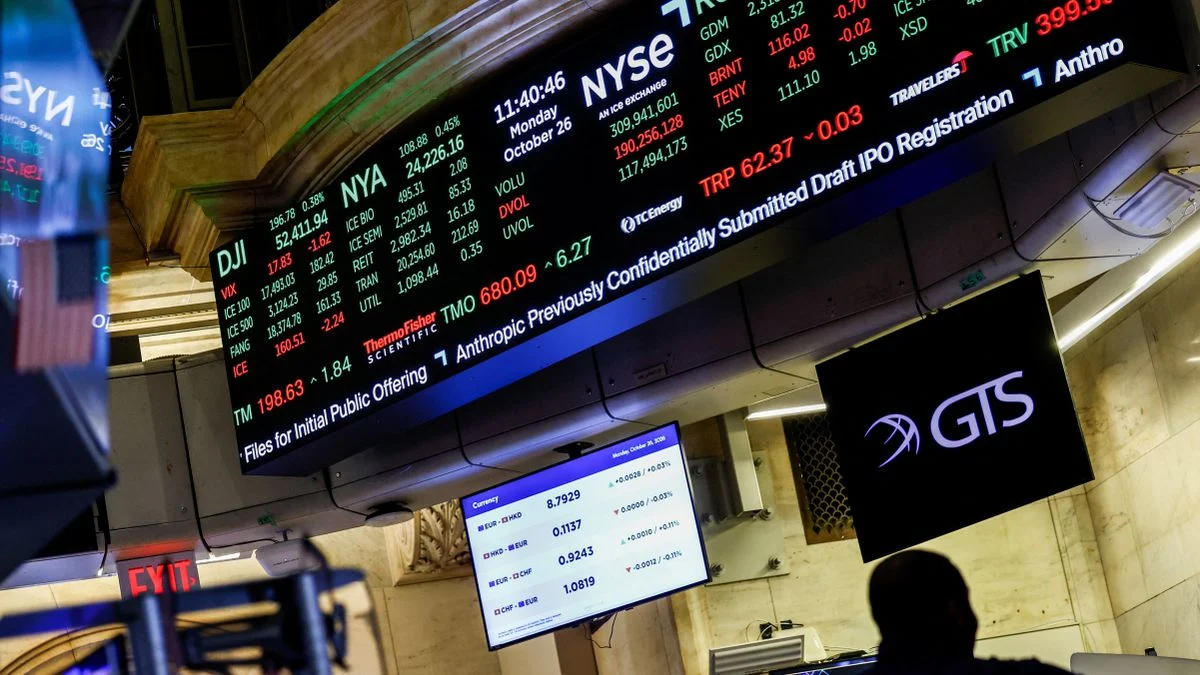
Anthropic, the San Francisco-based AI company behind the sophisticated "Claude" large language model, has officially moved toward an IPO. By submitting its regulatory filings in the United States, the company has signaled that it is ready to transition from a venture-backed research lab to a publicly traded entity. The disclosures within these filings have revealed a striking paradox: while the company is reporting exponential revenue growth, it is also incurring significant losses—a classic profile for a high-growth "hyper-scaler" in the tech industry.
Simultaneously, Meta Platforms has unveiled plans for its largest-ever capital-raising campaign. The tech giant intends to secure up to $95 billion in new equity financing, primarily earmarked for the construction and maintenance of massive AI-focused data centers. This move serves as a massive endorsement of the "AI-first" strategy, suggesting that for companies like Meta, the cost of not investing in AI infrastructure far outweighs the risks of capital dilution.
Chronology of Market Sentiment
The shift in market sentiment did not happen in a vacuum. It was the culmination of a sequence of events that began in the North American tech sector and rippled across the Pacific.

- Phase 1: The US Signal. The rally began in the U.S. markets, where the Philadelphia Semiconductor Index (SOX) showed consistent gains. As U.S. chip manufacturers saw their valuations climb, the "ripple effect" began to hit Asian suppliers who form the backbone of the global semiconductor supply chain.
- Phase 2: The Meta Announcement. News of Meta’s $95 billion fundraising plan reached Asian markets late in the week. The market interpreted this not as a sign of financial distress, but as a commitment to long-term dominance in the generative AI space.
- Phase 3: The Anthropic Filing. The formalization of Anthropic’s IPO plans provided the final piece of the puzzle. Investors in Asia viewed this as a "de-risking" event, confirming that there is a clear path for AI companies to exit via public markets.
- Phase 4: Asian Market Reaction. On Tuesday, this sentiment crystallized. Asian indices opened higher, with technology-heavy stocks leading the charge. The Tokyo-based Advantest, a critical supplier of semiconductor test equipment, surged by 10%, acting as a bellwether for the rest of the sector.
Supporting Data: Why Investors Are Buying
The enthusiasm in the markets is backed by significant, albeit volatile, data. In the case of Advantest, the 10% jump reflects the direct correlation between AI demand and semiconductor manufacturing equipment. Because high-end AI processors—such as those produced by Nvidia—require rigorous testing to ensure stability, companies like Advantest are seeing a direct surge in order books.
Furthermore, the SoftBank Group, a major Japanese technology investor, saw its shares rise by nearly 7%. This movement is attributed to SoftBank’s strategic position in the AI ecosystem, where its portfolio companies are currently benefiting from the massive influx of capital into the sector.
However, the financials reported by Anthropic serve as a necessary grounding element. The company’s disclosures show that revenue is scaling at a rate that is nearly unprecedented, yet the burn rate remains exceptionally high. Investors are currently choosing to ignore the "bottom-line" losses in favor of "top-line" growth, betting that the current infrastructure build-out will eventually lead to monopolistic or oligopolistic returns in the AI software layer.
Official Responses and Expert Analysis
Market strategists are cautiously optimistic, though they emphasize the need for long-term patience. Daisuke Hashizume, a Senior Strategist at Daiwa Securities, noted that the market’s relief is palpable. "The market has reacted with clear relief to the news of Anthropic’s IPO," Hashizume explained. "This is because it provides a benchmark for valuation in a space that has been notoriously difficult to price. Furthermore, the technology giants in our markets are effectively ‘tagging along’ with the massive growth trajectory of the US chip indices."
Conversely, there is a lingering sense of caution regarding the sheer scale of the investment. Anthony Saglimbene, Chief Market Strategist at Ameriprise Financial, provided a sobering perspective: "The market is currently fueled by the potential of AI, but we are entering a phase where the ‘hypothetical’ needs to become ‘tangible.’ Investors need the confidence that these aggressive capital expenditures actually reflect durable, long-term business needs rather than a temporary arms race."
Implications: The Road Ahead
The implications of this market trend are profound for both institutional and retail investors.

1. The "Infrastructure" Bet
The primary takeaway is that the "picks and shovels" companies—those that manufacture the chips, the testing equipment, and the data center hardware—are currently the safest vehicles for AI exposure. While the software companies (like Anthropic) offer high-growth potential, the hardware companies (like Advantest) provide the foundation upon which that growth is built.
2. The Risk of Overvaluation
The massive $95 billion capital raise by Meta raises questions about the "valuation ceiling." If the returns on these new data centers do not materialize within the next three to five years, we may see a significant correction in tech stocks. The market is currently pricing in a "best-case scenario," leaving very little room for operational error.
3. Regulatory and Geopolitical Shifts
As AI becomes a central pillar of national economic strategy, the regulatory environment in Asia is beginning to shift. Governments in Japan and South Korea are increasingly viewing semiconductor autonomy as a matter of national security. This suggests that the current rally is not merely a cyclical market event, but a structural pivot toward a future where computing power is treated with the same strategic importance as energy or food supplies.

4. The "Claude" Effect
Anthropic’s entry into the public markets will be a litmus test for the entire generative AI industry. If the IPO is successful, it will likely trigger a wave of secondary listings for other AI startups, further diversifying the market but also increasing the competition for institutional capital.
Conclusion
The current state of the Asian markets is a testament to the transformative power of AI. From the boardrooms of Tokyo to the retail trading apps of Seoul, the message is clear: the AI revolution is no longer a concept confined to Silicon Valley research labs. It is a massive, capital-intensive, and globally synchronized industrial shift.
While skepticism remains—justifiably so, given the high burn rates and the speculative nature of current AI business models—the appetite for innovation remains stronger than the fear of market correction. As we look toward the next quarter, the focus will undoubtedly shift from "how much are they spending" to "how much are they earning." For now, however, the markets are happy to bet on the vision, fueling a rally that shows few signs of slowing down.

This report is based on current market data and financial disclosures. Investors are reminded that the technology sector, particularly in the nascent field of artificial intelligence, remains subject to significant volatility and regulatory scrutiny.