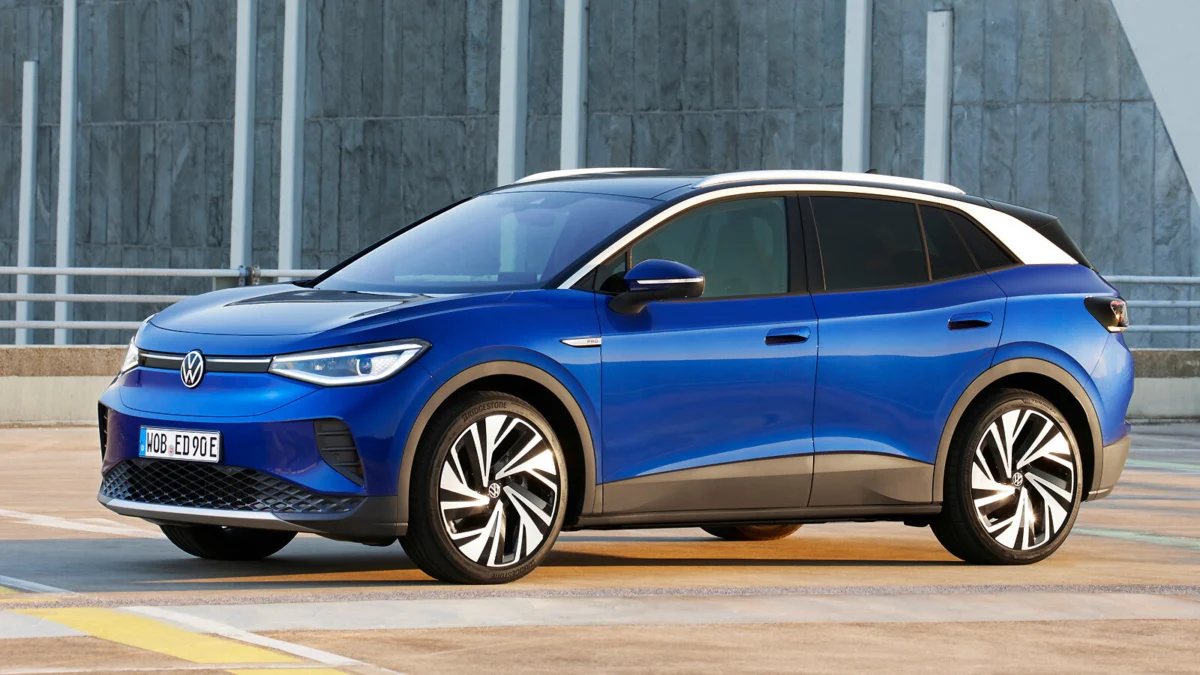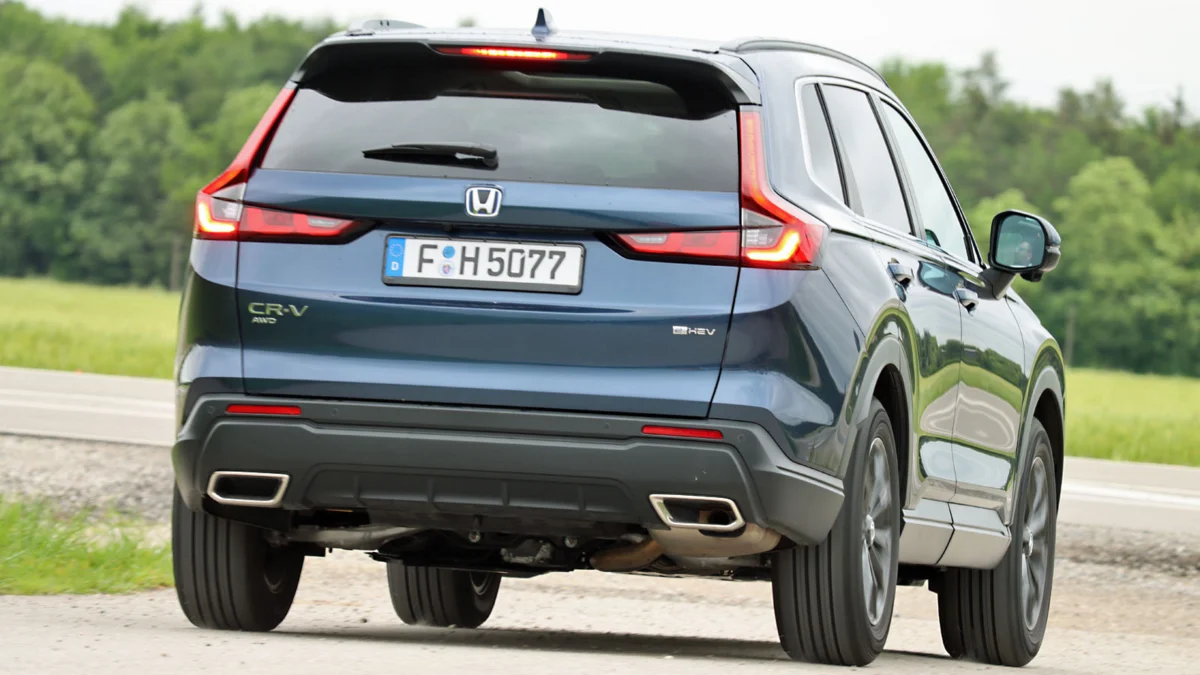
In a move that promises to fundamentally alter the architecture of the American automotive market, the U.S. National Highway Traffic Safety Administration (NHTSA) has announced a significant reclassification of vehicle categories. Starting with the 2030 model year, the long-standing distinction between passenger cars and "light trucks" will be tightened, forcing many popular crossover SUVs to be recategorized as passenger cars.
This regulatory shift is not merely a bureaucratic adjustment; it is a direct intervention in the Corporate Average Fuel Economy (CAFE) standards. By narrowing the definition of a light truck—a category historically granted more lenient fuel efficiency requirements—the government is effectively forcing manufacturers to improve the average fuel consumption of their entire fleet.
The Core Mandate: Raising the Bar for Efficiency
The new regulations, scheduled to take effect on November 30, 2026, are part of a broader, often contentious effort to align the US fleet with modern environmental and energy efficiency targets. According to NHTSA projections, these standards will push the fleet-wide average fuel efficiency to 34.9 miles per gallon (mpg) by the 2031 model year.
This target is broken down into specific requirements: 40.2 mpg (approximately 5.85 liters per 100 km) for passenger cars and 26.4 mpg (8.91 liters per 100 km) for the remaining light truck segment. The reclassification is particularly striking because it effectively tightens rules for heavy-consuming vehicles at a time when other regulatory bodies are facing pressure to deregulate.
The legal landscape surrounding these changes is already fraught with tension. A coalition of 21 states, the District of Columbia, and several major cities has filed a lawsuit in the U.S. Court of Appeals for the First Circuit, while various environmental organizations, including the Sierra Club and Public Citizen, have mounted a separate legal challenge in Washington, D.C. (Case No. 26-1261).
Chronology of a Regulatory Shift
To understand the weight of this decision, one must look at the history of the "light truck" classification. Established in 1975, the category was originally designed as a utilitarian exemption. It was intended to support small-scale commercial operators—such as tradespeople and farmers—who required vehicles capable of heavy lifting and off-road work and had no viable alternative to using these vehicles for personal transportation.
Over the last four decades, however, the automotive industry has masterfully leveraged this definition as a loophole. As consumer preference shifted toward SUVs and crossovers, manufacturers marketed vehicles that technically qualified as light trucks but were used exclusively as family transport. By 2026, the NHTSA reported that approximately 68 percent of all light-duty vehicles sold in the U.S. were classified as light trucks.
The new NHTSA mandate effectively seeks to reverse this trend. The agency estimates that the current ratio of 70 percent trucks to 30 percent passenger cars will flip once the new criteria are applied.
Defining the "Work Factor"
Under the new guidelines, possessing four-wheel drive (4WD) will no longer be sufficient to secure a "light truck" designation. Starting in 2030, a vehicle must meet a rigorous set of physical specifications to qualify for the more lenient efficiency standards:
- Mechanical Capability: A vehicle must have 4WD or a Gross Vehicle Weight Rating (GVWR) exceeding 6,000 pounds (approx. 2.7 tons).
- Geometric Thresholds: It must achieve a minimum 28-degree approach angle, a 20-degree departure angle, a 14-degree break-over angle, and at least 20 cm of ground clearance.
- The "Work Factor": A new metric, the "Light-Duty Work Factor," will be introduced. This calculation, which must reach a minimum of 8,500, accounts for GVWR, curb weight, and towing capacity.
Crucially, the presence of three rows of seats—a hallmark of the modern family SUV—will no longer be considered a sufficient justification for light-truck status. The era of the "urban-only" crossover masquerading as a utility vehicle for regulatory convenience is coming to a close.
Impact on Popular Models
While the NHTSA has not released an official list of affected vehicles, industry analysts have identified several high-volume models currently sold in both the U.S. and Europe that face imminent reclassification. Vehicles like the Toyota RAV4, the Honda CR-V, and the Chevrolet Equinox are primary candidates.
The history of such reclassifications suggests a dramatic shift in product development. In 2009, when the NHTSA reclassified over a million front-wheel-drive vehicles from "light truck" to "passenger car," several manufacturers responded by simply canceling their front-wheel-drive offerings, forcing all customers into more expensive, all-wheel-drive versions to maintain the light-truck designation. History may repeat itself as automakers scramble to engineer their way into the "truck" category or, alternatively, prioritize electrification to meet the stricter passenger car requirements.
The Importation Loophole: A Looming Risk
One unintended consequence of these stricter standards is the potential for manufacturers to manipulate global supply chains. U.S. law distinguishes between "domestic" and "imported" cars, with specific efficiency mandates applying differently to each group.
A vehicle is considered "domestic" under Section 32904 of the U.S. Code if at least 75 percent of the manufacturer’s costs are attributed to value-added labor or components in the U.S. or Canada. As the pressure to meet the 2031 efficiency targets intensifies, there is a risk that automakers might "offshore" the production of certain models—or reconfigure their supply chains—to manipulate these classifications.
While experts like Tom Stricker of the law firm Van Ness Feldman have noted that moving production abroad does nothing to reduce the actual fuel consumption or environmental impact of a vehicle, the economic incentive to avoid the stricter passenger car mandates remains high. However, current trade agreements like the USMCA, coupled with existing tariffs and high shipping costs, act as a deterrent to such "pro-forma" relocations for the time being.
Implications for the Global Automotive Industry
For German manufacturers like BMW, Mercedes-Benz, and Volkswagen, the new regulation presents a complex compliance challenge. These companies have invested heavily in North American manufacturing, with Audi, for instance, announcing plans for a major SUV production facility in Georgia.
For these firms, the key to navigating the new regime is vertical integration and local sourcing. By increasing the percentage of value-added content produced within the U.S. or Canada, these manufacturers can better manage their fleet compliance. However, this creates a potential "trickle-down" effect for European suppliers. If German automakers are forced to regionalize their supply chains to meet American efficiency regulations, domestic suppliers in Europe may face significant order losses.
Furthermore, the long lead time until 2030 forces automakers into a strategic dilemma. They cannot afford to design platforms based on current, relatively loose standards. They must instead adopt a "multi-scenario" strategy, ensuring that their vehicle architectures are flexible enough to accommodate higher efficiency requirements, even if political winds change and future administrations attempt to roll back these standards.
Conclusion
The NHTSA’s redefinition of light trucks marks a turning point in the U.S. government’s approach to vehicle emissions. By stripping away the ability for manufacturers to use the "light truck" label as a broad-spectrum loophole, the government is forcing the industry to confront the reality of its own product mix.
As the industry moves toward 2030, the market will likely see a wave of engineering innovation aimed at balancing vehicle utility with fuel efficiency. Whether this results in a genuine improvement in the environmental footprint of the American fleet or simply leads to a new cycle of corporate lobbying and supply chain restructuring remains to be seen. What is clear, however, is that the era of the oversized, inefficient family crossover being shielded from scrutiny is coming to an end. The road ahead for automakers in the United States is one of technical refinement, tighter margins, and a fundamental rethink of what defines a "truck" in the 21st century.