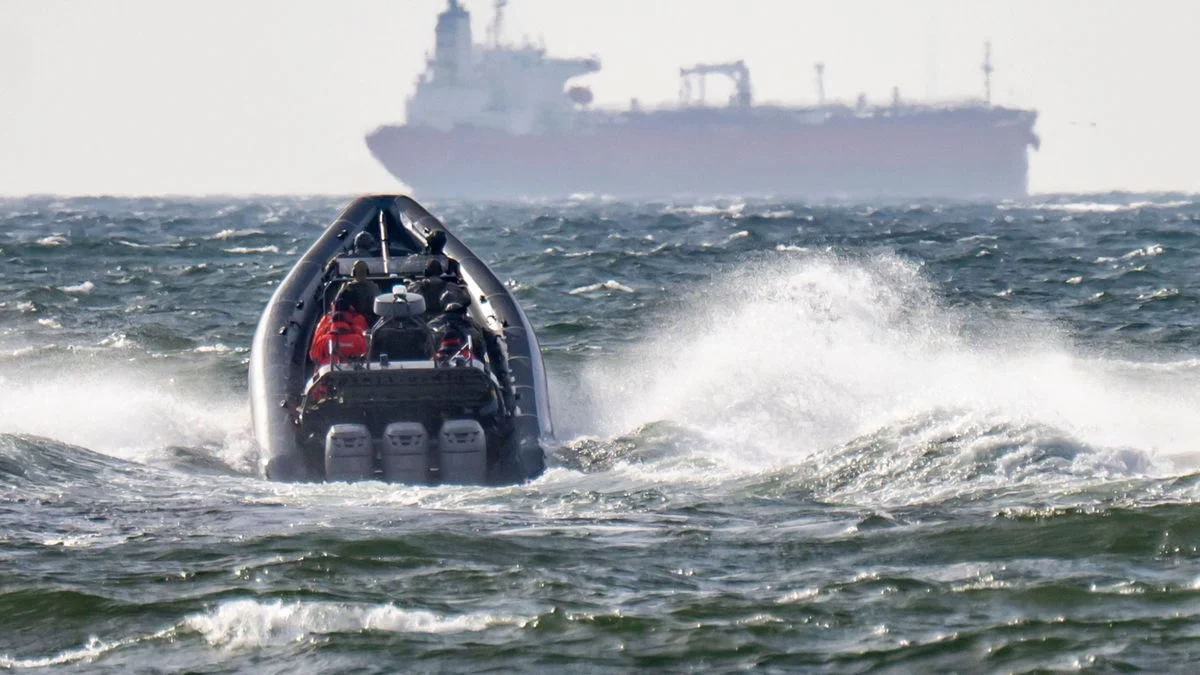
Berlin, Germany – A prominent voice within Germany’s Green Party has issued a forceful demand for decisive action against Russia’s illicit "shadow fleet" of oil tankers. Anton Hofreiter, Chairman of the Europe Committee in the Bundestag, is calling for the German Armed Forces, specifically the Navy, to actively intercept and halt these vessels as they traverse German territorial waters. His critique is sharp: Germany, he argues, has fallen short compared to its European neighbours, allowing a dangerous and illegal maritime operation to persist unchecked through its vital sea lanes.
Hofreiter’s demand underscores a growing concern among European policymakers regarding the Kremlin’s sophisticated efforts to circumvent Western sanctions imposed in response to its full-scale invasion of Ukraine. The shadow fleet, a clandestine network of aging vessels operating with opaque ownership structures and often questionable safety standards, is designed to keep Russian oil flowing to global markets beyond the reach of a G7-led price cap.
"These ships are operating illegally; they are breaking the law," Hofreiter stated emphatically in the "Berlin Playbook" podcast by Politico. "Therefore, these ships can be stopped… ideally by the German Navy." He highlighted that other nations, such as France and Belgium, have already taken concrete steps to board such vessels, setting a precedent that Germany, despite its significant maritime interests and exposure to these routes, has yet to follow. "Germany, although a number of these ships pass through German sea areas, has not really boarded a single one in recent months," the Green politician criticised. "And that’s why: No, Germany is not doing enough."
The urgency of Hofreiter’s appeal is rooted in the multifaceted threat posed by the shadow fleet. Beyond undermining the integrity of international sanctions, these vessels represent a significant environmental hazard due to their advanced age, often inadequate maintenance, and lack of proper insurance. Their operations in busy shipping lanes also raise serious maritime safety concerns, potentially risking collisions and catastrophic oil spills that could devastate vulnerable coastal ecosystems. His call for a Bundestag resolution to empower the government to act or, alternatively, an EU-wide mandate, highlights the perceived political paralysis and legal complexities currently hindering a robust German response.
The Immediate Demand: Bundeswehr Intervention
Anton Hofreiter’s proposal is unambiguous: the German Navy must be deployed to halt the passage of Russian shadow fleet vessels through German waters. This isn’t merely a suggestion for increased surveillance or monitoring; it’s a direct call for interdiction. His rationale is grounded in the assertion that these ships are engaged in illegal activities, thereby forfeiting any claim to unrestricted passage typically afforded to commercial vessels under international maritime law.
The legal basis for such intervention would primarily rest on violations related to sanctions evasion, safety regulations, and potentially environmental protection. If a vessel is suspected of violating international sanctions, operating without adequate insurance, or posing an imminent environmental risk, states generally possess the right to inspect and detain it within their territorial waters or even their exclusive economic zones (EEZ) under certain circumstances. Hofreiter explicitly states that the ships are "illegal" and "break laws," providing the legal justification he believes is necessary for military intervention.
The deployment of the Bundeswehr, particularly its naval assets, would signify a significant escalation in Germany’s approach to enforcing sanctions and protecting its maritime domain. It would move beyond diplomatic condemnations and economic penalties to direct physical confrontation at sea, a step laden with operational, legal, and geopolitical complexities. The German Navy is well-equipped with patrol vessels, frigates, and surveillance capabilities that could be repurposed for such interdiction missions, but the political will and a clear mandate from the Bundestag would be paramount.
A Stinging Critique of German Inaction
Hofreiter’s criticism of Germany’s perceived passivity is sharp and direct. He contrasts Germany’s lack of action with the proactive measures taken by other European nations like France and Belgium. This comparison serves to highlight what he views as a deficit in political courage or strategic resolve within Berlin. The implied question is: if other sovereign nations can take decisive action to protect their interests and uphold international law, why can’t Germany?
His remarks in the Politico podcast, "Deutschland, obwohl eine Reihe Schiffe durch deutsche Seegebiete fahren, hat noch kein einziges wirklich gebordet in den vergangenen Monaten," translate to a direct challenge to the German government’s current policy. He points out the apparent contradiction of Germany, a major maritime nation and a staunch supporter of Ukraine, allowing these illicit operations to continue unimpeded through its waters, despite acknowledging the problem. This inaction, he suggests, not only undermines the effectiveness of Western sanctions but also potentially compromises Germany’s own maritime security and environmental integrity.
The criticism extends beyond merely failing to board ships; it questions the overall effectiveness of Germany’s contribution to enforcing the G7 price cap and disrupting Russia’s war economy. Hofreiter’s assertion that "Deutschland tut nicht genug" (Germany is not doing enough) is a strong indictment, suggesting that the current policy framework or its implementation is insufficient to address the scale and nature of the shadow fleet threat. This public rebuke from a senior member of the ruling coalition puts significant pressure on Chancellor Olaf Scholz’s government to clarify its stance and potentially revise its approach to maritime enforcement.
The Genesis of a Covert Fleet: Circumventing Sanctions
The emergence of Russia’s shadow fleet is a direct consequence of the international community’s efforts to cripple Moscow’s war machine through economic sanctions following its full-scale invasion of Ukraine in February 2022. As the conflict escalated, Western nations moved to restrict Russia’s lucrative oil exports, a primary source of revenue for the Kremlin. The most significant measure was the introduction of a price cap on Russian crude oil, spearheaded by the G7 nations, the European Union, and Australia.
The G7 Price Cap and Russia’s Response
On December 5, 2022, the G7, EU, and Australia implemented a price cap of $60 per barrel on seaborne Russian crude oil. The mechanism behind this cap was ingenious yet complex: it prohibited Western companies from providing services (such as shipping, insurance, financing, and brokering) for Russian oil cargoes unless the oil was sold at or below the $60 price ceiling. Given that Western companies dominate the global maritime insurance and shipping industries, this measure was designed to significantly limit Russia’s ability to export oil at higher prices, thereby reducing its war chest.
Russia’s response was swift and multi-pronged, aiming to nullify the cap’s effectiveness. Rather than capitulating, Moscow began to construct an alternative, parallel shipping infrastructure – the so-called "shadow fleet." This fleet is specifically designed to operate outside the purview of Western services and regulations, allowing Russia to sell its oil at market prices, often above the $60 cap, to non-Western buyers, primarily in Asia.
The creation of this fleet has been a massive undertaking, involving the acquisition of hundreds of aging oil tankers, often purchased through obscure intermediaries and shell companies. These vessels are typically registered under flags of convenience (e.g., Liberia, Panama, Marshall Islands) and insured by non-Western providers, or in some cases, are effectively uninsured, adding another layer of risk to their operations. The ultimate goal is to obscure the origin of the oil and the financial transactions, making it exceedingly difficult for sanctions enforcers to track and penalize violations.
Modus Operandi: Old Ships, Obscure Owners, and Dangerous Practices
The shadow fleet’s operational model is characterized by secrecy, deception, and a disregard for international maritime norms.
-
Vessel Acquisition and Age: The fleet predominantly comprises older tankers, many of which are past their typical operational lifespan. These vessels are often purchased cheaply from legitimate owners seeking to offload them, as they become uneconomical or too risky to operate under strict Western regulations. Their age implies higher maintenance costs, increased risk of mechanical failure, and reduced safety features compared to modern vessels. Estimates suggest the shadow fleet has grown to include several hundred tankers, representing a significant portion of the global aging tanker fleet.
-
Opaque Ownership and Management: A cornerstone of the shadow fleet’s strategy is obfuscation of ownership. Vessels are frequently registered under complex corporate structures involving multiple shell companies across various jurisdictions, making it nearly impossible to identify the ultimate beneficial owner. This deliberate opacity is designed to evade accountability and make it difficult for authorities to impose sanctions on the true beneficiaries of the trade. Ship management companies are also often obscure, operating from jurisdictions with lax regulatory oversight.
-
Flag Hopping and AIS Manipulation: Vessels in the shadow fleet frequently change their flag registrations (flag hopping) to jurisdictions with weaker maritime enforcement or those that are less likely to cooperate with Western sanctions regimes. Another common tactic is the manipulation or disabling of Automatic Identification System (AIS) transponders. AIS is a critical safety system that broadcasts a ship’s position, course, and speed, aiding in collision avoidance and maritime traffic management. "Going dark" by switching off AIS allows these vessels to disappear from tracking systems for extended periods, facilitating illicit ship-to-ship transfers (STS) and obscuring their true itineraries.
-
Ship-to-Ship (STS) Transfers: STS transfers are a crucial method employed by the shadow fleet. This involves transferring oil from one tanker to another while at sea, often in remote or less-monitored areas. This practice is used to mix cargoes, change the origin of the oil on paper, or consolidate smaller shipments into larger ones, further complicating efforts to trace the oil’s provenance and ensure compliance with the price cap. While STS transfers are legitimate operations in certain contexts, their use by the shadow fleet raises significant safety and environmental concerns, particularly when conducted by inadequately trained crews on older, poorly maintained vessels in adverse weather conditions.
Environmental and Safety Perils
The operational methods of the shadow fleet pose severe environmental and safety risks that extend far beyond the geopolitical implications.
-
Environmental Catastrophe: The advanced age and poor maintenance of many shadow fleet tankers significantly increase the likelihood of structural failures, leaks, or even major oil spills. Should a collision or grounding occur involving one of these vessels, especially in sensitive ecological areas like the Baltic Sea or the North Sea, the environmental consequences could be catastrophic. The lack of proper insurance means that in the event of a major spill, there might be no adequate financial resources to cover the cleanup costs, leaving coastal states and their taxpayers to bear the burden. The marine ecosystems, fisheries, and tourism industries of affected regions would suffer devastating, long-lasting damage.
-
Maritime Safety: The deliberate disabling of AIS transponders creates "ghost ships" that pose a direct collision risk in busy shipping lanes. Other vessels rely on AIS data for navigation and collision avoidance. When a tanker operating without AIS suddenly appears, it creates an immediate and unpredictable hazard. Furthermore, the crews on these shadow fleet vessels may be poorly trained, overworked, or operating under immense pressure, leading to human error. The lack of adherence to international safety standards, combined with the often-poor condition of the vessels, elevates the risk of accidents for both the shadow fleet ships themselves and other legitimate maritime traffic.
-
Regulatory Blind Spots: By operating outside the conventional regulatory framework, the shadow fleet undermines the global efforts to ensure safe and responsible shipping. They circumvent international conventions on safety, pollution prevention, and crew welfare, creating a parallel system that prioritizes profit and sanctions evasion over human safety and environmental protection. This creates a dangerous precedent and weakens the overall integrity of global maritime governance.
Unpacking the Threat: Routes, Revenues, and Risks
The shadow fleet is not merely a theoretical problem; it represents a tangible threat actively traversing some of the world’s most critical and environmentally sensitive maritime regions. Its operations have direct implications for global energy markets, environmental security, and the efficacy of international law.
The Strategic Importance of German Waters
Germany’s geographical position places it at the crossroads of several vital shipping lanes, making its waters and contiguous zones particularly susceptible to the passage of the shadow fleet. Russian oil tankers, both legitimate and illicit, frequently transit through the Baltic Sea, the Danish Straits (connecting the Baltic to the North Sea), and then into the North Sea en route to various destinations. These routes are not only crucial for European trade but also pass through ecologically delicate areas.
The Baltic Sea, in particular, is an enclosed and shallow sea, making it highly vulnerable to pollution. An oil spill here would have devastating consequences for its unique marine life and the economies of surrounding nations. The North Sea, while larger, is also home to intensive shipping traffic, offshore energy infrastructure, and vital fishing grounds. The presence of poorly maintained, potentially uninsured tankers operating clandestinely in these busy and sensitive waters represents a constant threat to German and wider European maritime security. Hofreiter’s emphasis on "German sea areas" highlights this direct national exposure.
Fuelling the War Machine: The Economic Impact
The primary objective of the shadow fleet is to enable Russia to continue exporting oil at prices above the G7 cap, thereby sustaining its revenue stream and funding its ongoing war in Ukraine. While the price cap has had some impact, it has not fully choked off Russia’s oil revenues. By utilizing the shadow fleet, Russia can bypass Western service providers and sell its crude to alternative markets, often at prices closer to global benchmarks.
Estimates vary, but analysts suggest that Russia has been able to earn billions of dollars that would otherwise have been lost if the price cap were fully effective. This illicit revenue directly contributes to the Kremlin’s ability to finance its military operations, procure weapons, and withstand the broader economic pressure exerted by Western sanctions. Hofreiter’s demand for intervention is thus not just about maritime safety, but also about reinforcing the economic squeeze on Russia and reducing its capacity for aggression. The more effectively the shadow fleet is disrupted, the greater the financial pressure on Moscow.
The Looming Environmental Catastrophe
Beyond the immediate economic and geopolitical concerns, the environmental risk posed by the shadow fleet is perhaps the most visceral and widely understood danger. The use of aging vessels, often operating without comprehensive maintenance or proper classification, significantly elevates the risk of a major maritime incident.
- Hull Integrity: Older tankers are more susceptible to corrosion and fatigue, increasing the risk of hull breaches and leaks, especially in rough seas or during demanding maneuvers like ship-to-ship transfers.
- Engine Failures: Mechanical breakdowns are more common on older vessels, potentially leading to loss of propulsion, adrift situations, or collisions.
- Lack of Preparedness: The crews on these vessels may lack adequate training for emergency situations, and the absence of proper insurance means that robust emergency response plans and financial guarantees for cleanup operations are often non-existent.
- Vulnerable Ecosystems: A major oil spill in the Baltic or North Sea would devastate fisheries, contaminate coastlines, harm marine mammals and birds, and inflict long-term damage on fragile ecosystems. The economic cost of cleanup and rehabilitation would be astronomical, likely falling on the affected nations.
Hofreiter’s concern for the illegality of these ships therefore extends to their inherent environmental hazard, making their passage through German waters an unacceptable risk.
Navigating the Legal Labyrinth: International Maritime Law
Intervening against vessels in international waters, or even within a state’s Exclusive Economic Zone (EEZ), is a complex legal undertaking governed by the United Nations Convention on the Law of the Sea (UNCLOS) and other international treaties.
-
Territorial Waters (12 nautical miles): Within its territorial waters, a coastal state has full sovereignty, subject to the right of "innocent passage." However, passage is not "innocent" if it is prejudicial to the peace, good order, or security of the coastal state. Violations of customs, fiscal, immigration, or sanitary laws, or deliberate pollution, can render passage non-innocent and allow the coastal state to take necessary steps to prevent such passage. Operating in violation of international sanctions or posing an imminent environmental threat could arguably fall under this category.
-
Contiguous Zone (up to 24 nautical miles): Beyond territorial waters, in the contiguous zone, a state can exercise control to prevent infringement of its customs, fiscal, immigration, or sanitary laws within its territory or territorial sea.
-
Exclusive Economic Zone (EEZ) (up to 200 nautical miles): In the EEZ, a coastal state has sovereign rights for exploring and exploiting, conserving, and managing natural resources, and jurisdiction with regard to marine scientific research and the protection and preservation of the marine environment. While foreign vessels enjoy freedom of navigation, coastal states can take measures to enforce laws and regulations relating to pollution from vessels.
-
"Hot Pursuit": In certain circumstances, if a vessel violates a state’s laws within its territorial waters or contiguous zone, authorities can pursue it into international waters (hot pursuit) to effect an arrest.
Hofreiter’s assertion that the ships are "illegal" and "break laws" provides the primary legal justification. However, proving these violations and ensuring that any intervention adheres strictly to international law is critical to avoid diplomatic incidents or legal challenges. The precise nature of the "illegality" – whether it’s solely sanctions evasion, lack of proper insurance, or safety violations – would dictate the scope and legality of the intervention. The complexity of these legal nuances is likely a significant factor in Germany’s cautious approach so far.
A Divided Front: German Hesitation vs. European Action
Hofreiter’s critical stance highlights a perceived divergence in approach between Germany and some of its European partners when it comes to confronting the Russian shadow fleet. His call for action reflects a frustration with what he sees as Germany’s reluctance to translate strong rhetorical support for Ukraine and sanctions into robust maritime enforcement.
Hofreiter’s Call for Political Courage
The Green politician explicitly links Germany’s inaction to a lack of political courage. By suggesting that a Bundestag resolution would "increase the likelihood that the government dares" to act, Hofreiter implies that the current government (of which his own party is a part) is hesitant or risk-averse. This indicates a potential internal debate within the ruling coalition regarding the appropriate level of assertiveness in enforcing sanctions at sea.
His demand for a parliamentary mandate serves two purposes:
- Legal Clarity: It would provide a clear legal basis and political backing for the Bundeswehr’s involvement, addressing potential concerns about the scope of their authority or the interpretation of international law.
- Political Will: It would force the government to take a definitive stance and demonstrate a commitment to confronting the shadow fleet, pushing past any internal hesitations.
Hofreiter’s appeal is a direct challenge to the German government to overcome its perceived inertia and adopt a more proactive and visible role in maritime security, mirroring the resolve shown by its European allies.
Lessons from France and Belgium: Precedents for Intervention
The examples of France and Belgium are central to Hofreiter’s argument. These nations have demonstrated that intervention against suspicious vessels is not only feasible but also legally justifiable. While specific details of their operations are often kept discreet for operational security, reports suggest that these interventions typically involve:
- Safety Inspections: Boarding vessels under the guise of routine safety or environmental inspections, particularly if there are concerns about the ship’s seaworthiness, crew qualifications, or cargo handling procedures. These inspections can then uncover violations related to sanctions or insurance.
- Sanctions Enforcement: Directly investigating vessels suspected of sanctions evasion, often based on intelligence regarding their cargo, ownership, or recent port calls.
- Environmental Protection: Intervening if a vessel is deemed an imminent threat to the marine environment due to its condition or dangerous operational practices.
For instance, in early 2022, French authorities famously seized a Russian-flagged cargo ship in the English Channel suspected of violating EU sanctions, demonstrating a willingness to act decisively. Belgium has also been active in monitoring and, where appropriate, inspecting vessels in its waters. These actions provide a clear precedent that Hofreiter believes Germany should emulate, suggesting that the legal and operational frameworks for such interventions already exist and have been successfully applied by other EU members.
The German Government’s Stance: Awaiting a Clear Mandate?
The German government’s official response to the shadow fleet issue has been more cautious. While acknowledging the problem and condemning Russia’s circumvention tactics, there has been no public announcement of direct military interdiction by the Bundeswehr. This hesitation could stem from several factors:
- Legal Scrutiny: Germany is known for its strict adherence to international law and domestic constitutional procedures. Any military deployment, especially one involving potential confrontation, would undergo intense legal review to ensure full compliance.
- De-escalation Concerns: There might be a desire to avoid direct military confrontation with Russian-linked assets, fearing potential for escalation or diplomatic fallout, especially in the sensitive Baltic Sea region.
- Operational Capacity: While the German Navy is capable, dedicating significant assets to shadow fleet interdiction would require careful resource allocation and potentially divert resources from other missions.
- Coordination Imperative: Germany often prefers a coordinated EU or NATO approach to such complex international issues, rather than unilateral action, to ensure maximum legitimacy and effectiveness.
It is likely that the relevant German ministries – Defence, Foreign Affairs, and Transport – are engaged in internal discussions and legal assessments regarding the feasibility and implications of Hofreiter’s proposal. The absence of a clear government mandate so far suggests that these deliberations are ongoing, or that the government is seeking broader political consensus or an international framework before committing to such a significant step.
The Elusive EU Mandate: A Complex Endeavor
Hofreiter also floated the idea of an EU-wide mandate for intervention, acknowledging that this would be "not easy under international law." While an EU-level approach offers the benefit of collective action, shared resources, and stronger legal backing, it also comes with inherent complexities:
- Sovereignty Issues: Member states are typically protective of their national sovereignty over territorial waters and defence matters. Pooling such authority at the EU level requires significant political consensus and legal agreements.
- Diverse National Interests: While all EU members condemn Russia’s actions, their geographical exposure to the shadow fleet, economic dependencies, and strategic priorities can vary, making a unified operational mandate difficult to achieve.
- Legal Frameworks: Developing a common EU legal framework for maritime interdiction related to sanctions enforcement would require extensive negotiations and harmonization of national laws with EU regulations.
- Operational Command: Establishing a clear chain of command and operational control for an EU-mandated naval force would be a significant logistical and political challenge.
Despite these difficulties, an EU mandate would significantly strengthen the bloc’s ability to enforce sanctions and protect its collective maritime interests. It would send a powerful message of unity and resolve to Moscow. Hofreiter’s suggestion underscores the need for greater European cooperation on this issue, even if the path to achieving it is fraught with legal and political hurdles.
The Broader Ramifications: Security, Sovereignty, and Sanctions Integrity
Anton Hofreiter’s call for intervention against Russia’s shadow fleet transcends the immediate issue of maritime safety; it delves into fundamental questions of national sovereignty, the effectiveness of international sanctions, and Germany’s role in European security. The implications of either action or inaction are profound and far-reaching.
Germany’s Role in European Maritime Security
Germany, as a major economic power with extensive coastlines on the North and Baltic Seas, plays a pivotal role in European maritime security. Its inaction against the shadow fleet could be perceived as a dereliction of this responsibility, potentially undermining trust among allies and creating a security vacuum in critical sea lanes. Conversely, a decisive intervention by the Bundeswehr would solidify Germany’s commitment to protecting its maritime domain, upholding international law, and contributing actively to the collective security of Europe.
Such a move would signal to Russia that Germany is prepared to defend its interests and enforce sanctions with concrete actions, not just words. It would also set a precedent for other European nations facing similar challenges, potentially catalyzing a more coordinated and robust response across the continent. The integrity of European maritime space is crucial for trade, energy supply, and environmental protection, making Germany’s stance on the shadow fleet a defining element of its broader security posture.
Upholding the Rule of Law and Sanctions Efficacy
The very existence and operation of the shadow fleet represent a direct challenge to the international rule of law and the efficacy of sanctions regimes. By allowing these vessels to transit unimpeded, there is a risk of normalizing illicit activities and signaling that international regulations can be flouted with impunity. This undermines the credibility of the Western alliance’s efforts to penalize Russia for its aggression.
Hofreiter’s argument that these ships are "breaking the law" is central to this point. If states, especially those directly affected, do not enforce these laws, then the sanctions lose their teeth, and the principle of accountability is eroded. A failure to act could embolden Russia to expand its illicit operations and develop even more sophisticated methods of circumvention, making future sanctions regimes harder to enforce. Conversely, consistent and determined interdiction efforts would reinforce the message that violations of international law will carry consequences, thereby strengthening the global sanctions architecture.
The Geopolitical Tightrope: Balancing Deterrence and De-escalation
Any military intervention carries inherent geopolitical risks. Germany’s decision to deploy its Navy against Russian-linked vessels would be a highly sensitive act, potentially inviting diplomatic protests or even retaliatory measures from Moscow. The German government must carefully weigh the benefits of deterrence and sanctions enforcement against the risks of escalation in an already tense geopolitical environment.
However, inaction also carries risks. Allowing the shadow fleet to operate freely could be interpreted by Russia as a sign of weakness or a lack of resolve, potentially encouraging further aggressive actions. The challenge for Berlin is to find the right balance: to demonstrate firmness and uphold international law without inadvertently triggering an unintended escalation. This requires careful diplomatic messaging, clear rules of engagement for the Bundeswehr, and close coordination with allies to present a united front.
A Call for a Coordinated European Response
Ultimately, the issue of the shadow fleet is not solely a German problem but a European one. The vessels traverse the waters of multiple EU and NATO member states, and the environmental and economic impacts of an incident would be felt across the region. Hofreiter’s suggestion of an EU mandate, despite its complexities, highlights the necessity of a coordinated European response.
A fragmented approach, where some nations act while others remain passive, weakens the overall impact of sanctions and creates loopholes for Russia to exploit. A truly effective strategy would involve:
- Shared Intelligence: Enhanced intelligence gathering and sharing among European states to track shadow fleet movements and identify high-risk vessels.
- Harmonized Legal Frameworks: Developing common legal interpretations and enforcement guidelines to ensure consistent action across different national jurisdictions.
- Joint Operations: Potentially conducting coordinated maritime patrols or interdiction operations involving naval assets from multiple EU members.
- Diplomatic Pressure: A unified European diplomatic effort to pressure flag states and insurance providers that facilitate the shadow fleet’s operations.
By enriching and rewriting Anton Hofreiter’s initial statements, the broader context of Russia’s shadow fleet, its implications for Germany and Europe, and the complex legal and geopolitical considerations surrounding potential intervention become clear. Hofreiter’s call is a demand for Germany to step up and confront a multifaceted threat that undermines international law, fuels a devastating war, and poses significant environmental and safety risks to its own shores. The question now is whether Berlin will heed this call and translate rhetoric into decisive action.