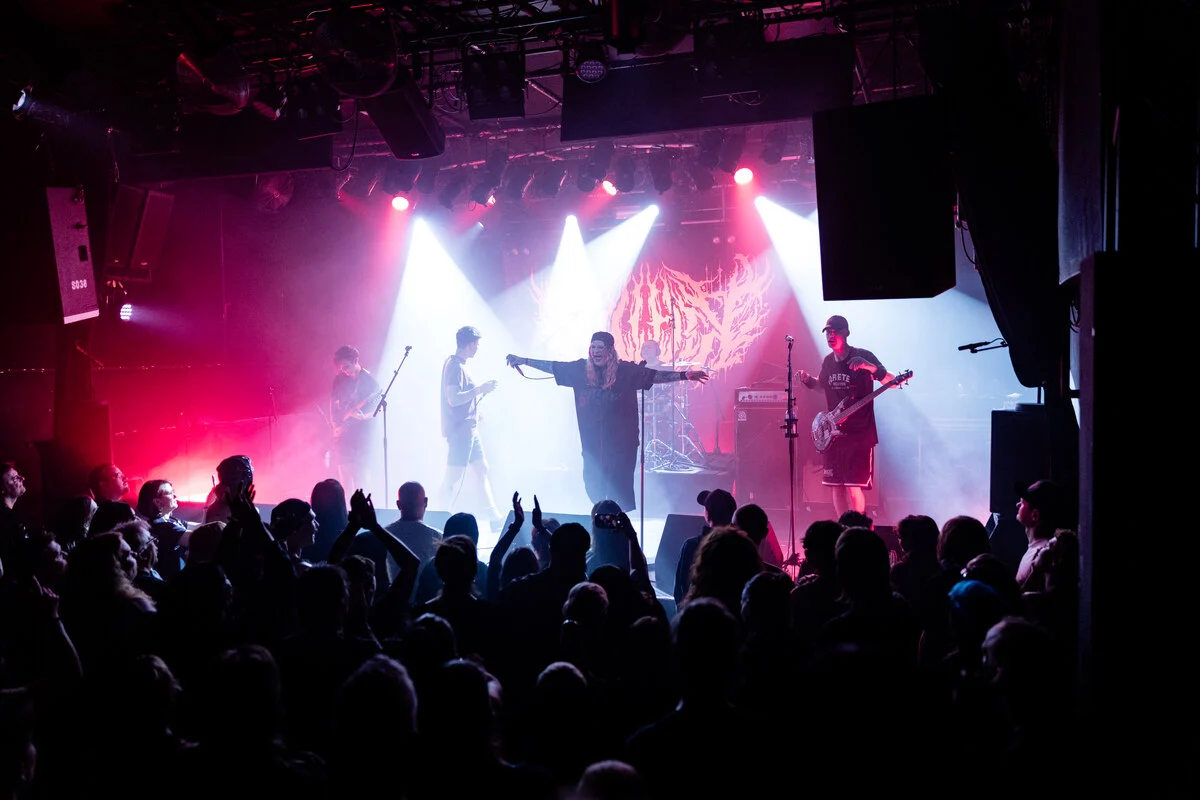
Berlin, Germany – On a mild autumn evening in Kreuzberg, the iconic SO36 club on Oranienstraße once again became the pulsating heart of a vital conversation. For the fifth consecutive year, the "Female-Fronted Is Not A Genre" (FFINAG) festival drew an eager crowd, united by a shared purpose: to spotlight female and non-male voices in the traditionally male-dominated realms of punk and hardcore. More than just a concert series, FFINAG stands as a powerful statement, challenging preconceived notions of gender in music and pushing for a truly equitable subcultural landscape.
The festival’s deliberately provocative name, "Female-Fronted Is Not A Genre," encapsulates its core critique. While seemingly counterintuitive for an event explicitly featuring non-male artists, it serves as a sharp commentary on the reductive practice of categorizing bands based on the gender of their members, rather than their artistic merit. This year’s edition underscored the festival’s commitment to fostering an inclusive atmosphere, free from the "Mackertum" (toxic masculinity and gatekeeping) that can often plague underground scenes, and asserting the right of all individuals to find a home within these vibrant cultural spaces.
The Genesis of a Movement: Challenging Subcultural Norms
Punk and hardcore, born from rebellion and a DIY ethos, have historically provided platforms for marginalized voices. Yet, despite their counter-cultural roots, these genres have not been immune to the pervasive gender imbalances found throughout the broader music industry. From the nascent days of punk in the 1970s, trailblazers like Poly Styrene of X-Ray Spex, Siouxsie Sioux of Siouxsie and the Banshees, and Joan Jett fought to carve out space, but their presence often remained exceptional rather than the norm. The Riot Grrrl movement of the early 1990s, spearheaded by bands like Bikini Kill and Bratmobile, directly confronted sexism within punk, advocating for feminist principles and creating safe spaces for women. However, even decades later, the fight for true parity continues.
The very phrase "female-fronted" itself, while sometimes used with good intentions to highlight diversity, often inadvertently reinforces the idea that women in music are an anomaly requiring special categorization. It implies a deviation from a male norm, rather than an integral part of the musical fabric. FFINAG directly challenges this framing, asserting that musical quality and genre identity should transcend the gender of the performers. The festival’s organizers understand the paradox: to achieve a future where such labels are obsolete, it is first necessary to actively amplify voices that have historically been sidelined. This proactive visibility is not about creating a separate genre, but about correcting an imbalance until true, ungendered equality is achieved.

The decision to focus exclusively on "female voices" and "bands with female members" as stated in the festival announcement, while seemingly reinforcing a gendered distinction, is a strategic response to a persistent problem. It’s an acknowledgment that, without such deliberate curatorial choices, these voices might continue to be underrepresented on mainstream and even alternative stages. The fact that punk, now in its 50th year, continues to reflect and update its internal claims and realities is a testament to its enduring capacity for self-criticism and evolution – a quality vital for any subculture aspiring to genuine inclusivity.
A Call for Inclusivity: The Festival’s Vision
At its heart, FFINAG is driven by a profound vision: to create an inclusive space where non-male individuals feel empowered and welcome within subcultural realms often perceived as masculine and, to outsiders, potentially unwelcoming. Gero Crocianelli, singer of Kill Her First and a co-organizer of the festival, articulated this vision clearly from the stage, expressing gratitude for the enthusiastic crowd and emphasizing the festival’s role as a beacon of inclusivity.
The organizers’ philosophy extends beyond mere numerical representation. While the article notes that many instruments on the opening night were still played by men, the overarching goal is to cultivate a "solidary atmosphere" that actively dismantles "Mackertum" – the often insidious forms of toxic masculinity, gatekeeping, and unearned authority that can stifle diverse participation. It’s about fostering an environment where artistic expression is valued above all, and where no one feels the need to assert dominance or dictate who belongs. This approach acknowledges that while visible representation is crucial, the underlying cultural shifts are equally, if not more, important for long-term change. FFINAG is not just showcasing bands; it’s cultivating a community.
An Evening of Diverse Voices: A Chronological Journey
The opening night of FFINAG 2024 at SO36 unfolded as a vibrant tapestry of sound and spirit, showcasing the breadth and vitality of non-male talent within punk and hardcore.

The evening commenced punctually to a well-filled hall, with Dutch singer and guitarist Wick Bambix taking on the role of the charming opener. Her folk-punk, delivered with two acoustic guitars and smoky vocals, resonated with an unmistakably rebellious attitude, occasionally tinged with country influences. The audience, attentive and ready to sing along, provided a warm reception, setting an engaging tone for the night. Bambix’s performance demonstrated that punk’s spirit of defiance can manifest in myriad forms, not solely through amplified aggression. Her raw, authentic delivery laid bare the emotional core often found beneath punk’s raucous surface, connecting directly with the audience.
Next, in keeping with the organizers’ aim for musical breadth, the alternative metal quintet Never Obey Again from Italy commanded the stage. Their powerful presence, sophisticated songwriting, and polished sound made it clear that this band aims for a wider reach, unafraid of a more mainstream interpretation of metal. Singer Carolina Bertelegni shared that the band had driven twelve hours from Italy to play, visibly overwhelmed by the enthusiastic reception from the Berlin audience. Never Obey Again’s performance served as a potent rebuttal to a commonly cited excuse for the scarcity of women in major rock and metal festival line-ups: the assertion that there aren’t enough professional bands with women. Here was undeniable proof to the contrary, showcasing talent that was not only professional but also ambitious and compelling. Their blend of heavy riffs, melodic vocals, and intricate arrangements captivated the crowd, demonstrating metal’s capacity for both power and accessibility.
The musical journey then shifted gears with the subsequent set by the queer-feminist hardcore band Kill Her First. Their sound was more direct and unembellished, rooted firmly in classic punk and old-school hardcore. Fronted by the vocal dynamism of Gero Crocianelli and Giulia Campagna, the band delivered a potent mix of powerful breakdowns and melodic sections. Their performance was a masterclass in controlled chaos, blending raw energy with moments of surprising tenderness, only to erupt again into the furious, energetic hardcore that defines the Kreuzberg underground. Kill Her First embodies the festival’s ethos, using their music as a vehicle for their queer-feminist message, delivering it with an intensity that left no doubt about their convictions. Their set was a visceral experience, connecting the audience to the core anger and passion that fuels the hardcore scene, while simultaneously offering a message of solidarity and resistance.
The evening culminated with the US-American punk band The Iron Roses, who consistently underscored the utopian vision of an inclusive scene throughout their performance. Their melodic punk, characterized by distinctive two-part harmonies and well-placed ska influences, provided a diverse and engaging conclusion to the concert night. The Iron Roses’ set explicitly amplified the visibility of queer positions within the scene, weaving their message of acceptance and belonging into every chord and lyric. Their music, blending catchy melodies with punk’s inherent urgency and a touch of ska’s rhythmic bounce, left the audience with a sense of hopeful defiance. It was a fitting end to an evening that celebrated not just music, but the community and values it represents.

Beyond the Stage: Broader Implications for Music and Society
The "Female-Fronted Is Not A Genre" festival in Berlin is more than just a local event; it’s a microcosm of a larger, ongoing struggle for equity and representation within the global music industry. Reports and studies consistently highlight the significant underrepresentation of women and non-binary individuals, not only as performers but also in crucial roles such as producers, sound engineers, and festival organizers. This disparity contributes to a "pipeline problem," where the perceived lack of female talent is often cited as a reason for imbalanced lineups, overlooking systemic barriers and biases that prevent many from reaching professional stages.
FFINAG directly confronts these issues by providing a dedicated platform. By actively curating a lineup that prioritizes non-male artists, the festival demonstrates that talent is abundant and diverse, challenging the notion that there aren’t "enough" qualified bands. Moreover, its focus on fostering a "solidary atmosphere without Mackertum" addresses the often-invisible cultural barriers that can make subcultural spaces unwelcoming or even hostile for marginalized groups. This commitment to creating genuinely safe and inclusive environments is crucial for nurturing new talent and ensuring that diverse voices can thrive without fear of judgment or harassment.
The festival’s emphasis on continuous reflection and updating of scene norms, particularly in punk’s 50th year, speaks to the dynamic nature of subcultures. True evolution requires constant self-assessment and a willingness to challenge established hierarchies. FFINAG exemplifies how grassroots initiatives can drive this change, pushing for a future where diversity is not just tolerated but celebrated as an inherent strength. The utopian vision of an inclusive scene, as highlighted by bands like The Iron Roses, is not a distant dream but a tangible goal that festivals like FFINAG are actively working towards, one powerful performance and one welcoming crowd at a time.
Ultimately, the "Female-Fronted Is Not A Genre" festival serves as a vital reminder that while music can be a powerful force for unity, the spaces in which it is created and consumed must also reflect the principles of equity and respect. By challenging simplistic labels, fostering solidarity, and amplifying underrepresented voices, FFINAG is not just enriching Berlin’s subculture; it’s paving the way for a more diverse, inclusive, and genuinely genre-defying future for music everywhere.