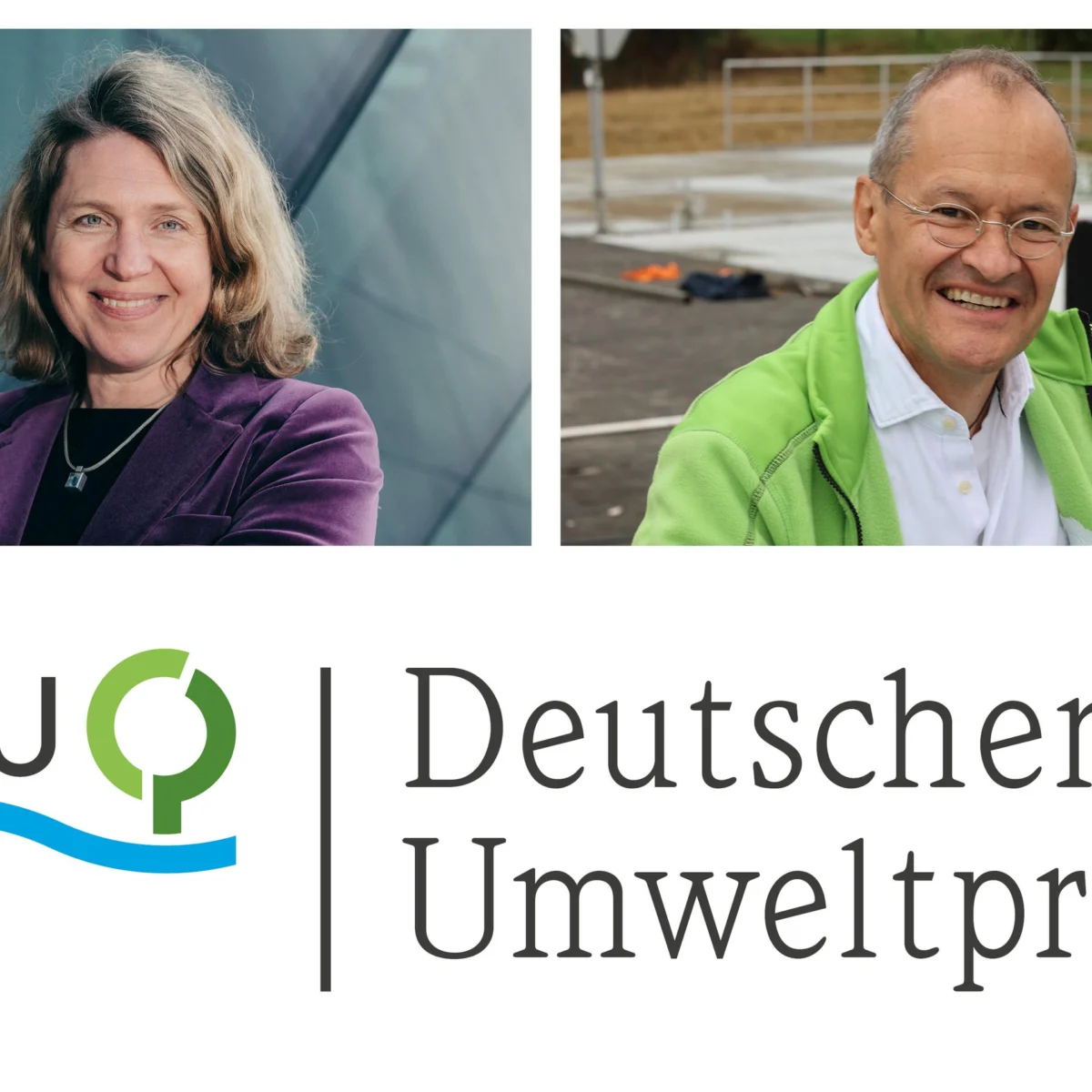
Aachen, Germany – October 26, 2026 – In a powerful affirmation of the intertwined paths of law and innovation in the fight for a sustainable future, Dr. Roda Verheyen, a distinguished environmental lawyer from Hamburg, and Dr. Klaus Vossenkaul, a pioneering engineer, have been jointly awarded the prestigious German Environmental Award (Deutscher Umweltpreis) by the Deutsche Bundesstiftung Umwelt (DBU). The coveted accolade, one of Europe’s most significant environmental distinctions, was presented by Federal President Frank-Walter Steinmeier at a grand ceremony in Aachen, recognizing their profound and complementary contributions to environmental and climate protection.
The laureates, whose work spans the critical domains of legal accountability and advanced technological solutions, share a substantial prize fund of 500,000 Euros. Their recognition underscores a growing understanding that addressing complex environmental challenges requires a multifaceted approach, integrating robust legal frameworks with cutting-edge scientific and engineering breakthroughs.
Generalsekretär Alexander Bonde of the DBU lauded Dr. Verheyen and Dr. Vossenkaul as "Mutmacher" – inspirers and encouragers – who demonstrate tangible pathways for positive progress. He highlighted their embodiment of "attitude, perseverance, and innovative power with a clear compass for environmental and climate protection," qualities deemed indispensable in navigating the complexities of the climate crisis and ecological degradation. This dual honour not only celebrates individual brilliance but also champions the synergy between legal advocacy and practical engineering, offering a blueprint for comprehensive environmental stewardship.
The Laureates: A Synergy of Law and Innovation
The German Environmental Award’s decision to honour both a legal expert and an engineer reflects a nuanced understanding of the challenges facing our planet. Environmental protection in the 21st century is no longer solely the domain of scientific discovery or policy-making; it demands a holistic strategy where legal frameworks create the impetus and boundaries, and technological innovation provides the means. Dr. Verheyen and Dr. Vossenkaul exemplify this critical convergence.
Dr. Roda Verheyen: Pioneering Environmental Law
Dr. Roda Verheyen, a prominent figure in German environmental law, brings an unwavering commitment to establishing clear and enforceable legal standards for climate and environmental protection. As a member of the Hamburg Constitutional Court, her work extends beyond theoretical discourse into the practical application and interpretation of constitutional principles in the context of ecological sustainability. Her legal expertise has been instrumental in shaping public debate and judicial outcomes related to climate action, often at the forefront of landmark cases that seek to hold governments and corporations accountable for their environmental impact.
Verheyen’s approach is characterized by a deep understanding of the intricate relationship between legal precedent, scientific evidence, and societal responsibility. She advocates for the creation of robust legal instruments that can translate ambitious climate targets into binding obligations, ensuring that commitments made on paper are translated into tangible actions. This includes advocating for stronger regulations on emissions, promoting renewable energy through legal incentives, and safeguarding biodiversity through protective legislation. Her work often involves navigating complex international and national legal frameworks, pushing for interpretations that prioritize long-term ecological health and intergenerational equity.
Her role as a "Mutmacher" in the legal sphere is particularly significant. In an era where climate litigation is increasingly becoming a tool for change, Verheyen’s perseverance in championing legal avenues for environmental protection inspires not only her peers but also a new generation of lawyers and activists. She demonstrates that the courtroom can be a powerful arena for environmental advocacy, where clarity, precision, and an unshakeable belief in justice can drive systemic change. Her contributions are vital in ensuring that environmental and climate protection are not merely aspirational goals but legally enshrined rights and responsibilities.
Dr. Klaus Vossenkaul: Engineering Solutions for Water Purity
Complementing Dr. Verheyen’s legal advocacy, Dr. Klaus Vossenkaul represents the innovative spirit of engineering dedicated to solving pressing environmental problems. As an engineer, Vossenkaul has dedicated his career to developing groundbreaking technologies that directly address one of the most critical environmental challenges of our time: water pollution. His most celebrated achievement, the development of advanced hollow fiber membranes, represents a significant leap forward in wastewater treatment.
These sophisticated membranes are designed to efficiently filter problematic substances from wastewater that conventional treatment methods often fail to capture. Among these insidious pollutants are microplastics, tiny plastic particles that have become ubiquitous in aquatic ecosystems and pose a severe threat to marine life and potentially human health. Beyond plastics, Vossenkaul’s membranes are highly effective in removing dangerous pathogens and increasingly prevalent multi-resistant germs, which represent a significant public health hazard. The rise of antibiotic-resistant bacteria in water bodies is a global concern, and Vossenkaul’s technology offers a vital line of defense.
The impact of his innovation is profound. By providing a highly effective barrier against these contaminants, his hollow fiber membranes contribute directly to cleaner water sources, protecting ecosystems, safeguarding biodiversity, and enhancing public health. The technology offers a scalable and efficient solution for municipal wastewater treatment plants, industrial applications, and even potential use in areas with limited access to clean water. Vossenkaul’s work embodies the "innovative power" and "clear compass" highlighted by Generalsekretär Bonde, demonstrating how targeted engineering solutions can yield measurable and impactful environmental benefits, transforming the challenge of water pollution into an opportunity for purification and regeneration.
Chronology of the Award and its Significance
The German Environmental Award, bestowed annually by the Deutsche Bundesstiftung Umwelt (DBU), holds a unique position among global environmental accolades. Established in 1993, it has grown to become one of Europe’s most significant and generously endowed environmental prizes, designed to acknowledge and encourage individuals and organizations whose innovative solutions and exemplary commitment contribute substantially to environmental protection.
The selection process is rigorous, involving nominations from various scientific, economic, and civil society sectors, followed by a comprehensive evaluation by an independent jury of experts. The award seeks to highlight solutions that are not only ecologically sound but also economically viable and socially acceptable, fostering a holistic approach to sustainability. Past recipients have included scientists, entrepreneurs, engineers, and activists whose work has spanned diverse fields from renewable energy development and sustainable agriculture to biodiversity conservation and environmental education.
The ceremony on October 26, 2026, in Aachen, with Federal President Frank-Walter Steinmeier presenting the awards, underscored the national importance of environmental protection and the high regard in which the laureates’ work is held. The President’s presence elevates the award beyond a scientific or technical recognition, positioning it as a matter of national priority and public interest. Aachen, a city with a rich history of innovation and cross-border collaboration, provided a fitting backdrop for celebrating breakthroughs that transcend traditional boundaries. The DBU’s consistent commitment to recognizing such pioneering efforts has solidified the German Environmental Award’s reputation as a powerful catalyst for positive change, inspiring further innovation and dedication in the pursuit of a sustainable future.
Supporting Data and Context
The urgency of the challenges addressed by Dr. Verheyen and Dr. Vossenkaul is underscored by a wealth of scientific data and global trends. Their work arrives at a critical juncture for both climate policy and public health.
The Urgency of Climate Litigation and Legal Frameworks
The past decade has witnessed a dramatic surge in climate litigation worldwide. From constitutional challenges to governmental climate inaction to lawsuits against corporations for their emissions, legal battles are increasingly shaping the landscape of climate policy. In Germany, significant legal rulings, such as the landmark 2021 Federal Constitutional Court decision, have affirmed that climate protection is a fundamental right, placing constitutional obligations on the state to protect future generations from the impacts of climate change. This ruling, and others like it, provide a powerful legal foundation for experts like Dr. Verheyen to advocate for more ambitious and legally binding climate targets.
Data consistently shows that despite international agreements, global greenhouse gas emissions continue to rise, pushing the planet closer to critical tipping points. The Intergovernmental Panel on Climate Change (IPCC) reports repeatedly emphasize the narrowing window for effective action. In this context, strong legal frameworks are not merely bureaucratic necessities but essential tools for enforcement, accountability, and driving behavioral change across all sectors. They provide the necessary levers to transition from fossil fuels to renewable energy, implement carbon pricing mechanisms, and protect natural carbon sinks. Dr. Verheyen’s dedication to crafting and defending these legal frameworks is thus a crucial component of the global effort to mitigate climate change and adapt to its unavoidable impacts. Her work ensures that scientific consensus is translated into actionable policy and that commitments are upheld through the force of law.
The Growing Challenge of Water Contamination
The global crisis of water contamination presents an equally dire picture. Microplastic pollution has become a pervasive environmental issue, with studies estimating that millions of tons of plastic waste enter aquatic environments annually. These tiny plastic particles, originating from various sources including synthetic textiles, tire wear, and the degradation of larger plastic items, are ingested by marine life, enter the food chain, and are now found in drinking water, air, and even human organs. The long-term health and ecological impacts are still being fully understood but are widely recognized as a severe threat.
Compounding this, the presence of pathogens and multi-resistant germs in wastewater poses a significant public health risk. The World Health Organization (WHO) highlights antimicrobial resistance (AMR) as one of the top 10 global public health threats. Wastewater treatment plants, while effective at removing many contaminants, often struggle with these microscopic threats. The spread of antibiotic-resistant bacteria from wastewater into rivers, lakes, and oceans can contribute to the global rise of untreatable infections, impacting both human and animal health.
Dr. Vossenkaul’s hollow fiber membrane technology directly addresses these critical issues. Conventional wastewater treatment often relies on biological processes and sedimentation, which are less effective against microplastics and certain types of pathogens and resistant bacteria. Membrane filtration, particularly with advanced hollow fiber designs, offers a physical barrier capable of removing particles down to nanometer scale, ensuring a significantly higher purity of treated water. The economic benefits are also substantial; by preventing environmental damage and reducing public health costs associated with waterborne diseases and antibiotic resistance, such technologies offer a high return on investment for communities and industries alike.
Official Responses and Laudatory Statements
The formal recognition by the DBU and the presence of the Federal President underscore the national importance attributed to the laureates’ work. Generalsekretär Alexander Bonde’s remarks resonated deeply, encapsulating the essence of their contributions. His description of them as "Mutmacher" (inspirers/encouragers) speaks to the often-overwhelming nature of environmental crises and the profound need for individuals who can demonstrate that solutions are not only possible but actively being implemented. In a world frequently grappling with eco-anxiety and a sense of helplessness, their concrete achievements offer a beacon of hope and a call to action.
Bonde’s further commendation of their "attitude, perseverance, and innovative power with a clear compass for environmental and climate protection" highlights the core virtues necessary for impactful environmental work. Dr. Verheyen’s "attitude" and "perseverance" are evident in her tireless pursuit of justice through the complex and often slow-moving legal system, challenging established norms and pushing for higher standards. Dr. Vossenkaul’s "innovative power" is manifested in his development of sophisticated, practical solutions that directly tackle tangible environmental threats. Both demonstrate a "clear compass," an unwavering commitment to the ultimate goal of protecting the environment and mitigating climate change, guiding their respective endeavors with unwavering focus.
Federal President Frank-Walter Steinmeier’s act of presenting the award adds significant symbolic weight. His presence signifies that the German state officially recognizes and values the contributions of these individuals, positioning environmental protection as a central pillar of national policy and societal well-being. His speech at the ceremony likely emphasized the collective responsibility to safeguard natural resources, the vital role of scientific and legal expertise, and the necessity of international cooperation in addressing global environmental challenges. This high-level endorsement serves to amplify the message that investing in environmental solutions and upholding environmental laws are not optional but imperative for a thriving future.
Implications and Future Outlook
The awarding of the German Environmental Award to Dr. Roda Verheyen and Dr. Klaus Vossenkaul carries significant implications, promising to amplify their respective fields and inspire broader action. For Dr. Verheyen, this recognition will undoubtedly bolster her influence in environmental jurisprudence. It lends greater authority to her arguments and potentially encourages more legal professionals to engage in climate litigation and the development of robust environmental laws. Increased public and political attention on her work could lead to stronger legislative initiatives and more vigorous enforcement of existing environmental protections in Germany and potentially serve as a model for other nations.
For Dr. Vossenkaul, the award brings well-deserved visibility to his innovative hollow fiber membrane technology. This heightened profile can accelerate the adoption of his solutions in wastewater treatment plants globally, attracting further investment for research and development, and facilitating partnerships for widespread implementation. As the issues of microplastic pollution and antimicrobial resistance continue to escalate, advanced filtration technologies like his become increasingly critical, and this award provides a powerful endorsement of their efficacy and necessity.
Beyond their individual impacts, the joint recognition of a lawyer and an engineer sends a powerful overarching message: that the most effective solutions to complex environmental challenges are interdisciplinary. It underscores the critical need for collaborative efforts that bridge the gaps between legal, scientific, technological, economic, and social sectors. This award serves as a blueprint for comprehensive environmental governance, highlighting that legal frameworks provide the imperative and structure, while technological innovation offers the practical means to achieve a sustainable future. Their collective achievements serve as a testament to the power of human ingenuity and perseverance, offering hope and concrete pathways forward in the global pursuit of ecological balance and climate resilience. The legacy of their work, celebrated today, promises to shape a cleaner, healthier, and more legally protected environment for generations to come.