The automotive giant Volkswagen is facing an unprecedented internal leadership crisis following the appearance of Audi CEO Gernot Döllner at a campaign rally for former US President Donald Trump. Daniela Cavallo, the powerful chair of Volkswagen’s General Works Council, has launched a blistering critique of the executive’s actions, describing them as a betrayal of corporate values and a dangerous flirtation with political extremism.
The Incident: A Breach of Protocol and Ethics
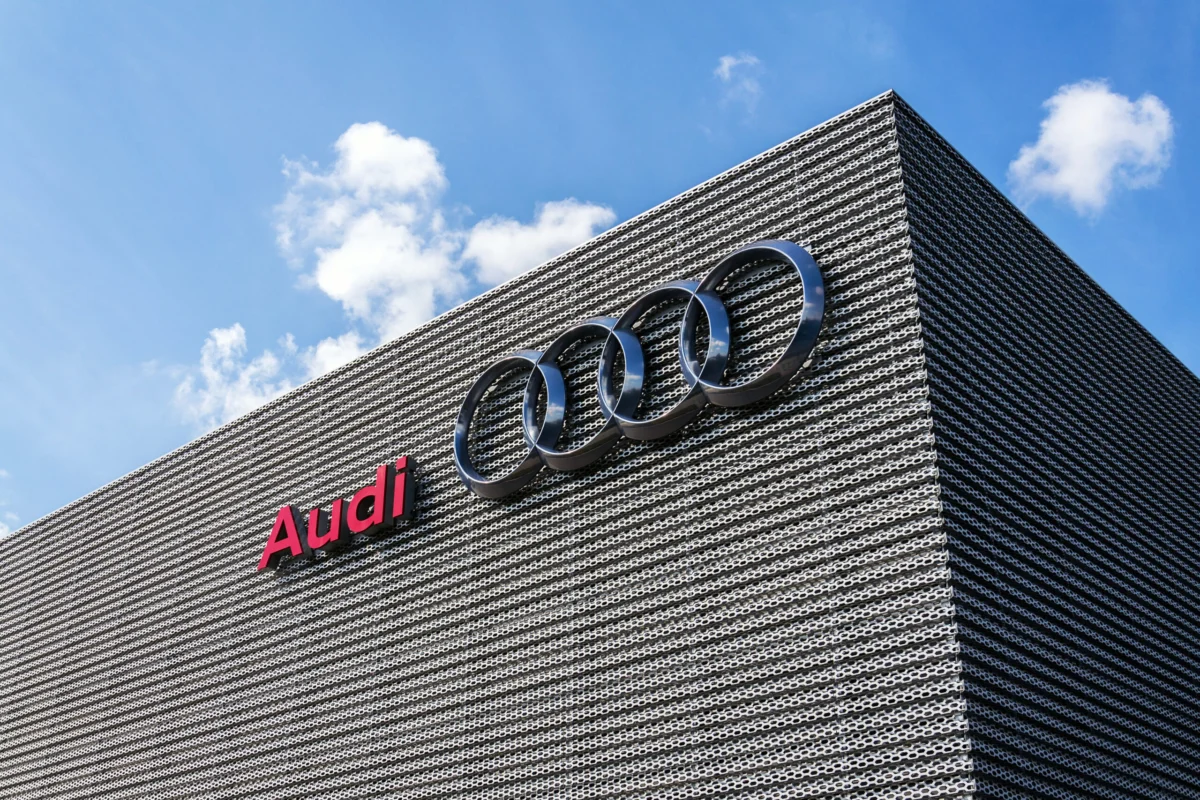
The controversy centers on a campaign event in Perry, Georgia, where Donald Trump—leveraging his political platform—announced plans for a new Audi manufacturing facility at the "Middle Georgia Mega Site." In a move that has stunned the German corporate establishment, Audi CEO Gernot Döllner joined Trump on stage, offering public thanks for the former president’s support.
For the Volkswagen Group, which has spent decades distancing itself from its historical origins as a showcase project of the Nazi regime in the 1930s, the optics were catastrophic. Daniela Cavallo, representing the workforce, did not mince words. In an internal interview, she characterized the rally as a display filled with "racism, sexism, xenophobia, transphobia, and contempt for democracy."
"For one of our top corporate representatives to step onto that stage and provide active campaign assistance—anyone who heard that speech and saw Döllner become an active part of that event should sink into the ground with shame," Cavallo stated. She explicitly linked the behavior to the company’s dark history, suggesting that the normalization of such political rhetoric by a German executive is "playing with fire."
Chronology of the Dispute
The tension between labor representatives and the executive board has been simmering for months, but the Georgia appearance acted as an accelerant.
- January 2026: VW CEO Oliver Blume publicly stated that any investment in a US-based production facility was contingent on the reduction of tariffs. At the time, the board argued that given the current tariff burden, a multi-billion dollar investment in the US was "not financially viable."
- The Campaign Rally: Donald Trump, speaking in Georgia, unilaterally announced the Audi plant project, effectively using the corporate investment as a centerpiece of his economic platform.
- The Appearance: Gernot Döllner appeared on stage, confirming the partnership and thanking Trump, effectively aligning the Audi brand with the former president’s political agenda.
- The Fallout: Following widespread backlash, Döllner attempted to defend his presence by claiming he had simply accepted an invitation from the US President.
- The Confrontation: Daniela Cavallo and the Works Council publicly condemned the move, citing a breach of the company’s internal guidelines, which explicitly prohibit public appearances with political candidates in the three months leading up to an election.
Economic and Strategic Context
From a purely cold-blooded, industrial perspective, the logic behind a US-based plant is sound. The United States remains one of the largest and most lucrative automotive markets in the world, yet Volkswagen’s overall market share in North America remains disproportionately low compared to its global footprint.
Audi’s current proposal involves a $4 billion investment (approximately €3.6 billion) aimed at producing 200,000 SUVs annually. The facility is expected to create 4,500 jobs, with construction slated for 2027 and production beginning in the early 2030s. This would mark Audi’s first dedicated manufacturing site in the United States.
However, the economic feasibility remains shrouded in political uncertainty. Cavallo noted that while the market potential is clear, the "deal" is plagued by variables:
- Tariff Uncertainty: It is unclear whether the promise of a factory will actually lead to long-term tariff exemptions for the entire Volkswagen Group.
- Political Volatility: Investors and union leaders alike are questioning the durability of any promises made by a political candidate. There is no guarantee that these commitments would survive a change in administration.
- The "Big Picture" Requirement: The Works Council is demanding a comprehensive view of how this investment impacts the broader group, specifically regarding the security and viability of Volkswagen’s domestic production sites in Germany.
Internal Governance: A Clear Violation of Policy
The most damaging aspect of the incident for the executive board is not just the political alignment, but the direct violation of internal corporate policy.
According to Cavallo, Audi has established, strict guidelines regarding political engagement. Specifically, public appearances with politicians actively running for office are prohibited within the three-month window before an election—a rule that Döllner himself signed only months ago. By violating this, Döllner has opened himself up to accusations of professional incompetence and a disregard for corporate governance.
"There is certainly a clear violation here," Cavallo emphasized. The internal conflict is now threatening the stability of the entire management structure, with critics labeling the board—led by Oliver Blume—as a "puppet" in a political propaganda show.
The Role of the Supervisory Board
Despite the headlines and the public announcements, the Audi plant is far from a done deal. The project is still subject to the approval of the supervisory boards, where the employee side holds significant influence.
Cavallo has set firm conditions for her support: "Without a total overview of the planning round, including a look at all locations, we will not give the green light." This effectively places the project in a state of suspended animation. The Audi supervisory board may have expressed initial support, but the final decision remains under the purview of the group’s leadership bodies, which are now clearly divided.
Implications for Volkswagen’s Future
The fallout from this event reaches far beyond a single factory in Georgia. It raises fundamental questions about the role of German multinational corporations in an increasingly polarized global political climate.
- Reputational Risk: By aligning with a polarizing figure like Donald Trump, Volkswagen risks alienating its diverse customer base and damaging its brand identity as a company built on "progressive" values.
- The "Puppet" Narrative: The critique from the Works Council has severely damaged the authority of the current management team. If the board is seen as a political tool rather than a sovereign economic leader, it will struggle to maintain the trust of its shareholders and employees.
- Labor Relations: The confrontation marks a significant hardening of the relationship between labor and management. As the company faces the transition to electric mobility and the need for painful restructuring, the loss of trust between the Works Council and the CEO could paralyze decision-making at a critical juncture.
- Historical Burden: Volkswagen’s unique history continues to haunt its strategic decisions. The fact that the company’s founders were tied to the Nazi regime means that the firm is held to a higher standard of ethical and political neutrality than its competitors. Failing to meet this standard results in immediate and intense backlash.
Conclusion: A Turning Point
The incident in Georgia has transformed from a simple business expansion announcement into a defining moment for the Volkswagen Group. As the company navigates the complex landscape of international trade and shifting political alliances, it must grapple with the reality that its corporate leaders are no longer just business executives—they are symbols of the company’s values.
For Gernot Döllner, the path forward is narrow. He must reconcile his actions with the demands of the Works Council and restore the reputation of a brand that prides itself on "progress." For the Volkswagen Group, the challenge is to prove that it can expand into the lucrative US market without sacrificing its identity or falling victim to the volatile whims of global politics.
As the company prepares for its next planning round, the silence from the executive suite is deafening. One thing is certain: the era of corporate leaders playing both sides of the political aisle without consequence is effectively over. The internal pressure on the board to account for this "show of shame" will likely continue to dominate the boardroom discourse for the foreseeable future.