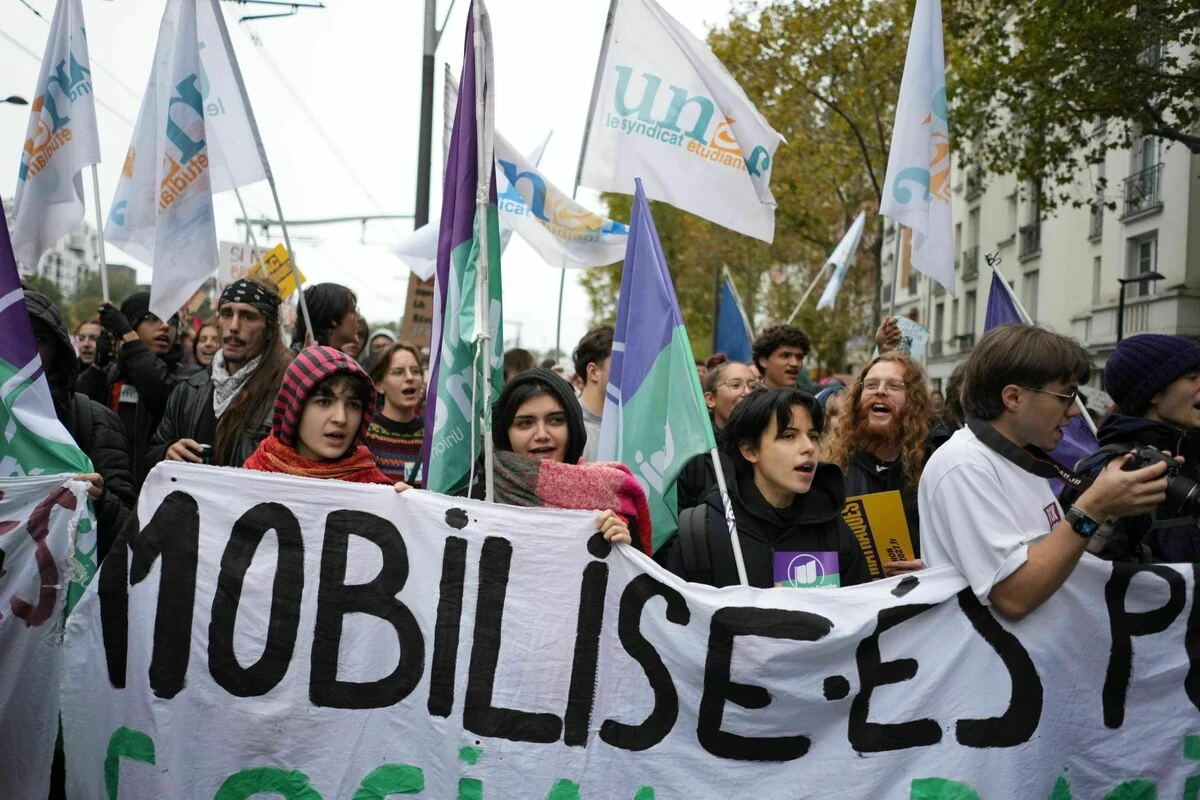
Paris, France — France finds itself at a critical political juncture as tens of thousands of demonstrators flooded the streets this Saturday, met by an unprecedented security mobilization. Under the watchful eyes of 70,000 police officers—an increase of 10,000 from the previous week—the French government attempted to curb the momentum of widespread anti-government sentiment. From the heart of Paris to the provincial hubs of Lyon and Marseille, the day was defined by a volatile mix of peaceful protest, aggressive police tactics, and a deepening divide between President Emmanuel Macron’s administration and a disillusioned citizenry.
The Core Conflict: A Nation at Odds
The protests, which have become a weekly occurrence, have evolved into a multi-faceted challenge to the Macron presidency. While initial demonstrations were sparked by students demanding better funding for the education system, an end to the "Parcoursup" university admission system, and increased social support, the movement has now broadened. It has absorbed labor unions, anti-racism groups, and citizens outraged by the rising cost of living, widening wealth inequality, and the perceived dismantling of the French social contract.
The atmosphere in Paris was one of high tension. Authorities, fearing a repeat of the riots and looting that marred previous weekends, took the drastic step of forcing organizers to move the main protest march away from the city center to the southeastern outskirts, citing a need to protect commercial districts. This administrative maneuver, upheld by a judicial court in an emergency ruling, set the tone for the day: a state prioritized on containment rather than dialogue.
Chronology of a Tense Saturday
The Morning: Preventive Measures
By midday, Interior Minister Laurent Nuñez confirmed the mobilization of 70,000 police officers nationwide. In the Paris region alone, over 1,000 security checks were conducted in public transit hubs and near protest zones. These "preventive" operations proved highly productive for the police, who seized an array of potential weapons, including ball bearings, slingshots, and even a soft-air gun. By 1:00 PM, 135 individuals had already been arrested, a figure that would continue to climb as the day progressed.
Mid-Afternoon: Clashes and Containment
While the main march in Paris remained largely disciplined—a fact highlighted by left-wing politician Jean-Luc Mélenchon, who praised the "magnificent mass demonstration of collective discipline"—the provinces told a different story.
In Lyon, Marseille, and Clermont-Ferrand, the situation devolved into open conflict. Police deployed tear gas and, in the case of Clermont-Ferrand, flash-bang grenades to prevent protesters from infiltrating city centers. In Nizza, authorities went further; after demonstrators ignored orders to vacate the area, police deployed water cannons to disperse the crowd. By late afternoon, the city of Brussels in neighboring Belgium also saw its own spillover of unrest, as hundreds of young protesters clashed with police over educational grievances, resulting in the use of tear gas and reports of excessive force by law enforcement.
The Evening: Political Repercussions
As the sun set, the focus shifted from the streets to the political fallout. In Orléans, a massive protest against the far-right Rassemblement National (RN)—which held a major party congress—remained largely peaceful. Thousands of protesters gathered to voice their opposition to the policies of Marine Le Pen and to express solidarity following a horrific, racially motivated terror attack in a Paris suburb the previous day.
Supporting Data and Security Statistics
The sheer scale of the police response underscores the Macron administration’s anxiety. With 70,000 officers deployed, the government’s message was clear: maintain order at any cost.
- Arrests: By early afternoon, 135 arrests were confirmed nationwide, with that number rising throughout the evening.
- Seizures: Thousands of security checks led to the confiscation of items classified as "potential weapons," signaling a high level of preparedness for violent escalation.
- Geographic Spread: Major confrontations were recorded in at least six cities, including Paris, Lyon, Marseille, Nizza, Lille, and Clermont-Ferrand.
- Demographics: The protest movement is notably young, driven heavily by students and those entering a precarious labor market, though they are increasingly bolstered by older, disillusioned working-class citizens.
Official Responses: Macron and the Security Apparatus
Interior Minister Laurent Nuñez remained the face of the government’s response, consistently emphasizing the need for "extreme speed" in reacting to potential agitators. He explicitly blamed "far-left extremists" and "criminals" for fueling the violence, a narrative designed to decouple the peaceful protestors from the rioters.
President Emmanuel Macron, meanwhile, faces a precarious situation. Beyond the protests, he is dealing with the trauma of a recent "racist terrorist attack" in the Paris suburb of Trappes. A 39-year-old suspect is currently in custody after a shooting rampage that left one person dead and five injured, including a 12-year-old girl who remains in critical condition. Macron has attempted to address both the social unrest and the terror threat as issues of national stability, but critics argue his heavy-handed response to the protests is only serving to radicalize the opposition.
Opposition figures like Jean-Luc Mélenchon have seized the moment, threatening weekly protests if the government does not address the "social misery" plaguing the country. "There is still time for him to give in," Mélenchon warned, noting that the only alternative for the President would be resignation.
Implications: The Road Ahead
The events of this weekend suggest that France is entering a period of prolonged civil instability. Several factors indicate that the current strategy of the Macron government is nearing its limit:
1. The Erosion of Public Space
The decision to ban protests in city centers and force marches to the periphery of Paris has created a "siege mentality" among protesters. While this may protect storefronts in the short term, it risks alienating the general public, who view these measures as an infringement on the fundamental right to demonstrate.
2. The Radicalization of Youth
The student demands—which include 250,000 additional university spots, increased teacher staffing, and a 200-euro monthly stipend increase—are structural in nature. They are not easily solved by police intervention. As long as these demands remain unmet, the youth movement is likely to continue its escalation, potentially moving beyond traditional protest tactics.
3. The Far-Right Factor
The presence of a massive, competing demonstration in Orléans against the Rassemblement National highlights the volatile political climate. With Marine Le Pen preparing to launch her presidential campaign, the street protests are no longer just about economic policy; they are a proxy war for the future identity of France. The interplay between anti-government protesters, far-right nationalists, and a police force under extreme pressure creates a "powder keg" effect.
4. The Failure of Administrative Solutions
Despite promises by President Macron to revise the Parcoursup university admissions system, the lack of concrete, immediate action has left many feeling betrayed. The student groups have explicitly stated that they will continue to protest until they see tangible changes, rendering the President’s past promises insufficient to quiet the streets.
Conclusion: A Fragile Equilibrium
As France enters the next week, the equilibrium between the state and the street remains fragile. The government has successfully prevented the total collapse of public order through overwhelming force, but this "peace" is superficial. The underlying grievances—economic inequality, educational crisis, and the sense of political exclusion—remain unaddressed.
The strategy of "mass policing" has become the primary mechanism of governance. While effective in the immediate sense of preventing widespread looting, it offers no long-term solution to the profound social malaise that has gripped the nation. Unless the Macron administration can bridge the gap between its policy goals and the urgent needs of the protestors, the coming weeks promise only more of the same: tear gas in the streets, a heavy police presence in the transit hubs, and a deepening, dangerous divide at the heart of French democracy.
The message from the streets is clear: the era of polite, manageable protest is over. What remains to be seen is whether the state will choose to engage in meaningful reform or continue to rely on the shield and the baton to maintain a tenuous, and increasingly expensive, peace.