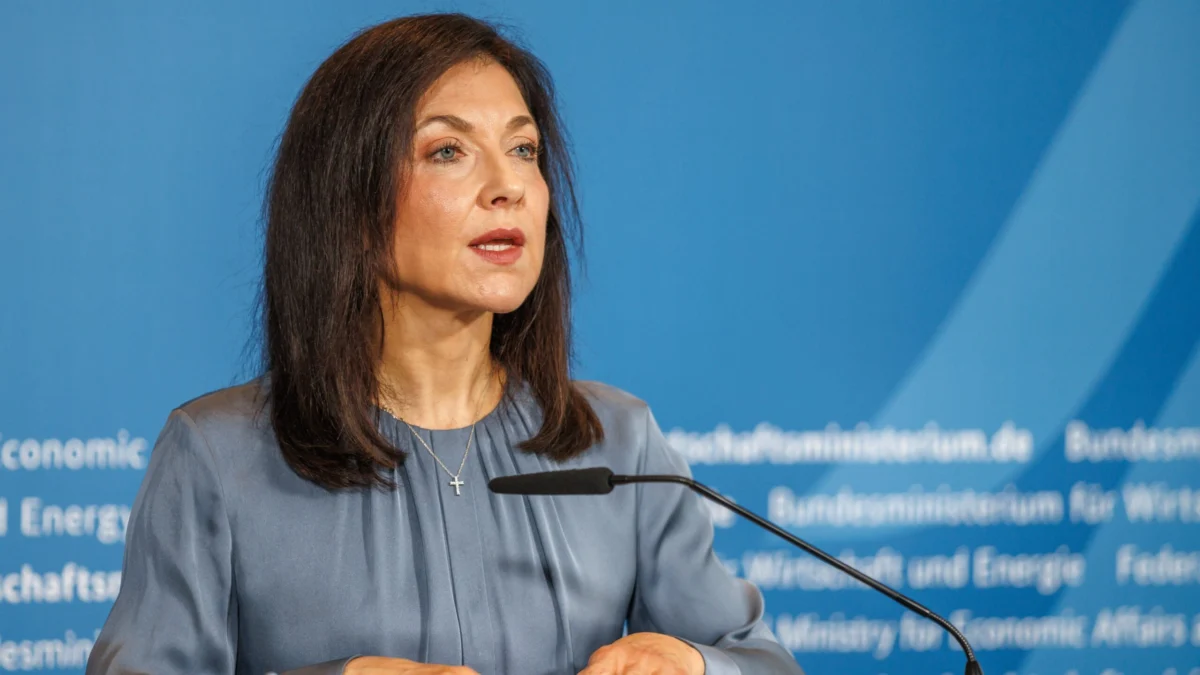
Berlin, Germany – In a significant and rare show of cross-party unity, eight German state premiers have issued a stark warning to Economics Minister Katherina Reiche (CDU), demanding immediate and substantial revisions to the nation’s Offshore Wind Energy Act (Windenergie-auf-See-Gesetz). The leaders, representing a broad political spectrum from the Social Democrats (SPD) to the Christian Social Union (CSU) and the Greens, caution that the current legislative framework risks a "fatal misdecision" that could severely cripple German industry. The highly anticipated letter, a copy of which has been obtained by the Handelsblatt newspaper, underscores a growing unease among regional governments regarding the federal government’s renewable energy strategy and its economic implications.
The signatories include prominent figures such as Olaf Lies (SPD), Minister-President of Lower Saxony, a key coastal state for offshore wind development; Markus Söder (CSU), Minister-President of Bavaria, an industrial powerhouse; Daniel Günther (CDU), Minister-President of Schleswig-Holstein, another crucial coastal state; and Cem Özdemir (Greens), Minister-President of Baden-Württemberg, a state known for its innovative industries. This diverse coalition highlights the widespread nature of the concerns, transcending traditional political divides and geographical interests, to focus on what they perceive as an existential threat to Germany’s industrial competitiveness and its ambitious energy transition goals.
The essence of their urgent appeal lies in the belief that the existing legal framework for offshore wind development is fundamentally flawed, creating insurmountable hurdles for investment, hindering project realization, and ultimately jeopardizing Germany’s position as a leader in green technologies. The premiers argue that without swift corrections, the nation risks losing crucial industrial capacity, jobs, and technological expertise at a time when the global race for renewable energy dominance is intensifying.
The Genesis of Discontent: A Chronology of Growing Concerns
Germany has long been a pioneer in renewable energy, with ambitious targets for transitioning away from fossil fuels and nuclear power. Offshore wind energy is a cornerstone of this strategy, envisioned as a reliable, large-scale power source to underpin the future energy mix. However, the path to realizing these ambitions has been fraught with increasing challenges, culminating in the premiers’ unprecedented intervention.
Initial Legislative Intent and Ambitious Targets
The Windenergie-auf-See-Gesetz was initially conceived as a pivotal instrument to accelerate the expansion of offshore wind capacity in Germany. Its primary goal was to provide a clear, stable, and predictable regulatory framework for investors and developers, facilitating the construction of vast wind farms in the North and Baltic Seas. Germany set ambitious targets, aiming for at least 30 gigawatts (GW) of offshore wind capacity by 2030, rising to 40 GW by 2035 and 70 GW by 2045. These targets reflected a strong political will to decarbonize the economy, enhance energy security, and foster green industrial growth. The law sought to streamline permitting processes, define auction mechanisms, and ensure grid connection for future projects, laying the groundwork for what was hoped to be a booming sector. Early legislative drafts and policy discussions were marked by optimism, with the potential for Germany to cement its role as a global leader in offshore wind technology and manufacturing.
Emerging Headwinds in the Sector
Despite the initial optimism, the implementation of the law and the realities of the market began to reveal significant structural problems. Over the past few years, the offshore wind sector, both domestically and internationally, has faced a confluence of adverse factors. Soaring inflation, rising interest rates, and unprecedented increases in raw material costs (steel, copper, rare earth elements) have driven up the capital expenditure required for new projects. Supply chains, already strained by the COVID-19 pandemic and geopolitical tensions, have become increasingly fragile, leading to delays and further cost escalations.
Furthermore, the complexity of offshore wind development, involving massive infrastructure projects, specialized vessels, and highly skilled labor, has always presented unique challenges. Bureaucratic hurdles, lengthy permitting procedures, and the intricate process of securing grid connections have added layers of difficulty and uncertainty for developers. Auction mechanisms, while designed to foster competition and reduce costs, have sometimes inadvertently created situations where developers bid aggressively low, only to face viability issues when market conditions shift, leading to project cancellations or delays. This accumulation of challenges has led many industry stakeholders to refer to the current situation as an "offshore crisis," a term echoed by the Handelsblatt article linked in the original report.
Escalating Industry Warnings
For months, industry associations, energy companies, and expert think tanks have been sounding alarms about the deteriorating investment climate and the viability of Germany’s offshore wind targets. Warnings have come from organizations representing wind energy manufacturers, project developers, and energy utilities, all highlighting the disconnect between the government’s ambitious goals and the practical realities on the ground. They have pointed to a slowdown in final investment decisions, a lack of clarity on future funding mechanisms, and the risk of projects being relocated to more favorable regulatory environments abroad. Concerns were repeatedly raised about the potential loss of skilled jobs, the erosion of Germany’s industrial base in wind turbine manufacturing, component supply, and specialized engineering services. These warnings, initially fragmented, have now coalesced into a unified call for action, culminating in the premiers’ letter.
The Premiers’ Collective Action
The letter from the eight state premiers represents a critical turning point. It signifies that the concerns, once primarily confined to industry circles, have now been elevated to the highest levels of regional political leadership. The unusual cross-party nature of the signatories—spanning CDU, CSU, SPD, and Greens—underscores the gravity of the situation and suggests a broad consensus that the current federal policy is unsustainable. Their intervention is not merely a critique but a demand for immediate legislative corrections, positioning the state leaders as crucial advocates for both regional economic interests and national energy security. This collective action serves as a powerful message to the federal government, urging a fundamental re-evaluation of the Windenergie-auf-See-Gesetz to avert what they foresee as a profound industrial and economic setback.
The Economic Stakes: Supporting Data and Industrial Vulnerability
The state premiers’ warning of a "fatal misdecision at the expense of German industry" is rooted in a deep understanding of the economic significance of the offshore wind sector and its interconnectedness with the broader German industrial landscape. The stakes are immense, impacting investment, employment, technological leadership, and the nation’s overall energy transition.
Germany’s Offshore Wind Ambitions and Current Reality
Germany’s targets for offshore wind are among the most ambitious globally. The goal of 30 GW by 2030, rising to 70 GW by 2045, implies an exponential growth curve from the current installed capacity, which stands at approximately 8.5 GW. Achieving these targets requires annual installations far exceeding historical averages, demanding a sustained surge in investment and project execution. Each gigawatt of offshore wind capacity represents billions of euros in capital expenditure, generating thousands of jobs across the supply chain. Failure to amend the current law could severely hamper the pace of development, leading to a significant shortfall against these targets and undermining the credibility of Germany’s climate commitments.
Investment Landscape and Supply Chain Fragility
Offshore wind projects are incredibly capital-intensive, with costs often ranging from €3 billion to €5 billion for a single large-scale wind farm. This necessitates a stable and attractive investment climate to draw in the necessary private capital. The premiers’ concerns directly address how the current legislative framework might deter such investments. Factors like unpredictable auction results, insufficient risk mitigation for developers, and bureaucratic delays can make Germany a less appealing destination compared to other countries offering more stable regulatory environments and clearer pathways to profitability.
The "fatal misdecision" directly threatens Germany’s robust industrial supply chain for offshore wind. This includes:
- Manufacturing: Germany is home to leading manufacturers of wind turbine components, including specialized gears, generators, and foundations. A slowdown in domestic projects directly impacts order books, potentially leading to production cuts and plant closures.
- Logistics and Port Infrastructure: Coastal states like Lower Saxony and Schleswig-Holstein have invested heavily in specialized port facilities for the assembly and dispatch of massive turbine components. A lack of projects would render these investments underutilized.
- Specialized Services: Engineering firms, installation companies, maintenance providers, and research institutions form a critical ecosystem. A stagnant market risks losing this highly skilled workforce and specialized expertise to countries with more active project pipelines.
- Steel and Heavy Industry: The construction of turbine towers, foundations, and offshore platforms relies heavily on the output of Germany’s steel and heavy manufacturing sectors. Reduced demand from offshore wind would reverberate throughout these foundational industries.
Job Creation and Technological Leadership
The offshore wind sector is a significant employer, creating highly skilled jobs in engineering, manufacturing, logistics, construction, and operations. Analysts estimate that achieving Germany’s ambitious targets could create or sustain hundreds of thousands of jobs directly and indirectly. A "fatal misdecision" could reverse this trend, leading to job losses and a brain drain of crucial talent. Moreover, Germany has historically been at the forefront of renewable energy technology. A faltering domestic market could undermine its capacity for research and development, allowing other nations to seize leadership in next-generation offshore wind technologies. This would not only be an economic loss but also a strategic setback in the global energy transition.
Broader Energy Transition Costs
Delays or failures in offshore wind development have cascading effects on Germany’s overall energy transition. Offshore wind is crucial for providing a stable, high-capacity baseload of renewable electricity, balancing the intermittency of onshore wind and solar power. If offshore wind expansion falters, Germany will either have to rely more heavily on fossil fuels (e.g., natural gas, which carries geopolitical risks and higher carbon emissions) or import more electricity, both of which would increase energy costs for consumers and businesses. This would also make it exceedingly difficult for Germany to meet its legally binding climate targets, eroding its international reputation and potentially incurring penalties. The economic burden of a failed energy transition, characterized by higher energy prices and unfulfilled climate commitments, would be substantial and long-lasting.
The Ministry’s Stance and Potential Government Responses
The letter from the state premiers places considerable pressure on Economics Minister Katherina Reiche and the federal government. As a prominent figure within the CDU, Reiche is tasked with navigating the complex interplay between economic competitiveness, energy security, and climate protection. Her response will be critical in determining the path forward.
Katherina Reiche’s Portfolio and Responsibilities
As the Federal Minister for Economic Affairs and Climate Action, Katherina Reiche holds a pivotal role in Germany’s energy transition. Her ministry is responsible for shaping industrial policy, ensuring energy supply, fostering innovation, and driving climate action. This broad mandate means she must balance the interests of various sectors, from heavy industry to renewable energy developers, while also adhering to national and international climate commitments. Her party, the CDU, traditionally emphasizes a market-based approach to economic policy, but also recognizes the strategic importance of a robust industrial base and energy security. The call for corrections to the Windenergie-auf-See-Gesetz therefore directly challenges her ministry’s current legislative approach.
Balancing Act: Energy Security, Affordability, and Climate Goals
The federal government faces an intricate balancing act. On one hand, it is committed to rapid decarbonization and achieving its ambitious renewable energy targets. On the other, it must ensure a secure and affordable energy supply for households and industries, particularly in the wake of recent energy crises. The expansion of offshore wind is seen as a crucial component in achieving both climate goals and energy independence. However, if the current legal framework is perceived as driving up costs for industry or creating an unstable investment environment, it directly undermines the affordability and security aspects of the energy transition. The premiers’ letter highlights this inherent tension, arguing that the current law prioritizes certain aspects (e.g., cost reduction through competitive bidding) without adequately considering the broader industrial and supply chain implications.
Potential Counter-Arguments and Policy Defenses
In response to the premiers’ demands, the Ministry for Economic Affairs and Climate Action might offer several counter-arguments or policy defenses:
- Commitment to Renewables: The ministry would likely reiterate its unwavering commitment to the expansion of offshore wind and the overall energy transition, emphasizing that the goals remain unchanged.
- Ongoing Review Processes: It might state that the Windenergie-auf-See-Gesetz is subject to regular review and adaptation, acknowledging that market conditions evolve. They could point to existing mechanisms for legislative adjustments.
- Necessity of Balancing Interests: The ministry could argue that the current law represents a carefully considered balance between various stakeholders—environmental protection, economic efficiency, consumer costs, and industry development—and that radical changes might disrupt this balance.
- Broader European Context: They might also emphasize that some challenges, such as rising material costs and supply chain issues, are global or European in nature and not solely attributable to national legislation.
- Dialogue and Collaboration: A common response would be to invite continued dialogue with state governments and industry representatives to find constructive solutions within the existing framework or through targeted amendments.
The Political Pressure Cooker
The sheer breadth of political support for the premiers’ letter—encompassing parties that are often at odds on other issues—creates significant political pressure on Minister Reiche and the ruling coalition. Ignoring such a unified demand from regional leaders could strain federal-state relations, undermine confidence in the federal government’s energy strategy, and potentially fuel broader discontent ahead of upcoming elections. The fact that leaders from coastal states (critical for offshore wind) and industrial heartlands are aligned suggests that the issue is not merely regional but has national economic implications that cannot be easily dismissed. This makes a purely defensive stance difficult to maintain, necessitating a serious consideration of the demands.
Far-Reaching Implications: Economic, Political, and Environmental
The outcome of this debate and the federal government’s response to the premiers’ letter will have profound and lasting implications across Germany’s economic, political, and environmental landscape.
Economic Repercussions
If the Windenergie-auf-See-Gesetz is not adequately corrected, the economic repercussions could be severe:
- Capital Flight: Investors, faced with regulatory uncertainty, rising costs, and diminished returns, may divert their capital to more predictable and profitable offshore wind markets in other countries. This would mean Germany loses out on vital investment.
- Diminished R&D and Innovation: A stagnant domestic market would reduce incentives for German companies to invest in research and development for next-generation offshore wind technologies, weakening Germany’s long-term competitive edge and its capacity for innovation.
- Higher Energy Prices: A slowdown in offshore wind expansion would likely necessitate greater reliance on more expensive or carbon-intensive forms of energy, leading to higher electricity prices for German households and businesses. This would undermine the competitiveness of energy-intensive industries.
- Reliance on Imports: If domestic renewable energy production falters, Germany might become increasingly dependent on electricity imports, jeopardizing its energy security and exposing it to price volatility in international markets.
- Loss of Industrial Base: The most dire warning from the premiers—a "fatal misdecision" for German industry—points to the potential erosion of manufacturing capabilities, specialized services, and skilled labor in the wind energy sector, leading to widespread job losses and a weakening of Germany’s industrial core.
Political Ramifications
The premiers’ letter also carries significant political weight:
- Federal-State Relations: A failure by the federal government to address the concerns could strain relations between the federal and state levels, particularly with states heavily invested in the offshore wind sector or those with significant industrial bases.
- Credibility of Energy Policy: The broad, cross-party nature of the protest could undermine the credibility of the federal government’s overall energy transition strategy, suggesting a disconnect between federal policy and regional realities.
- Broader Policy Debate: The issue could ignite a wider political debate on the efficacy and direction of Germany’s entire energy policy, potentially leading to calls for a comprehensive review of the "Energiewende" (energy transition) strategy.
- Electoral Impact: For the ruling coalition, failure to address these concerns could translate into voter dissatisfaction, particularly in states where industrial jobs or energy security are prominent issues.
Environmental and Climate Target Setbacks
From an environmental perspective, the implications are equally grave. Offshore wind is critical for Germany to meet its ambitious climate targets, including reducing greenhouse gas emissions by 65% by 2030 (compared to 1990 levels) and achieving climate neutrality by 2045. A significant slowdown in offshore wind expansion would make these targets exceedingly difficult, if not impossible, to achieve. This would not only damage Germany’s reputation as a climate leader but also contribute to the broader global challenge of climate change. Delays in decarbonizing the energy sector could necessitate more stringent and potentially more costly measures in other sectors to compensate, placing an additional burden on the economy.
Germany’s Role in European Energy Transition
Germany’s energy transition is not just a domestic affair; it holds significant implications for the wider European Union. As the EU’s largest economy, Germany’s success or failure in expanding renewable energy has a ripple effect across the continent, influencing technology adoption, supply chain development, and overall climate action. A setback in Germany’s offshore wind sector could weaken the entire European push towards energy independence and decarbonization, hindering the EU’s ability to meet its own ambitious climate goals and diminishing its geopolitical leverage in energy matters.
The Path Forward: Dialogue and Potential Reforms
The letter from the eight state premiers therefore marks a critical juncture for Germany’s energy policy. It necessitates a serious, transparent, and collaborative dialogue between the federal government, state leaders, and industry stakeholders. Potential reforms to the Windenergie-auf-See-Gesetz could include:
- Revising Auction Mechanisms: Implementing mechanisms that better account for rising costs and supply chain risks, ensuring project viability while still fostering competition.
- Streamlining Permitting: Further simplifying and accelerating approval processes for offshore wind farms and associated grid infrastructure.
- Risk Mitigation: Exploring federal guarantees or support mechanisms to de-risk investments in challenging economic environments.
- Infrastructure Development: Accelerating investments in grid expansion and port infrastructure to keep pace with offshore wind development.
- Industrial Policy Integration: Explicitly integrating industrial policy considerations into the energy law to support domestic manufacturing and supply chains.
The urgency expressed by the premiers underscores that this is not merely a technical debate but a fundamental question about Germany’s industrial future, its energy security, and its commitment to climate action. The federal government’s response will shape not only the trajectory of offshore wind in Germany but also its broader economic and environmental destiny for decades to come.