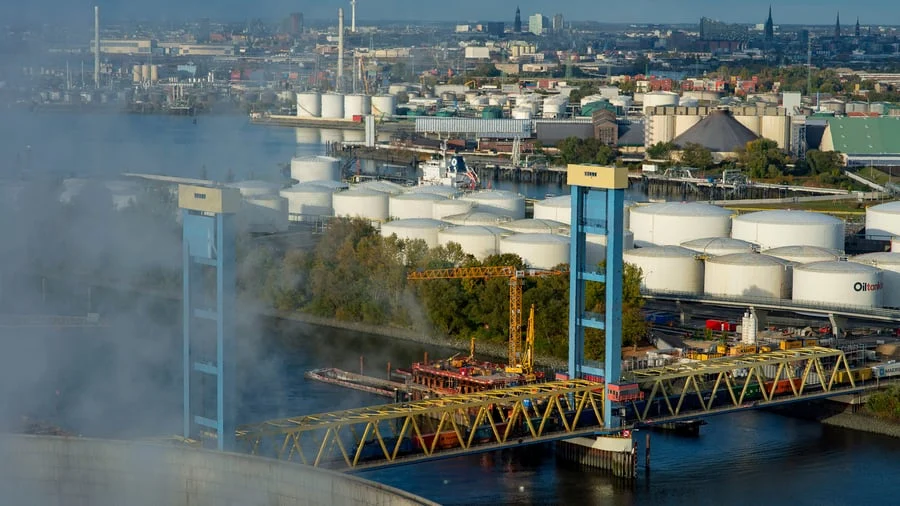
BERLIN – In a move aimed at cushioning the impact of ongoing global energy market turbulence, the German federal government has initiated the release of additional national oil reserves. This decision, formalized through a new ordinance that came into effect this past Thursday, aligns Germany with international commitments, specifically those mandated by the G7 nations and the International Energy Agency (IEA).
As energy prices remain a focal point of economic anxiety across the Eurozone, the government’s intervention is designed to inject supply into the market, specifically targeting diesel and heating oil. This strategic release marks a significant effort to stabilize supply chains that have been under immense pressure due to geopolitical instability and shifting global trade patterns.
The Core Facts: A Coordinated International Effort
The decision to tap into national emergency stocks is not a unilateral German action but rather part of a synchronized effort by the G7 and the IEA to prevent supply-side shocks from escalating into a full-scale energy crisis.

According to the Federal Ministry for Economic Affairs, Germany is committed to contributing 19.5 million barrels to a total international release pool of 100 million barrels. While approximately 6 million barrels had already been released by October, the current move addresses the remaining 13.5 million barrels.
The primary objective is the stabilization of volatile markets. The Ministry emphasized that the focus for this specific tranche will be on middle distillates—specifically diesel and heating oil—which are critical for both industrial logistics and domestic heating as the colder months approach.
Chronology: From Crisis to Collective Action
The narrative of this release is deeply intertwined with the shifting geopolitical landscape that has defined the last two years.

The Trigger: March 2024
The initial impetus for this series of releases came in March, following the outbreak of hostilities involving Iran. The resulting regional instability threatened the flow of crude oil through vital maritime chokepoints, causing immediate alarm in global energy markets. Recognizing the risk of an acute supply shortfall, the IEA authorized a historic release of strategic oil reserves to calm the markets.
The G7 Mandate: October 2024
By early October, it became clear that the initial March release was only a stopgap. Global energy prices remained stubbornly high, and supply chains for refined products like diesel remained precarious. During a G7 summit, member nations—including Germany—formally agreed to a more structured and transparent release of national stockpiles to ensure that the global economy would not suffer from a catastrophic price spike.
Implementation: The Current Phase
The German government has moved to codify these agreements into national law. As confirmed by Minister Katherina Reiche (CDU) during recent deliberations regarding a long-term national refinery strategy, the necessary regulatory framework was finalized and published in the Federal Law Gazette this week. This legal action effectively reduces Germany’s strategic oil reserve mandate from 90 days to 82 days of coverage, a temporary sacrifice made in the interest of market stability.
Supporting Data: Understanding the Strategic Buffer
To understand the weight of this decision, one must consider the role of the Strategic Petroleum Reserve (SPR). Traditionally, industrialized nations maintain these reserves as an insurance policy against total supply failure.
- The 90-Day Standard: Under IEA rules, member states are generally required to hold oil stocks equivalent to at least 90 days of net imports.
- The Adjustment: By lowering the requirement to 82 days, Germany is effectively freeing up a portion of its "emergency" insurance to be sold on the open market.
- Targeting Distillates: Unlike crude oil, which requires refining, the release of diesel and heating oil provides an immediate, tangible benefit to the consumer and logistics sectors. With diesel being the lifeblood of German manufacturing and trucking, the government’s decision to prioritize these products is a strategic economic maneuver rather than a generic supply increase.
The inventory shift is significant. With the German economy grappling with the transition away from Russian energy dependence, these reserves serve as a critical bridge. The government’s ability to release these stocks without compromising national security is predicated on a careful balance between holding enough for a worst-case scenario and utilizing the inventory to prevent a "soft" economic crisis—namely, the inability of businesses to afford the fuel necessary to operate.
Official Responses and Political Implications
The response from the federal government has been one of measured caution. Minister Katherina Reiche, in her recent comments, framed the release as a necessary, if regrettable, step.

"We are fulfilling our international obligations while ensuring that the German market remains adequately supplied," a spokesperson for the Ministry of Economic Affairs stated. "The priority is to prevent bottlenecks in the supply of diesel and heating oil, which are essential for our citizens and our industry."
Opposition voices, however, have questioned the sustainability of this strategy. Critics argue that relying on reserve releases is a temporary fix for a structural problem. They point out that the energy market is undergoing a fundamental shift, and that until Germany diversifies its energy sources and upgrades its refining capacity, it will remain vulnerable to these types of shocks.
Furthermore, the "refinery strategy" mentioned by Minister Reiche suggests that the government is aware of these criticisms. The focus is shifting from simply "releasing stocks" to a long-term plan that includes upgrading older, inefficient refineries and securing more stable long-term import contracts.

Implications: The Road Ahead
The decision to dip into the 82-day reserve threshold sends a clear message: the German government is willing to take unconventional steps to protect the domestic economy from international energy volatility. However, this policy carries both risks and rewards.
Economic Impact
In the short term, the increase in supply is expected to exert downward pressure on prices, or at the very least, act as a ceiling to prevent further, uncontrolled increases. For a country like Germany, which relies heavily on a robust logistics network, even a modest stabilization in diesel prices is a significant economic win.
Energy Security
The long-term concern is the depletion of the buffer. By reducing the reserve from 90 to 82 days, Germany has slightly less "cushion" should an unforeseen event—such as a total closure of major shipping lanes or a further escalation in conflict—occur. The government’s gamble is that the current market tension will subside before the reserves fall below a level that would be considered truly dangerous.

The Green Transition Paradox
There is also a broader irony at play. While the government is committed to a "Green Transition" and the reduction of fossil fuel reliance, the current energy reality necessitates a deep reliance on the very fuels they seek to phase out. This policy highlights the difficult "middle ground" that policymakers must navigate: maintaining energy security for the current economy while simultaneously investing in the energy systems of the future.
Global Geopolitics
Finally, Germany’s alignment with the G7/IEA is a testament to the importance of the transatlantic alliance. By participating in these coordinated releases, Germany is signaling that its energy policy is not merely domestic, but part of a larger, unified Western strategy to withstand economic warfare and geopolitical pressure.
Conclusion: A Delicate Balancing Act
As the winter months approach, the efficacy of this latest release will be put to the test. Will the 13.5 million barrels be enough to keep prices at the pump and heating costs in homes at manageable levels?

The German government has essentially placed a bet on the resilience of global supply chains. By utilizing its strategic reserves, it is buying time—time for the global market to adjust to new realities, time for infrastructure projects to come online, and time for the geopolitical dust to settle.
However, as the data and the history of this crisis indicate, the era of "cheap and abundant" energy is firmly behind us. The reliance on strategic reserves, while effective in the short term, is a symptom of a larger, ongoing struggle to maintain stability in a world where energy is increasingly being used as a lever of geopolitical power. For the German citizen, the immediate benefit is a potential reprieve from rising costs. For the German policymaker, the challenge remains: how to balance the immediate need for fuel with the long-term necessity of a secure, sustainable, and independent energy future.