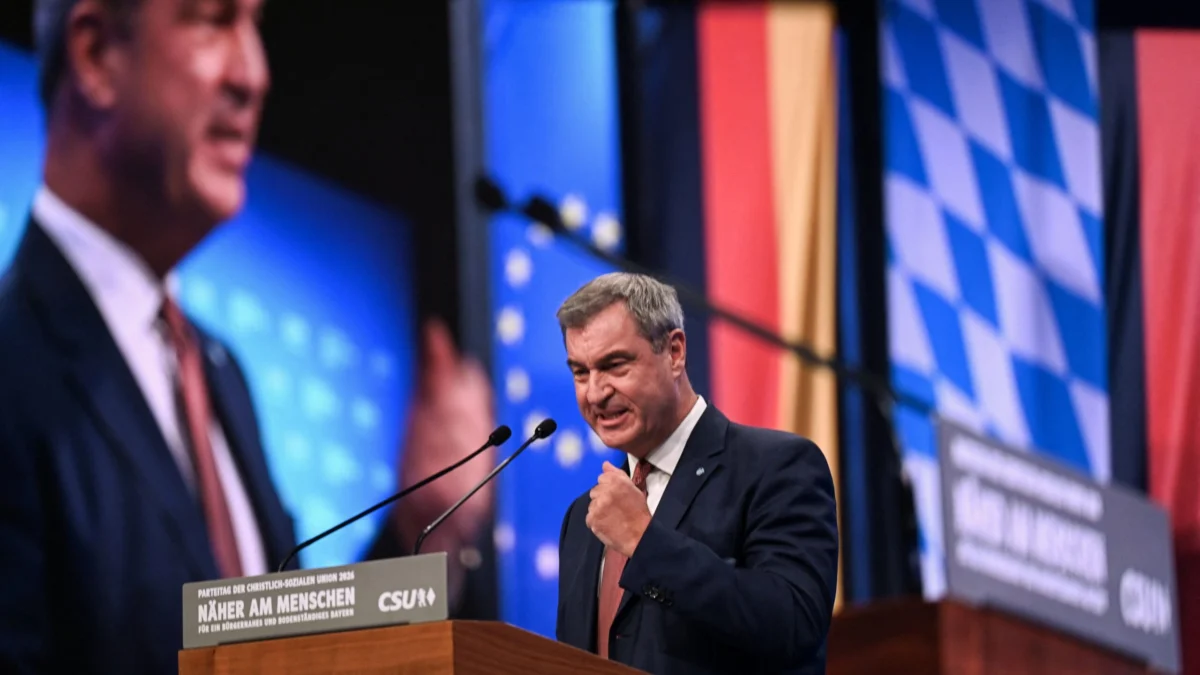
In a high-stakes address at the CSU party conference in Munich, Bavarian State Premier and party leader Markus Söder delivered a stark warning regarding the stability of Germany’s political landscape. Facing a "hurricane" of structural change and electoral setbacks, Söder has demanded a radical recommitment to the party’s core values and a decisive, uncompromising stance against political extremism from both the right and the left.
1. The Core Facts: A Party at the Crossroads
On Friday in Munich, the Christian Social Union (CSU) held a pivotal party congress, dominated by the forceful rhetoric of its chairman, Markus Söder. The central theme of the gathering was not merely policy, but the existential preservation of the German political center.
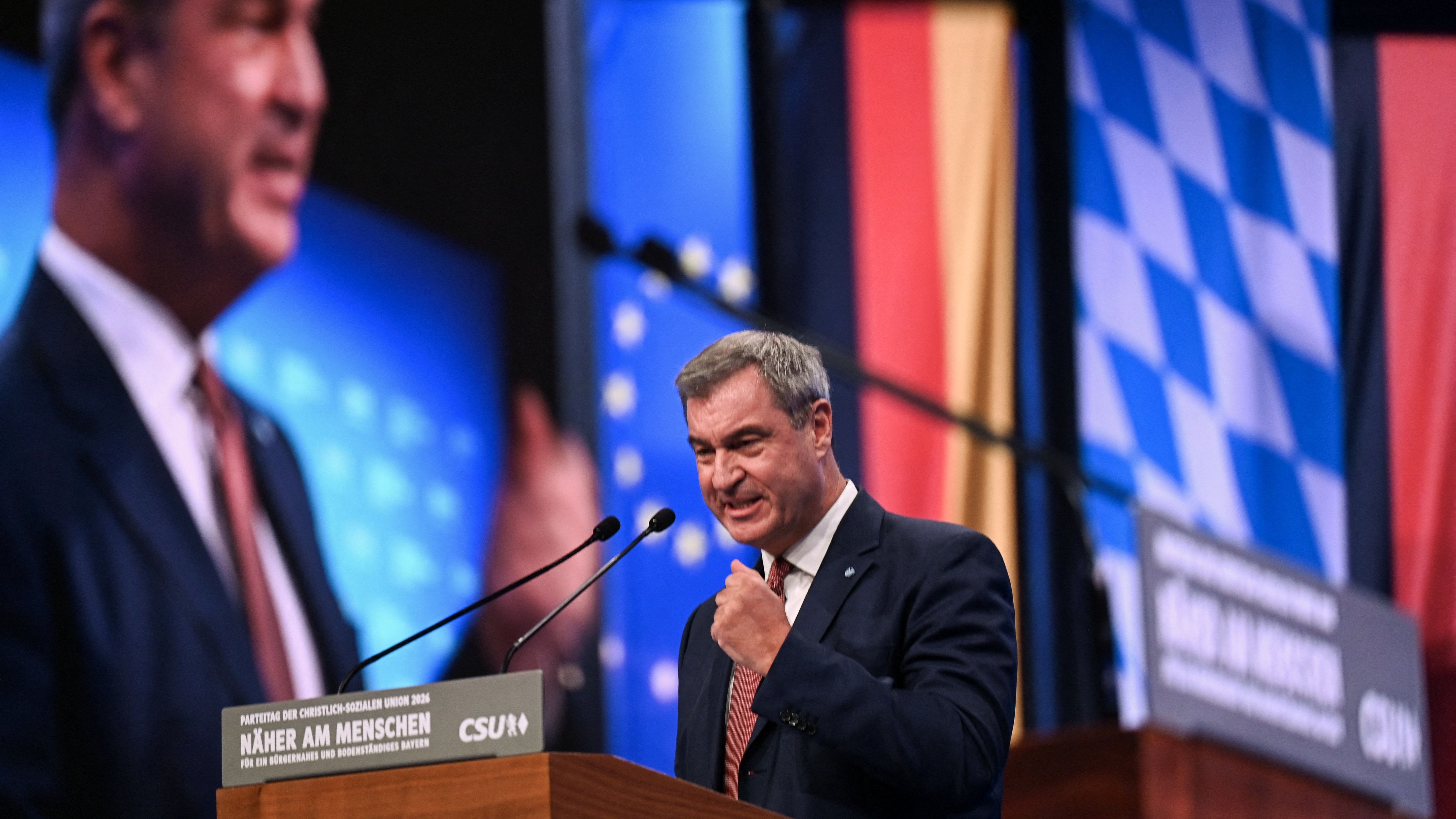
Söder’s message to the delegates was unequivocal: the current governing coalition in Berlin is failing to address the fundamental anxieties of the German populace, creating a vacuum that is being filled by radical forces. By labeling the current political climate as a "hurricane," Söder underscored the volatility of the nation, citing a societal "upheaval" that threatens the traditional conservative-liberal balance that has defined the Federal Republic for decades.
The CSU leader emphasized two primary threats: the "blue wave" of the right-wing populist party, Alternative for Germany (AfD), and the persistent influence of the left-wing spectrum. Söder warned that if the established center—the governing "black-red" coalition in Berlin—fails to deliver tangible results, the electorate’s trust in democratic institutions will suffer a potentially irreparable blow.

2. A Chronology of the Crisis
To understand the gravity of Söder’s address, one must look at the recent timeline that has led to this moment of apprehension within the CSU:
- The Post-Pandemic Shift: Following the exhaustion of the COVID-19 pandemic, the German public began showing signs of deep economic fatigue, exacerbated by soaring inflation and energy costs.
- The Eastern Election Shocks: A series of state election results in Eastern Germany provided the first tremors of the current "hurricane." The AfD saw record-breaking support, while established parties struggled to maintain their traditional voting blocks.
- The Berlin Coalition Tensions: The formation of the current governing coalition in the capital, often marked by internal bickering and stalled progress on infrastructure and digitalization, became a lightning rod for public frustration.
- The Munich Conference (Present Day): Söder’s speech serves as a corrective measure, attempting to re-establish the CSU as the reliable "anchor" of stability, differentiating it sharply from the chaotic discourse currently seen in the federal government.
3. Supporting Data and Societal Context
The "disaster" in the East, as Söder described it, is rooted in concrete electoral data. Recent polling and actual vote counts in regions such as Saxony-Anhalt have shown the AfD reaching historically high thresholds of support. This, coupled with the resurgence of the Left Party (Die Linke) in urban centers like Berlin, suggests a Germany that is becoming increasingly polarized.
Economically, the "upheaval" is not merely rhetorical. Germany, once the undisputed industrial engine of Europe, is grappling with a slow-growth environment, a transition to green energy that has caused friction in the middle class, and a bureaucratic bottleneck that hinders investment. Söder’s argument is that the government’s failure to translate "progressive" goals into "practical" solutions for the working class has handed a massive recruitment tool to political extremes.
4. Official Responses and Internal Party Dynamics
The reaction within the CSU to Söder’s call to arms was one of disciplined, if anxious, support. The delegates, acutely aware of their own sliding poll numbers in Bavaria, responded to the speech with standing ovations.

However, the internal challenge remains: how to balance the necessity of a sharp "right-wing" profile (to win back voters from the AfD) with the need to remain a party of government that can appeal to moderate, centrist voters.
Critics within the political opposition have accused Söder of "playing to the gallery," suggesting that his aggressive rhetoric against the Left and the AfD is a tactical maneuver designed to consolidate his own power base before the next federal election cycle. Conversely, the leadership of the current Berlin coalition has remained largely tight-lipped, maintaining that the "work is getting done" despite the "noise" of political campaigning.

5. Implications for the Future of German Democracy
Söder’s warning that this could be the "last cartridge of the democracy" is a chilling rhetorical device, but it serves a specific purpose: to force a realization among his peers that the status quo is no longer an option.
The Risk of a Broken Coalition
If the current coalition in Berlin continues to stutter, the implications are profound. A collapse of the government would likely lead to early elections, which, in the current polling climate, could see a parliament so fragmented that forming a stable government becomes a mathematical impossibility. This would hand the keys to the narrative to the populists.

The Strategy of Abgrenzung (Delimitation)
The CSU’s strategy moving forward is clear: strict Abgrenzung. This means there will be no cooperation, no "soft" talk, and no normalization of the AfD. By defining the party as the sole protector of the "democratic center," Söder is betting that voters will eventually return to the fold once the "storm" passes.
The Path to 2025
As Germany looks toward the next major election cycle, the pressure on the CSU to provide a viable alternative to the current chaos will only intensify. Söder has effectively set the terms of engagement: the next two years will be defined by "work, results, and success." If the party can demonstrate that it is a party of competence rather than just conflict, it may survive the current "hurricane."

However, the risk remains. By painting the current situation as a binary choice between the democratic center and the abyss, Söder has raised the stakes. If the public perceives that the center—including the CSU—is also failing to provide solutions, the "blue wave" that Söder fears may prove even more resilient than he anticipates.
Conclusion: The "Orkan" as an Opportunity
Ultimately, the Munich party congress was a testament to the fact that the established political class in Germany is aware of the ground shifting beneath its feet. Whether this awareness leads to a genuine revitalization of the democratic center or merely a period of defensive, reactionary politics remains to be seen.

Markus Söder’s call for a "re-commitment" is a recognition that rhetoric alone will not solve the structural issues of a nation in transition. The German electorate is demanding more than just warnings about the future; they are demanding a blueprint for stability. As the "hurricane" continues to blow, the CSU’s ability to move from "warning" to "governing" will be the true test of its relevance in the 21st century.
The message from Munich is clear: The time for complacency has ended. The era of the "political hurricane" has arrived, and for Germany’s traditional parties, there is no shelter—only the hard, unglamorous work of rebuilding trust with a skeptical and increasingly polarized public. The coming months will be defined by whether the CSU can truly be the voice of that reconstruction, or if they, like the coalition they criticize, will be swept aside by the very forces they are attempting to fight.