By [Your Name/Journalistic Desk]
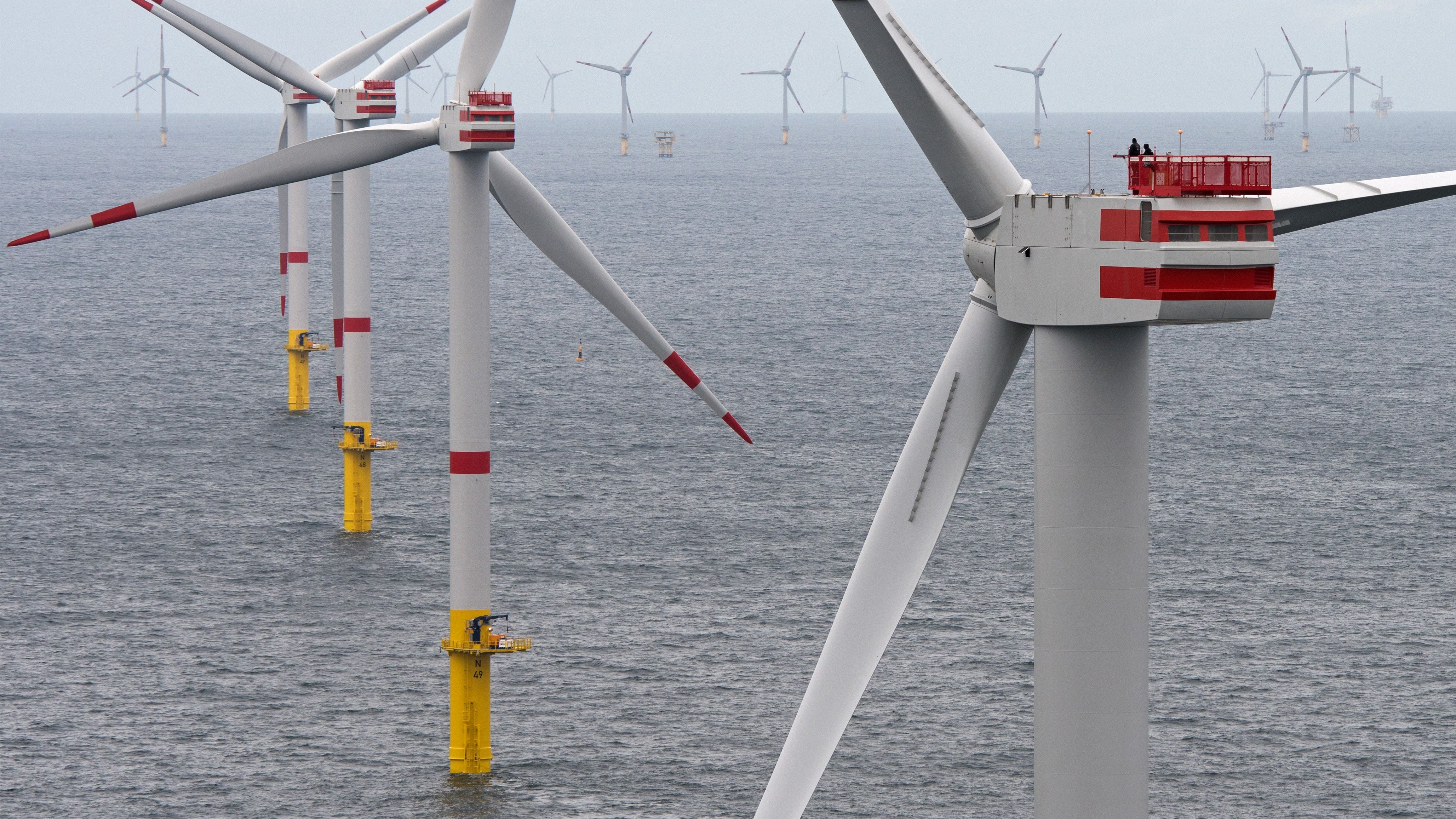
The ambition is colossal: transforming the North Sea into the "green power plant" of Europe. By 2030, the nations bordering the North Sea aim to install 120 gigawatts (GW) of offshore wind capacity, escalating to a staggering 300 GW by 2050. However, as the initial euphoria of these political declarations fades, a sobering reality is setting in. The ambitious transition, intended to electrify heavy industry and reduce reliance on volatile oil and gas imports, is currently stalling.
Tim Meyerjürgens, CEO of Tennet Germany—one of the nation’s most significant energy infrastructure investors—has issued a stark warning: the offshore wind expansion is at a critical juncture. According to Meyerjürgens, the current nationalistic, fragmented approach to planning and auctioning is failing. To succeed, Europe must pivot toward a deeply integrated, cross-border strategy.
The Infrastructure Bottleneck: A Multi-Billion Euro Challenge
As an operator of transmission networks, Tennet Germany sits at the heart of this transition. The company is currently planning average annual investments of roughly €13 billion through 2030, cementing its position as a pillar of the German energy sector. Yet, money alone cannot solve the engineering and regulatory hurdles.
The core challenge lies in the physical connection of offshore wind farms to the onshore grid. This is not a simple task; it requires technically complex, high-voltage direct current (HVDC) solutions that must be laid across hundreds of kilometers of seabed. These grid connections represent a significant portion of the total capital expenditure for any offshore project. When these projects are planned in isolation—country by country—they lose the efficiency of scale and suffer from suboptimal connectivity.
Chronology of a Stalled Transition
The path to a green energy hub has been marked by high-level summits and ambitious targets, but the execution has lagged.

- 2023: Nine North Sea nations formalize an agreement to reach 120 GW by 2030 and 300 GW by 2050. This is framed as the "Green Industrial Revolution" for the continent.
- Early 2025: A study by the Boston Consulting Group (BCG) reveals that only 64 percent of the North Sea areas auctioned by the participating states were successfully awarded. The remaining 36 percent found no takers, highlighting a major red flag for the market.
- Mid-2025: Industry discourse shifts from "how to build" to "why no one is bidding." The combination of rising capital costs, longer project implementation timelines, and the slow pace of industrial electrification creates a "wait-and-see" environment that discourages long-term investment.
- Present Day: Industry leaders like Tennet are now openly calling for a fundamental restructuring of how sea areas are tendered and how networks are integrated across borders.
Supporting Data: The Reality of "Volllaststunden"
To understand the scale of the challenge, one must look at the math. A goal of 300 GW is equivalent to the power capacity of 300 massive coal-fired power plants. However, the comparison ends there. While a coal plant can provide consistent, "baseload" power for 8,760 hours a year, offshore wind is subject to the whims of the weather.
On average, wind turbines at sea reach approximately 4,000 full-load hours per year. This intermittency means that to replace the reliable output of fossil-fuel plants, the installed capacity must be significantly higher, and the infrastructure must be far more resilient. Furthermore, "shadowing effects"—where wind farms located too close together effectively block the wind from one another—have been confirmed by various studies. This density issue further complicates the planning process, as current, crowded site allocations threaten to reduce the total energy yield of the North Sea.
The Case for Cross-Border Integration: Griffin and Lion Links
Despite the regulatory gridlock, there are glimmers of hope. Projects like the "Bornholm Energy Island," led by 50Hertz (Germany) and Energinet (Denmark), serve as a prototype for what the future could look like. By connecting Danish wind parks to both the Danish and German national grids, the project creates a more flexible and robust energy market.

Tennet is mirroring this approach with the "Griffin Link" and "Lion Link" projects. Griffin Link intends to connect the electricity markets of Great Britain and Germany while simultaneously integrating offshore wind farms in the North Sea. Similarly, Lion Link aims to bridge the Netherlands and the UK.
As Meyerjürgens points out, these projects are not just "nice to have"; they are essential. "By combining connections for offshore wind parks with cross-border power links, we can essentially double the utilization of the infrastructure with relatively low additional investment," he explains. It is a win-win for efficiency and security of supply.
The Regulatory Impasse: Why 27 Nations is Too Many
The most stinging critique from the industry is the lack of agility in European governance. While political leaders often herald "European unity," the practical reality is a tangle of bilateral negotiations that take years to finalize.

Meyerjürgens is blunt: "We should learn from each other more strongly in Europe and adopt existing solutions instead of inventing new rules every single time." He argues that waiting for a consensus among all 27 EU member states is a recipe for stagnation. Instead, he advocates for a regional approach, where the nations bordering specific "sea basins"—starting with the North Sea—take the lead in coordinating auction calendars, grid connections, and financial frameworks.
Official Responses and Political Vision
German Federal Minister of Economics, Katherina Reiche (CDU), has publicly acknowledged the necessity of this shift. During the North Sea Summit in Hamburg, she labeled the North Sea as the "strategic key region of Europe." Her rhetoric is strong, emphasizing that "intelligent networking of offshore energy" is the only way to ensure affordable, clean, and secure energy while reducing geopolitical dependencies.
However, the industry remains skeptical. While ministers sign joint declarations at summits, these documents rarely translate into the granular, binding legislative changes required to accelerate project timelines. The gap between political ambition and regulatory implementation remains a chasm that continues to deter private capital.

The "Negative Bidding" Trap
A significant point of friction involves the recent auction process. In the years 2023 to 2025, several bidders promised multi-billion euro payments to the state to secure offshore plots. These "negative bids" have backfired. Many of these projects are now considered economically unviable, yet there is no clear legal mechanism to return the plots without triggering massive financial penalties or legal delays.
Meyerjürgens warns that we cannot afford to have these multi-billion euro grid connections sitting empty in the middle of the sea, waiting for wind farms that may never be built because the developers over-leveraged themselves during the bidding process. He calls for a "use it or lose it" policy: project developers must be required to either realize the projects reliably or surrender the areas so they can be re-auctioned under more realistic market conditions.
Implications: A Crossroads for the Energy Transition
The implications of this situation are profound. If Europe continues to treat offshore wind as a collection of national projects rather than a unified continental grid, the cost of the energy transition will skyrocket, and the climate targets will likely be missed.

The transition to a sustainable energy system requires more than just more turbines; it requires a systemic shift in how we manage the electricity market. The technology exists to connect the North Sea in a way that balances supply and demand across borders, buffering the volatility of wind energy. The barrier is entirely man-made: a combination of bureaucratic inertia, national pride, and flawed auction designs.
For Germany and its North Sea partners, the next few years will be decisive. Will they continue to prioritize national control over efficiency, or will they finally embrace the radical cross-border integration that their own industry experts say is the only path to a secure, green, and affordable future? As it stands, the North Sea remains a vast, untapped potential—but it is a potential that is currently being blocked by the very policies designed to unlock it.