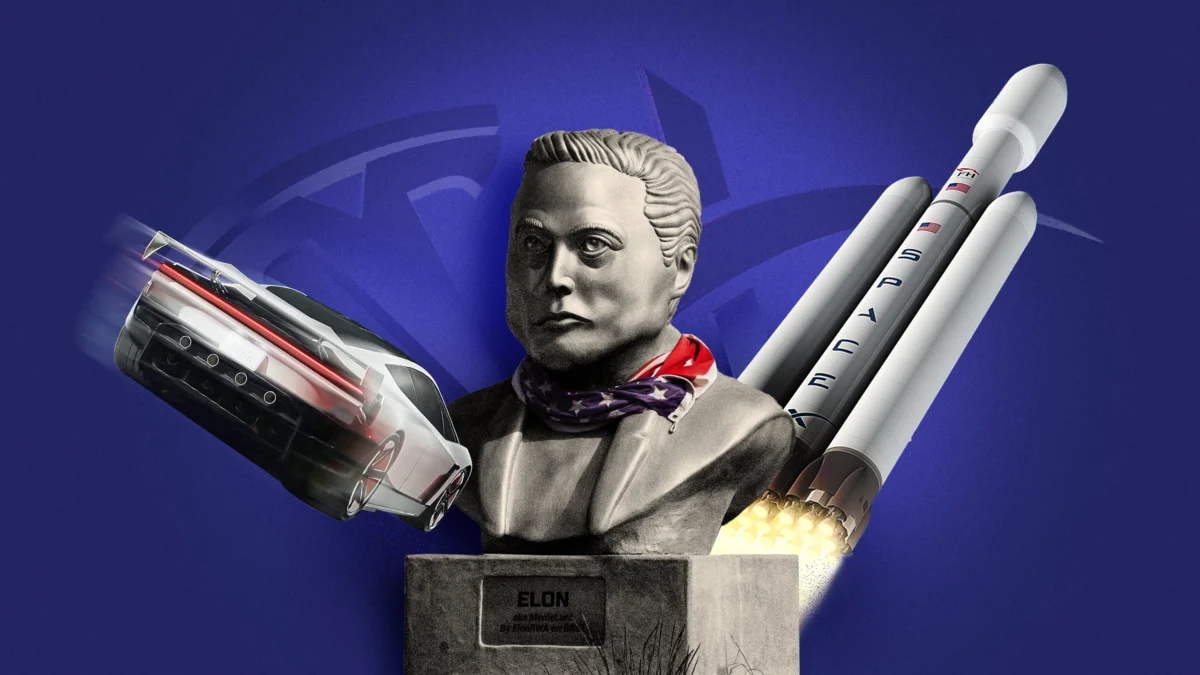
The business world is currently abuzz with a prospect that was once relegated to the realm of science fiction and speculative forum threads: the potential merger of Elon Musk’s two flagship enterprises, Tesla and SpaceX. With reports surfacing that both companies have initiated the formation of special committees to evaluate a possible business combination, the global financial community is recalibrating its expectations. Should this consolidation come to fruition, it would undeniably rank among the most significant corporate transactions in economic history.
The Magnitude of the Merger
The sheer scale of a combined Tesla-SpaceX entity is difficult to overstate. With a collective market valuation estimated in the neighborhood of $3.5 trillion, the new conglomerate would instantly secure its position as the fifth-largest company in the world. To put this into perspective, such an entity would eclipse the market capitalization of retail giant Amazon and sit within striking distance of the software behemoth Microsoft.
This is not merely a quantitative increase in size; it is a qualitative shift in the landscape of global industry. By bringing together the world’s most prominent electric vehicle and energy storage manufacturer with the pioneer of reusable aerospace technology, Musk would be creating an unprecedented vertical integration of ground-based and extraterrestrial infrastructure.

A Chronology of Speculation and Strategy
The conversation surrounding a potential merger has evolved from fringe theory to board-level discourse over the past several years.
- The Early Years: During the formative stages of both companies, they operated as distinct silos. Tesla focused on the transition to sustainable energy, while SpaceX aimed to make humanity multi-planetary.
- The Rise of Cross-Pollination: As the years progressed, technological overlap became increasingly apparent. Innovations in materials science, battery storage, and artificial intelligence developed at Tesla began to find utility in the design of SpaceX’s Starship and Falcon rockets.
- The "Everything App" Mentality: Musk’s acquisition of X (formerly Twitter) and his push for an "everything app" framework fueled speculation that he viewed his businesses as a singular ecosystem rather than disparate ventures.
- The Catalyst: Recent statements from Musk during an analyst call, where he explicitly stated that "a combination of the two companies has a lot to be said for it," served as the primary catalyst for the current market surge.
- The Current Phase: The establishment of independent special committees by both firms indicates that this is no longer a rhetorical musing but a subject of formal legal and financial due diligence.
Financial Implications and Market Response
The financial markets have responded with a characteristic mixture of euphoria and caution. Following the news, SpaceX shares saw a notable spike, jumping as much as 11% to hover around the $164 mark. Simultaneously, Tesla shares enjoyed a healthy 3% climb to approximately $385.
JP Morgan, among other institutional heavyweights, has responded to the rumors by doubling its price targets for relevant equity, signaling a belief that the synergies created by such a merger would far outweigh the risks of integration. The rationale is clear: by pooling resources, the combined company could leverage Tesla’s manufacturing prowess to streamline the mass production of aerospace components, while SpaceX’s advancements in satellite internet (Starlink) could provide the backbone for Tesla’s autonomous driving network.
Official Stances and The Governance Challenge
Despite the excitement, significant hurdles remain. Elon Musk is, by definition, the primary stakeholder in both companies. This creates a labyrinth of governance issues. In his recent address, Musk acknowledged these complexities, stating that he is legally barred from participating in the negotiations due to his status as a controlling shareholder.
"The conflict of interest is the very reason I am not part of the special committees," Musk clarified. This separation is vital. For such a merger to pass regulatory scrutiny—particularly in the United States, where the Federal Trade Commission (FTC) maintains a hawkish stance on market consolidation—the process must be entirely transparent and demonstrate that it benefits minority shareholders rather than just the majority owner.
Synergies: Why Merge?
Beyond the headline-grabbing valuation, there are strategic imperatives that could justify such a merger:
1. Resource Optimization
Tesla has spent years perfecting high-volume manufacturing and supply chain management. SpaceX, conversely, is an R&D powerhouse. Integrating these two cultures could allow SpaceX to reduce the "cost per kilogram" to orbit by applying Tesla’s assembly-line efficiency to rocket manufacturing.
2. The AI and Data Advantage
Both companies are arguably the world’s leading collectors of real-world physical data. Tesla gathers billions of miles of driving data for its Full Self-Driving (FSD) suite, while SpaceX collects immense telemetry data from every launch. A unified AI platform could accelerate advancements in robotics, automation, and machine learning at a scale that no competitor could match.
3. Vertical Energy Integration
SpaceX’s long-term goal of colonizing Mars requires sustainable power generation, energy storage, and life support systems—all of which are core competencies for Tesla’s Energy division. A merger would effectively create a closed-loop energy economy, from solar panels on Earth to power grids on the Red Planet.

The Risks: Can a Company Be Too Big?
Critics and antitrust analysts are already sounding the alarm. A company that controls a significant portion of the electric vehicle market, the private space launch industry, and global satellite internet infrastructure would arguably possess a level of geopolitical leverage that is unprecedented in the private sector.
There is also the "Key Person Risk." The success of this hypothetical conglomerate would be inextricably linked to Elon Musk. While he has proven his ability to manage multiple high-stakes ventures simultaneously, the structural complexity of a $3.5 trillion company would test the limits of even the most capable executive.
Market Dynamics: A New Era of Competition?
If the merger proceeds, it will trigger a ripple effect throughout the global economy. Competitors in the automotive sector, such as Ford, Volkswagen, and Toyota, would find themselves competing against a company that not only makes the cars but also controls the satellite network that guides them and the infrastructure that launches the hardware to maintain that network.

Similarly, in the aerospace sector, companies like Blue Origin and Rocket Lab would face an adversary with the financial backing of a mass-market consumer goods company. This shift could lead to a massive consolidation in the aerospace industry, as smaller players struggle to keep pace with the combined R&D budgets of a Tesla-SpaceX entity.
The Road Ahead: What Investors Need to Watch
For investors, the coming months will be critical. The following factors will determine whether this vision becomes reality:
- Committee Findings: The reports generated by the special committees will be the first "official" signal of the feasibility of the merger. These reports will likely address the valuation ratios and the structure of the new entity.
- Regulatory Hurdles: The Department of Justice (DOJ) and the FTC will play a decisive role. Any attempt to combine these firms will be scrutinized under the lens of the Sherman Antitrust Act.
- Shareholder Votes: Ultimately, the decision will rest with the shareholders. Given Musk’s high approval rating among retail investors, he may find the path to a vote easier than expected, though institutional investors may demand significant concessions.
Conclusion: A Paradigm Shift
The potential fusion of Tesla and SpaceX represents more than just a corporate merger; it is a vision of the future that attempts to collapse the distance between Earth and space. Whether this is an act of genius or a step toward unsustainable centralization remains to be seen.

If successful, the combined entity would be the first of its kind: a civilization-scale company capable of building the cars of today and the starships of tomorrow. As the world watches, the question is not just whether they can merge, but whether the global economy is ready for a company that effectively operates at the scale of a nation-state. For now, the markets remain in a state of anticipatory excitement, waiting for the next move from the world’s most ambitious boardroom.