As the nights lengthen and the autumn air grows crisp, amateur astronomers and stargazers are turning their eyes toward the heavens. The annual Orionid meteor shower, one of the most spectacular displays of the year, has reached its peak activity, offering a breathtaking cosmic performance for those willing to brave the chill of the October night.
Main Facts: The Cosmic Dust of Halley’s Comet
Each year, between early October and early November, the Earth passes through a stream of debris left behind by one of history’s most famous celestial visitors: Comet 1P/Halley. As our planet plunges through this trail of cosmic dust and ice particles, these tiny fragments collide with our atmosphere at incredible velocities, incinerating upon entry to create the brilliant streaks of light we know as "shooting stars."
The Orionids are particularly celebrated for their speed and brilliance. While many meteor showers originate from slower-moving debris, the Orionids are among the fastest of the recurring showers. With velocities reaching 66 kilometers per second—or approximately 237,600 kilometers per hour—these meteors strike the atmosphere with a kinetic energy that produces vivid, long-lasting trails, often referred to as "trains."
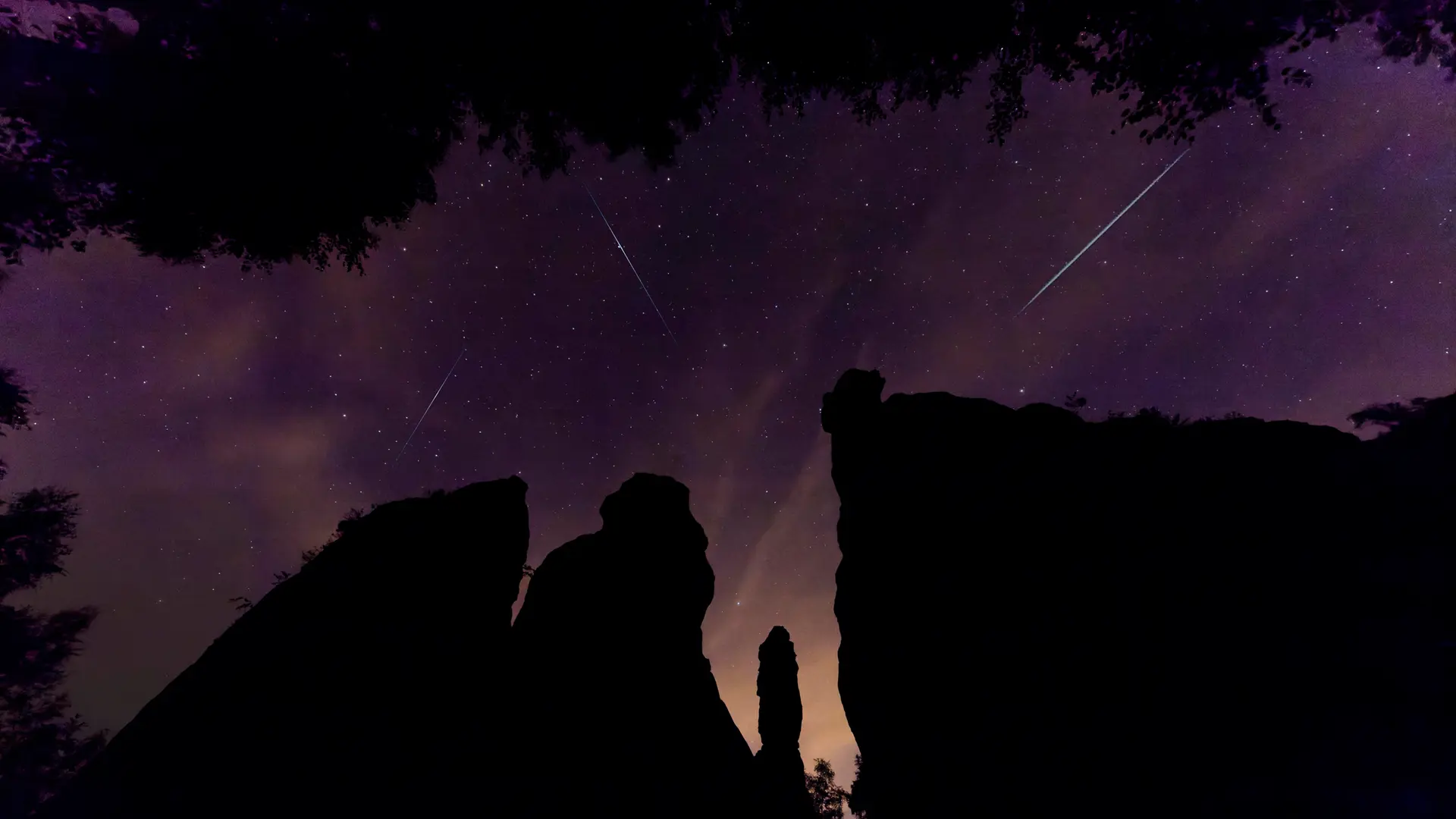
For the 2026 cycle, the peak activity occurred in the night between October 21 and October 22. While theoretical models suggest a zenithal hourly rate (ZHR) of up to 20 meteors per hour under perfect, dark-sky conditions, seasoned observers know that reality often dictates a more modest experience. In practice, stargazers can expect to see roughly one meteor every six minutes, provided they are far removed from the light pollution of urban centers.
A Chronology of the 2026 Display
The 2026 Orionid event began with a slow build-up in early October, as Earth’s orbital path began to intersect with the diffuse edges of the debris cloud shed by Halley’s Comet during its previous visits to the inner solar system.
- Early October: Initial, sporadic sightings were reported as the Earth first entered the periphery of the comet’s tail.
- October 21–22 (The Peak): The night of maximum intensity. Observers across the Northern Hemisphere reported ideal conditions, with the radiant point rising above the horizon after midnight, allowing for optimal viewing in the pre-dawn hours.
- Post-Peak Period: Activity will continue to decline gradually through the final week of October, with the shower remaining active until approximately November 7. For those who missed the primary peak due to inclement weather or scheduling, the waning days of the shower still offer a chance to catch lingering stragglers.
Supporting Data: The Physics of the Orionids
The intensity of a meteor shower is determined by the density of the debris stream and the relative velocity of the Earth’s collision with that stream. The Orionids are unique due to the "retrograde" orbit of their parent body, Comet Halley.

Why are they so fast?
Most comets orbit the sun in the same direction as the planets. However, Halley’s Comet follows a retrograde orbit, meaning it circles the sun in the opposite direction. When the Earth meets the debris left by this comet, the two are essentially moving in a head-on collision course.
To visualize this speed: a particle traveling at 66 km/s covers the distance from Magdeburg to Chemnitz in less than three seconds. This extreme velocity is why the Orionids often produce persistent, ionized gas trails that remain visible for several seconds after the initial flash—a phenomenon caused by the intense heat generated by atmospheric friction.
Observing Tips
Astronomy is a science of patience and preparation. To maximize the experience, experts recommend the following:

- Escape the Glow: Light pollution is the enemy of the stargazer. Travel to a rural area where the Milky Way is visible.
- Ditch the Gear: While it seems counterintuitive, telescopes and binoculars are detrimental to observing meteor showers. Their narrow field of view misses the fast-moving streaks. The human eye, with its wide-angle capability, is the best tool for the job.
- Adaptation: Allow at least 20 to 30 minutes for your eyes to adjust to the darkness. Avoid looking at your phone, as the blue light will reset your night vision.
- The Radiant Point: The meteors appear to originate from the constellation Orion, near the bright star Betelgeuse. While they can appear anywhere in the sky, tracing their paths backward will lead you to this "radiant."
Official Perspectives and Secondary Observations
While the Orionids have been the primary focus of the astronomical community this week, they are not the only marvel currently gracing the sky. The 2026 season has been particularly rich for space enthusiasts.
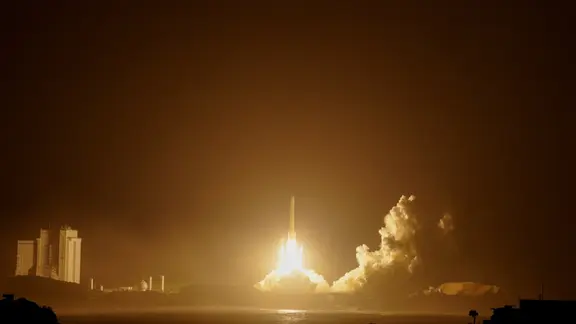
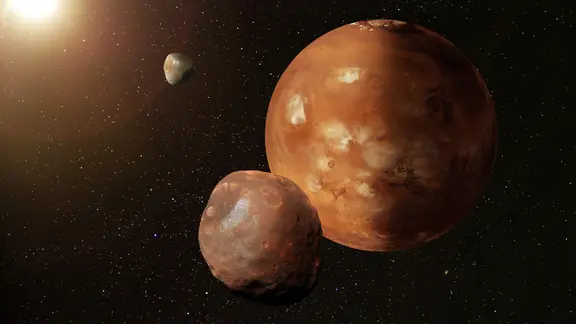
On October 19, 2026, the international scientific community celebrated the successful launch of the MMX (Martian Moons eXploration) mission. This ambitious project, led by Japan, aims to retrieve samples from Phobos, one of the moons of Mars. The involvement of German engineering—specifically high-precision optics and sensors developed in Thuringia—marks a significant milestone for European aerospace contributions to Martian exploration.
Furthermore, as the peak of the Orionids coincides with the shift into late autumn, the sky has provided additional theater. For early risers who stay out until 2:00 AM, the eastern horizon has revealed the bright, steady glow of Jupiter and the distinct reddish hue of Mars. The juxtaposition of these planetary giants with the fleeting, transient nature of the meteor shower provides a stark reminder of the dynamic mechanics of our solar system.
Implications: Why We Watch
The study of meteor showers like the Orionids is far more than a recreational pastime. It serves as a vital bridge between public interest and scientific inquiry.
Scientific Value
By observing the rate, frequency, and spectral signatures of these meteors, scientists can map the structure of debris trails left by long-period comets. This data provides insights into the aging process of comets and the evolution of the solar system’s composition. Because Halley’s Comet is a "short-period" comet that has visited the inner solar system thousands of times, the debris we see today acts as a historical record of its previous passages.
The Human Connection
Beyond the data points, the Orionids offer a profound psychological benefit. In an increasingly urbanized and digital world, the act of looking up—of reconnecting with the vast, ancient mechanics of the cosmos—is a grounding experience. It reminds observers of our place in the universe, a fragile planet moving through a debris-filled vacuum, protected by the very atmosphere that turns these cosmic rocks into fleeting works of art.
Future Perspectives
As we look toward the end of October, the conversation around celestial observation continues to evolve. Discussions regarding the global standardization of time—specifically the debate between permanent winter or summer time—are ongoing. Much like the predictable cycles of the Orionids, these societal rhythms are subject to intense scrutiny by experts. Medical professionals have argued that, from a circadian health perspective, the preservation of natural light cycles is paramount.
Whether we are measuring the velocity of comet dust or the impact of daylight savings on the human body, the underlying theme remains the same: our lives are inextricably linked to the cycles of the earth and the heavens.
As the 2026 Orionid shower fades into the annals of this year’s astronomical record, it leaves behind a sense of wonder. For those who spent the night watching the skies, the memory of those 66-kilometer-per-second streaks of light serves as a testament to the enduring majesty of our night sky. The next major opportunity for such a display will come in November with the Leonids, but for now, the quiet beauty of the late October darkness remains a perfect backdrop for reflection and discovery.